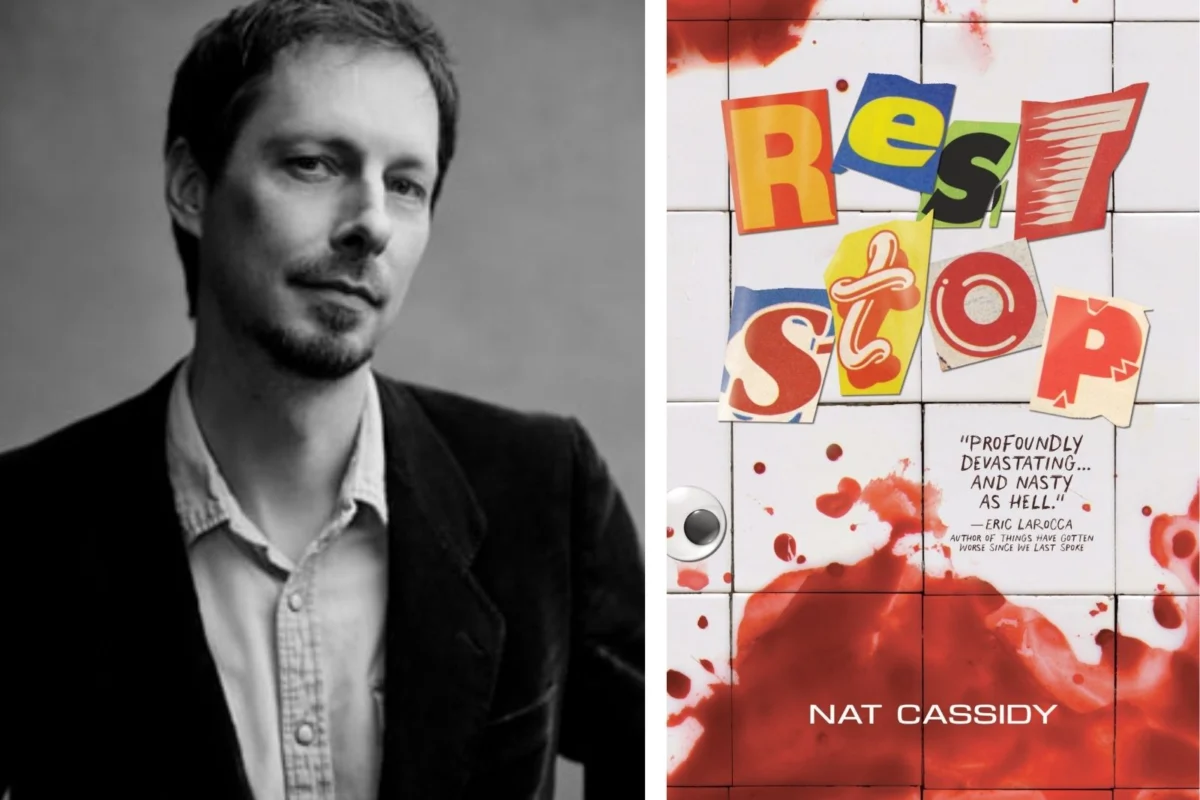
Nat Cassidy’s chilling novella, "Rest Stop," a standout piece from his recently released collection "I Know a Place: Rest Stop and Other Dark Detours," is slated for a feature film adaptation. The acclaimed author himself is penning the screenplay, promising a faithful yet cinematic translation of his unsettling narrative. The story plunges readers into the claustrophobic confines of a rest stop bathroom, where a musician finds themselves trapped, battling both the visceral horrors within the stalls and the unseen terrors lurking beyond.
Cassidy described the novella’s visceral nature to Deadline, the publication that first broke the news of the adaptation, stating, "I like to describe this novella as Green Room meets Gerald’s Game." He further elaborated on its thematic territory, noting, "It’s the closest thing I’ve yet written to ‘extreme’ horror—though, I wouldn’t say it goes nearly as hard or gets nearly as bleak as the most extreme ‘extreme’ horror stories I’ve read." His stated ambition for the adaptation is to heighten the everyday anxieties associated with such mundane locations, "Regardless, I’m hoping it makes your next visit to a gas station bathroom even scarier than it would otherwise be."
Coin Operated Secures Rights for "Rest Stop" Adaptation
The film rights to "Rest Stop" have been acquired by Coin Operated, the production company founded by Gary Dauberman, a name synonymous with modern horror filmmaking. Dauberman’s company has an established track record of developing and producing engaging and often terrifying cinematic experiences. Notably, Coin Operated is also behind André Øvredal’s recent horror film Passenger, which explores supernatural encounters on a desolate stretch of road. The company’s slate also includes Santiago Menghini’s The Revenge of La Llorona and a planned reboot of the iconic slasher franchise Urban Legend, signaling a commitment to a diverse range of horror subgenres.
Dauberman expressed his enthusiasm for the "Rest Stop" project in a statement to Deadline, drawing a colorful analogy to describe the novella’s multifaceted appeal. "Like the junk food aisle at any sketchy gas station on the side of the road, Rest Stop has a little bit of everything (that may or may not kill you)," he remarked. He highlighted the elements that he believes will translate effectively to the big screen: "Its relentless pace, psychological torment, heartfelt character moments, and many squirm-inducing sequences make it the rare horror story that has all the ingredients for a perfectly terrifying experience on the big screen."
Contextualizing "Rest Stop" within Contemporary Horror
The announcement of the "Rest Stop" adaptation arrives at a time when the horror genre is experiencing a significant resurgence in popularity and critical acclaim. Audiences are increasingly receptive to stories that explore psychological dread, visceral terror, and nuanced character studies, moving beyond traditional jump scares. The trend of adapting literary horror, particularly novellas and short stories that offer contained yet potent narratives, has proven successful. Works like Stephen King’s Gerald’s Game, which Cassidy references, have demonstrated the potential for intense, character-driven horror to captivate a broad audience when translated to film.
Cassidy’s description of "Rest Stop" as a blend of Green Room and Gerald’s Game immediately places it within a lineage of horror films that excel at creating unbearable tension through confined spaces and escalating threats. Green Room, Jeremy Saulnier’s 2015 film, is renowned for its brutal depiction of a punk band trapped in a neo-Nazi venue, a masterclass in sustained dread and claustrophobic violence. Gerald’s Game, Mike Flanagan’s 2017 adaptation of Stephen King’s novel, famously features a woman handcuffed to a bed in a remote cabin, forcing her to confront her past traumas and immediate survival needs. The combination of these two cinematic touchstones suggests that "Rest Stop" will likely deliver a potent cocktail of external threats and internal psychological struggle, amplified by the inherently unsettling environment of a desolate roadside facility.
The collection "I Know a Place: Rest Stop and Other Dark Detours" itself signifies Cassidy’s exploration of the darker undercurrents present in seemingly ordinary spaces and experiences. The title hints at a broader theme of venturing into the unknown and confronting hidden dangers, a common thread in gothic and contemporary horror literature. The inclusion of "Rest Stop" as a central piece within this collection underscores its significance and its potential to resonate with readers seeking unsettling, thought-provoking narratives.
The Allure of the Unseen: Examining the "Rest Stop" Premise
The core premise of a musician trapped in a rest stop bathroom offers a fertile ground for horror. Public restrooms, particularly those found in isolated rest stops, are often perceived as liminal spaces—transient, utilitarian, and frequently associated with a degree of unease. They are places where anonymity is paramount, and the potential for encounters with unsavory characters or hidden dangers is a common trope in urban legends and cautionary tales.
Cassidy’s intention to make "your next visit to a gas station bathroom even scarier" speaks to the power of tapping into pre-existing anxieties. The novella likely leverages this familiar discomfort, transforming it into a source of genuine terror. The confinement of a bathroom stall, a space designed for privacy, paradoxically becomes a cage. The sounds, smells, and limited visibility inherent to such an environment can be amplified to create a deeply unsettling atmosphere.
The protagonist’s identity as a musician adds another layer of vulnerability and potential for thematic exploration. Music often serves as a form of escape, expression, and connection. By trapping a musician, the narrative may explore themes of silenced voices, lost creativity, or the struggle to find harmony amidst chaos. The juxtaposition of art and horror, of the sublime and the grotesque, is a well-established convention in the arts.
Gary Dauberman’s Vision and Coin Operated’s Track Record
Gary Dauberman’s involvement as a producer and the backing of Coin Operated are significant indicators of the adaptation’s potential. Dauberman has a proven track record in the horror genre, having penned the screenplays for the successful Annabelle films and the critically acclaimed adaptation of Stephen King’s IT. His understanding of what makes a horror story effective on screen, combined with his company’s dedication to genre filmmaking, suggests that "Rest Stop" is in capable hands.
Coin Operated’s current slate further reinforces this notion. Passenger, while a different subgenre of horror, demonstrates a willingness to explore atmospheric and character-driven narratives with supernatural elements. The planned reboot of Urban Legend indicates an interest in modernizing classic horror tropes and engaging with the genre’s legacy. The production company’s focus on "Coin Operated" suggests a desire to produce engaging and potentially profitable genre films that resonate with contemporary audiences.
Dauberman’s description of "Rest Stop" as having "a little bit of everything" hints at a balanced approach to horror, incorporating elements that appeal to a broad spectrum of fans. The mention of "relentless pace," "psychological torment," "heartfelt character moments," and "squirm-inducing sequences" suggests a comprehensive horror experience that aims to satisfy both adrenaline junkies and those who appreciate deeper thematic resonance.
Project Status and Future Outlook
As of the initial reporting, the "Rest Stop" film adaptation is in its nascent stages. Key creative personnel such as a director and cast members have yet to be announced. This early stage of development often allows for significant creative exploration and the potential for exciting casting announcements. The author’s direct involvement in writing the script is a positive sign for the fidelity of the adaptation, ensuring that the core themes and atmosphere of the novella are preserved.
The timeline for production and release remains uncertain. However, the acquisition of rights and the commencement of scriptwriting by the author indicate a clear intent to bring "Rest Stop" to the screen. The success of previous literary horror adaptations, coupled with the established reputation of both Nat Cassidy and Gary Dauberman, bodes well for the future of this project. Horror fans will undoubtedly be eager to see how this claustrophobic and terrifying tale unfolds in cinematic form, promising to transform a common roadside amenity into a site of unforgettable terror. The genre’s current momentum suggests that "Rest Stop" could become another significant contribution to the ever-evolving landscape of modern horror cinema.