Maika Monroe, an actress long celebrated for her indelible contributions to contemporary horror cinema, is poised to redefine her acclaimed career with a performance in Zachary Wigon’s Victorian Psycho that she describes as her most challenging and terrifying to date. Premiering on May 21 at the prestigious Cannes Film Festival 2026, the film positions Monroe at the dark heart of a chilling period thriller, a stark departure from the modern genre fare that has cemented her status as a formidable presence on screen. From her breakout role in the critically acclaimed It Follows to the recent box-office sensation Longlegs, Monroe has navigated a spectrum of fear, yet Victorian Psycho promises an intensity that transcends her previous experiences, pushing the boundaries of psychological and visceral horror.
A New Dimension of Terror for a Genre Veteran
Monroe, a native of Santa Barbara, confessed to being profoundly affected by the role of Winifred Notty, an idiosyncratic young woman who infiltrates a wealthy Victorian household. "It terrified me. I knew that it would be the hardest role that I have ever done — and so incredibly different from anything I’ve ever done," Monroe stated, reflecting on the arduous journey. Her previous roles, often characterized by a relatable vulnerability or resilient defiance in the face of supernatural or existential threats, typically allowed her a degree of personal connection. However, Winifred Notty offered no such anchor. "There’s always a little part of me in roles that I do, something that I can ground it with or connect it with within my own personal life — but this role was really a departure from that. It was working from the ground up, creating this character where I couldn’t rely on my own self. It really, in the most magical way, took a toll on me. I felt it every day." This level of intense immersion, even for an actress seasoned in the demands of high-stakes drama and horror, underscores the profound psychological depth and disturbing nature of Victorian Psycho.
Monroe’s career trajectory has seen her consistently challenge genre conventions. After gaining significant critical attention for her roles in It Follows (2014) and The Guest (2014), she has become synonymous with intelligent, character-driven horror. Her recent commercial success with Longlegs, a film that garnered significant buzz for its unsettling atmosphere and unique visual style, further solidified her commercial appeal and critical acclaim. The buzz surrounding Reminders of Him, another project cited as a commercial success earlier in 2026, only amplifies the anticipation for her latest venture. This succession of high-profile, successful projects has firmly established Monroe not just as a "scream queen" in the traditional sense, but as an actress capable of delivering nuanced, complex performances within the genre, drawing audiences with her compelling screen presence.
The Gothic Tapestry of 1858: Winifred Notty’s Descent
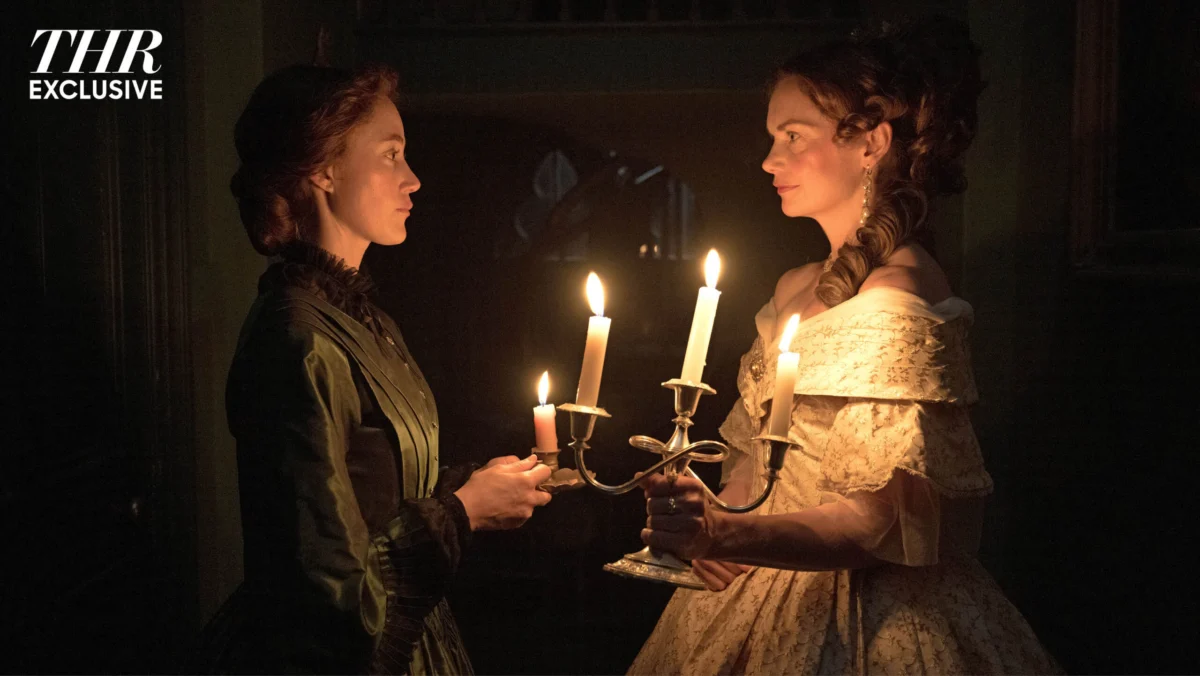
Set against the austere backdrop of 1858, Victorian Psycho delves into the dark undercurrents of Victorian society and the human psyche. The film is an adaptation of Virginia Feito’s novel, with Feito herself penning the screenplay, ensuring a faithful yet cinematic translation of her unsettling narrative. Monroe’s character, Winifred Notty, arrives at the imposing gothic manor of the Pounds family, ostensibly as the new governess. Her eagerness to please is met with reluctance by the aristocratic matriarch and patriarch, portrayed with chilling precision by Ruth Wilson and Jason Isaacs, respectively. Tasked with the education and supervision of their children, Winifred finds a rare glimmer of connection with Ms. Lamb, a kindly fellow employee played by Thomasin McKenzie, while outwardly maintaining a plucky determination to assimilate into the rigid social hierarchy of the household.
Director Zachary Wigon, known for his incisive character studies and psychological thrillers such as Sanctuary, elaborates on the core conflict driving Winifred’s actions. "It’s fascinating to see an outsider who desperately wants to be an insider, and it’s simply impossible," Wigon observes. "It’s a very, very deep paradox. She will never belong — and she will never stop wanting to belong." This internal struggle, a desire for acceptance clashing with an unyielding reality, forms the psychological crucible from which the film’s horrors emerge.
The narrative soon spirals into a macabre sequence of events. People vanish, and blood begins to stain the pristine surfaces of the manor – the garden, the hallway, the kitchen – transforming the gothic edifice into a stage for escalating terror. This is no mere tale of an eccentric employee losing her composure; Wigon teases the audience with the revelation that Winifred Notty is, in fact, a serial killer. He recalls his initial encounter with the source material: "I remember reading the manuscript of the novel, and it’s like, ‘What is this woman going to do?’" This immediate sense of dread and curiosity, central to the novel, was something Wigon aimed to translate visually. The aesthetic challenge, he noted, was to "do something set in 1858, but with a contemporary style," blending historical authenticity with modern cinematic sensibilities to create a truly unique horror experience.
Crafting a Killer: Monroe’s Meticulous Preparation
To embody a 19th-century serial killer, Monroe embarked on an intensive preparatory regimen. This included weekly virtual rehearsals with Wigon, meticulously blocking scenes and refining character nuances. A crucial element was mastering the English accent, coupled with a precise adjustment of mannerisms and body language to authentically convey the rigid social decorum of the Victorian era. Monroe even suggested the addition of painfully visible prosthetic teeth, a detail that further accentuates Winifred’s unsettling nature and physical transformation.
The physical demands of the role were equally daunting. Monroe recounted a particularly memorable sequence filmed at 4:30 in the morning, requiring her to be covered in fake blood in freezing temperatures for an elaborate technocrane shot. Such experiences highlight the actor’s commitment to delivering an unvarnished portrayal. "I had every scene memorized because you’re running the script so many times — it was so ingrained in my head, and I could still recite probably for years to come," Monroe shared, emphasizing the profound imprint the character left on her. This level of dedication extended to her emotional connection with Winifred, leading her to confess, "This character might be the character that I miss the most." This sentiment, coming from an actress who has portrayed a wide array of memorable characters, speaks volumes about the depth and complexity of Winifred Notty.
Monroe’s performance was further enriched by the dynamic interplay with her principal costars. Jason Isaacs’ portrayal of Mr. Pounds is described as slithery and unpredictable, his gaze conveying a discomfiting interest in Winifred. Wigon lauded Isaacs, a veteran of projects ranging from Harry Potter to The White Lotus, for his captivating and unusual choices. Ruth Wilson, as the matriarch, embodies a "desperate shit-stirrer," a performance that deeply impressed Monroe. "Some of my favorite scenes that I’ve ever filmed in my entire career were with Ruth," Monroe revealed, admitting to being "blown away" by Wilson’s challenging and nuanced portrayal.
The most intriguing relationship, however, is Winifred’s bond with Ms. Lamb, played by Thomasin McKenzie. In a world where Winifred is largely met with disgust and incomprehension, Ms. Lamb offers a rare moment of genuine connection. "For the first time, she feels this bit of connection with a person," Monroe explained. This interaction complicates Winifred’s characterization, revealing a relatably human desire for companionship beneath the veneer of an unhinged murderer. The tension then shifts from simply witnessing her actions to contemplating the profound implications if she were to achieve, or fail to achieve, the acceptance she so desperately craves. This nuanced exploration of a killer’s inner world promises to elevate Victorian Psycho beyond conventional horror tropes.
The Volatile Path to Production: From A24 to Bleecker Street
The journey of Victorian Psycho to the screen was as intricate as its narrative. The project originated organically from a prior collaboration between Zachary Wigon and Virginia Feito on an unrelated script. Feito’s revelation of her impending novel prompted a swift pivot, with the duo fast-tracking a screen adaptation. The initial momentum saw the rights acquired by A24, the indie powerhouse known for its distinctive and often genre-redefining films, with Margaret Qualley initially attached to star.
However, the volatile landscape of independent filmmaking led to a significant evolution of the project. The original setup gradually dissolved, resulting in a change of distributors and lead actress. Wigon candidly addressed these shifts: "It changed distributors, it comes with the territory of the volatile nature of independent filmmaking." The film ultimately found its home with Bleecker Street, a distributor recognized for its curated selection of independent dramas and arthouse features, with Maika Monroe stepping into the lead role. Wigon expressed immense satisfaction with this new partnership: "We’re enormously pleased with all the support that Bleecker has given me to bring the film into the world."
This transition from A24 to Bleecker Street, while common in the indie sphere, highlights differing strategic priorities among distributors. A24 has a reputation for cultivating a distinct brand identity, often championing auteur-driven, boundary-pushing genre films. Bleecker Street, while also committed to quality independent cinema, has carved out a niche with a slightly broader, albeit still discerning, audience, often focusing on character-driven narratives and critical acclaim. The shift suggests that while the film’s core artistic vision remained intact, the new partnership might have offered a different creative or logistical pathway that better aligned with the project’s evolving needs, ultimately landing a star whose unique intensity perfectly matched Wigon’s vision.
Wigon’s decision to cast Monroe was rooted in her distinctive acting qualities. "She has this very, very intense internal quality, where you can tell that the gears are whirring and there’s a lot going on in the character’s head," he explained. This intrinsic ability to convey complex inner turmoil made her an ideal choice for portraying a serial killer, a character type that inherently invites audience speculation about their motivations and internal landscape. "I thought it would be perfect for a serial killer because we’re always wondering what’s going on in their head — that’s why this whole industry of nonfiction TV shows and whatnot exists about trying to understand the phenomenon," Wigon elaborated, drawing a parallel between the film’s psychological depth and the societal fascination with criminal psychology.
Wigon’s "Demented" Vision: Precision in Filmmaking
The distinctive "arch-horror-comic tone" of Victorian Psycho evolved during the post-script stages of the film’s development. Wigon describes his initial approach as almost mathematical. "It’s a little bit more like engineering in the beginning," he said. "It’s more about the structural math of, ‘How are we going to fit this narrative and how are these scenes going to be arranged?’" This meticulous structural planning laid the groundwork for the film’s unique aesthetic. Monroe, reflecting on Wigon’s overall approach, succinctly described it with one word: "Demented."
Wigon himself embraced this description, elaborating on the film’s unsettling mood: "When I talked to people about it in the beginning, I said, ‘This is a kind of manic madness.’" The presence of Monroe was instrumental in bringing this vision to life. Wigon lauded her unwavering commitment on set: "Every single time that we got into a setup, it was like Maika had the character in a vice grip. She never really left. You were always right there. It was like a magnet. It was just amazing to watch." This synergy between director and star undoubtedly contributed to the film’s potent atmosphere.
The post-production phase, according to Wigon, was remarkably straightforward, a testament to his exacting pre-production planning. Having had extensive access to the castle where filming took place for prep, Wigon ensured that "almost everything in the shot list [was] pre-visualized before we started shooting." This rigorous approach meant "almost zero coverage" was needed during filming. "You don’t really shoot coverage in these situations because you want to max out what you can get stylistically. If you have a more sophisticated or complicated visual idea that’s going to come at the cost of coverage, that’s fine because you’ve visualized it," he explained, highlighting a directorial philosophy focused on maximizing stylistic impact through precise execution.
Monroe herself was deeply impressed by the final cut. "Zach had such specific visuals and certain shots, and you’re filming it like, ‘That looks cool, hope that works out, seems cool’ — and then seeing it all put together, it really blew me away," she recounted. The experience was also unique in allowing her a degree of detachment from her own performance. "As with most actors, it’s always a bit odd watching yourself, but what was really nice about this project is that it was very different for me — that little part of me was able to take myself out of it." This ability to view her own work objectively underscores the profound transformation she underwent for the role, allowing Winifred Notty to truly emerge as a distinct entity on screen.
Cannes 2026 and Beyond: Implications for Genre Cinema
The premiere of Victorian Psycho at the Cannes Film Festival 2026 is a significant event, signaling the film’s artistic ambition and potential impact. Cannes, known for launching critically acclaimed and often challenging cinema, provides an unparalleled platform for Victorian Psycho to garner international attention and critical assessment. Its inclusion in the festival’s lineup speaks to its perceived quality and distinctiveness, particularly within the often-overlooked horror genre. This premiere could serve as a crucial launchpad for the film’s global distribution, influencing its reception by critics and audiences worldwide.
The film’s blend of period gothic horror with a contemporary serial killer narrative also positions it firmly within the ongoing "elevated horror" movement. This trend, to which Monroe herself has significantly contributed with films like It Follows, emphasizes psychological depth, atmospheric tension, and social commentary over jump scares and gratuitous gore. Victorian Psycho appears to push these boundaries further, using the historical setting to explore themes of societal repression, class struggle, and the insidious nature of psychological decay, all through the lens of a compelling, albeit terrifying, central character.
For Bleecker Street, distributing Victorian Psycho represents a strategic move. While they have a diverse slate, a high-profile genre film premiering at Cannes could broaden their market reach and solidify their reputation for supporting innovative filmmaking. The commercial success of Monroe’s recent projects also offers a strong draw, combining critical prestige with bankable talent.
Ultimately, Victorian Psycho marks a pivotal moment in Maika Monroe’s career, showcasing her willingness to delve into truly dark and challenging territory. Her portrayal of Winifred Notty, complete with prosthetic teeth and an unsettling intensity, promises a performance unlike any she has delivered before. Industry observers and audiences alike will be keenly watching how this "demented" vision, meticulously crafted by Zachary Wigon and powerfully embodied by Monroe, resonates at Cannes and subsequently shapes the landscape of modern horror. It is clear that while Maika Monroe has scared audiences before, Victorian Psycho intends to do so on an entirely new, deeply unsettling level.
Stay tuned for more Cannes 2026 first looks and exclusives as the festival unfolds.