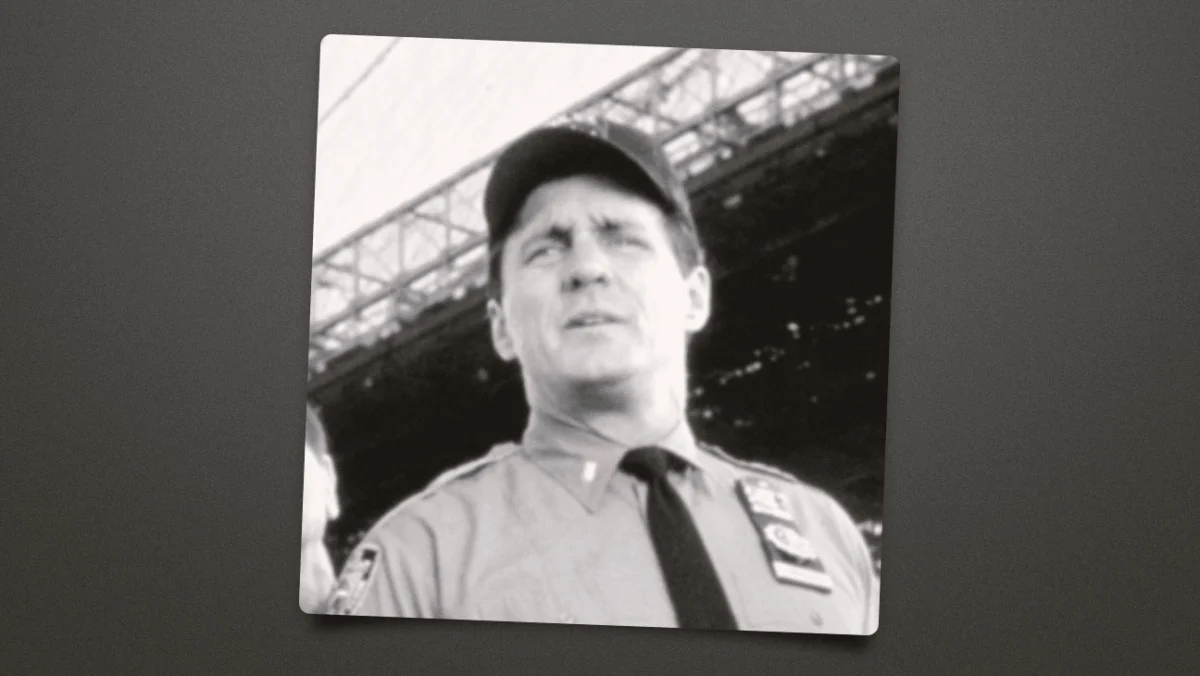
Veteran character actor Beau Starr, whose memorable performances graced iconic films like Goodfellas and the Halloween horror franchise, has passed away at the age of 81. Starr’s brother, Mike Starr, confirmed to TMZ that the actor died on Friday, April 24, 2026, in Vancouver, Canada, due to natural causes. His passing marks the end of a remarkable career that began on the professional football field before transitioning into a prolific and respected presence in both film and television.
A Life of Diverse Pursuits: From Gridiron to Stage
Born in 1944, Beau Starr’s early life was defined by athletic prowess rather than dramatic arts. Before his distinctive face and commanding presence became familiar on screen, Starr pursued a career in professional football, a testament to his imposing physicality and competitive spirit. He played for several prominent teams, including the New York Jets in the National Football League (NFL) and the Montreal Alouettes and Hamilton Tiger-Cats in the Canadian Football League (CFL). This period of his life, though preceding his acting fame, provided him with discipline, resilience, and a grounded understanding of teamwork and performance under pressure, qualities that would later serve him well in the demanding world of entertainment. While specific details of his football career, such as his position or years of play, are not widely publicized, his involvement with professional teams like the Jets, a franchise steeped in NFL history, underscores a foundational athleticism and dedication. The transition from the high-stakes environment of professional sports to the nuanced demands of acting is a path few successfully navigate, yet Starr embraced this dramatic shift with characteristic determination.
His entry into the entertainment industry began in the late 1970s. After his professional football career, Starr found a new calling in the performing arts. In 1980, he honed his craft on the stage, starring in a play at the esteemed American Theater of Actors. This theatrical experience provided him with crucial foundational skills, allowing him to develop his voice, stage presence, and character interpretation in a live setting. The same year, his talent caught the attention of television producers, earning him his first television credit in 1979 on the Canadian sketch comedy series Bizarre. This initial foray into television marked the beginning of a relentless and varied career that would see him become a dependable and versatile character actor, adept at inhabiting a wide array of roles from tough law enforcement officers to sympathetic fathers.
Establishing a Screen Presence: Early Television and Film Roles
Following his debut on Bizarre, Beau Starr steadily built his resume, quickly becoming a familiar face across numerous popular television shows and films throughout the 1980s. His robust build and authoritative demeanor often led to roles as police officers, blue-collar workers, or formidable antagonists, though he consistently brought a nuanced humanity to even the smallest parts.
One of his early notable television appearances came in 1983 with an episode of the highly popular American sitcom Three’s Company. This series, known for its comedic misunderstandings and groundbreaking portrayal of a man living with two female roommates, provided Starr with an early opportunity to showcase his comedic timing, albeit briefly, in a show that was a cultural phenomenon of its era. The same period saw him branching into film, appearing in the 1984 Steve Martin-starring comedy The Lonely Guy. While not a box office smash, the film further expanded his experience in feature films alongside established comedic talent.
The mid-1980s proved to be particularly busy for Starr, as he landed recurring or guest roles on some of the decade’s most iconic action and adventure series. From 1983 to 1985, he appeared in multiple episodes of The A-Team, the beloved action series centered around a group of ex-Special Forces operatives working as benevolent mercenaries. His presence in the series, often as a tough-guy adversary or a supporting figure in the team’s weekly exploits, aligned perfectly with the show’s blend of action, humor, and strong character archetypes. Concurrently, from 1983 to 1986, Starr also made multiple appearances on The Fall Guy, another popular action-adventure series starring Lee Majors as a Hollywood stuntman who moonlights as a bounty hunter. These roles showcased his reliability and ability to seamlessly integrate into ensemble casts, adding authenticity and gravitas to the episodic narratives.
In 1985, Starr also featured in the highly acclaimed crime comedy Fletch, starring Chevy Chase. The film, celebrated for its witty dialogue and Chase’s charismatic performance as an investigative reporter, allowed Starr to be part of a critically and commercially successful project that has since achieved cult status. Later in the decade, in 1988, he appeared in an episode of Highway to Heaven, the heartwarming drama series starring Michael Landon as an angel sent to Earth to help people. This role demonstrated his versatility, moving from action and comedy to more poignant dramatic fare, solidifying his reputation as a capable and adaptable actor willing to tackle a broad spectrum of genres.
Defining Roles: The Halloween Franchise
While his early career was marked by consistent work, it was his entry into the horror genre that brought Beau Starr to a wider audience and etched his face into the collective memory of horror fans. In 1988, Starr joined the iconic Halloween film universe, a franchise that had revolutionized the slasher genre since its inception in 1978. He was cast as Sheriff Ben Meeker in Halloween 4: The Return of Michael Myers, a pivotal film that marked the franchise’s resurgence after the commercially disappointing and critically divisive Halloween III: Season of the Witch (1982), which famously departed from the Michael Myers storyline.
Halloween 4 saw the return of the masked killer Michael Myers, ten years after his apparent demise. Starr’s portrayal of Sheriff Meeker was critical to the film’s narrative, as he represented the beleaguered authority figure attempting to protect the small town of Haddonfield from the relentless evil personified by Myers. Sheriff Meeker was not merely a peripheral character; he was a central figure in the town’s defense, a dedicated lawman burdened by the horrific legacy of Michael Myers. Starr imbued the character with a sense of genuine concern and a weary determination, providing a grounded, human element amidst the supernatural terror. His performance helped anchor the film, providing a believable foil to Myers’s unstoppable force and a protector figure for Jamie Lloyd, the niece of Laurie Strode and the new focus of Myers’s obsession.
The success of Halloween 4, which grossed over $17 million on a modest budget, revitalized the franchise and solidified Starr’s place within its lore. His character’s popularity and importance led to his reprisal of the role in the franchise’s fifth entry, Halloween 5: The Revenge of Michael Myers, released in 1989. In this sequel, Sheriff Meeker continued his valiant efforts to understand and combat Michael Myers, further exploring the character’s psychological toll from battling such an enduring evil. Starr’s consistent performance across both films provided a crucial thread of continuity and a relatable perspective for audiences as Haddonfield once again faced unimaginable horror. His work in the Halloween series cemented his image as a reliable, strong presence in a genre that often demands both vulnerability and resilience from its human characters.
Iconic Supporting Work: Goodfellas and Beyond
The early 1990s brought Beau Starr arguably his most globally recognized role, albeit a supporting one, in Martin Scorsese’s masterpiece Goodfellas. Released in 1990, Goodfellas is widely regarded as one of the greatest gangster films ever made, a cinematic landmark that redefined the genre with its gritty realism, groundbreaking narrative style, and stellar performances. In this Oscar-winning film, Starr played the father of Henry Hill, portrayed by Ray Liotta. Though his screen time was limited, his presence as the disapproving, blue-collar father figure added a crucial layer to Henry’s character development, highlighting the stark contrast between Henry’s respectable family background and his eventual descent into the alluring but dangerous world of organized crime.
His performance, though brief, resonated with audiences and critics alike, demonstrating his ability to leave a lasting impression with economy and authenticity. The film, which earned six Academy Award nominations and won one for Joe Pesci’s unforgettable supporting role, cemented its place in cinematic history and brought Starr to the attention of a broader, more mainstream audience. The impact of Goodfellas on popular culture and filmmaking is immense, and Starr’s contribution, however small, is part of that enduring legacy.
The profound respect Starr garnered from his colleagues was evident in the heartfelt tribute penned by Christopher Serrone, who portrayed the younger version of Henry Hill in Goodfellas. Serrone took to Instagram on Saturday, May 2, 2026, to announce Starr’s passing, sharing a poignant message that underscored Starr’s character both on and off-screen. “It is with a heavy heart I’m here to inform everyone of the very sad passing of Beau Starr. [Mike Starr] asked me to make the announcement,” Serrone wrote. He continued, “Beau enjoyed a rich a meaningful life. He was a son, brother, father, grandfather, actor and NFL/CFL player. Please take a moment to help me remember a great guy. RIP.” This tribute from a fellow actor, who shared a significant cinematic connection, speaks volumes about the personal impact Starr had on those he worked with, highlighting not just his professional achievements but also his personal qualities as a "great guy."
A Prolific Career: Television and Film Versatility
Beau Starr’s career was characterized by its sheer volume and diversity. After his significant roles in Halloween and Goodfellas, he continued to be an incredibly active presence in both television and film, often juggling multiple projects simultaneously. His ability to move seamlessly between genres and mediums was a hallmark of his enduring appeal as a character actor.
In 1990, he secured a starring role in NBC’s crime drama series True Blue, which followed the lives of New York City police officers. For its 12-episode run, Starr was a central figure, further solidifying his reputation for playing authoritative, grounded characters within law enforcement. This role provided him with a sustained platform to showcase his dramatic range and presence, establishing him as a reliable leading man for a network series, even if for a short duration.
His extensive filmography continued to expand throughout the 1990s and into the 2000s, featuring appearances in a plethora of other projects that touched various corners of the entertainment landscape. Notable film credits include Bad Blood (1989), a crime thriller, and the critically acclaimed action blockbuster Speed (1994). In Speed, starring Keanu Reeves and Sandra Bullock, Starr contributed to one of the decade’s most thrilling and commercially successful films, further diversifying his portfolio and demonstrating his capacity to be part of high-profile productions.
On the television front, Starr’s presence remained consistent and impactful. He appeared in the short-lived but intriguing drama 2000 Malibu Road (1992), showcasing his ability to adapt to different narrative styles. He also made a guest appearance on the hugely popular and critically acclaimed police procedural NYPD Blue. This Emmy Award-winning series, known for its realistic portrayal of police work and complex characters, was a significant credit for any actor, and Starr’s contribution further highlighted his capability within gritty, character-driven dramas.
As the new millennium dawned, Starr continued his prolific output. He was featured in the Showtime drama series Leap Years (2001-2002), which explored the lives of a group of friends over five decades. Later, he had a role in the Canadian medical comedy-drama series Doc (2001-2004), starring Billy Ray Cyrus, showcasing his adaptability to different cultural productions and comedic tones. His later career also included appearances in science fiction fare like Final Days on Planet Earth (2006) and the popular comedic detective series Psych (2006-2014), where he once again demonstrated his ability to blend into an ensemble while leaving a distinct impression. These later roles underscored his versatility and enduring commitment to his craft, ensuring he remained a working actor for decades.
Legacy and Broader Impact
Beau Starr’s passing marks the loss of a true character actor, a type of performer vital to the fabric of Hollywood but often unsung. Character actors like Starr are the backbone of countless films and television shows, providing the essential support that elevates leading performances and grounds fantastical narratives in reality. His ability to embody a wide range of roles, from the gruff but honorable Sheriff Meeker to the stern patriarch in Goodfellas, speaks to a profound dedication and talent. He brought an authentic, lived-in quality to every character, making them believable and memorable, regardless of their screen time.
His career trajectory, from a professional athlete to a respected actor, also offers an inspiring narrative of reinvention and perseverance. It highlights the often-unseen pathways individuals take to find their true calling, demonstrating that passion and dedication can lead to success in vastly different fields. Starr’s commitment to both the physicality of sports and the emotional depth of acting showcases a rare blend of discipline and artistry.
The tributes from colleagues, such as Christopher Serrone, emphasize not only Starr’s professional contributions but also his personal character. In an industry often focused on celebrity, the genuine respect and affection shown for Beau Starr underscore the importance of his presence as a human being – a family man, a friend, and a mentor – beyond his on-screen personas. His career spanned nearly five decades, witnessing significant shifts in the entertainment industry, from network television’s golden age to the rise of cable and streaming. Through it all, Starr remained a constant, reliable presence, adapting to new formats and continuing to deliver compelling performances.
Beau Starr leaves behind a rich legacy of work that will continue to be discovered and appreciated by new generations of viewers. His performances in films like Goodfellas and the Halloween franchise will forever be part of cinematic history, while his extensive television credits ensure that his distinctive presence will be remembered across countless hours of programming. His death, attributed to natural causes at the age of 81 in Vancouver, a significant hub for film and television production, brings to a close a life well-lived and a career that enriched the cinematic and television landscape for decades. He will be remembered as a dedicated professional, a versatile talent, and a man who truly enjoyed a rich and meaningful life.