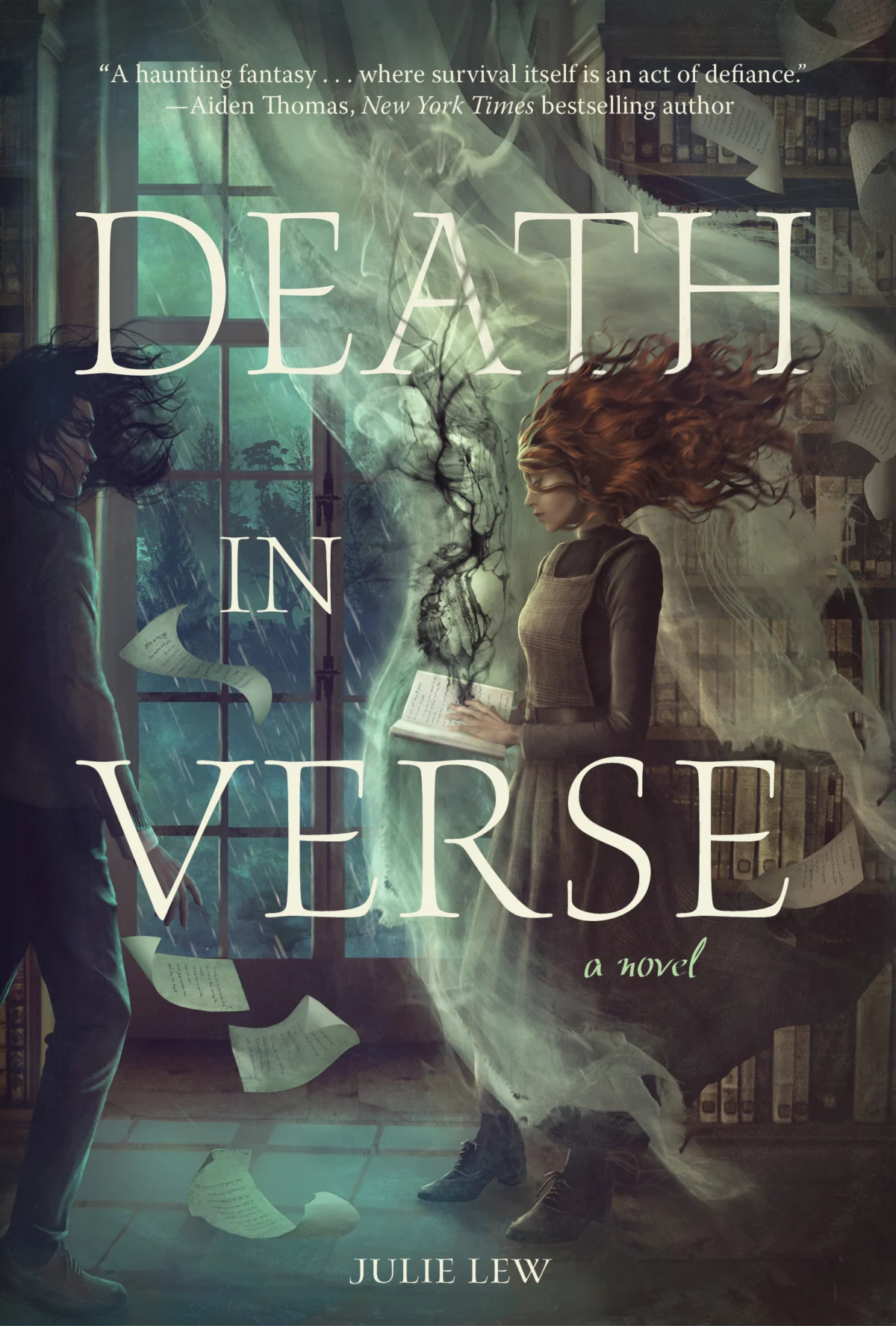
The literary world is abuzz with the imminent release of Julie Lew’s debut young adult novel, Death in Verse, set to debut on September 22, 2026, from Union Square & Co. The novel plunges readers into a chilling mystery where magic, poetry, and peril intertwine, promising a captivating narrative for fantasy and thriller enthusiasts alike. The publisher has released an exclusive excerpt and the striking cover art, designed by Jill Turney with illustration by Marcel Bolivar, offering a tantalizing glimpse into the dark and enchanting world Lew has crafted.
A Mysterious Disappearance and a Cryptic Invitation
The story centers on Bronte Cade, a seventeen-year-old thrust into a desperate search for her missing mother. The only tangible clue left behind is an enigmatic invitation to a prestigious retreat for magical poets, the Radley School of Poetry. Driven by a fierce determination to uncover the truth, Bronte embarks on a perilous journey, adopting her mother’s identity as the esteemed Dr. Sappho Cade to infiltrate the exclusive institution.
However, upon arriving at the Radley School, located on the remote Baron Rock, Bronte finds the island eerily abandoned. She is met by only six other bewildered attendees, a fragment of an unfinished poem, and an anonymous host whose chilling pronouncements are delivered through an enchanted gramophone. The ultimatum is stark: complete a mysterious spell by deciphering the poem, and they might escape on the next ferry. Failure to do so carries a fatal consequence. The stakes are immediately raised as Bronte grapples with a critical disadvantage: she possesses no magical abilities, making her an anomaly among the alleged magical poets.
The Radley School: A History of Enchantment and Secrecy
The Radley School of Poetry, as depicted in Death in Verse, is more than just an academic institution; it is a sanctuary for those who wield magic through verse. Historically, such institutions have been shrouded in an aura of exclusivity and arcane knowledge. The narrative hints at a long-standing tradition of Radley funneling graduates into powerful positions within the Consortium, a self-proclaimed "enlightened" organization that, until fifty years prior to the novel’s setting, had legally restricted women from practicing magic. This historical context underscores the societal shifts and potential underlying tensions within the magical community.
The school’s isolated location on Baron Rock, accessible only by a treacherous sea passage, further emphasizes its detachment from the ordinary world. This deliberate isolation likely serves to protect its secrets and its inhabitants, but in this instance, it creates a claustrophobic trap for the unsuspecting guests. The description of the journey to the island, battling a tempestuous sea and navigating dense fog, immediately establishes the perilous nature of the Radley environment.

A Gathering of Suspects and a Rising Body Count
As Bronte attempts to navigate this dangerous masquerade, she finds herself allied with a seemingly unlikely companion, the "infuriating yet brilliant" Marlowe Fang. Together, they must unravel the identity of their host and the sinister plot unfolding around them. The excerpt reveals that Bronte is not the only one harboring secrets. Among the six other poets are individuals with diverse backgrounds and potential motivations:
- Ambrose Hurst: A seemingly amiable former student, carrying a worn volume of poetry. His initial warmth offers a brief respite from the pervasive unease.
- Freya Blake: A mysterious young woman who remains reserved, adding to the enigma of the group. Her statement, "I don’t practice magic," sets her apart.
- Percy Barrett: An auditor from the Consortium’s main branch, characterized by his peevish demeanor and prejudiced remarks, highlighting potential internal conflicts within the magical governing body.
- Agatha Plath: An elderly former nurse, embodying a grandmotherly presence, who offers practical comfort like a warm fire.
- Eliot Fang: An auditor from District Three, exhibiting a cheerful disposition that contrasts with his twin.
- Marlowe Fang: Eliot’s twin, a Consortium researcher. Their non-binary identity is noted with a mix of curiosity and commentary from other characters, reflecting evolving societal attitudes.
The initial interactions suggest a volatile mix of personalities, each potentially holding a piece of the puzzle or harboring their own hidden agendas. The rising body count, as mentioned in the book’s synopsis, transforms the poetic retreat into a deadly game of survival, forcing Bronte and her hesitant allies to confront the possibility that one of them might be the killer, or worse, the next victim.
The Unfinished Poem and the Host’s Ultimatum
The core of the mystery lies in the unfinished poem, which the host claims is key to completing a spell. The first line, revealed in the excerpt, is: "On evening tide, my love departs to sea." This single line, etched onto a card found within a napkin, serves as the initial clue for the trapped poets. The host’s demand for a completed poem, even a simple quatrain, that produces a "desired effect" suggests a magical outcome tied to poetic creation.
The timeline provided is critical: "You have until the beginning of term to complete the poem." With the first ferry of the new term arriving in six days, the guests are under immense pressure to collaborate and decipher the spell before their time runs out. This deadline intensifies the suspense and forces rapid alliances and potential betrayals.
The host’s distorted voice over the enchanted gramophone adds a layer of unease and mystery. The deliberate distortion of the voice suggests an attempt to conceal identity and amplify the sense of dread. The phrase "You must forgive my ruse. I summoned you here because I need your help" indicates a manipulation, framing the dangerous situation as a collaborative effort rather than an outright threat. However, the subsequent ultimatum—failure to complete the spell means they cannot leave and "Let us hope it finds you alive and well"—leaves no room for doubt about the dire consequences of non-compliance.

Bronte’s Desperate Search and the Consortium’s Role
Bronte’s personal quest to find her mother is intertwined with the larger mystery at Radley. Her mother, Dr. Sappho Cade, was a distinguished figure within the Consortium, suggesting her disappearance may be linked to her professional life or her involvement with the Radley School. Bronte’s attempts to gather information from Consortium headquarters have been met with stonewalling and evasiveness, fueling her suspicion that the organization is aware of more than it reveals.
The mention of her mother’s sparsely furnished studio apartment, a "lair" separate from their shared home, paints a picture of a woman deeply dedicated to her career, perhaps at the expense of personal connections. The discovery of the invitation on a wobbly table in this spartan setting underscores the suddenness and secrecy surrounding her mother’s vanishing act. Bronte’s desperate journey to Radley is a testament to her unwavering love and determination to find her mother, even at great personal risk.
Broader Implications: Magic, Poetry, and Control
Death in Verse delves into themes that resonate beyond the immediate mystery. The novel explores the potent connection between magic and poetry, suggesting that words can hold immense power, capable of shaping reality. The Consortium’s role as a governing body hints at the complex dynamics of power and control within the magical world. The historical context of restricting women’s access to magic raises questions about equality and the evolution of magical societies.
Furthermore, the narrative seems poised to examine the nature of identity and belonging. Bronte’s status as a non-magical individual within a realm of magical poets highlights the challenges of assimilation and the struggle to find one’s place when one doesn’t fit the prescribed mold. The diverse backgrounds and identities of the guests at Radley, including Percy’s prejudiced remarks and the nuanced introduction of Marlowe Fang, suggest a commentary on societal prejudices and the evolving understanding of identity.
The novel’s release is anticipated to spark discussions about the intersection of fantasy, mystery, and social commentary, offering readers a thought-provoking narrative wrapped in an engaging plot. Julie Lew’s background in fantasy and horror, coupled with her stated preference for "darker and queerer" themes, suggests that Death in Verse will likely offer a unique and compelling perspective on these enduring themes. As the release date approaches, the literary community eagerly awaits the full unfolding of this magical, deadly puzzle.