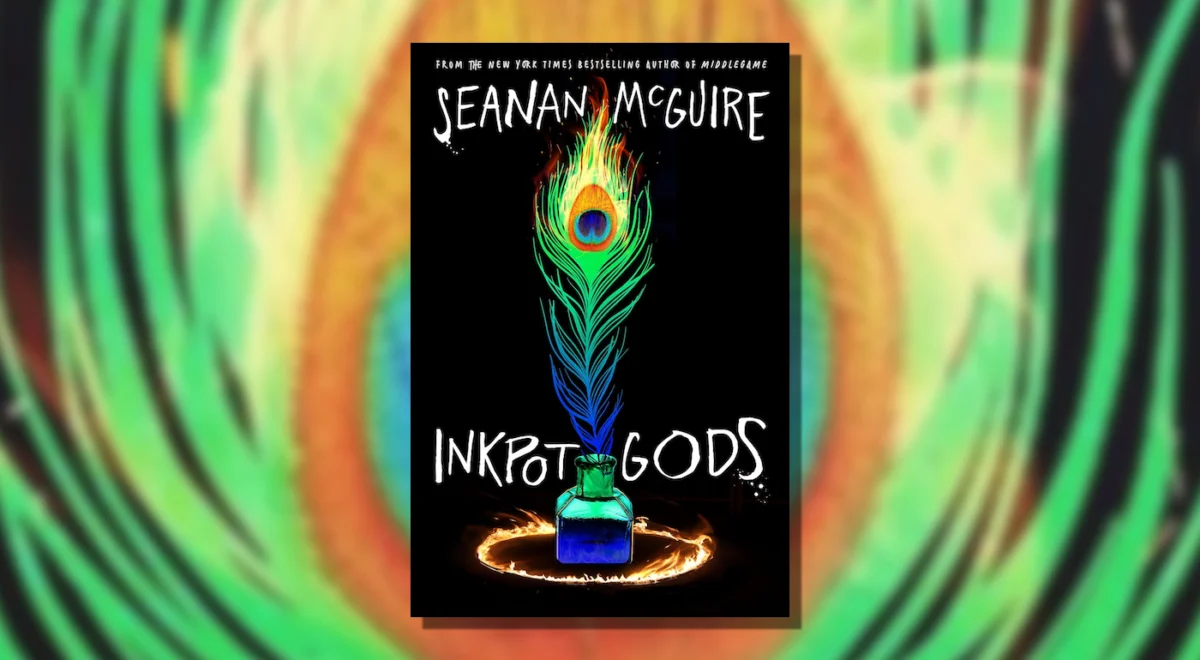
Tor Books is set to release Inkpot Gods, the highly anticipated fourth installment in Seanan McGuire’s Alchemical Journeys fantasy series, on June 9th. The novel promises to delve deeper into the intricate magical world established in previous books, continuing the saga of Asphodel Baker and her profound, world-altering alchemical creations. An exclusive excerpt offers a glimpse into the foundational events that shape this complex narrative, hinting at a legacy of power, consequence, and the ongoing struggle against the shadows of the past.
The excerpt centers on the origins of a lineage born from dark alchemy, set against the backdrop of a world that increasingly mirrors the grim imaginings of its creator. More than a century after Asphodel Baker mastered the art of imbuing alchemically crafted life with potent energy, and subsequently erected the "Impossible City" upon the ruins of Olympus, her descendants find themselves at a critical juncture. This new generation, born into a reality teetering on the brink of a "hellscape," is compelled to confront the sins of their progenitor, seeking to amend the consequences of her formidable legacy. The central question posed by the narrative is whether these modern-day "gods" possess the strength to overcome the evils their maker unleashed, or if they are destined to be undone by her enduring influence.
The Genesis of a Legacy: Elisabet Turner’s Ordeal
The narrative plunges into the past, specifically January 7, 1865, at midnight Eastern Time. This period marks a significant turning point with the revelation that Elisabet Turner is pregnant. The news is met with widespread surprise, as Elisabet has long been perceived as a solitary figure, entirely untouched by conventional romantic or physical relationships. Her reputation precedes her; even those inebriated in local taverns reportedly recoil from her presence, fearing an unspoken claim or a subtle act of "defilement" that could lead to unwanted intimacy. This deep-seated apprehension stems from the precariousness of her very existence, born to an ailing mother, her own survival to adulthood having seemed improbable.
Despite these perceived impossibilities, Elisabet has not only survived but thrived, now carrying a child with no discernible father. In this ostensibly civilized era, accusations of witchcraft are dismissed as antiquated superstition. Yet, the circumstances surrounding Elisabet’s pregnancy invite such whispers. The text posits that if the Devil were indeed seeking brides, Elisabet, driven by a desire for a better life, might be among the first to embrace such a pact. However, her reality is one of profound isolation. Orphaned and now twenty, her physical appearance is described as far from conventional. Two severe bouts of smallpox have left her complexion scarred and pocked, further marred by port-wine stains from birth. A debilitating eye condition and twisted limbs render her unfit for physical labor, a stark contrast to her farming heritage.
An opportunity for a different life, offered by her uncle in Boston, to become a "lady," was refused. This refusal, it is implied, coincided with her first bout of illness, an invitation rescinded by the time of her recovery. This pattern of closed doors and missed opportunities has defined Elisabet’s existence, leading to a growing suspicion among her neighbors that she might, after all, be a witch.
Her daily life is one of quiet routine: walking the village streets, purchasing necessities with dwindling family funds, and gazing at the sky with an unspoken longing. The villagers, observing her enigmatic behavior and her changing physique, speculate whether she understands the profound implications of her condition. Only the village priest, Father Clemence, engages her directly. He emerges from their encounter with a cryptic pronouncement: Elisabet is "serving in an older story than her own, and how she has the telling of it will determine all our fates and futures." This statement, delivered by a man of the cloth, further fuels village gossip, though his position as their spiritual guide ensures he remains largely unmolested by further inquiry. The community, resigned to the inexplicable, awaits the arrival of Elisabet’s child, viewing it as a divine miracle.
Unseen Worlds and Divine Encounters
Despite the villagers’ suspicions, Elisabet Turner is not a witch in the traditional sense. She has not made pacts with dark forces. Her experiences, however, have exposed her to phenomena far beyond the ordinary. She possesses a keen awareness of her own limitations and the harsh realities of her life. The scarring from her illnesses runs deeper than the physical, affecting her internal health and rendering her vulnerable. She harbors a profound skepticism about divine intervention, seeing no grand plan or evidence of God’s design in her persistent misfortunes.
Yet, Elisabet has witnessed undeniable signs of a world unseen by most. She has observed individuals exhibiting extraordinary abilities: women walking through winter adorned with diamond-like ice, men leaving trails of flowers in their wake during summer, and figures emerging from the sea with aquatic features. These encounters have led her to a firm conviction: gods walk the Earth, ancient beings predating established religious texts.
One such divine entity, in the form of an early winter storm, encountered Elisabet. He was a handsome figure, exuding the scent of petrichor and the charged energy of static. He approached her not with revulsion at her appearance, but with acceptance, treating her as a woman and himself as a man. Their encounter in her solitary bed became a moment of profound love and intimacy. The storm’s "lightning" within her flesh was overwhelming, transforming the rain, once a symbol of her loneliness, into a sacred sacrament. This divine union left her pregnant, a "storm cradled in her womb," a beacon of hope that she would no longer be alone. Her only task now is to wait.
The Crucible of Birth and a Mother’s Choice
The narrative then shifts to July 2, 1872, as morning breaks. Elisabet is in the throes of labor, her strength waning. A midwife, a stranger with an unfamiliar accent, assists her. The labor is difficult, and Elisabet senses something is gravely wrong. The midwife reveals the truth: her lover, the storm, was warned of Elisabet’s frail health, but he disregarded the counsel, driven by his own desires.
The midwife presents Elisabet with an agonizing choice: she can save either herself or her infant daughter, but not both. The labor is not going well, and only one can survive. Elisabet, understanding the gravity of the situation, grasps the implications. The midwife explains the reasoning behind the divine intervention: the storm god, recognizing his own time was fading, felt compelled to sow new life. Elisabet is urged to choose life for herself, to embrace a future of happiness and fulfillment. Alternatively, she can choose to sacrifice herself for her daughter, a child of storms who is destined for greatness, a child who "will change the world" and "will be remembered."

Overwhelmed by pain and the impossible decision, Elisabet nods fiercely. Her final whispered question, "Name?", elicits a sorrowful response from the midwife. She offers the name "Ilithyia," a softer truth amidst the harsh realities. Elisabet’s labor, which began at midnight, concludes at noon the following day, claiming her life. Her daughter, Ilithyia, is born, and as Ilithyia, the midwife, extracts the placenta, she faces another critical decision.
She can leave the infant with the villagers, who may or may not treat her kindly, or she can abscond with the child, becoming her sole guardian. The temptation to raise the child herself is strong, as Ilithyia has never lied to a mother in childbirth and is committed to the truth that Elisabet’s daughter will indeed alter the world. However, she recognizes that if she intervenes directly, the change will be "kinder" and claim "fewer lives."
At this pivotal moment, a knock on the door and the voice of the village priest, Father Clemence, inquiring about Elisabet, interrupts Ilithyia’s contemplation. The possibility of Ilithyia taking the child vanishes, replaced by a predetermined path. Accepting the new reality, Ilithyia swaddles the infant and opens the door to the priest. He, with wary grief, understands the tragedy. He will raise the child, Floretta, as his own, attempting to restore his honor by placing her with her uncle in Boston years later. Ilithyia departs, her task complete, heading back to Olympus.
The Unfolding of a Destiny: Floretta Bearse
Seven years later, on July 11, 1872, at 4:18 p.m. ET, the consequences of Elisabet Turner’s sacrifice become increasingly apparent. Floretta Bearse, now a young girl, is a stark contrast to her mother. She is described as tall, long-limbed, with features reminiscent of her namesake flower, always turning towards the sun. Her gentle disposition and melodic voice have begun to attract the attention of village youths, fueling the persistent gossip surrounding her parentage.
The narrative posits that a kinder world might have allowed Floretta to grow up ordinary, unaware of the supernatural forces that shaped her birth. However, the commitment of divine beings to their pronouncements, as exemplified by Ilithyia, ensures that predetermined futures are set in motion.
A delegation of village men approaches Father Clemence, expressing "concern" for Floretta’s upbringing. They describe her as "wild," attributing her behavior to the lack of a female influence and the perceived "temptation" she poses to village sons. Father Clemence, though angered by their thinly veiled accusations, understands the inevitability of their fear-driven agenda. He knows he cannot protect Floretta from the community’s judgment, especially given the whispers about her mother’s mysterious past. He also harbors the secret knowledge that he is not Floretta’s biological father, having taken her in out of a sense of obligation, believing his stewardship had somehow failed Elisabet.
The men, driven by their anxieties, propose a solution: locating Elisabet’s uncle, John Baker, in Boston. This decision marks a significant turning point, setting Floretta on a path toward her maternal lineage.
The Arrival of John Baker and the Weight of Inheritance
John Baker, a formidable figure shaped by Boston’s demanding environment, arrives in the small village. He is Elisabet’s uncle and represents a stark contrast to the pastoral simplicity of his sister’s former home. Tall, strong, and possessing a distinguished bearing, John Baker carries himself with an air of authority and a deep-seated pride. He is a man who has meticulously sculpted his life, leaving little room for sentimentality or extraneous pursuits.
His presence in the village is a consequence of a summons from Father Clemence, a request he found presumptuous and inconvenient. He had no intention of returning to the place where his sister had lived and died in hardship. He views the summons as an intrusion into his affairs, and his initial demeanor is one of cold impatience, tinged with a desire to understand why he has been called upon.
The initial meeting between John Baker and Father Clemence is marked by a palpable tension. Father Clemence, despite his spiritual role, appears somewhat intimidated by Baker’s imposing presence. He attempts to explain his reasons for summoning Baker, highlighting Elisabet’s death and the subsequent care of her daughter. Baker, however, remains brusque, expressing his lack of interest in returning to the village and his assumption that the child, Elisabet’s daughter, had died with her mother.
The revelation that the child, Floretta, survived and has been under Father Clemence’s care for seven years shifts the dynamic. Baker’s stoicism falters, replaced by a sharp, calculating stillness. He questions the priest’s claim of having sent word of the child’s survival, suspecting a deliberate omission. Father Clemence, in turn, explains that the congregation’s growing unease about a priest living with an unrelated young girl has necessitated this contact.
The conversation culminates in Baker’s reluctant acceptance of responsibility for his niece. He dismisses the name "Floretta Bearse" with disdain, intending to provide her with a more fitting name befitting her lineage in Boston. This decision signifies Floretta’s transition from the shadows of her mother’s past to a future shaped by her maternal uncle’s influence. The narrative hints at the complex interplay of divine will, human choices, and the enduring power of lineage as Floretta’s destiny begins to unfold, setting the stage for the events of Inkpot Gods. The story underscores the profound and often perilous consequences of powerful alchemy and the enduring reach of its creators.