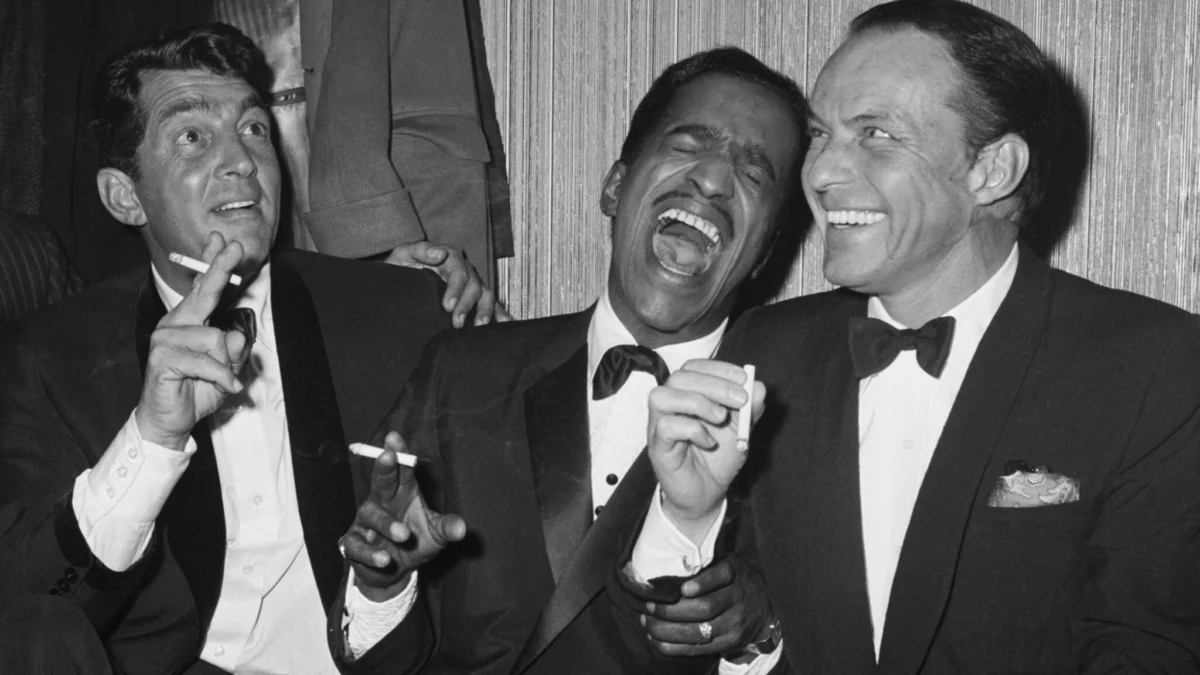
The image of the Rat Pack is indelibly etched into the collective consciousness of American culture: five men in tailored tuxedos, standing under the spotlight of the Sands Hotel’s Copa Room, exuding an effortless blend of charisma, musical talent, and a seemingly bottomless supply of distilled spirits. Frank Sinatra, Dean Martin, Sammy Davis Jr., Peter Lawford, and Joey Bishop represented the pinnacle of mid-century sophistication, a group whose camaraderie appeared as fluid as the cocktails they frequently brandished. However, a historical analysis of their performances reveals a calculated professional rigor that stood in stark contrast to their public image as carefree, boozy raconteurs. While the presence of a bar on stage was a staple of their act, the contents of those glasses were frequently non-alcoholic, serving as props in a carefully choreographed display of "cool" that redefined the entertainment industry in the 1950s and 1960s.
The Architecture of an Image: The Sands and the Summit
The genesis of the Rat Pack’s most famous iteration began in the late 1950s, centering on the Sands Hotel in Las Vegas. While the original "Rat Pack" was a group of friends centered around Humphrey Bogart and Lauren Bacall in Holmby Hills, the version led by Frank Sinatra—often referred to by the members themselves as "The Summit" or "The Clan"—became the definitive cultural icon. Between 1960 and 1965, these five performers created a synergy that transformed Las Vegas from a burgeoning gambling desert outpost into the entertainment capital of the world.
The core of their appeal was the "Summit" at the Sands, particularly during the filming of the 1960 heist film Ocean’s 11. During this period, the group would film during the day and perform two shows at night. The logistics of such a schedule were grueling, requiring a level of physical stamina and mental acuity that was incompatible with the heavy alcohol consumption suggested by their stage personas. It was during these legendary residencies that the use of "stage liquor"—typically apple juice for scotch or water for gin and vodka—became a standard industry practice for the group.
Chronology of the Rat Pack Era (1955–1965)
To understand the evolution of the Rat Pack’s persona, one must examine the timeline of their collective rise:
- 1955: Frank Sinatra’s career experiences a massive resurgence following his Academy Award win for From Here to Eternity. He begins establishing a dominant presence in Las Vegas.
- 1957: Following the death of Humphrey Bogart, the original Holmby Hills Rat Pack dissolves, leaving a vacuum that Sinatra begins to fill with his own circle of associates.
- 1959: Dean Martin and Sammy Davis Jr. become frequent collaborators with Sinatra. The chemistry between the three becomes the commercial engine of the group.
- 1960: The "Golden Year." The filming of Ocean’s 11 brings all five members (Sinatra, Martin, Davis Jr., Lawford, and Bishop) to the Sands. This period establishes the "Summit" format of improvised comedy and high-level vocal performance.
- 1961–1963: The group’s influence reaches its zenith, coinciding with their ties to the Kennedy administration via Peter Lawford, the President’s brother-in-law.
- 1965: The traditional lineup begins to fracture. Political shifts and the changing musical landscape, dominated by the British Invasion, begin to marginalize the classic "crooner" style.
Deconstructing the "Drunk" Persona: The Dean Martin Case Study
Perhaps the most significant contributor to the Rat Pack’s reputation for inebriation was Dean Martin. Known as the "King of Cool," Martin’s entire stage identity was built on the premise of being a "happy drunk." He would often stumble onto the stage, lean on the piano for support, and slur his jokes with a charming, half-lidded grin.
However, historical records and statements from his peers indicate that this was largely a theatrical artifice. Martin was a dedicated professional who valued his privacy and health; he was often the first to leave the late-night parties to play golf early the next morning. By using apple juice in his glass, Martin was able to maintain the comedic timing required for his "drunk" routine while remaining entirely sober. This allowed him to hit difficult musical cues and engage in the rapid-fire banter that characterized the Rat Pack’s live shows. The juxtaposition of his apparent intoxication and his flawless vocal delivery was a testament to his skill as a performer, rather than a reflection of his actual state.
Economic and Cultural Data: The Impact on Las Vegas
The Rat Pack was not merely a musical group; they were an economic powerhouse. During their peak years at the Sands, the financial implications of their presence were staggering:
- Ticket Demand: For a room that seated roughly 600 people, the Sands would receive upwards of 30,000 reservation requests during a Rat Pack engagement.
- Casino Revenue: The presence of the group was a "loss leader" for the hotel. While the performers were paid high salaries—Sinatra reportedly earned $50,000 per week in 1960 (roughly $500,000 in today’s currency)—the hotel recouped these costs through increased gambling revenue. High rollers followed the Pack, and the casino floors were consistently at capacity.
- Real Estate and Tourism: The Rat Pack is credited with legitimizing Las Vegas as a destination for the American middle class. Their presence gave the city an air of Hollywood glamour that helped drive the construction of new resorts throughout the 1960s.
The Role of Sammy Davis Jr. and Civil Rights Implications
While the group’s image was often centered on leisure and vice, their internal dynamics had significant social implications. Sammy Davis Jr., a Black man in a pre-Civil Rights Act America, faced systemic racism even as a headliner. In the early 1950s, Black performers were often barred from staying in the hotels where they performed.
Sinatra used his immense leverage to challenge these norms. He famously refused to play at any venue that would not allow Davis to stay in the hotel or eat in the dining room. This stance forced a level of integration in major Las Vegas resorts years before federal law mandated it. The Rat Pack’s onstage chemistry—where Davis was treated as an equal (and often the most talented) member of the group—served as a subtle but powerful visual argument for racial integration to a national audience.
Professional Analysis: The Illusion of Spontaneity
From a performance theory perspective, the Rat Pack’s greatest achievement was the illusion of spontaneity. To the audience, it appeared as though five friends had simply wandered onto a stage to drink and joke around. In reality, the shows were meticulously structured. Joey Bishop, often called the "Hub" of the wheel, was responsible for the comedic writing and ensuring the "improvised" banter stayed on track.
The "liquor as a prop" strategy was essential to this structure. To maintain the high-energy, two-hour sets required of them, the performers needed to be in peak physical condition. The substitution of water or juice for alcohol allowed them to perform the "party" without the physiological consequences of one. This professional discipline ensured that the brand remained untarnished by the potential messiness of actual public intoxication, which could have led to missed cues, vocal strain, or legal liabilities for the venues.
Broader Cultural Legacy and Modern Implications
The legacy of the Rat Pack extends far beyond their discography or filmography. They pioneered the concept of the "lifestyle brand" before the term existed. They sold an aspirational version of masculinity that emphasized friendship, sartorial excellence, and a relaxed attitude toward life’s pressures.
Today, the influence of the Rat Pack can be seen in the way modern celebrity "squads" or ensembles are marketed. The idea that a group of stars is more valuable together than apart is a direct descendant of the Sands "Summit" model. Furthermore, the "cocktail culture" they championed continues to experience periodic revivals, proving the enduring appeal of the mid-century aesthetic they helped define.
In conclusion, the Rat Pack’s association with alcohol was a masterclass in stagecraft. By utilizing the glass and the bar as symbols of leisure, they created an atmosphere of intimacy and rebellion that resonated with a post-war audience seeking escapism. The revelation that their onstage drinking was often a facade does not diminish their legacy; rather, it highlights the immense professional skill and calculated effort required to make the difficult task of being "cool" look so entirely effortless. Their true "spirit" lay not in the bottles on the stage, but in the disciplined chemistry that allowed them to dominate the American entertainment landscape for over a decade.