The 2026 Cannes Film Festival marked the debut of Parallel Tales, the latest feature from Academy Award-winning director Asghar Farhadi. This French-language production, which runs for 139 minutes, represents a significant departure for the Iranian filmmaker, known for his tightly wound domestic dramas set in Tehran. Starring a powerhouse ensemble including Isabelle Huppert, Virginie Efira, Vincent Cassel, and Pierre Niney, the film explores the blurred boundaries between creative fiction and lived experience. While the project arrived with significant anticipation given Farhadi’s pedigree, the critical response following its premiere has highlighted a narrative of two halves—one a vibrant, camp-adjacent exploration of voyeurism and the other a protracted, repetitive meditation on the consequences of narrative interference.
Narrative Architecture and Plot Development
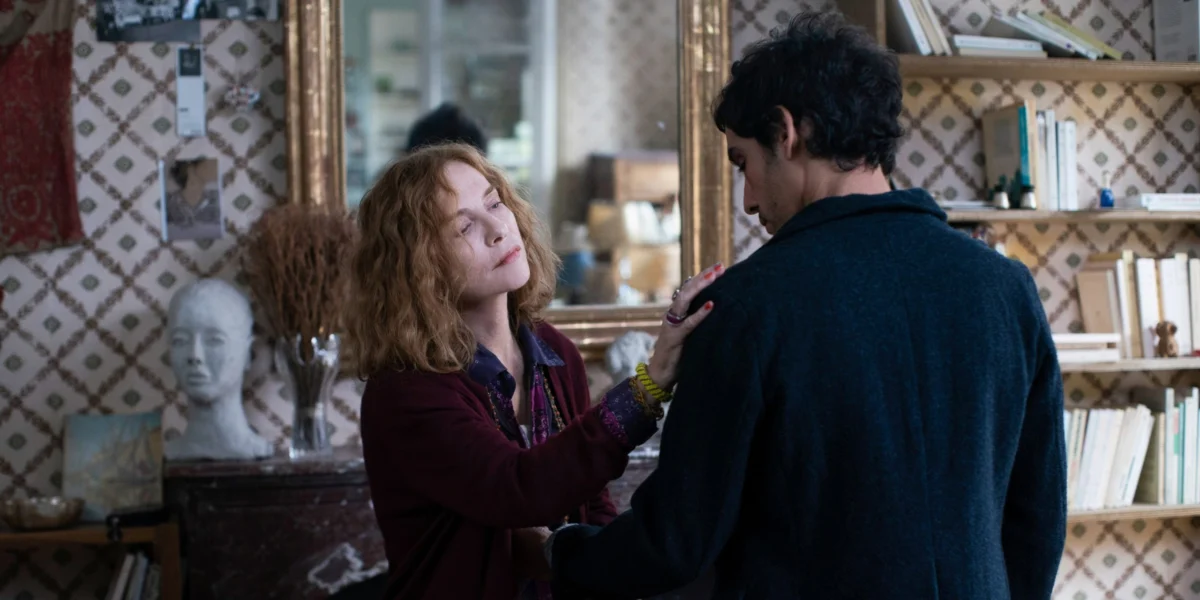
The film’s first act centers on Sylvie, portrayed by Isabelle Huppert, a reclusive and eccentric novelist living in a cluttered, sprawling apartment in Paris. Struggling with writer’s block and a lack of inspiration for her upcoming project, Sylvie turns her gaze outward. Utilizing a telescope, she begins spying on the residents of the building across the street. Her primary subjects are a trio of foley artists who work from a home studio, creating sound effects for various film productions.
Sylvie begins to construct a fictional world based on her observations, filling in the gaps of their lives with melodramatic flourishes. In her mind, she rebrands the neighbors: the blonde woman she observes becomes "Anna" (Virginie Efira), whom Sylvie imagines with dark hair. She casts the younger man as Christophe (Pierre Niney), Anna’s husband, and the older man as Pierre (Vincent Cassel), Anna’s secret lover. These sequences are presented to the audience as stylized vignettes, characterized by a moody blue filter and heightened romantic tension. Farhadi uses these segments to contrast the "glamour" of fiction with the mundane reality of the foley artists’ actual work, which involves using household objects to mimic animal noises rather than the erotic soundscapes Sylvie imagines.
The narrative shifts gears dramatically when Sylvie’s editor, played in a brief cameo by Catherine Deneuve, rejects the manuscript. The focus then moves to Adam (Adam Bessa), a young man who enters Sylvie’s orbit after a chance encounter on the Paris Metro. Adam eventually gains access to Sylvie’s unfinished work and begins to manipulate the real-life subjects of her novel, leading to a collision between the imagined drama and the actual lives of the neighbors.
Production Context and Directorial Style
Parallel Tales marks Farhadi’s third major venture into European cinema, following the 2013 French-language film The Past and the 2018 Spanish-language feature Everybody Knows. Farhadi, who wrote the screenplay alongside Massoumeh Lahidji, continues his career-long fascination with the subjectivity of truth and the ripple effects of small deceptions. However, where his previous works like A Separation and The Salesman relied on realistic, high-stakes moral dilemmas, Parallel Tales adopts a more meta-narrative approach.
The film’s production design emphasizes the claustrophobia of Parisian apartment living. Sylvie’s flat is a character in itself—overstuffed with books, broken glass, and the detritus of a long career. The cinematography by Farhadi’s long-term collaborators utilizes distinct visual languages to separate the layers of the story: the "reality" of the foley studio is lit with naturalistic, flat tones, while Sylvie’s "fictions" are saturated and atmospheric.
Technical Deep Dive: The Role of Foley Artistry
A significant portion of the film’s midsection is dedicated to the craft of foley artistry, providing a rare cinematic look at the post-production process. The characters played by Efira, Niney, and Cassel are shown meticulously recreating sounds for nature documentaries and independent films. This technical element serves as a metaphor for the film’s larger themes; just as foley artists use artificial means to create a sense of reality for an audience, Sylvie uses her limited observations to construct a "real" emotional world for her readers.
The contrast between the foley artists’ professional precision and the messy reality of their interpersonal dynamics (or lack thereof) provides much of the film’s early irony. In one sequence, the trio is seen using a spring mattress to create sound for an explicit scene in Sylvie’s imagination, only for the film to reveal they were actually mimicking the flapping of bird wings for a nature sequence. Industry analysts have noted that these scenes offer a "film-within-a-film" appeal that specifically targets cinephile audiences.
Critical Reception and Performance Analysis
Isabelle Huppert’s performance has been a focal point of early reviews. Critics have described her portrayal of Sylvie as "borderline camp," noting her idiosyncratic movements and the dramatic flair she brings to the role of the voyeuristic author. The scene in which she lights a cigarette has already garnered attention for its unique choreography, signaling a departure from Huppert’s typically more reserved dramatic roles.
However, the film’s reception has been tempered by its pacing and structural choices. The transition from the first half, dominated by Huppert’s Sylvie, to the second half, which focuses on Adam Bessa’s character, has been described by some critics as jarring. The second act’s repetitive nature—exemplified by recurring scenes involving a cleaning lady discussing her physical ailments—has led to discussions regarding the film’s 139-minute runtime.
Adam Bessa’s portrayal of Adam has been characterized as unsettling and enigmatic. His character serves as the catalyst for the film’s darker turn, moving the story from a whimsical exploration of creativity into a more sinister examination of manipulation. While Bessa’s performance has been praised for its intensity, the screenplay’s shift toward a more explanatory tone in the final act has been cited as a potential weakness.
Chronology of Development and Release
The development of Parallel Tales began in late 2023, shortly after the conclusion of the international tour for Farhadi’s previous film, A Hero. Filming took place entirely on location in Paris over the course of four months in 2025.
- September 2024: Project announcement and casting of Isabelle Huppert and Vincent Cassel.
- January 2025: Principal photography begins in the 10th Arrondissement of Paris.
- June 2025: Post-production commences, focusing on the intricate foley and sound design required for the film’s meta-elements.
- May 2026: World Premiere at the Cannes Film Festival in the Competition section.
The film is slated for a theatrical release in France in late 2026, with international distribution rights currently being negotiated by major studios.
Industry Implications and Broader Impact
The premiere of Parallel Tales at Cannes highlights the ongoing trend of celebrated international directors moving toward multi-national co-productions. For Farhadi, the film represents an attempt to blend his signature psychological depth with a more experimental, European art-house aesthetic.
From a market perspective, the presence of high-profile stars like Cassel and Efira ensures that the film will have significant draw in Francophone territories. However, the film’s challenging structure may impact its performance in broader international markets. The themes of voyeurism and the ethics of storytelling are particularly resonant in an era dominated by true-crime obsession and the blurring of private and public lives through social media.
Furthermore, the film’s focus on the labor behind cinema—specifically the foley artists—comes at a time of increased awareness regarding the technical crafts within the industry. By highlighting these "invisible" workers, Farhadi adds a layer of commentary on the nature of cinematic truth.
Official Statements and Reactions
During the Cannes press conference, Asghar Farhadi addressed the film’s dual structure, stating that the intention was to mirror the way stories often "get away" from their creators. "We start with a vision of how we want a story to go," Farhadi remarked through a translator, "but reality has a way of asserting itself in ways that are often inconvenient and sometimes destructive."
Isabelle Huppert commented on the "physicality" of her role, noting that the character of Sylvie required a balance between intellectual arrogance and physical fragility. "She is a woman who lives in her head, so when the world outside actually enters her space, she doesn’t know how to handle the physics of it," Huppert explained.
Conclusion and Future Outlook
Parallel Tales stands as a complex, if divisive, entry in Asghar Farhadi’s filmography. It succeeds in showcasing the immense talent of its lead performers and offers a fascinating look at the mechanics of sound in cinema. However, its structural pivots and extended runtime suggest a film that is as much a challenge for its audience as it is for its characters. As it moves from the festival circuit to global cinemas, its legacy will likely be defined by its ambitious attempt to deconstruct the act of storytelling itself, even if that deconstruction leads to a narrative that some find "monotonous" in its final stretches. The film’s exploration of how fiction can "surpass reality" remains a poignant, if cautionary, tale for the modern age.