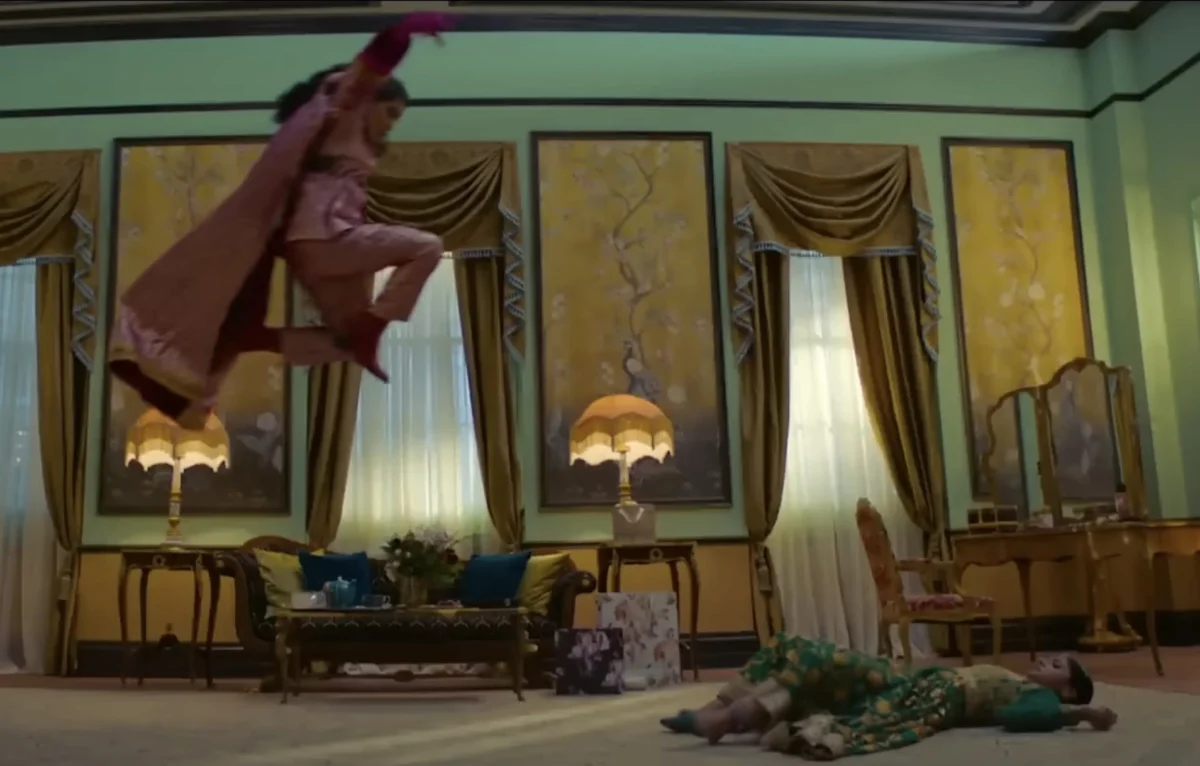
The cinematic landscape has been graced with a truly unique offering that masterfully blends the intricate choreography of martial arts, the nuanced social commentary reminiscent of Jane Austen, and the vibrant tapestry of British South Asian experiences. Nida Manzoor’s directorial debut, Polite Society, has emerged as a film that not only captivates with its explosive action sequences but also resonates deeply through its exploration of sisterhood, personal aspirations, and the complexities of identity. This article delves into the film’s distinctive approach to characterization through combat, its cultural underpinnings, and its broader implications within contemporary cinema.
A Visionary Synthesis of Diverse Influences
Polite Society tells the story of Ria Khan, a teenager wholly consumed by her passion for martial arts, training in Northern Shaolin kung fu with an intensity that mirrors her idolization of figures like Bruce Lee and cinematic universes such as Once Upon a Time in China and Crouching Tiger, Hidden Dragon. Her world, however, is thrown into disarray with the impending marriage of her older sister, Lena, an art school dropout, to the seemingly charming geneticist Salim. What begins as a familial concern quickly escalates into a high-octane fight for Lena’s future, as Ria uncovers a sinister plot involving cloning and a menacing matriarch, Raheela.
The film’s genesis lies in director Nida Manzoor’s own multifaceted identity as a British Asian individual, navigating the intersection of her Indian heritage and her British upbringing. Manzoor has articulated a desire to explore the intense emotional landscape of teenage girls through the visceral medium of action, a concept that forms the bedrock of Polite Society. This creative impulse allows the film to transcend typical genre boundaries, offering a narrative that is simultaneously exhilarating and profoundly human.
The Choreography of Emotion: Martial Arts as Character Revelation
Film scholar David Bordwell, in his observations on classic kung fu cinema, noted the inherent capacity of martial arts sequences to convey character. Polite Society not only embraces this principle but elevates it, utilizing fight scenes as a direct conduit to the characters’ inner turmoil, motivations, and relationships.

The Sisterly Showdown: A Battle of Fear and Love
One of the film’s most pivotal and emotionally charged sequences is the confrontation between Ria and Lena. Occurring after Lena discovers Ria’s interference in her relationship with Salim, this fight is a brutal yet tender portrayal of sibling discord. The scene masterfully interweaves moments of dark humor, exemplified by the resigned demeanor of their parents overhearing the chaos, with the raw, unvarnished reality of a deeply fractured familial bond.
The fight choreography itself mirrors this duality. It’s a hybrid of UFC-style aggression and raw street fighting, executed with a horrifyingly over-the-top flair. Lena, in her desperation, employs a range of vicious attacks, including an elbow strike, a headbutt, and even a chokehold, escalating to burning Ria’s face with a hair appliance. In contrast, Ria, typically a fiery and assertive character, adopts a more defensive posture. This strategic choice speaks volumes about her respect for Lena and her profound attachment, highlighting that her objective is not to inflict harm but to protect her sister. Ria’s use of Brazilian jiu-jitsu-like grappling aims to subdue Lena rather than injure her, and her retaliatory bite is a desperate act only when Lena’s chokehold becomes life-threatening.
The fight culminates not in a decisive victory, but in Lena’s tearful confession. The brutal exchanges have pushed her to reveal her deep-seated fear of inadequacy as an artist, which has driven her to seek refuge in marriage. This heartbreaking revelation underscores Manzoor’s intention for this to be the "bloodiest" fight, signifying that siblings possess the unique ability to inflict the most profound emotional wounds. The scene powerfully illustrates how conflict, even physical, can unearth vulnerabilities and truths that remain hidden in times of peace.
A Bollywood Homage with a Sinister Edge: The Wedding Dance
Perhaps one of the most visually arresting and thematically significant scenes is Ria’s diversionary dance at Lena’s wedding. This sequence is a direct homage to Sanjay Leela Bhansali’s 2002 Bollywood epic, Devdas. Specifically, it references the iconic performance of Chandramukhi, portrayed by Madhuri Dixit Nene, in a vibrant green sari, dancing to the song "Maar Daala." The song’s chorus, translating to "my joy is killing me," imbues Ria’s seemingly celebratory performance with an ominous undertone.
Manzoor artfully integrates martial arts elements into the traditional Bollywood choreography. Ria infuses the familiar dance movements with a fierce martial intent, conveyed through her expressions and gestures. At moments, she deviates from the original choreography, incorporating a pose reminiscent of Neo’s dojo sparring with Morpheus in The Matrix, a subtle nod to the film’s science-fiction element. She also pointedly mimics shooting herself in the head while glaring at Salim, a bold and unsettling statement. At other times, the original choreography takes on a new, aggressive meaning within the film’s context. For instance, a graceful slicing motion by Dixit in Devdas becomes a menacing chopping attack when performed by Ria, a stark reminder of her martial prowess.
This fusion of dance and martial arts is a cornerstone of Polite Society‘s innovative storytelling. As film critic and scholar David Bordwell has observed, the wirework in films like Crouching Tiger, Hidden Dragon often possesses a dance-like quality. Manzoor takes this connection further, seamlessly merging the expressive fluidity of Indian dance with the percussive impact of martial arts, creating a visual language that is both culturally specific and universally resonant.
Confronting the "Big Boss": Raheela’s Masterful Menace
The film’s climax sees Ria facing off against Raheela, a confrontation Manzoor intended to feel like a battle against a "Big Boss," the ultimate antagonist. This fight, while mirroring the dynamic of Ria being overpowered as in her fight with Lena, distinguishes itself through its stylistic and emotional depth. Raheela’s movements evoke classic kung fu cinema, characterized by grace, fluidity, and traditional techniques rather than modern brawling. Her slippery, elusive style is a visual metaphor for her deceptive nature.
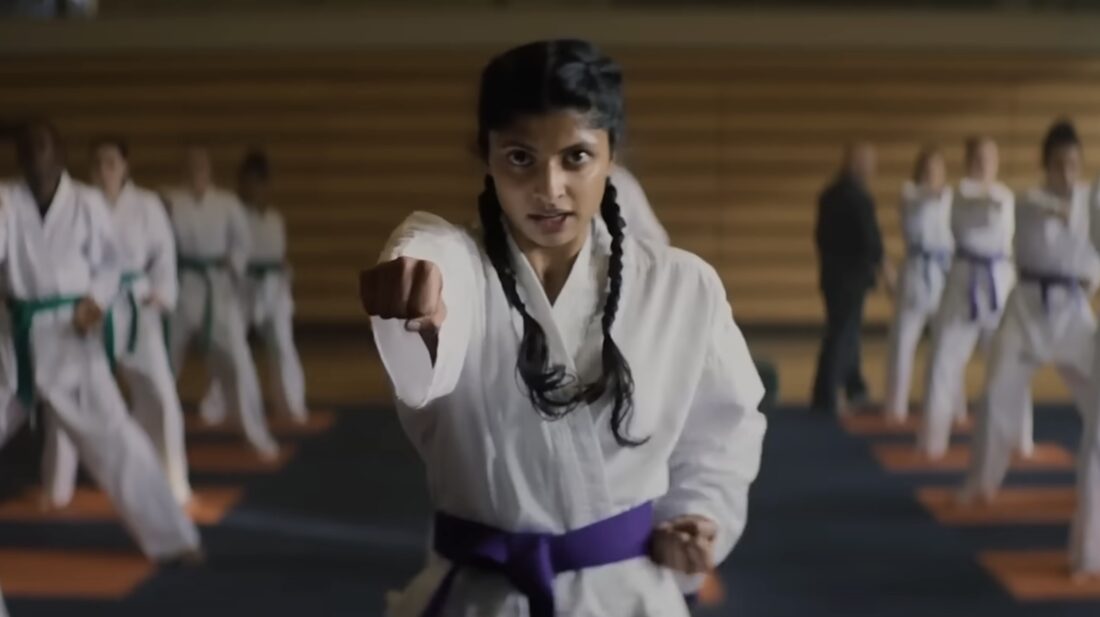
Raheela’s combat prowess is demonstrated through sophisticated blocking techniques using her forearms and a stance that echoes Taijiquan (Tai Chi). She adeptly catches, redirects, and counters Ria’s strikes, a stark contrast to Lena’s more direct aggression. The use of a clothes sash as a weapon—parrying a punch, blinding Ria, and then using it to choke her—highlights Raheela’s malicious ingenuity. Fight arranger Rob Lock stated his intention to emphasize Raheela’s malevolence through her technique, drawing inspiration from Silat, a Southeast Asian martial art class.
Beyond the physical confrontation, Raheela embodies a deeper cultural anxiety. In South Asian families, elders are traditionally accorded immense respect, often addressed as "aunty" or "uncle" regardless of relation. This hierarchical structure can create a grim situation when an elder figure is malicious, forcing a struggle between ingrained respect and the need to confront wrongdoing. Raheela perfectly embodies this duality, her outward politeness masking a sinister undercurrent, a dynamic that resonates with the social stratagems found in Jane Austen’s novels. Much like Lady Catherine de Bourgh attempts to control Elizabeth Bennet, Raheela seeks to dominate Ria. Both protagonists, though outmatched in experience and status, display unorthodox rebellion and an unwavering spirit.
Manzoor also introduces a layer of sympathy for Raheela, acknowledging the limited choices available to women of her generation and the bitterness that can stem from such constraints. This nuance is evident in the film’s conclusion, where Raheela, defeated, reaches out for Lena in despair, her own shattered dream becoming a poignant counterpoint to Ria’s and Lena’s aspirations.
Cultural Context and the Nuances of "Politeness"
The film’s title, Polite Society, is a deliberate and ironic commentary on the surface-level civility that can mask underlying conflict and manipulation, particularly within familial and cultural contexts. Raheela’s chilling creepiness, while evident to all viewers, carries an amplified weight for audiences familiar with the cultural imperative to respect elders, even those who may be malevolent. The scene where Ria visits Raheela’s home to apologize, only to be met with increasing threats culminating in a harrowing waxing scene and an escape from flunkies while Raheela laughs, captures the unsettling powerlessness felt when confronting someone of higher social or familial status. This dynamic, where politeness unravels to reveal antagonism, is a hallmark of Austen’s social commentary and is expertly mirrored in Manzoor’s narrative.
Thematic Resonance and the Crisis of Identity
The film’s thematic core is powerfully encapsulated in the lyrics of the X-Ray Spex song featured in the end credits: "Identity is the crisis, don’t you see?" Each of the central characters grapples with a profound crisis of identity tied to their aspirations and fears. Ria is fixated on becoming a stuntwoman, Lena fears failure as an artist, and Raheela is consumed by a desire for rebirth through cloning, striving to embody a perceived destined self.

Their fighting styles become a visual manifestation of these internal struggles: Raheela’s masterful, subtle movements reflect her calculated malice; Lena’s desperate brutality highlights her fear and vulnerability; and Ria’s tenacious and admirable fighting spirit embodies her unwavering determination. Raheela’s dismissive assessment of Ria’s "big dreams" as "utterly unremarkable" is met with Ria’s perfect, elegant jumping spin kick—a move she has finally mastered—signifying her triumph over self-doubt and her embrace of her true capabilities. Polite Society thus uses martial arts not merely as an action spectacle, but as an integral component of characterization, illustrating how physical struggles mirror the battles fought within.
Broader Impact and Cinematic Significance
Polite Society stands as a significant contribution to contemporary cinema for several reasons. It provides a refreshing and authentic portrayal of British South Asian experiences, moving beyond tokenistic representations to offer a nuanced and multifaceted narrative. The film’s innovative fusion of genres—action, comedy, drama, and science fiction—demonstrates a bold creative vision that challenges traditional genre conventions. By using martial arts as a vehicle for emotional expression and character development, Manzoor has crafted a film that is both intellectually stimulating and viscerally engaging.
The film’s success also highlights a growing appetite among audiences for diverse storytelling and genre-bending narratives. As Polite Society continues to resonate with critics and viewers alike, it paves the way for future filmmakers to explore similar thematic depths and stylistic innovations, further enriching the global cinematic tapestry. Its triumph signifies a pivotal moment in representing complex cultural identities through dynamic and powerful storytelling.