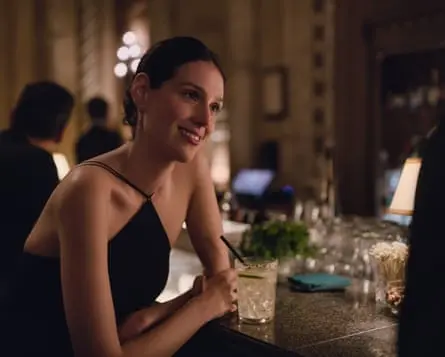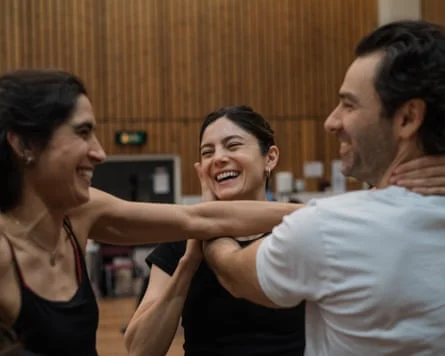
Monica Barbaro, fresh from her Oscar-nominated turn as Joan Baez in James Mangold’s Bob Dylan biopic A Complete Unknown, is stepping onto the hallowed boards of the National Theatre for a revival of Les Liaisons Dangereuses. The acclaimed actress, known for her captivating screen presence, is embracing the visceral challenge of live theatre, a stark contrast to the meticulously crafted worlds of film. "I feel like I’m imitating an American accent, but it really is mine," Barbaro jokes, referring to her current rehearsal process where she adopts an English cadence for her role as Madame de Tourvel. During interviews, however, she asserts her preference for her natural voice, stating, "I feel it’s best to use my own voice." This transition marks a significant evolution in her already impressive career, demonstrating a commitment to expanding her artistic repertoire.
From Folk Icon to French Aristocracy: A Career in Transition
Barbaro’s immersion in the role of Madame de Tourvel, a character etched into literary history as a poignant victim of seduction and manipulation, is a formidable undertaking. The lineage of actresses who have previously embodied this complex figure—including Juliet Stevenson, Michelle Pfeiffer, Annette Stroyberg, and Reese Witherspoon—underscores the weight of the role. "Speaking aloud in a theatre for this big of an audience is new for me," Barbaro admits, a hint of apprehension in her voice. This vulnerability is a testament to her dedication to the craft, as she navigates the unique demands of stage performance.
Her preparation for A Complete Unknown, which saw her embody the legendary Joan Baez, was an equally intensive process. Over several months, Barbaro delved into Baez’s distinctive vocal style, mastered her guitar playing, and even utilized prosthetic teeth to capture the singer’s iconic appearance. Reflecting on the film’s swift production and release, she notes, "We filmed it only a year and a half ago, and it was put out within months. It was really intense. It took a long time for me to land afterwards and feel more like myself again." This period of intense immersion and subsequent readjustment highlights the profound impact of embodying such a significant historical figure.
The film A Complete Unknown explores the deeply influential relationship between Bob Dylan and Joan Baez, a partnership that has long captivated the public imagination. Baez, already a celebrated folk star and civil rights advocate at the time of their meeting, provided a powerful counterpoint to the then-emerging Dylan. Their connection was characterized by a potent creative synergy and intense personal dynamics, making their eventual divergence all the more poignant. Director James Mangold’s portrayal, while fictionalizing certain aspects, sought to honor the crucial role women like Baez and Dylan’s then-girlfriend Suze Rotolo played in shaping his political consciousness. Barbaro emphasizes this point, stating, "Joan and Suze were empowered women. They were a huge part of Dylan voicing his opinions about political matters. They told him what was important to talk about, they were a huge influence on him. And the film honoured that in a way."
Discovering Inspiration in Joan Baez
As Barbaro immersed herself in Baez’s life and work, a profound admiration grew. "I’m just like: ‘Then she marched with Martin Luther King, are we clear on that? Do people know that?’" she exclaims, highlighting Baez’s impactful activism. She was heartened by the audience response, noting, "It was really nice to hear from a lot of people who watched the movie that they were intrigued to find out more about her." A particularly resonant aspect of Baez’s story for Barbaro was their shared mixed heritage. Barbaro, who is of quarter Mexican descent, found a deep personal connection to Baez’s memoir, which candidly explored the complexities of dual identities and the feeling of not fully belonging. This resonated with Barbaro’s own experiences navigating an industry that often sought to categorize her.
The actress finally met Baez in person last year during a performance in San Francisco. The encounter was a surreal experience for Barbaro, who had spent so much time inhabiting her voice. "It was so trippy. It was so strange to hear in person the voice I’d been obsessing over for so long. There’s a worship quality to it; I felt in complete awe of her. It was kind of a whirlwind moment." The two have maintained contact, and Barbaro expresses a desire for a more in-depth conversation now that the pressures of filming have subsided.

The Oscar nomination for her portrayal of Baez was, in Barbaro’s words, "totally surreal," yet it was something she had consciously prepared herself for. She acknowledges a past hesitation to openly desire such accolades, but ultimately embraced the ambition. "It seemed embarrassing to want it, or celebrate it, and I needed to confront that it was something I’d love to have. Then, when it happened – unbridled joy." This recognition served as a significant validation for an actress who initially felt daunted by the caliber of her co-stars and the director on A Complete Unknown. "I had to constantly encourage myself to believe I could take up space. The Oscar nomination was a nice reminder that I did that, I worked hard, I showed up every day."
The Dark Allure of Les Liaisons Dangereuses
Barbaro’s current endeavor, Les Liaisons Dangereuses, places her within the intricate and morally ambiguous world of pre-revolutionary French aristocracy. The National Theatre’s revival, a re-imagining of Christopher Hampton’s acclaimed 1985 adaptation, is directed by Marianne Elliott, known for her work on War Horse and The Curious Incident of the Dog in the Night-Time. Elliott’s collaboration with Hampton on this iteration aims to place a greater emphasis on the female characters at the heart of the drama.
Pierre Choderlos de Laclos’s 1782 epistolary novel, Les Liaisons Dangereuses, has maintained its scandalous and compelling allure for centuries. Once decried as "diabolical," it became a sensation across Europe, even reportedly prompting Marie Antoinette to seek a discreet copy. The narrative unfolds through letters exchanged by the manipulative Marquise de Merteuil and the Vicomte de Valmont, former lovers who engage in a sophisticated game of seduction and ruin for their own amusement. Valmont’s task, set by Merteuil, involves corrupting the innocent Cécile Volanges and, more profoundly, conquering the virtuous Madame de Tourvel. The production’s promotional materials have hinted at the play’s contemporary relevance, with one article proclaiming, "Sex is back."
However, Barbaro’s interpretation of the play’s appeal transcends mere titillation. "I find it to be quite depressing," she states, with a wry laugh. "You can see the characters having fun with the games they’re playing with people. You can see why that world would be enticing. And then at the end you realize: that’s a horrific thing to do to somebody. It’s a proper epic, like a Greek tragedy. The seduction is really just the means of manipulation. What it’s about is power: systemic abuse, corruption and cruelty. Ultimately, you see patterns of abuse repeat themselves." She observes the cyclical nature of power and manipulation within the narrative, noting that even as Tourvel and Valmont meet tragic ends, Cécile survives to seemingly inherit Merteuil’s machinations, a grimly realistic conclusion.
The depiction of elite excess and impunity within the play resonates strongly with contemporary societal concerns. "It was about the corruption of a certain class who could operate with impunity, and fuck over anyone they wanted," Barbaro reflects. She believes the story’s themes are profoundly relevant to modern audiences, citing the recent release of the Epstein files as a stark reminder of the enduring nature of such corruption. "The Epstein files were released a few days before we started rehearsals. It felt palpable. Particularly [Ghislaine] Maxwell’s role in it." Hampton’s revised script further explores the constrained agency of women in pre-revolutionary France, examining Merteuil’s cruelty not merely as villainy, but as a product of her precarious position as an aging woman in a society that devalued her.
For Barbaro, the play’s enduring power lies in its unflinching portrayal of emotional devastation. "As a modern woman with autonomy and independence, the thing I fear most in the world is dying of heartbreak," she confesses. "That’s what makes Tourvel interesting. She can’t revive herself or escape the situation she’s in, her life is essentially ruined. She is controlled by her own shame, and that theme of shame is still relevant today." She acknowledges the difficulty in making such characters relatable to a contemporary audience. "It’s painful to watch Tourvel fall into Valmont’s hands because we know he’s manipulating her. But to get through the play, you have to recognise some part of yourself in someone who would still say yes. You can see someone at their game and still fall in love with them."
Early Influences and a Defining Role
Barbaro’s upbringing in Mill Valley, California, provided a different milieu from the opulent salons of 18th-century Paris. Raised in a family that valued the arts—her father a doctor, her mother a former nurse and avid dance enthusiast—Barbaro was exposed to various creative pursuits from a young age. She dedicated years to ballet training, even studying it at New York University’s Tisch School of the Arts. However, her passion for acting was ignited early, with a formative role as Hermia in A Midsummer Night’s Dream at the age of 12 solidifying her career aspirations. "I didn’t identify as a dancer, I knew I wanted to act," she affirms.
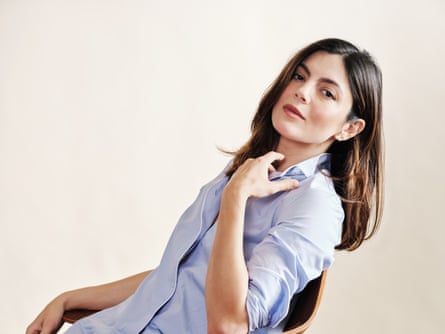
Following her return to California after university, Barbaro honed her craft through commercials and smaller television roles. It was her portrayal of naval aviator Phoenix in the blockbuster Top Gun: Maverick (2022) that catapulted her into the mainstream spotlight. The film, a critical and commercial success, grossed over $1.4 billion worldwide, marking a significant turning point in her career. She also recently completed filming Luca Guadagnino’s drama Artificial, alongside her boyfriend Andrew Garfield, which explores themes of power and ambition in the context of artificial intelligence development, echoing the core concerns of Les Liaisons Dangereuses.
Barbaro draws parallels between her admiration for Joan Baez and her approach to stage acting. She highlights Baez’s ability to "give her whole self" to a performance, even while battling stage fright, embodying a willingness to embrace imperfection and avoid constant self-correction. This is a quality Barbaro strives to embody in her theatrical debut. Her childhood visits to London with her Anglophile mother, filled with performances by the Royal Ballet and explorations of art galleries, have imbued her with a deep appreciation for the cultural landscape, making her current engagement at the National Theatre a particularly meaningful full-circle moment.
Navigating Ambition and Vulnerability
"It feels like going back to school," Barbaro remarks about her experience at the National Theatre. "There’s a part of me that wants to prove my worthiness, and prove to myself that I can do it in all forms. And the National is the ultimate space to break into the more traditional, classic side of this art form. I get to carve out a part of the practice that I haven’t gotten to do yet."
When asked about her personal coping mechanisms, akin to Tourvel’s reliance on religion, Barbaro humorously identifies her "workaholism" and "commitment to my own independence." She views acting as a form of therapy, a means of confronting the deeply ingrained societal pressure to avoid embarrassment. "I was, in a lot of ways, raised with the ideology to never embarrass yourself. But in the theatre, that’s the number one thing you have to be comfortable doing." The inherent vulnerability of live performance, she notes, stands in stark contrast to the manipulative environment depicted in Les Liaisons Dangereuses, where honesty is weaponized. "They say: ‘Never show pity, especially to the vulnerable.’ If you’re subjected to horrifically toxic people, it’s very hard to be shameless about who you are. I think societally, we’re always trying to edge towards less of that."
Despite the heightened attention that has accompanied her recent successes, including her relationship with Andrew Garfield, Barbaro remains grounded in an internal measure of her progress. She emphasizes that even with an Oscar nomination and critical acclaim, she "still auditioned" for Les Liaisons Dangereuses. "We ran scenes one through five yesterday, twice, and—I probably shouldn’t say this—but I went home thinking: ‘I’m a terrible actor and they’re finding out.’" She expresses gratitude for experiencing this level of success later in her career, stating, "I’m so glad this [fame and success] happened to me at this stage in my career, rather than in my early 20s, and thinking somehow I have some superiority or something. The scarcity of work in this industry has terrified me for so long, and it feels like a gift to not be in a state of desperation any more."
As she looks ahead, Barbaro embraces an invigorating sense of uncertainty. "I honestly don’t know right now, which is kind of a weird, exciting thing. It’s nice to feel that and not feel like: ‘Oh no, I’ll never work again.’ At least I know something will be there." With a warm embrace and heartfelt thanks, Barbaro departs to return to the demanding, yet rewarding, work of bringing Madame de Tourvel to life.
Les Liaisons Dangereuses is scheduled to run at the National Theatre’s Lyttelton Theatre in London until June 6th.