Director Chen Yu-hsun, known for his distinctive cinematic vision in films like "Tropical Fish" and "My Missing Valentine," presents his latest feature, "A Foggy Tale," a poignant drama set against the somber backdrop of Taiwan’s White Terror era. The film, which recently screened at the prestigious Udine Far East Film Festival, offers an intimate look at personal resilience and unexpected human connection amidst a period of widespread political repression and fear. Spanning from 1949 to 1992, the White Terror saw the Kuomintang (KMT) government systematically suppress dissent, hunting and executing civilians on suspicion of communist sympathies, leaving an indelible mark on the island nation’s collective psyche.
The Shadow of the White Terror: A Historical Context
To fully appreciate the narrative depth of "A Foggy Tale," an understanding of the White Terror is crucial. This era of political cleansing began on May 19, 1949, when Generalissimo Chiang Kai-shek, having retreated with his Nationalist forces (Kuomintang) to Taiwan after losing the Chinese Civil War to Mao Zedong’s Communists, declared martial law. This decree, initially intended as a temporary measure to safeguard Taiwan against perceived communist infiltration from the mainland, lasted for an astonishing 38 years, making it the longest period of martial law imposed by any nation in the 20th century.
Under martial law, the KMT government, led by Chiang Kai-shek and later his son Chiang Ching-kuo, wielded immense power, effectively suspending constitutional rights and freedoms. The stated objective was to eliminate communist spies and sympathizers, but in practice, the dragnet extended far wider, encompassing intellectuals, artists, political dissidents, and anyone deemed critical of the authoritarian regime. The primary enforcement body was the Taiwan Garrison Command, whose agents conducted arbitrary arrests, interrogations, and trials, often without due process. Torture was common, and confessions were frequently coerced.
The human cost of the White Terror was immense. While exact figures remain debated, historians and human rights organizations estimate that between 140,000 and 200,000 people were arrested, with a significant number, potentially 3,000 to 4,000, executed. Many others endured decades of political imprisonment on Green Island and other detention facilities. The term "White Terror" itself emerged from the contrast with the "Red Terror" of communist purges, denoting the KMT’s anti-communist stance. Its impact was not merely physical; it instilled a deep-seated fear and self-censorship within Taiwanese society, discouraging political discussion and independent thought for generations. Families of victims were often ostracized, their lives forever scarred by the state’s actions. The lifting of martial law in 1987 by President Chiang Ching-kuo marked a pivotal step towards democratization, but the legacy of the White Terror continues to shape Taiwan’s political and social landscape, with ongoing efforts for transitional justice and historical reconciliation.
A Personal Odyssey in a Repressed Land
It is within this fraught historical setting that Chen Yu-hsun meticulously crafts the story of "A Foggy Tale," primarily focusing on individual experiences rather than grand political statements. The film opens in 1953, a year after martial law had firmly entrenched its grip, introducing teenage Yue, a naive country girl. Her idyllic rural life is shattered when her elder brother, suspected of anti-government activities, is revealed to be a fugitive. The quiet tension of their last moments together, as Yue brings him lunch in the fields, subtly foreshadows the impending tragedy.
A year later, the devastating news reaches Yue: her brother has been executed by a firing squad in Taipei. The family’s plight is compounded by her uncle’s cold refusal to allocate funds to retrieve the body, a common practice for families of political prisoners, who often bore the financial burden of their loved ones’ deaths and burials. Armed with little more than a few pennies and a cherished watch—her brother’s last possession—Yue embarks on a solitary and perilous journey to Taipei. Her goal: to earn enough money to claim her brother’s remains and bring him home.
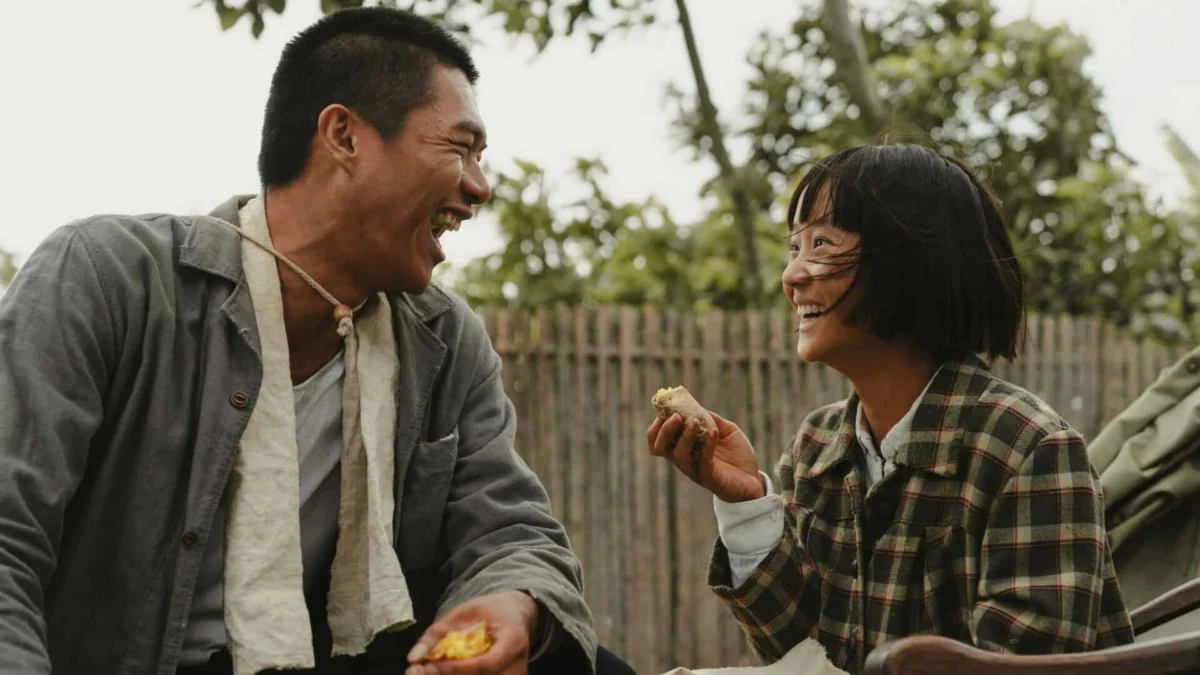
Taipei, however, proves to be a labyrinthine and unforgiving city for the innocent country girl. She quickly falls prey to urban perils, only to be rescued by Chao Kung-tao, a gruff but kind-hearted rickshaw driver. Chao, taking an immediate soft spot for Yue’s vulnerability and resolute spirit, decides to help her navigate the city’s complexities and raise the much-needed funds. This unlikely partnership forms the core of the film’s narrative, evolving into a beautiful and often humorous friendship that transcends their disparate backgrounds and the oppressive societal conditions.
Character Dynamics and Stellar Performances
The success of "A Foggy Tale" rests significantly on the palpable chemistry between its two lead actors, Caitlin Fang as Yue and Will Or Wai-lam as Chao Kung-tao. Their performances are a study in contrasts, each embodying distinct facets of life under the White Terror.
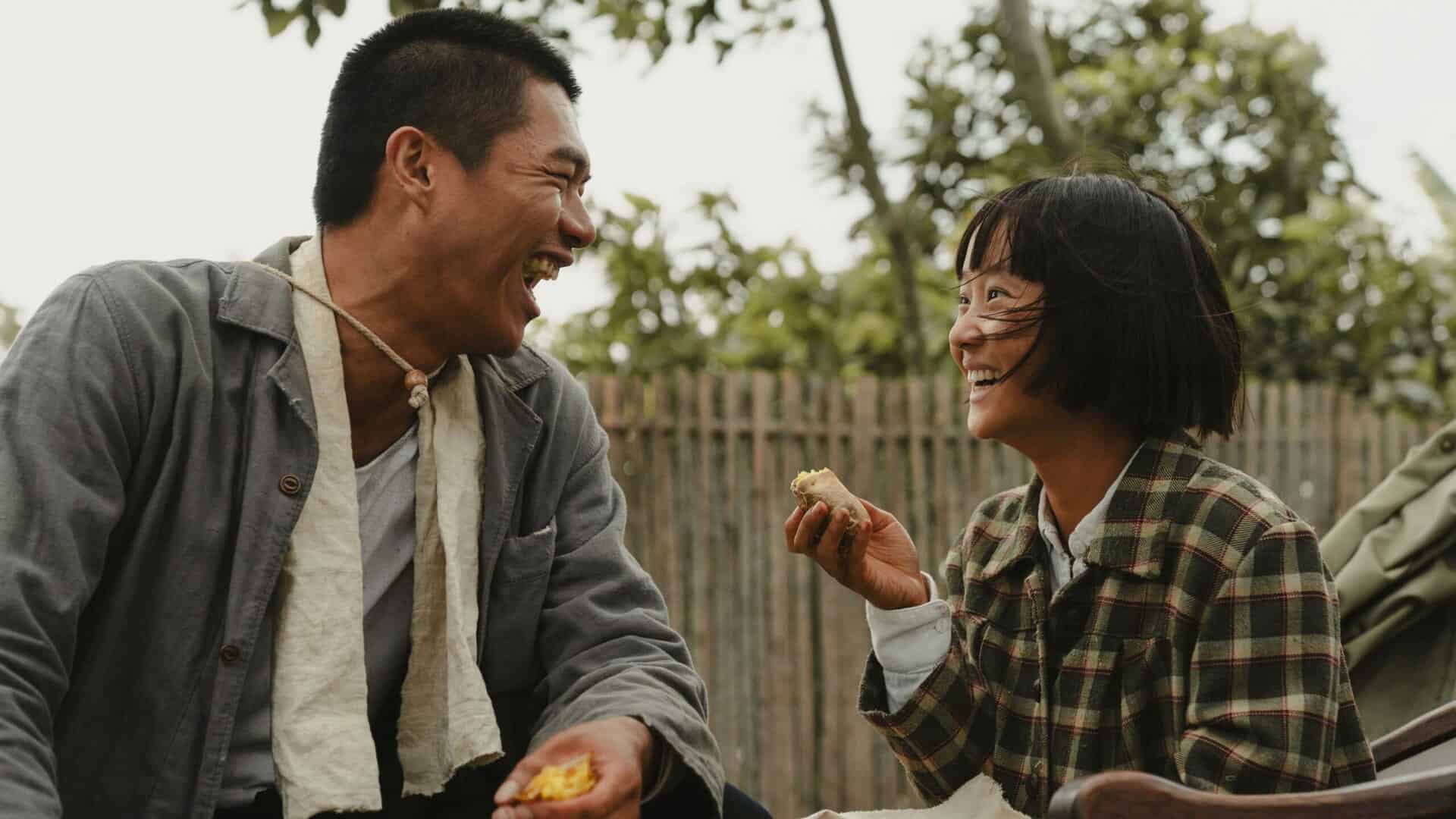
Caitlin Fang portrays Yue with a remarkable blend of wide-eyed innocence and underlying determination. Her character’s naivety is initially startling—she readily trusts strangers and makes impulsive decisions, such as betting her meager savings on a dice game despite clear warnings. Yet, this innocence is not depicted as weakness but as a shield against the harsh realities of her environment, highlighting a resilience born from her singular purpose. Fang masterfully conveys Yue’s emotional journey from a sheltered girl to one who slowly comprehends the moral ambiguities of the world, all while retaining her core purity.
Conversely, Will Or Wai-lam’s portrayal of Chao Kung-tao is loud, brazen, and seemingly carefree. His foul-mouthed demeanor and rough exterior initially paint him as an oafish character. However, as the narrative progresses, Chen Yu-hsun gradually peels back these layers, revealing a deeply troubled man haunted by his own past and the pervasive fear of the White Terror. Chao’s character becomes a crucial lens through which the audience experiences the psychological toll of living under constant surveillance and arbitrary justice. His seemingly cynical outlook is a coping mechanism, and his decision to help Yue stems from a profound empathy that has survived his own hardening experiences. The dynamic between Fang’s gentle, unwavering resolve and Or’s volatile, protective energy creates a compelling and emotionally rich partnership.
A particularly impactful performance also comes from Taiwanese singer/actress 9m88, who plays Hsia, Yue’s elder sister, a dancer and singer in Taipei. Her scene with Yue at a formalin pool, a stark and haunting depiction of the process of preserving bodies, is emotionally resonant and serves as one of the film’s most memorable moments. It powerfully underscores the grim realities faced by families of victims and the dehumanizing aspects of state repression, creating a heartbreaking tableau that is immediately followed by a poignant, heartwarming procession scene, showcasing Chen’s masterful balance of tone.
Artistic Vision and Technical Craftsmanship
Chen Yu-hsun, who also penned the screenplay, demonstrates a nuanced approach to historical storytelling. Instead of employing heavy-handed political commentary, "A Foggy Tale" uses the White Terror as a pervasive, almost atmospheric, backdrop. The repression is not explicitly detailed through expository dialogue but rather felt through subtle details, unspoken fears, and the characters’ lived experiences. This indirect approach allows the film to explore universal themes of loss, resilience, and human connection without alienating audiences unfamiliar with Taiwanese history.
The film’s title itself, "A Foggy Tale," is rich with symbolism. Water, rain, clouds, and fog are repeatedly used in dialogue and visually throughout the feature as metaphors for the suffocating conditions and uncertainty people lived under. This delicate weaving of natural imagery with the political climate effectively conveys the pervasive sense of dread and confusion that characterized the era, making the abstract concept of repression feel tangible.
The technical aspects of the production are consistently impressive. Cinematographer Chen Chi-wen, in collaboration with the art direction team, meticulously recreates 1950s Taipei with an authentic, unromanticized aesthetic. The imagery is deliberately drab and dirty, portraying roads, buildings, and makeshift dwellings with a grimy realism that reflects the social, economic, and political turmoil of the time. The sweeping camera movements guide the audience through narrow alleys, bustling bazaars, and somber funeral homes, immersing them in Yue’s journey. The film’s music, while adhering to the genre’s sensibilities, achieves particular impact in key emotional scenes, notably the aforementioned formalin pool sequence, enhancing its profound resonance.
Critical Acclaim and Broader Implications
"A Foggy Tale" has garnered significant critical attention, particularly at the Golden Horse Awards, Taiwan’s most prestigious film awards. It received an impressive 11 nominations, ultimately taking home four coveted awards, including Best Narrative Film and Best Original Screenplay. This recognition underscores the film’s artistic merit and its ability to resonate deeply within the Taiwanese cultural context, acknowledging its nuanced portrayal of a sensitive historical period. Its screening at the Udine Far East Film Festival further cements its international appeal, allowing a wider audience to engage with this important piece of Taiwanese cinema.
While some minor criticisms have been noted—such as a perceived lack of urgency in Yue’s character at times, which could be attributed to her naive youth, and an epilogue sequence that, despite a surprising cameo, adds a touch of melodrama—these hardly detract from the film’s overall accomplishment. The director’s choice to prioritize the human drama over a strictly historical recounting gives the film a unique texture, differentiating it from more overtly political historical dramas.
"A Foggy Tale" stands as an impactful and important chronicle of a period not often depicted in cinema with such delicate and personal focus. While it may not aim for the epic scope or direct political confrontation of other White Terror films like Hou Hsiao-hsien’s "A City of Sadness" (1989), or even the more recent "Super Citizen Ko" (2022), it offers a vital contribution to the cinematic discourse surrounding Taiwan’s dark past. By centering on the individual struggles and the unexpected bonds forged in adversity, Chen Yu-hsun’s film helps to humanize a complex historical period, fostering empathy and understanding.
The film’s exploration of memory, resilience, and the enduring human spirit against a backdrop of state-sanctioned terror holds significant relevance today. It serves as a reminder of the fragility of freedom and the importance of confronting historical injustices for national healing and identity formation. "A Foggy Tale" is not just a historical drama; it is a testament to the power of individual stories to illuminate broader truths, making it a significant and moving addition to contemporary Taiwanese cinema.