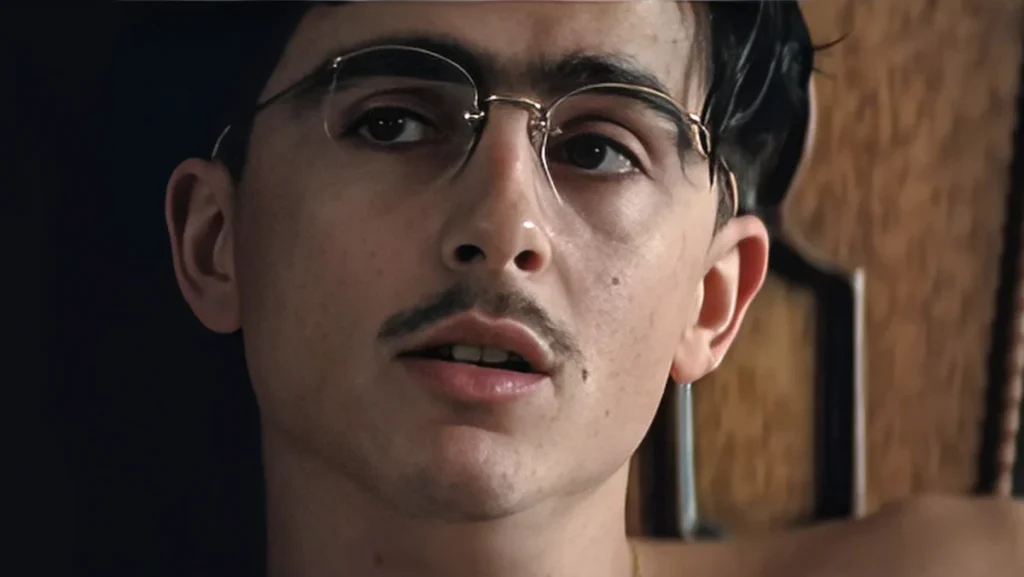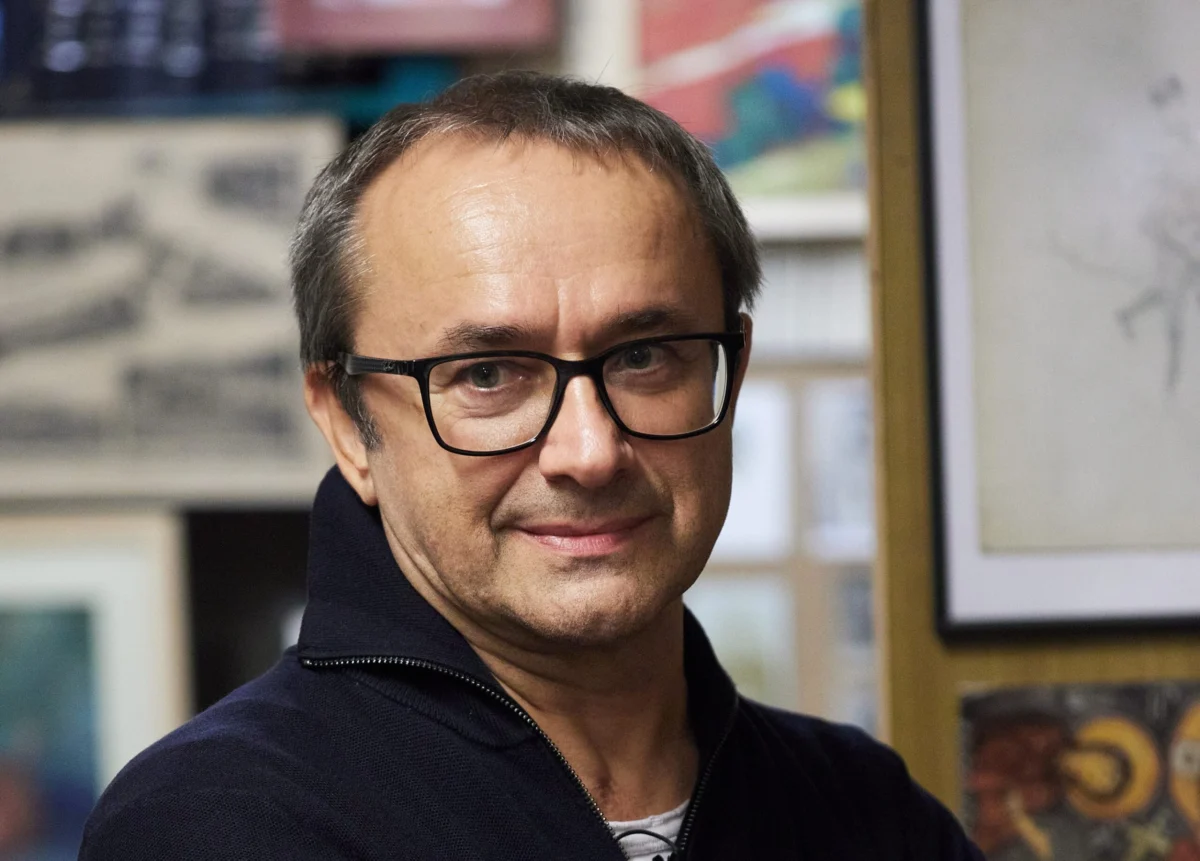
Andrey Zvyagintsev, the acclaimed Russian filmmaker, is set to make a significant return to the international cinematic stage with his new film, Minotaur, premiering at the Cannes Film Festival. This highly anticipated feature marks his first directorial effort in nine years, following a harrowing personal health crisis and amidst profound geopolitical upheaval stemming from Russia’s full-scale invasion of Ukraine. Zvyagintsev, widely recognized as one of his generation’s most incisive chroniclers of contemporary Russian society, brings a renewed sense of urgency and a changed perspective to his craft, channeling both his personal ordeal and his country’s tragic trajectory into this new work.
A Legacy of Uncompromising Realism
In the 2010s, Andrey Zvyagintsev solidified his reputation as a master of cinema, earning widespread critical acclaim and numerous international accolades. His journey to prominence began with his striking 2003 debut, The Return, which captivated audiences and critics alike, winning the Golden Lion at the Venice Film Festival. This early success foreshadowed a distinctive style characterized by stark realism, profound psychological depth, and a relentless examination of human nature against the backdrop of societal decay.
The subsequent decade cemented his status with a powerful trifecta of films: 2011’s Elena, a chilling exploration of moral compromise and class disparity; 2014’s Leviathan, a searing indictment of corruption and the individual’s powerlessness against the state, which earned the Best Screenplay award at Cannes and an Academy Award nomination for Best Foreign Language Film; and 2017’s Loveless, a haunting narrative of marital breakdown mirroring a nation’s emotional desolation, which secured the Jury Prize at Cannes and another Oscar nomination. Through these works, Zvyagintsev demonstrated a singular ability to craft intimate stories that resonated on an epic scale, delivering uncompromising, brutally realist portraits of contemporary Russian life, often exploring themes of justice, faith, family, and the pervasive impact of systemic issues on the individual psyche. His films are renowned for their meticulous cinematography, deliberate pacing, and complex character studies, often leaving audiences with a lingering sense of unease and a profound reflection on the human condition.
A Period of Profound Stasis and Personal Trauma
Following the critical triumph of Loveless, Zvyagintsev’s formidable cinematic momentum encountered an abrupt halt. Several potential future projects struggled to gain traction, with one notable endeavor, The Opposite of Jupiter, initiated between 2018 and 2019 and revisited in 2020-2021, ultimately failing to move past the development stage due to its prohibitively high budget. This period of creative frustration, however, paled in comparison to the life-threatening personal crisis that would soon engulf the filmmaker.
In a candid interview, Zvyagintsev recounted a harrowing 18-month ordeal precipitated by a severe case of COVID-19. The virus inflicted devastating lung damage, rendering him almost entirely incapacitated for an entire year. He described being bedridden, unable to move his hands or legs, a condition that necessitated a medically induced coma lasting an astonishing 40 days. "Forty days of coma is not the best pleasure one can have and enjoy. You don’t exist," he reflected on the profound disassociation from reality. His recovery, which he terms "a complete and utter miracle" and a "resurrection," began with intensive rehabilitation in Germany, eventually leading him to Paris in August 2022, where he continued his arduous journey back to health, initially in a wheelchair, gradually regaining his mobility and sense of self.
This brush with mortality profoundly reshaped Zvyagintsev’s perspective, both as an individual and as an artist. While he refrained from consciously dissecting whether the experience enriched or impoverished him, the overarching lesson he gleaned was a forceful imperative to seize the present. "One has to live in a fast lane," he asserted, articulating a newfound urgency to realize his creative visions. "All the important decisions, all the projects, have to be realized ASAP. I’m not going to wait for procrastinating producers. I’m going to do it fast." This sentiment underscores a dramatic shift from his previous struggles with project financing, hinting at a more decisive and perhaps less compromising approach to his future work.
Returning to a Radically Transformed World
Zvyagintsev’s physical "resurrection" in Paris coincided with his return to a global landscape irrevocably altered, particularly concerning his homeland. While he was battling for his life, Russia had launched its full-scale invasion of Ukraine in February 2022, escalating what was already a tense geopolitical situation into a brutal, full-scale war. This grim reality presented a stark new chapter in his country’s history, a context he found impossible to ignore.
Known for his unflinching willingness to speak frankly about Russian life and culture in his films, Zvyagintsev was intrinsically inspired to address this new reality. His longstanding artistic drive to dissect societal truths found a potent, albeit tragic, new catalyst. It was against this backdrop that the concept for his next project, Minotaur, began to coalesce, blending a prior artistic fascination with the pressing urgency of current events.
The Genesis of Minotaur: Adaptation and Allegory
Minotaur is an adaptation of Claude Chabrol’s 1969 erotic thriller, The Unfaithful Wife (originally La Femme infidèle). Co-written by Simon Lyashenko, the project itself has a history that predates the war. Zvyagintsev had been attempting to acquire the rights to Chabrol’s French-Italian classic long before the conflict erupted. However, fate intervened, and the acquisition did not materialize until later. This delay, initially a frustration, proved serendipitous, allowing the director to fuse his long-held fascination with the original material with the stark new realities of Russia in 2022.
Chabrol, a master of the psychological thriller and a key figure of the French New Wave, often delved into the moral ambiguities and hidden tensions within the French bourgeoisie. The Unfaithful Wife is a quintessential Chabrol film, portraying a seemingly idyllic marriage shattered by infidelity and its violent consequences. Zvyagintsev’s decision to adapt this particular work and shift its setting to contemporary Russia in September 2022—a period marked by the country’s "overall mobilization"—is highly significant. The original story’s exploration of betrayal, deception, and the unraveling of a domestic facade takes on a much broader, allegorical resonance when placed within the context of a nation embroiled in a controversial war, facing internal dissent and international isolation.

The choice of the title Minotaur further deepens this allegorical layer. In Greek mythology, the Minotaur is a monstrous creature trapped within a labyrinth, a symbol of hidden horrors, inescapable fates, and complex, confusing paths. This imagery suggests that Zvyagintsev’s adaptation will likely move beyond a simple narrative of marital infidelity to explore a more profound, perhaps monstrous, reality hidden within Russian society, or the labyrinthine moral and political choices confronting its citizens. It could symbolize the inescapable consequences of collective actions, the hidden moral corruption within the state, or the protagonist’s own entrapment within a complex web of deceit and consequence. This thematic depth is a hallmark of Zvyagintsev’s previous works, which consistently explore the dark undercurrents beneath the surface of everyday life.
Zvyagintsev specifically cited a particular scene from Chabrol’s original as a profound inspiration: "In this screenplay, there is a scene with not a single word being said… I was completely mesmerized by that setup. This is exactly what cinegenesis is all about. If you have a 20-minute scene with all the details, all the essence, all the understanding, but not a single word said – this is really great filmmaking. This is the dream of every director." This emphasis on visual storytelling and unspoken tension aligns perfectly with Zvyagintsev’s own minimalist yet powerful aesthetic.
Responding to a Nation in Crisis: The War’s Indelible Mark
The Russia-Ukraine war is not merely a backdrop for Minotaur; it is an intrinsic, driving force behind its narrative and its very existence. Zvyagintsev unequivocally stated that the film’s setting in September 2022, the period of Russia’s "overall mobilization," represents "the most tragic, the hardest, page in the history of the country." This period saw hundreds of thousands of men drafted into military service, sparking widespread fear, protest, and a mass exodus of citizens from Russia. Families were torn apart, and the social fabric was profoundly strained.
For Zvyagintsev, an artist who has consistently used his platform to critique societal ills, ignoring this monumental crisis was not an option. He articulated his artistic imperative: "What is happening between Russia and Ukraine, living in a world free from censorship – of course one can resort to making fairy tales about superheroes, one can refer to the language of [war], but not say what is happening behind your window. [For me] it would have been simply, absolutely impossible." This statement is a powerful rebuke of state-sanctioned narratives and propaganda, reaffirming his commitment to a truthful, albeit often painful, depiction of reality. It highlights the ethical responsibility he feels as a filmmaker to address the profound human cost and moral complexities of the conflict, rather than succumbing to escapism or official rhetoric.
His previous films have frequently drawn the ire of Russian cultural authorities, who have at times sought to limit their distribution or criticize their negative portrayal of Russia. In the current climate of heightened censorship and suppression of dissent, Zvyagintsev’s decision to directly address the war is not only an artistic choice but also a significant act of defiance. It positions Minotaur as a potent work of political cinema, reflecting the moral dilemmas and societal anxieties gripping Russia.
Filming Beyond Borders: A Creative Exodus
The production of Minotaur also reflects the profound geopolitical shifts. Unlike his previous films, which were shot extensively in Russia, Minotaur was filmed in Latvia. Zvyagintsev candidly admitted the impossibility of filming in Russia under the current circumstances, citing the prevailing political climate and the risks associated with creating a critical work within a repressive environment.
The choice of Latvia was a pragmatic yet symbolically resonant one. As a former Soviet republic, Latvia shares historical and cultural ties with Russia, and a significant portion of its population (approximately 40%) is Russian-speaking. This facilitated a familiar working environment for the international creative team, whose members are dispersed across various countries including Los Angeles, Spain, Vancouver, Cyprus, and London. Zvyagintsev noted, "Many people speak Russian in Latvia… and we had a team where the working language was Russian. We were very happy filming this way."
Furthermore, the architectural and urban landscapes of Latvia provided the necessary visual authenticity. Zvyagintsev observed that certain "pockets" of Latvia are "highly recognizable" and "you couldn’t really distinguish between some godforsaken district of Moscow – the really run-down district of Moscow – or the suburbs." This allowed for the visual continuity and grim realism characteristic of his work, even while physically distancing the production from Russia. The decision to film abroad underscores the broader trend of independent Russian artists and cultural figures seeking refuge and creative freedom outside their homeland, forming a diaspora of dissent against the current regime. It highlights the challenges faced by those who refuse to align with state narratives and are compelled to seek alternative spaces for artistic expression.
Artistic Resilience and Geopolitical Statements
Andrey Zvyagintsev’s return to filmmaking with Minotaur is more than just the release of a new movie; it is a testament to artistic resilience in the face of immense personal adversity and a profound geopolitical crisis. His harrowing recovery from a near-fatal illness has imbued him with a new urgency, while the ongoing war has provided an inescapable, tragic context for his artistic inquiry.
The premiere of Minotaur at the Cannes Film Festival is particularly significant. Cannes, a bastion of global cinema, often serves as a platform for challenging and politically charged works. By featuring Zvyagintsev’s film, the festival amplifies a critical voice from Russia, offering international visibility to a perspective that is increasingly suppressed within his own country. It signals solidarity with independent artists who dare to speak truth to power, even when facing significant personal and professional risks.
Zvyagintsev’s work has consistently provided a moral mirror to Russian society, reflecting its complexities, contradictions, and profound challenges. With Minotaur, he appears poised to continue this vital tradition, merging a classic tale of domestic betrayal with the larger narrative of a nation grappling with its identity and future amidst war. The film is anticipated not only as a powerful cinematic experience but also as a significant cultural and political statement, offering a nuanced and unflinching look at contemporary Russia through the lens of one of its most important filmmakers. His "miraculous recovery" and subsequent creative drive underscore the enduring power of art to confront trauma, challenge narratives, and illuminate the human condition in even the darkest of times. As audiences gather at Cannes, the anticipation for Minotaur reflects a global hunger for cinema that is both deeply personal and profoundly relevant to the urgent issues of our world.