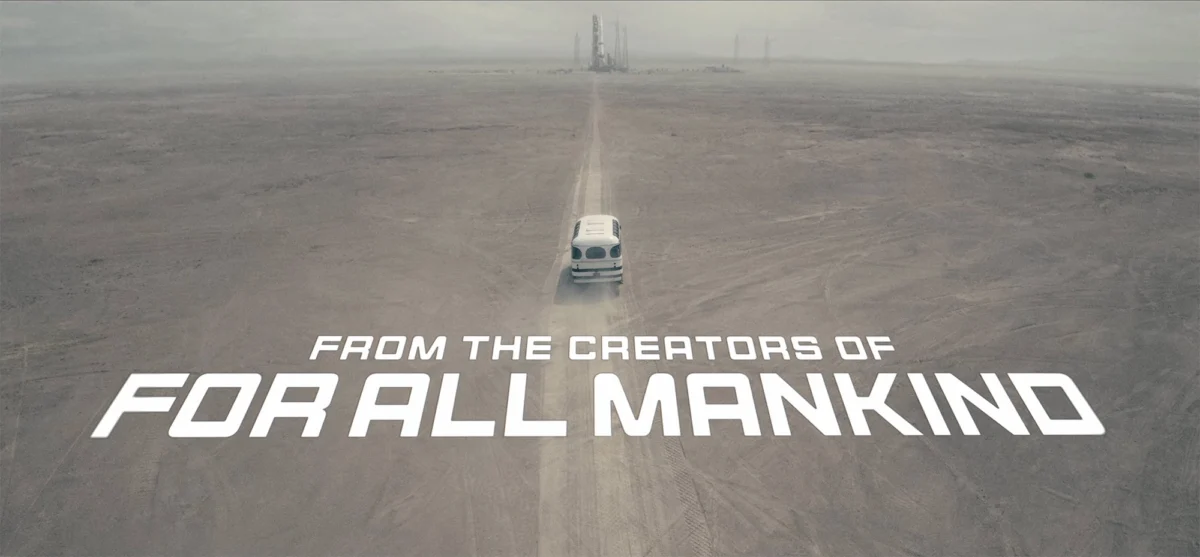
Apple TV+ has officially released the full-length trailer for Star City, a high-stakes expansion of the critically acclaimed For All Mankind universe. Scheduled for a global premiere on May 29, 2026, the series serves as a propulsive paranoid thriller that revisits the pivotal moment the original series began: the Soviet Union’s successful mission to put the first human on the moon. While For All Mankind focused primarily on the American response and the subsequent decades of global space escalation from a Western perspective, Star City pivots the lens 180 degrees, offering a gritty, behind-the-Iron-Curtain look at the cosmonauts, engineers, and intelligence officers who orchestrated the Soviet victory.
The trailer, released on April 23, 2026, highlights the immense human cost of the space race within the Soviet system. With a tagline emphasizing that "reaching for space meant risking everything on Earth," the footage showcases the internal friction between scientific ambition and the rigid surveillance of the state. The series is positioned not just as a science fiction drama but as a historical thriller exploring the shadows of a regime where failure was often met with dire consequences.
The Narrative Foundation: A Mirror to the Space Race
Star City is designed to function as a parallel narrative to the early seasons of For All Mankind. The original series, which debuted in 2019, established an alternate timeline where Soviet cosmonaut Alexei Leonov became the first person to step onto the lunar surface in June 1969. This event triggered a "never-ending" space race, pushing the United States to accelerate its technological development and social reforms.
Star City returns to this "point of divergence" but explores the internal machinery of the Soviet space program headquartered in the real-world Zvyozdny gorodok (Star City) outside of Moscow. The series aims to depict the immense pressure placed on the Soviet team to maintain their lead over NASA. The trailer features a standout moment of conflict, with a character exclaiming, "I will not have any more deaths on my watch because of your paranoia!" This line underscores the central theme of the series: the collision between the human spirit’s desire to explore and the oppressive atmosphere of the Cold War Soviet Union.

The show is expected to delve into the lives of the various stakeholders within the program. This includes not only the cosmonauts who piloted the dangerous N1 rockets but also the engineers who worked under the constant threat of being purged and the intelligence officers whose job was to ensure ideological purity and prevent Western espionage.
Production Team and Creative Vision
The series is helmed by the original For All Mankind creative trio of Ronald D. Moore, Ben Nedivi, and Matt Wolpert. Their involvement ensures narrative continuity and the same attention to technical detail that has become a hallmark of the franchise. Nedivi and Wolpert serve as showrunners, bringing their experience in crafting complex, multi-layered dramas to this new venture.
The writing room for Star City features a robust lineup of talent, including Andrew Chambliss, George Mastras, Megan McDonnell, Gursimran Sandhu, K.C. Scott, and Liba Vaynberg. Direction for the episodes is handled by Nick Murphy and Stefan Schwartz, both of whom have extensive backgrounds in high-end television drama. The series is produced by Tall Ship Productions in association with Sony Pictures Television.
Executive producers include Nedivi, Wolpert, Moore, Maril Davis, Andrew Chambliss, and Steve Oster. This production structure mirrors the successful model used for For All Mankind, suggesting a high level of investment from Apple in maintaining the quality of its flagship sci-fi brand.
Casting and Character Dynamics
The ensemble cast for Star City brings together a mix of veteran performers and rising stars. The lead cast includes:

- Rhys Ifans: Known for his versatility in both dramatic and character roles.
- Anna Maxwell Martin: A two-time BAFTA winner whose presence suggests a focus on intense, performance-driven drama.
- Adam Nagaitis: Familiar to audiences for his role in Chernobyl, bringing experience in Soviet-era period pieces.
- Alice Englert: Noted for her work in atmospheric dramas.
- Agnes O’Casey, Josef Davies, Solly McLeod, and Ruby Ashbourne Serkis: Rounding out the cast in roles that span the hierarchy of the Soviet space hierarchy.
Industry analysts have noted a creative choice in the casting: the primary cast features several prominent British and Irish actors rather than a strictly Russian ensemble. This has sparked discussion regarding the show’s stylistic approach, though the use of period-accurate production design and the 1970s aesthetic seen in the trailer suggests a commitment to historical immersion. The footage highlights the stark, brutalist architecture of the Soviet Union and the claustrophobic interiors of the Soyuz and LK lander modules, contrasting sharply with the more polished, optimistic aesthetic often associated with early NASA.
Chronology of the For All Mankind Universe
To understand the placement of Star City, it is essential to look at the timeline of the franchise as established by Apple TV+:
- June 1969: Alexei Leonov lands on the moon, claiming it for the Soviet Union. (For All Mankind Season 1 / Star City Season 1).
- 1970s: The U.S. establishes Jamestown base; the Soviets establish Zvezda base.
- 1980s: Militarization of the moon reaches a peak, leading to a near-nuclear confrontation. (For All Mankind Season 2).
- 1990s: The race to Mars begins, involving private enterprise (Helios). (For All Mankind Season 3).
- 2003: An international asteroid mining operation begins on Mars. (For All Mankind Season 4).
- March 2026: Apple TV+ officially renews For All Mankind for its sixth and final season.
- May 2026: Star City premieres, providing the Soviet perspective of the era spanning the late 60s and 70s.
By launching Star City just as the main series enters its final chapter, Apple is employing a "world-building" strategy similar to that of the Star Trek or Star Wars franchises. This allows the creators to fill in historical gaps and provide a more globalized view of the alternate history they have created.
Technical Context: The Real Star City vs. Fiction
The series takes its name from the actual high-security facility in Russia known as Zvyozdny gorodok. During the Cold War, this was a secret, closed city where cosmonauts lived and trained. By naming the series Star City, the creators are leaning into the mystique of this location, which was largely unknown to the Western public during the height of the Space Race.
The trailer features detailed recreations of Soviet space hardware, most notably the N1 rocket. In actual history, the N1 was the Soviet counterpart to the American Saturn V, but it suffered four consecutive launch failures, leading to the cancellation of the Soviet lunar program. In the Star City/For All Mankind timeline, the N1 is a reliable workhorse that enables the USSR to beat the Americans to the moon. The series is expected to explore the "what if" scenarios regarding the engineering triumphs and hidden disasters that would have occurred had the Soviet program succeeded.

Broader Impact and Streaming Strategy
The release of Star City is a significant move for Apple TV+ as it continues to solidify its reputation as the premier destination for high-concept science fiction. With a roster that includes Silo, Foundation, Severance, and Dark Matter, Apple has moved away from the "volume" strategy of competitors like Netflix, focusing instead on high-budget, critically acclaimed "prestige" genre television.
The expansion of the For All Mankind universe suggests that Apple sees long-term value in the intellectual property created by Ronald D. Moore. For All Mankind has been a consistent performer for the platform, praised for its "hard" sci-fi approach and its ability to blend political intrigue with human drama. Star City offers a way to extend the brand’s life without necessarily continuing the chronological progression of the main series into the far future.
Industry observers suggest that Star City will appeal to a demographic interested in "Cold War noir" and political thrillers. By focusing on the paranoia of the Soviet era, the show distinguishes itself from the more aspirational "American Dream" themes found in the early seasons of For All Mankind.
Anticipated Reception and Official Statements
While Apple has not released specific viewership targets, the marketing campaign for Star City has been robust. The official synopsis describes the show as a "bold new chapter" that explores "the risks they all took to propel humankind forward."
Creators Ben Nedivi and Matt Wolpert have previously expressed their fascination with the Soviet side of the story. In interviews regarding the parent series, they often noted that the Soviet Union’s achievements were frequently shrouded in secrecy, making them a fertile ground for dramatization. "The Soviet program was just as ambitious, just as heroic, and twice as dangerous because of the political climate," Wolpert noted in a previous press briefing regarding the franchise’s expansion.

The series is set to debut on May 29, 2026, with a weekly release schedule that will carry the show through July. This strategy is designed to build "watercooler" conversation and sustain interest leading into the final season of the flagship series.
Implications for the Alternate History Genre
Star City represents a sophisticated evolution of the alternate history genre. Rather than simply changing one historical fact, the series attempts to build a comprehensive, multi-perspective world. It challenges the "Great Man" theory of history by focusing on the collective effort of thousands of unnamed individuals working within a system that viewed them as expendable.
As the trailer concludes with sweeping shots of 1970s Moscow and the desolate lunar surface, the narrative stakes are clear. Star City is not just a story about landing on the moon; it is a story about the cost of that landing on the souls of those who made it possible. With its premiere just weeks away, the series is poised to be one of the most discussed television events of the 2026 summer season, offering a fresh, darker look at the race for the stars.