Few anime titles in recent decades have achieved the profound global impact and extensive critical discourse generated by "Attack on Titan." Adapted from Hajime Isayama’s critically acclaimed and best-selling manga series, the anime first premiered in 2013 and rapidly ascended to become one of the most influential works in contemporary animation. What began as a seemingly straightforward survival narrative against monstrous humanoids evolved into an ambitious, multi-layered epic, intertwining elements of horror, fantasy, war drama, and intricate political allegory. Spanning a decade of television production, initially by Wit Studio and later by MAPPA, and guided by a succession of talented directors including Tetsuro Araki, Masashi Koizuka, and Yuichiro Hayashi, the series stands as a rare example of sustained excellence, even as it navigated significant stylistic and narrative transformations.
The Genesis of a Global Phenomenon
Hajime Isayama’s "Attack on Titan" manga debuted in Bessatsu Shonen Magazine in September 2009 and concluded in April 2021, selling over 110 million copies worldwide by 2023. Its premise captivated readers immediately: humanity confined within colossal walls, desperately fending off gargantuan, man-eating creatures known as Titans. The anime adaptation, launched by Wit Studio in April 2013, brought this visceral world to life with stunning animation and a relentless pace. Its immediate success was not merely commercial; it ignited a cultural firestorm, garnering numerous accolades both in Japan and internationally, including recognition at the Tokyo Anime Awards and consistently high rankings on global streaming platforms. The series transcended traditional anime fandom, drawing in a broad audience intrigued by its complex mythology and brutal realism.
The cultural penetration of "Attack on Titan" is undeniable. Its commercial triumph is mirrored by the extensive critical and fan discourse surrounding its themes, particularly in its later, more morally ambiguous arcs. The release of compilation features, such as "Attack on Titan: The Last Attack," re-editing final episodes for a theatrical experience, underscored the enduring legacy of the franchise, demonstrating that its narrative conclusion was not an end but a significant milestone in its ongoing cultural footprint.
A Narrative of Survival, Mystery, and Betrayal
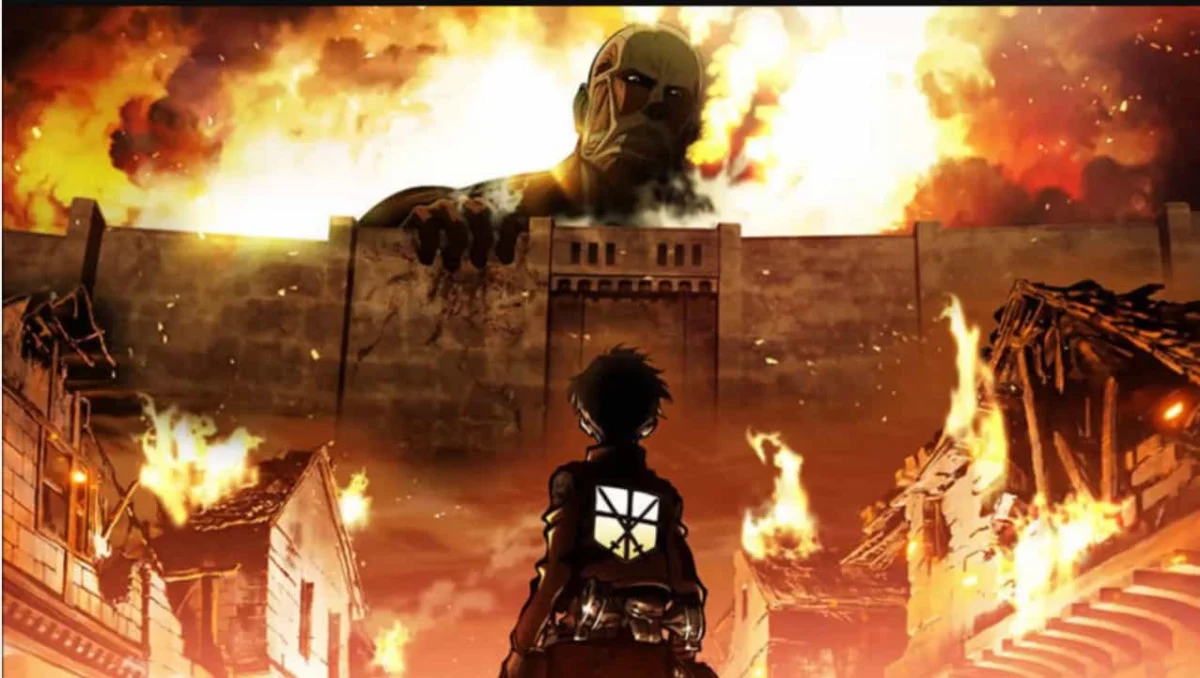
The foundational premise of "Attack on Titan" is one of the most iconic in anime history. Humanity teeters on the brink of extinction, forced to inhabit three concentric walls—Maria, Rose, and Sina—to protect itself from the enigmatic Titans. The narrative initially centers on Eren Yeager, a young boy whose peaceful life within Wall Maria is irrevocably shattered when the outer wall is breached by the Colossal and Armored Titans, leading to the brutal death of his mother and the devastation of his hometown. Fueled by an incandescent rage and an unwavering thirst for vengeance, Eren enlists in the military’s Survey Corps, an elite unit tasked with venturing beyond the walls, alongside his childhood friends Mikasa Ackerman, a fiercely loyal combat prodigy, and Armin Arlert, a brilliant strategist. Their collective journey to eradicate the Titans forms the initial thrust of the story.
Season 1: The Brutality of a Desperate World (April – September 2013)
The first season is broadly structured into three narrative segments, commencing with the introduction of the main trio and their arduous military training. From its opening moments, "Attack on Titan" established a distinct, grim tone through its unflinching depiction of violence, loss, and the fragility of life. Characters, often meticulously developed, could be brutally killed off shortly after their introduction, fostering a pervasive sense of unpredictability and existential dread. This potent fusion of thriller, horror, mystery, fantasy, and drama provided a rich contextual backdrop for the unfolding narrative, with each revelation about the Titans and their world simultaneously illuminating and deepening the overarching mysteries. Critical reception for the first season was overwhelmingly positive, praising its intense action, compelling characters, and groundbreaking animation, setting a high bar for subsequent installments.
Season 2: Unveiling the Enigmas Within (April – June 2017)
Following a four-year hiatus, the second season delved deeper into the series’ burgeoning mysteries, revealing that the very walls protecting humanity held profound secrets, and that some of the protagonists harbored hidden identities. The introduction of the intelligent, terrifying Beast Titan and the shocking revelation of Reiner Braun and Bertholdt Hoover’s true identities as Titan Shifters dramatically altered the narrative’s trajectory. The story pivoted from a seemingly straightforward battle for survival to a complex exploration of identity, betrayal, and the nature of the enemy. Concurrently, relationships like that between Ymir and Historia Reiss added significant emotional depth, while the continuous casualties among key characters forged the psychological evolution of the survivors, hardening their resolve and complicating their moral compass. The critical consensus highlighted the season’s masterful pacing and the impactful plot twists that redefined the series’ scope.
Season 3: Political Intrigue and Historical Revelations (July 2018 – July 2019)
The third season marked a pivotal turning point, shifting heavily into the realm of political thriller and historical exposé. Split into two distinct parts, it meticulously unraveled the complex web of power structures within the human world, shedding intense light on the "why" behind the Titans’ existence and humanity’s plight. Internal conflicts within the military police, the clandestine machinations of the royal family, and a daring coup d’état orchestrated by Commander Erwin Smith transformed the series into a sophisticated political drama. This approach facilitated a deeper analysis of characters such as Captain Levi Ackerman and Historia Reiss, exploring their backstories and motivations, while simultaneously delivering some of the most memorable and fluidly animated action sequences, notably Levi’s iconic confrontation with the Beast Titan.
The second part of the third season returned to large-scale, brutal action, culminating in the harrowing battle to retake Wall Maria. This arc masterfully combined intense emotional stakes with spectacular animation, particularly in moments like Armin’s near-fatal sacrifice and the agonizing moral dilemma faced by the protagonists in choosing who to save using the Titan serum. These sequences underscored the series’ remarkable ability to merge deeply personal drama with epic, world-altering storytelling, solidifying its status as a landmark anime. The critical acclaim for Season 3 was immense, with many critics lauding its narrative ambition and emotional resonance.
The Final Season: Geopolitical War and Moral Ambiguity (December 2020 – November 2023)
The "Final Season," produced by MAPPA, introduced a significant and jarring shift in perspective. Set four years after the events of the previous season, the narrative transported viewers across the sea to the nation of Marley, presenting a world where the dominance of Titans was increasingly challenged by rapidly advancing military technology. The story became exponentially more intricate, delving into themes of racism, colonialism, propaganda, and inherited hatred, meticulously exploring the perspectives of characters previously established as antagonists.
This shift was particularly effective in adding unprecedented depth to the narrative, as the reasoning behind the actions of both sides of the conflict was gradually revealed. The portrayal of Eldian refugees, systemic oppression, and the insidious nature of inherited hatred transformed "Attack on Titan" into a complex sociopolitical drama that resonated with contemporary global issues. However, this increased complexity also introduced narrative challenges, as the proliferation of plot threads, political factions, and a growing cast of characters occasionally made the story difficult to track, leading to criticisms of pacing and clarity from some viewers.
The culmination of the story, particularly across "The Final Chapters" (Parts 1-2) and the theatrical compilation "The Last Attack," brought all these disparate elements together in an apocalyptic confrontation. The Rumbling, orchestrated by Eren Yeager, aimed to annihilate all humanity outside Paradis Island, unleashing an army of Colossal Titans to systematically flatten entire civilizations. This cataclysmic scenario provided a dramatic backdrop for the ultimate confrontation, forcing former enemies and allies alike to unite in a desperate bid to stop Eren.
At this advanced stage, the narrative often ventured into highly convoluted territory, grappling with immense philosophical questions about freedom, destiny, and the cycle of violence. The attempt to portray Eren as a morally ambiguous figure, despite his genocidal actions, was not always entirely convincing for all viewers, particularly as the narrative strove to justify his increasingly extreme motivations. However, the inclusion of the parents of some protagonists, and the profound regret they felt for setting their children on a path of revenge, added a compelling emotional layer. The somewhat realistic and bittersweet ending regarding the enduring nature of conflict, even after a monumental struggle, offered a form of closure, though its ultimate satisfaction remained a point of fervent debate among the global fanbase.
Technical Prowess and Artistic Evolution
From a technical standpoint, "Attack on Titan" maintained an exceptional standard throughout its decade-long run. Wit Studio’s animation in the early seasons was outstanding, particularly in its dynamic depiction of movement. The innovative use of the omni-directional mobility (ODM) gear allowed for exhilarating sequences where characters appeared to defy gravity, soaring through urban landscapes and forests, creating some of the most thrilling and iconic action scenes in anime history. The brutality of the Titan attacks was rendered with striking detail, combining grotesque imagery with fluid, impactful animation.
With the transition to MAPPA for "The Final Season," the visual style underwent a noticeable evolution. The focus shifted toward a darker, more desaturated color palette and a more grounded, weightier sense of movement, reflecting the narrative’s increasing seriousness and geopolitical scope. While some fans initially criticized the increased use of CGI for certain Titan sequences, the overall quality remained exceptionally high, particularly in the large-scale battles and the meticulous rendering of character expressions. MAPPA’s animation thrived on the raw speed and power of characters during combat, with both heroes and villains moving in ways that emphasized intensity, chaos, and the sheer scale of destruction.
Character design also stood out as a strong point. Early work by Kyoji Asano established a distinctive and memorable look, especially in the unsettling design of the Titans, whose grotesque appearance combined distorted human-like features with monstrous proportions. Later, Tomohiro Kishi introduced sharper lines and more detailed expressions, effectively reflecting the aging of the characters and the darkening tone of the story. While some design choices in the final season made certain characters appear somewhat similar, the overall level of detail and expressiveness remained impressive, particularly in differentiating between the extensive cast of major and minor figures.
The backgrounds and environmental design further enriched the series’ immersive quality. The initial medieval aesthetic, characterized by towering walls, quaint villages, and expansive rural landscapes, gradually gave way to more industrial and modern settings, particularly in the detailed depiction of Marley. The cataclysmic destruction wrought by the Rumbling was presented on a massive, terrifying scale, with entire cities reduced to smoldering ruins, powerfully reinforcing the narrative’s apocalyptic tone. The backgrounds were consistently impressive, both in their intricate drawing and evocative coloring, often finding their apogee in the desolate aftermath of colossal battles.
Sound design and music played an equally crucial role in forging the series’ identity. The iconic soundtrack, primarily composed by Hiroyuki Sawano and later joined by Kohta Yamamoto, combined powerful orchestral elements with electronic influences and distinctive vocal tracks, creating a memorable and instantly recognizable audio experience. The judicious use of silence in key moments amplified tension, while the series’ opening and ending themes became cultural touchstones, evolving alongside the narrative and contributing significantly to its overall dramatic impact.
Enduring Legacy and Critical Discourse
Despite its many undeniable strengths, "Attack on Titan" was not without its critics. The increasing complexity of the narrative in the later seasons, with its multitude of plot twists, factional conflicts, and character arcs, occasionally bordered on overwhelming for some viewers, with certain developments not always feeling fully developed or adequately explained. The pacing, particularly in the final arcs, could feel uneven, oscillating between moments of intense, rapid-fire action and lengthy, exposition-heavy dialogue. Additionally, the decision to segment the "Final Season" into multiple parts, stretching its conclusion across several years, was criticized by some for disrupting the narrative flow and momentum.
Nevertheless, the profound emotional impact of the series remains undeniable. The continuous sacrifice of beloved characters, the agonizing moral dilemmas faced by the protagonists, and its unflinching exploration of universal themes such such as freedom, revenge, prejudice, the cycle of violence, and the burden of history, ensured that "Attack on Titan" resonated on multiple, deeply personal levels. Even when the narrative occasionally faltered or became overly dense, the sheer strength of its characterizations, the intensity of its key moments, and its ambitious thematic scope maintained unparalleled audience engagement and critical debate.
"Attack on Titan" stands as a monumental achievement in the history of anime, a series that redefined the medium’s capacity for complex storytelling and profound thematic depth. Its decade-long journey, from a brutal survival story to a sprawling, intricate exploration of war, political ideology, and the very nature of humanity, is both impressively ambitious and, at times, provocatively frustrating. While the final chapters may not have satisfied every single viewer’s expectations, they do not diminish the overarching significance or the immense artistic accomplishment of the work as a whole. Ultimately, "Attack on Titan" is a title that can be appreciated, debated, and revisited for years to come, a rare quality that speaks volumes about its unparalleled ambition, its enduring legacy, and its indelible mark on global popular culture.