The internal politics of the New York Police Department have reached a critical juncture in the twenty-fifth season of Law & Order: Special Victims Unit, as Detective Griffin, portrayed by Corey Cott, finds himself caught in a high-stakes power struggle between the department’s upper management and the leadership of the Special Victims Unit. For several weeks, the narrative arc has focused on the escalating pressure applied by Chief Tynan, played by Noma Dumezweni, who has tasked Griffin with a covert mission to surveil and find grounds for the dismissal or discipline of Captain Olivia Benson. As the series approaches its final episodes of the season, a pivotal confrontation between Griffin and Tynan suggests that the detective is no longer willing to serve as a pawn in a bureaucratic vendetta, setting the stage for a dramatic resolution that could redefine the squad’s future.
The Breakfast Confrontation and the Ethics of Surveillance
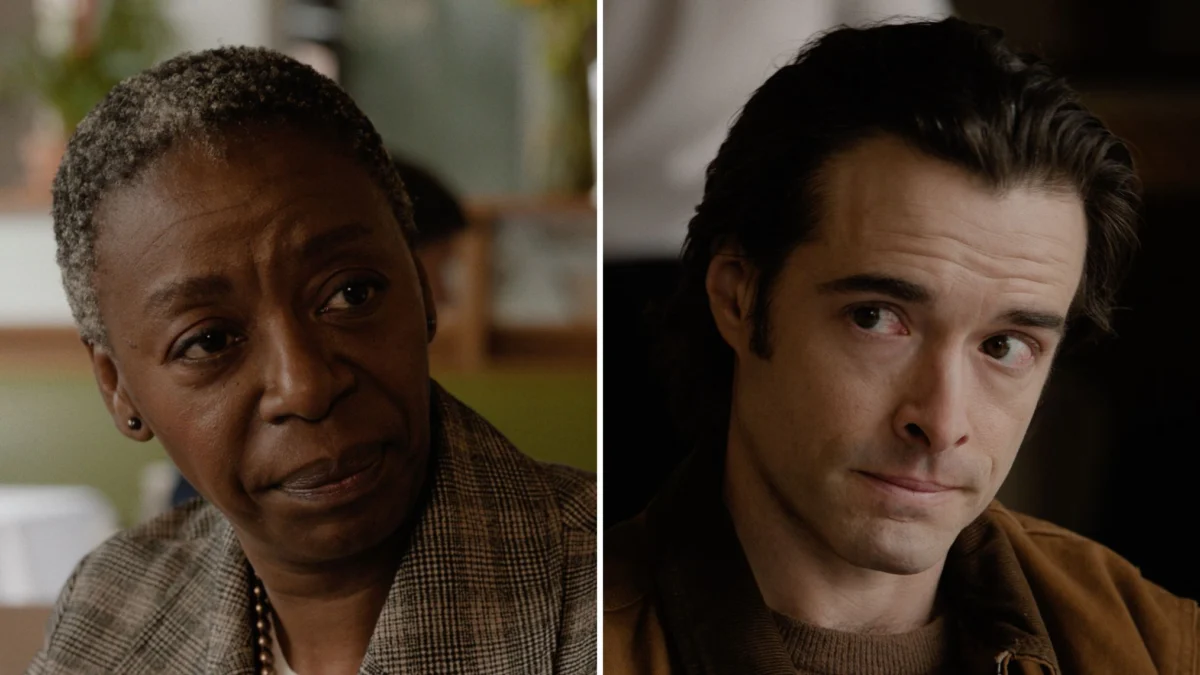
The tension between Detective Griffin and Chief Tynan culminates in a recently released exclusive preview of the April 30 episode, where the two characters meet for a breakfast that is far from amicable. The setting—a standard diner—serves as a mundane backdrop for a conversation laden with professional and personal consequences. When Tynan attempts to maintain a semblance of cordiality by suggesting he order waffles, Griffin pointedly declines, opting only for coffee, a symbolic gesture that signals his intent to keep the meeting strictly professional and brief.
Griffin’s report to Tynan reveals the fruitlessness of her directed investigation into Captain Benson’s conduct. Having reviewed hundreds of cases under Benson’s command, Griffin reports finding only "minor mistakes"—administrative errors such as transposed license plate numbers and misfiled paperwork. He explicitly notes that such clerical oversights are common across the department, even suggesting that his own personnel file contains similar or worse infractions. The detective’s assessment is clear: there is no evidence of incompetence or corruption within Benson’s leadership.
Despite this lack of substantive evidence, Tynan refuses to abandon her pursuit. Her demand for the physical files indicates a refusal to accept Griffin’s objective analysis, prompting a rare moment of defiance from the detective. Griffin directly challenges Tynan’s motivations, accusing her of allowing personal ego to dictate departmental decisions. He asserts that Tynan is "wrong about Benson" and urges her to move past whatever "chain of command" grievances or personal biases are driving her actions. The dialogue underscores a significant shift in Griffin’s character; while he was initially introduced as someone who might be susceptible to administrative pressure, his time serving under Benson has fostered a sense of loyalty rooted in the captain’s efficacy and moral clarity.
Analyzing the "Fall Guy" Dynamics
One of the most striking elements of the confrontation is Griffin’s realization that he is being positioned as a "fall guy." In the context of police procedurals and real-world institutional politics, a fall guy is often a lower-ranking officer used to insulate high-ranking officials from the fallout of a failed or controversial operation. Griffin explicitly calls out Tynan for this strategy, suggesting that when she realized she could not find direct dirt on Benson, she pivoted to targeting members of Benson’s unit as a means of indirect sabotage.
This tactical shift by Tynan highlights a recurring theme in Law & Order: SVU: the friction between the "boots on the ground" detectives who prioritize victim advocacy and the "brass" at 1 Police Plaza who are often preoccupied with optics, liability, and political maneuvering. By refusing to comply with Tynan’s implicit demand for a fabricated or exaggerated narrative of Benson’s failures, Griffin is risking his own career trajectory. As Corey Cott noted in a March interview, his character is approaching a "fork in the road" where he must choose between the security of his career under the Chief’s wing and the integrity of the Special Victims Unit.
Contextualizing "Impropriety": Benson Under Cross-Examination
The upcoming episode, titled "Impropriety," provides the procedural framework for this internal conflict. According to official synopses from NBC, the episode begins with a classic SVU hook: an unconscious and injured teenager is abandoned outside a hospital, prompting a search for the perpetrators. However, the secondary plotline carries the most weight for the season’s overarching narrative. Benson is set to face "serious consequences" during a cross-examination where she chooses to protect a victim’s secret.
This scenario is a hallmark of Captain Benson’s character—placing the psychological well-being and privacy of a survivor above the rigid requirements of the legal system. In the eyes of an administrator like Chief Tynan, such an action is not an act of heroism but a breach of protocol that can be characterized as "impropriety." The timing of this legal pressure is likely not coincidental; if Tynan cannot find administrative corruption in Benson’s past files, she will undoubtedly seize upon any contemporary "mistake" made in the heat of a trial to justify her removal.
The title "Impropriety" itself is a loaded term in the NYPD’s Internal Affairs Bureau (IAB) lexicon. It suggests a failure to adhere to the standards of conduct expected of a high-ranking officer. For Benson, the impropriety is a matter of ethics; for Tynan, it is a weapon of opportunity.
Historical Precedents of Internal Conflict in SVU
The conflict between Benson and Tynan is the latest in a long history of "SVU vs. The System" storylines. Throughout twenty-five seasons, the unit has frequently come under fire from various internal and external entities. Notable past antagonists have included:
- The Internal Affairs Bureau (IAB): Most notably represented by Ed Tucker in earlier seasons, who eventually became an ally and romantic interest for Benson. The evolution of that relationship showed that internal oversight, while often perceived as adversarial, is a necessary component of police work, though it is frequently weaponized by those with personal agendas.
- The District Attorney’s Office: Conflict often arises when prosecutors demand evidence that detectives feel would further traumatize a victim.
- The "Old Guard" of the NYPD: High-ranking officials who view the Special Victims Unit as a "social work" detail rather than "real" police work.
Chief Tynan represents a modern iteration of this conflict—a high-ranking woman of color in a position of power who may feel that Benson’s "maverick" style of leadership is a liability in a more transparent and scrutinized era of policing. By contrasting Tynan’s administrative rigidity with Benson’s victim-centered approach, the show explores the complexities of modern law enforcement leadership.
The Production Impact and Cast Perspectives
The inclusion of Corey Cott and Noma Dumezweni has brought a fresh energy to the milestone twenty-fifth season. Cott, widely known for his leading roles on Broadway in productions such as Newsies and Bandstand, brings a grounded, earnest quality to Detective Griffin. His portrayal of a man caught in a moral quandary has been praised for its subtlety, avoiding the clichés of the "dirty cop" trope.
Mariska Hargitay, who has played Olivia Benson since the show’s inception in 1999, remains the emotional anchor of the series. As both the star and an executive producer, Hargitay has often advocated for storylines that reflect the real-world difficulties faced by those working in the field of sexual assault and domestic violence. The Tynan-Griffin-Benson triangle serves as a meta-commentary on the longevity of the character; after twenty-five years, the question of whether a leader like Benson can survive in a changing institutional landscape is a pertinent one for the audience.
Corey Cott’s previous comments regarding the "fallout" of the choice Griffin must make suggest that the season finale may involve significant changes to the squad’s roster. "He’s going to have to risk his entire career and maybe the integrity of SVU as well," Cott stated. This level of stakes suggests that the resolution will not be a simple return to the status quo.
Broader Implications for the Season 25 Finale
As Law & Order: SVU moves toward its season conclusion, several questions remain regarding the impact of the Tynan-Benson feud. If Griffin successfully defends Benson, he may find himself blacklisted by the Chief’s office, effectively ending his upward mobility within the NYPD. Conversely, if Tynan succeeds in ousting Benson, it would mark the most significant status quo shift in the history of the franchise.
The data regarding the show’s performance indicates that viewers remain deeply invested in these character-driven arcs. SVU continues to be a top performer for NBC and a major draw for the Peacock streaming service. The "Benson in jeopardy" trope is a proven ratings driver, but the current storyline feels more grounded in institutional reality than past "damsel in distress" scenarios. This is a battle of paperwork, policy, and professional reputation—the very things that can truly end a career in the modern world.
Furthermore, the resolution of this conflict will likely affect the rest of the squad, including Sergeant Odafin "Fin" Tutuola (Ice-T) and Detective Joe Velasco (Octavio Pisano). A leadership change or a scandal within the unit would place all their careers under the microscope, especially as the department looks to cut costs or reorganize.
Conclusion: A Fork in the Road for Justice
The April 30 episode and the subsequent chapters of Season 25 are poised to test the foundations of the Special Victims Unit. Detective Griffin’s decision to stand up to Chief Tynan is more than just a moment of personal bravery; it is a defense of the specific brand of justice that Captain Benson has spent a quarter-century cultivating. As Griffin noted, the choice he makes will "shake things up a bit," and for a show that has surpassed 500 episodes, such a shake-up is essential for maintaining its relevance.
Whether Tynan’s motivations are purely ego-driven or rooted in a genuine, albeit misguided, desire for departmental reform, the collision between her vision and Benson’s reality is inevitable. As the "fork in the road" approaches, fans of the series are left to wonder if the integrity of the unit can survive the very system that created it. The upcoming legal battle in "Impropriety" will likely serve as the catalyst for the final confrontation, proving once again that in the world of Law & Order, the most dangerous enemies are often the ones wearing the same uniform.