Andy Garcia’s directorial endeavor, Diamond, is set to make its highly anticipated world premiere at the Cannes Film Festival, marking it as a significant entry in contemporary cinema. The film, a gritty detective story steeped in the classic film noir tradition, distinguishes itself as a remarkable anomaly in an era dominated by runaway production: it was meticulously shot entirely within the sprawling metropolis of Los Angeles, the very city that serves as its atmospheric backdrop and, indeed, one of its central characters. This commitment to authentic location shooting stands in stark contrast to prevailing industry trends, where productions frequently migrate to regions offering more lucrative tax incentives, making Diamond a testament to a deeply held artistic vision and a poignant homage to the city often depicted but rarely truly inhabited on screen.
A Return to Los Angeles: The Unsung Star
In an industry landscape increasingly characterized by headlines lamenting the exodus of film productions from California, Diamond emerges as a powerful counter-narrative. The decision to film exclusively in Los Angeles, from its iconic landmarks to its lesser-known enclaves, underscores a deliberate artistic choice by Garcia, who has called the city home since 1978. This commitment breathes an undeniable authenticity into the narrative, allowing the city’s rich history and diverse architecture to imbue every frame with a sense of place and time. Locations ranging from the ornate grandeur of the Bradbury Building and the historic charm of Angels Flight to the bustling energy of Clifton’s Cafeteria, the timeless appeal of The Pantry, and the distinctive atmosphere of the Paramour Estate, all contribute to painting a vivid portrait of modern-day L.A. that simultaneously echoes its cinematic past.
The issue of "runaway production" has been a persistent concern for California’s film industry for decades. Data from organizations like FilmLA consistently highlight the decline in on-location feature film shooting in Los Angeles County, largely attributed to more aggressive and financially attractive tax credit programs offered by states like Georgia, Louisiana, New York, and international competitors such as Canada and the United Kingdom. While California does offer its own film and television tax credit program, its impact on retaining high-budget feature films has often been debated, leading many productions to seek more cost-effective alternatives elsewhere. In this context, Diamond‘s steadfast dedication to its Los Angeles setting is not merely a logistical choice but a profound artistic statement, celebrating the city’s unique character and its enduring legacy as the birthplace of Hollywood.
Garcia’s personal connection to L.A.’s architectural heritage, particularly from the 1930s and 1940s, is a driving force behind the film’s visual identity. He describes the movie as a "love letter" to the city, meticulously incorporating landmarks such as the California Club and City Hall into the narrative tapestry. This deliberate choice meant Garcia had to firmly reject proposals to relocate production to other cities, famously stating his refusal to shoot in Atlanta despite potential financial benefits. This unwavering commitment, especially for an independent film with tight schedules and limited resources, underscores the integral role of Los Angeles as a character in Diamond, rather than just a backdrop.
The Genesis of Joe Diamond: From Homework to Hardboiled Detective
The origin story of Diamond is as unique as the film itself, a charming anecdote that speaks to the unexpected wellsprings of creativity. The initial spark for the film came not from a commissioned script or a grand pitch, but from a mundane high school English homework assignment. Garcia recounted to The Hollywood Reporter that his daughter, then a senior, approached him for help with a short story requiring a Los Angeles location. She chose the iconic Bob’s Big Boy diner. In a moment of spontaneous improvisation, Garcia began to narrate, and his daughter typed, an inner monologue that would become the foundational voice of his titular gumshoe, Joe Diamond.
"I woke up to the morning light that had the courage to peek through the thick gray skies. I didn’t wake up in my well-worn Murphy [bed], but on a bed of ice plants that will forever have my imprint. And I looked up and I saw Bob, a big boy, smiling at me," Garcia recited, recalling the initial burst of inspiration. This improvised narrative, surprisingly, manifested in the distinct style of a film noir, a genre Garcia clearly holds in high regard. The nascent story, complete with a couple of additional scenes, earned a ‘B’ grade for his daughter.
What began as a school project lay dormant on Garcia’s computer for several years. It wasn’t until around 2014 that he revisited the material, feeling compelled to "explore this character" further. This period of dedicated development saw the story expand to 60 pages, at which point Garcia attempted to pitch it as a television pilot. However, like many passion projects in the notoriously challenging entertainment industry, it failed to garner interest at the time. This initial rejection, far from deterring Garcia, fueled his resolve to bring Joe Diamond’s story to the big screen, a testament to the perseverance often required to shepherd independent visions to fruition. The journey from a high school assignment to a Cannes premiere spans over two decades, embodying the spirit of dedication Garcia often references, echoing the sentiments of Francis Ford Coppola on the long-term pursuit of a dream.
Joe Diamond: A Relic in a Modern L.A. Noir
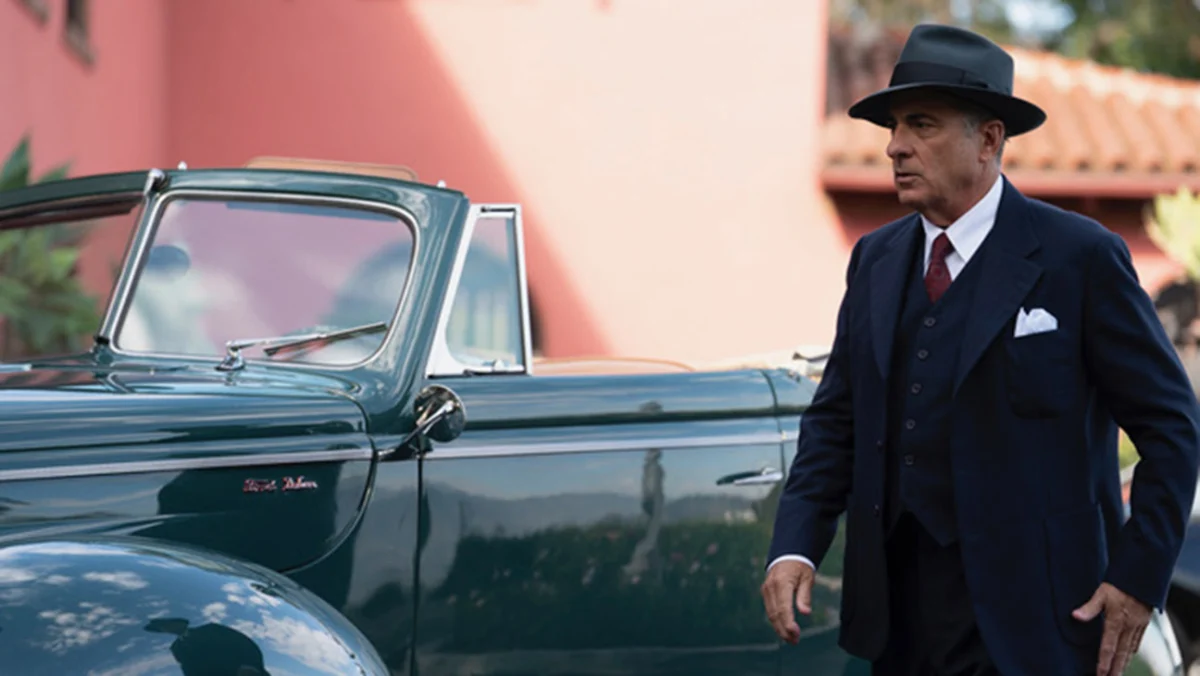
At the heart of Diamond is Joe Diamond, a character Garcia portrays as a self-described "relic from another time." In an L.A. increasingly defined by athleisure and fleeting trends, Diamond steadfastly favors classic suits, a sartorial choice that immediately sets him apart. He is a man content on a barstool, embodying a certain old-school sensibility that is central to the film’s noir aesthetic. This deliberate portrayal positions Diamond as an anachronism, a hardboiled detective navigating a contemporary world, creating a fertile ground for conflict and introspection.
The plot unfolds when Diamond is hired by a wealthy woman, played by the acclaimed Vicky Krieps, whose husband is found dead in their opulent hilltop mansion. As Diamond delves into the investigation, the case gradually unravels, leading him not only to the truth behind the murder but also to profound revelations about his own mysterious past. This classic noir setup, featuring a private investigator, a beautiful and enigmatic client, and a web of deceit, is given a modern L.A. twist, promising a fresh take on beloved genre tropes.
Garcia has assembled an impressive ensemble cast to bring this neo-noir world to life. Dustin Hoffman takes on the role of a Chinese food-loving coroner, a character detail that adds a touch of quirky humanity to the grim proceedings. Brendan Fraser, enjoying a significant career resurgence, portrays a glad-handing District Attorney, a figure likely to embody the political machinations often found in noir narratives. Rounding out the supporting cast is Bill Murray as a sympathetic bartender, a role that could offer moments of levity or poignant insight into Diamond’s world. The caliber of this cast underscores the magnetic appeal of Garcia’s script and vision, drawing celebrated actors to an independent project driven by passion.
The Art of Assembling a Star-Studded Independent Cast
Casting an independent film, particularly one with a tight 25-day shooting schedule across 52 locations, presents immense challenges. Yet, Garcia managed to attract an impressive roster of A-list talent, a testament to the strength of his material and his long-standing relationships within the industry. He emphasized that while relationships are invaluable, ultimately, actors "have to be motivated by the material."
Bill Murray, a frequent collaborator in independent cinema known for his discerning choices, readily agreed to participate, telling Garcia, "Whatever character, I’ll do it." Garcia affectionately refers to Murray as "a prince in my life," highlighting the personal bond that facilitated his involvement. Similarly, Dustin Hoffman, a legendary figure in Hollywood, also came aboard with enthusiasm.
The "first linchpin" in the casting process, however, proved to be Vicky Krieps. Garcia sent the script to Krieps through their mutual agent, but months passed without a response. His agent attributed the delay to Krieps being a "slow reader" and distracted by family. The breakthrough came unexpectedly when Krieps happened to be watching Ocean’s Eleven with a friend. Her friend, expressing admiration for Garcia, remarked, "Oh, I love this actor. I really like him. You should work with him." Krieps then remembered the script sitting unread. She proceeded to read it that very night and called Garcia the next day, eager to join the project. Garcia, having seen Krieps in Paul Thomas Anderson’s Phantom Thread years prior, had already envisioned her for the role, recognizing her ability to portray complexity and nuance, thereby avoiding a "cliché" interpretation of the character. Krieps’s commitment proved pivotal, creating a "snowball effect" that helped solidify the rest of the cast.
The Rigors of Independent Filmmaking: 25 Days, 52 Locations
The logistical undertaking of Diamond was nothing short of monumental. Garcia and his team executed the entire principal photography in a mere 25 days, spread across an astounding 52 distinct locations throughout Los Angeles. This pace is extraordinarily demanding, even for experienced crews, and speaks volumes about the meticulous planning, dedication, and sheer willpower involved in independent filmmaking. Garcia himself alluded to the financial constraints, jokingly referring to working on a "$20 salary," underscoring the passion-driven nature of the project.
A particular anecdote highlights the challenges and serendipitous moments of location scouting. Garcia had written a specific dwelling for Joe Diamond – an apartment above a garage in downtown L.A. During the COVID-19 shutdown, while acting in Guy Ritchie’s Wrath of Man with Jason Statham, Garcia found himself filming scenes in precisely the type of location he had envisioned for Diamond. He immediately recognized it: "This is the place." This kind of organic discovery, coupled with the painstaking process of securing permits and access for numerous historic and privately owned locations, underscores the grassroots effort behind the film. The team even managed to film at Cole’s, the historic French Dip restaurant, after its announced closure, restoring its iconic sign for the shoot, a poignant act of preservation for a piece of L.A. history. This intensive, location-heavy production schedule is a testament to the efficiency and creative problem-solving inherent in independent cinema, transforming what might be seen as limitations into opportunities for authentic storytelling.
Cannes Premiere: A Dream Realized After Decades
For Andy Garcia, bringing Diamond to the Cannes Film Festival is the culmination of a two-decade-long journey, a profound moment of personal and professional triumph. He likened the experience to raising a child and watching it embark on its own path: "It’s like you’ve raised a child to the point where it’s grown now and you walk it to the intersection. You say, ‘I love you and I’m proud of you,’ and you watch it go across the street by itself. You can’t make people like it. It’s on its own." This sentiment reflects the universal experience of an artist releasing their creation into the world, acknowledging that its reception is ultimately beyond their control.
Garcia also reflected on the broader philosophy of artistic creation, drawing inspiration from literary and cinematic giants. He recalled an interview with playwright William Saroyan, who, when asked if he cared about the success of his plays, responded, "The fact that my place exists is success enough." This perspective resonates deeply with Garcia, particularly after the long and arduous process of bringing Diamond to fruition. He also cited Francis Ford Coppola, who once told him that the mark of a resonant movie is "how it holds up 25 years later." Garcia recently saw Coppola’s own passion project, Megalopolis, a film that took 30 years to realize. From this, Garcia gleaned a powerful lesson: "there’s no great obstacle that can’t be overcome by a dream. To achieve that dream, you have to have discipline and commitment and thick skin. But all the great movies and great art starts with a dream that a person won’t let go of."
The Cannes Film Festival provides an unparalleled global platform for Diamond. Known for its prestigious selection and its role in launching both established and emerging cinematic voices, a Cannes premiere can significantly elevate a film’s profile, attracting international distributors, critics, and audiences. For an independent film like Diamond, this exposure is invaluable, offering the opportunity to reach a wide viewership and establish its place within the contemporary film landscape. The festival’s historical appreciation for auteur-driven, artistically ambitious works makes it an ideal setting for Garcia’s deeply personal and meticulously crafted noir.
Broader Implications: A Beacon for L.A. Filmmaking and the Noir Genre
The premiere of Diamond at Cannes carries significant implications, both for the future of filmmaking in Los Angeles and for the enduring legacy of the film noir genre. In an industry grappling with the economic realities of global production, Diamond serves as a powerful reminder of the irreplaceable value of authentic locations and the unique character that Los Angeles imparts to stories set within its bounds. Should the film garner critical acclaim and commercial success, it could potentially inspire other filmmakers to reconsider their production choices, advocating for a return to L.A. and reinforcing the city’s identity as a vibrant, living film set. It stands as a testament to the idea that artistic integrity, even in the face of financial pressures, can yield compelling results.
Furthermore, Diamond‘s modern-day L.A. noir setting offers a fresh interpretation of a beloved, yet less prominent, genre. Film noir, with its characteristic cynicism, moral ambiguity, chiaroscuro lighting, and urban decay, reached its zenith in the mid-20th century. While it has seen revivals and homages, a truly authentic and contemporary noir is a rarer occurrence. Garcia’s film, by embracing classic tropes while grounding them in a modern Los Angeles, could contribute to a renewed interest in the genre, demonstrating its timeless relevance and adaptability. The exploration of a "relic" detective in today’s world provides fertile ground for commentary on societal changes, urban evolution, and the enduring human condition.
Ultimately, Diamond represents a victory for independent filmmaking and the power of artistic conviction. It is a story of persistence, passion, and an unwavering commitment to a singular vision, demonstrating that even against formidable odds and extended timelines, a deeply personal project can find its way to the world stage. As Diamond steps into the international spotlight at Cannes, it carries with it not just the weight of its narrative, but the profound resonance of a filmmaker’s enduring love letter to a city and a genre, hoping to inspire dreams in others who face similar creative challenges.