The surreal and often grotesque world of Dorohedoro continues to unfold in its second season, offering viewers a unique blend of dark fantasy, body horror, and unexpected emotional depth. This latest installment delves deeper into the ramifications of En’s demise, exploring the ripple effects on his associates and further unraveling the intricate and often disturbing magic system that defines this universe. The season’s ability to juxtapose visceral imagery with profound character moments remains its most compelling attribute, drawing audiences into its bizarre yet compelling narrative.
The Unraveling of En’s Empire and the Sorcerers’ World
The central premise driving the current arc is the fallout from the death of En, a powerful sorcerer who commanded significant influence. His passing has not only created a power vacuum but has also triggered a unique, almost instantaneous, informational cascade throughout the sorcerers’ world. This phenomenon, where his fungal infrastructure crumbles and presumably relays information about his demise, is a testament to the inventive world-building by creator Q Hayashida. This interconnectedness of magic and its tangible effects is a recurring theme, distinguishing Dorohedoro from many contemporary fantasy narratives that often rely on more conventional power structures.
Hayashida’s magic system, characterized by devil-shaped tumors in sorcerers’ brains that channel smoke through specialized organs to manifest powers under specific esoteric conditions, continues to be a source of fascination and horror. This biological and almost alchemical approach to magic offers a stark contrast to the often generic spellcasting seen in other media. The concept of sorcerers literally becoming demons upon fulfilling these conditions, coupled with the inherent body horror elements, underscores the series’ commitment to a distinctive and unsettling aesthetic.
Nikaido’s Time-Bending Burden: A Tale of Consequence and Kindness
Beyond the immediate chaos, the season also dedicates significant narrative space to Nikaido’s personal struggles, particularly her fraught relationship with her time-travel abilities. Her powers are depicted as a "literal black box," an uncontrollable force that has instilled deep-seated fear and trauma. As a child, she lacked the understanding and control necessary to wield this potent magic, and the unresolved consequences have left her adult self hesitant to explore or master it.
This narrative thread taps into a familiar trope in time-travel science fiction: the inherent unpredictability and potential for catastrophic consequences stemming from even minor alterations to the past. The "butterfly effect" looms large, but in Dorohedoro’s context, it serves to illuminate Nikaido’s inherent kindness. Her reluctance to use her powers stems from a desire to protect those she cares about, a stark contrast to the often self-serving motivations found in other magical practitioners. Her continued adherence to the memory of Yakumo, a feat only she can achieve due to her unique abilities, further emphasizes her deep emotional connections and her role as a keeper of memories, adding a layer of poignancy to the series’ otherwise macabre proceedings.
The Human Element Amidst the Absurdity
Despite the pervasive gore, bizarre transformations, and outlandish scenarios, Dorohedoro consistently anchors its narrative in its characters’ humanity. The disarray within En’s clan following his disappearance provides a poignant glimpse into the emotional toll of loss and the fracturing of established hierarchies. Fujita’s PTSD, Ebisu’s increasingly melancholic giggling, and the aimless ennui of Shin and Noi all underscore the genuine impact of En’s absence.
Noi’s candid confession of her distaste for En, referring to him as an "arrogant mushroom dumbass," is particularly telling. This outburst, delivered with her characteristic bluntness, highlights the complex relationships and hidden resentments that simmer beneath the surface of the sorcerers’ world. It reveals that even within seemingly monolithic factions, individual opinions and loyalties are far from uniform, adding a crucial layer of complexity that sustains the narrative across its extensive run, a significant achievement for a 23-volume series.
Turkey’s Culinary Magic and a Celebration of Identity
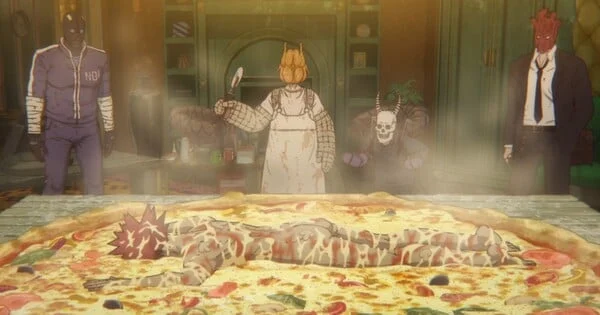
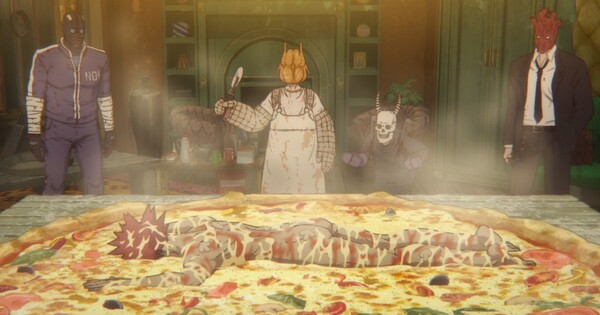
A particularly memorable and characteristically Dorohedoro moment involves the "resurrection" of En. Shin and Noi, in a display of their peculiar brand of loyalty and resourcefulness, team up with Turkey, a sorcerer with the ability to create replica puppets. These puppets are imbued with an instinctual drive to locate and interact with the person they are modeled after. However, Turkey’s magic takes a decidedly culinary turn; she must literally cook these replicas into existence. The anime’s detailed and almost appetizing depiction of this process is a testament to its visual storytelling, paradoxically evoking hunger even amidst the grotesque nature of the act.
Crucially, the article notes that Turkey is a transgender woman. This revelation, while potentially not adapted in all visual media, serves as another compelling facet of the series’ diverse and inclusive character representation. It adds another layer of depth and celebration to a character who already embodies the series’ unique brand of absurdity and skill.
A Symphony of Tones and Unbridled Creativity
The enduring appeal of Dorohedoro lies in its remarkable capacity to weave together a multitude of disparate elements into a cohesive and captivating whole. This latest episode exemplifies this by seamlessly transitioning between the profound grief of loss and the simple, almost primal, joy derived from a well-made pizza. The series’ ability to navigate these tonal shifts without feeling jarring or incoherent is a rare and commendable feat.
Hayashida’s artistic vision, characterized by its boundless creativity, is on full display. The visual language of Dorohedoro is consistently inventive, from the practicalities of sorcerers utilizing souped-up vacuum cleaners as "brooms" to the visceral performances of characters like Haru, who transforms her tail into a microphone to deliver death metal odes to humanity’s perceived failings. Every scene is imbued with either a palpable sense of joy and imaginative flair or a disturbing immersion in festering viscera. This duality is not overwhelming; rather, it contributes to the series’ unique charm and the feeling that its narrative could indeed continue indefinitely. The ongoing encounters between the Cross-Eyes and En’s former cleaners suggest that the momentum of the story shows no signs of abating.
Supporting Data and Context
The Dorohedoro manga, created by Q Hayashida, was serialized in Shogakukan’s Monthly Ikki and later Hibana magazines from 2000 to 2018, amassing 23 volumes. The first anime adaptation, a 12-episode series produced by MAPPA, premiered in January 2020, followed by a two-episode OVA released in March 2020. The second season, produced by Studio Outright, began airing in April 2024, with this review focusing on a particularly impactful episode within that season. The series has garnered critical acclaim for its distinctive art style, complex world-building, and mature themes. Its appeal extends across various demographics, attracting fans of dark fantasy, psychological horror, and unconventional storytelling.
Broader Impact and Implications
Dorohedoro’s continued success, both in manga and anime form, signifies a growing audience appetite for narratives that defy conventional genre boundaries. Its willingness to embrace the bizarre, the grotesque, and the emotionally resonant allows it to explore complex themes of identity, loss, and the nature of humanity in ways that resonate deeply with viewers. The series’ impact can be seen in its influence on other creators and its ability to foster dedicated fan communities. By consistently delivering on its promise of the absurd and the profound, Dorohedoro solidifies its position as a significant and enduring work in the landscape of modern speculative fiction.
The series is currently available for streaming on Crunchyroll and Netflix, allowing new audiences to discover its unique world and established fans to continue their journey through its intricate narrative.
Rating: To Be Determined
Dorohedoro is currently streaming on Crunchyroll and Netflix.