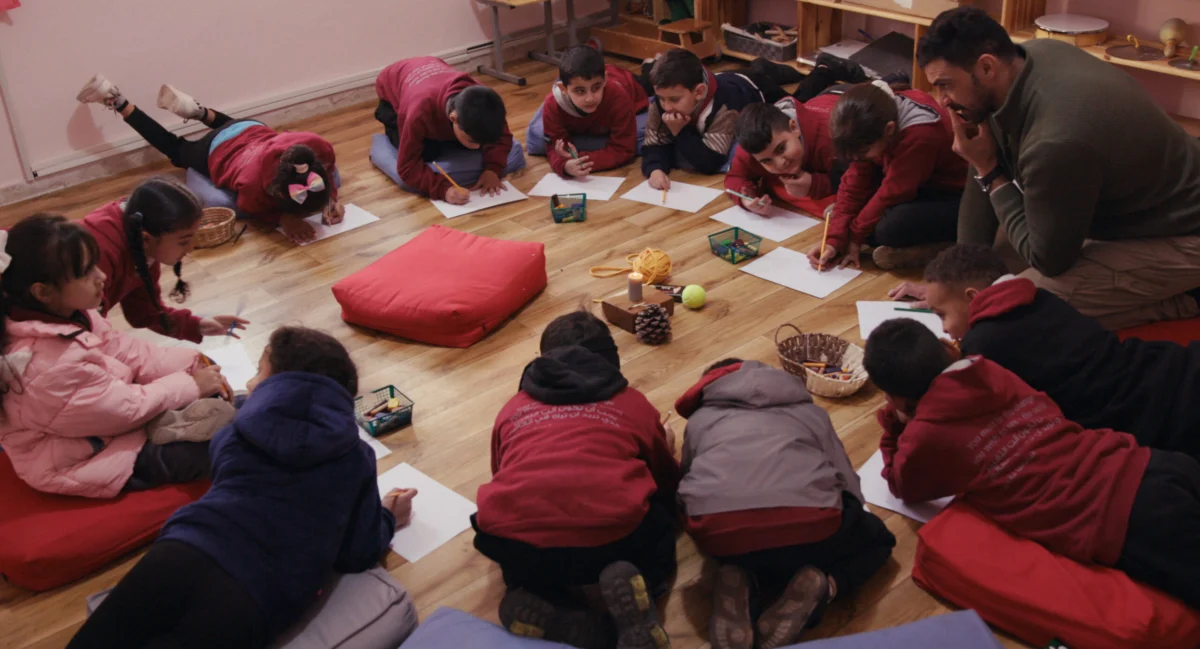
Marjolein Busstra’s compelling documentary, House of Hope, a poignant exploration of a Palestinian couple dedicated to teaching young students non-violent resistance within an elementary school in the occupied West Bank, has been awarded the prestigious Best International Feature Documentary prize at the Hot Docs Canadian International Documentary Festival. The accolade, announced on Friday night, not only signifies a major triumph for the Palestine-Netherlands co-production but also critically propels the film into eligibility for consideration in the highly coveted Best Documentary Feature category at the upcoming Academy Awards, offering a significant platform for its vital message.
Hot Docs: A Beacon for Global Documentary Cinema
The Hot Docs Canadian International Documentary Festival, celebrating its [insert approximate number, e.g., 31st] edition this year, stands as North America’s largest and most influential documentary film festival. Annually attracting hundreds of thousands of attendees and industry professionals from around the globe, the festival serves as a vital marketplace and a launchpad for non-fiction storytelling. Its commitment to showcasing diverse narratives, fostering emerging talent, and facilitating crucial industry connections solidifies its reputation as a premier destination for documentary filmmakers and enthusiasts alike. The festival’s top jury prize, particularly for an international feature, is a coveted recognition, signaling a film’s artistic merit, compelling narrative, and significant potential for broader impact and distribution. For House of Hope, this win at such a prominent festival marks a pivotal moment in its journey, amplifying its message of resilience and peaceful resistance to a global audience.
‘House of Hope’: A Story of Education and Empowerment
Busstra’s House of Hope delves into the lives of a Palestinian couple whose unwavering commitment to education transcends the immediate challenges of their environment. Operating within an elementary school in the West Bank, their innovative approach focuses on imparting the principles of non-violent resistance to their young students. This methodology, rooted in historical precedents of peaceful protest and civil disobedience, aims to equip the next generation with tools for advocacy and self-determination that prioritize dialogue and peaceful action over conflict. The film’s world premiere at IDFA (International Documentary Festival Amsterdam), another leading international documentary festival, earlier in the year had already garnered significant attention, highlighting its strong thematic resonance and cinematic quality. The IDFA premiere, followed by its success at Hot Docs, establishes a robust trajectory for the film, emphasizing its universal appeal and the urgent relevance of its subject matter.
The significance of a film like House of Hope receiving such high honors cannot be overstated. In an era often dominated by narratives of conflict, the documentary offers a counter-narrative of hope, agency, and the transformative power of education. Its focus on non-violent resistance within a highly contested geopolitical region brings an essential, often overlooked, perspective to the forefront. The Academy Award qualification, a direct consequence of this win, opens doors to an even wider viewership and potentially positions the film to contribute to global conversations on peacebuilding, human rights, and the role of education in fostering social change. It underscores the power of documentary cinema not just to inform, but to inspire and challenge perceptions.
A Spectrum of Award-Winning Documentaries
Beyond House of Hope‘s central triumph, Hot Docs celebrated a diverse array of documentaries, each offering unique insights into human experience, historical events, and social issues across the globe. The awards ceremony underscored the festival’s dedication to spotlighting both established and emerging voices in non-fiction filmmaking.
Best Canadian Feature Documentary: Saigon Story: Two Shootings in the Forest Kingdom
The award for Best Canadian Feature Documentary was bestowed upon Saigon Story: Two Shootings in the Forest Kingdom, directed by the Oscar-nominated filmmaker Kim Nguyen. This powerful film reportedly explores the lives of two families irrevocably connected by Eddie Adams’ iconic and haunting photograph from the Vietnam War era. Adams’ 1968 image, depicting the execution of a Viet Cong prisoner, remains one of the most impactful and controversial photographs in journalistic history, having profoundly shaped public perception of the conflict. Nguyen’s film, by delving into the personal stories behind such a monumental historical artifact, promises a deeply humanistic and introspective examination of war’s enduring legacy and the complex moral ambiguities it presents. Kim Nguyen, known for his ability to craft narratives with profound emotional depth and visual artistry, brings a unique perspective to this historical moment, moving beyond the immediate shock of the image to explore its long-term reverberations on individual lives.
Best Emerging International Filmmaker: Dawood Hilmandi for Paikar
The trophy for Best Emerging International Filmmaker was presented to Dawood Hilmandi for his film Paikar. Another significant entry from the Netherlands, Paikar offers a deeply personal reflection from the filmmaker, who, from his exile in Amsterdam, grapples with his identity and experiences as a refugee after being compelled to flee Iran and Afghanistan. This award recognizes not only Hilmandi’s nascent talent but also the critical importance of refugee narratives in contemporary cinema. In an era marked by unprecedented global displacement, films like Paikar provide invaluable first-person accounts, fostering empathy and understanding for the millions forced to leave their homes in search of safety and a new beginning. Hilmandi’s perspective, reflecting on the complexities of memory, belonging, and the search for identity in a new land, resonates strongly with universal themes of displacement and resilience.
Special Jury Prizes: Diverse Narratives of Community and Reflection
Two special jury prizes were also awarded, highlighting films that demonstrated exceptional artistic vision and thematic depth. The Special Jury Prize for a Canadian Feature Documentary went to Banchi Hanuse for Ceremony. This film chronicles an indigenous community in Canada’s north, exploring their traditions, challenges, and resilience. Ceremony had previously garnered an audience prize at SXSW, indicating its strong connection with viewers and its powerful portrayal of cultural preservation and community strength. Such recognition underscores the growing importance of indigenous storytelling in the global film landscape, offering authentic voices and perspectives on issues of sovereignty, heritage, and contemporary life.
The Special Jury Prize for an International Feature Documentary was awarded to Heidrun Holzfeind for The 49th Year. This film delves into the life of an anarchist who has been imprisoned since 1980, reflecting on his radical past through a collection of letters. The documentary offers a rare and intimate glimpse into the mind of a long-term political prisoner, exploring themes of ideology, conviction, and the passage of time behind bars. It prompts viewers to consider the complexities of political engagement, justice systems, and the personal cost of radical beliefs.
Best Social Impact Documentary: The Seoul Guardians
In a category recognizing films with significant social resonance, the Best Social Impact Documentary trophy was presented to directors Chul Young Cho, Shin Wan Kim, and Jong Woo Kim for The Seoul Guardians. Hailing from South Korea, the film is set against the backdrop of protests erupting over martial law being declared in 2024, depicting a night of chaos and collective citizen resistance. This film draws parallels with South Korea’s own tumultuous history of democratic struggles, where civic activism and mass protests have played a pivotal role in shaping the nation’s political landscape. The film’s portrayal of collective resistance in the face of authoritarian measures serves as a powerful testament to the enduring human spirit and the fundamental right to protest, offering a timely commentary on global democratic challenges.
The Power of Documentary Film and Its Broader Implications
The collective body of films honored at Hot Docs this year powerfully illustrates the critical role of documentary cinema in contemporary society. These films serve as more than mere entertainment; they are crucial tools for education, empathy, and social commentary. From the intimate portrayal of non-violent resistance in the West Bank to the historical echoes of war, the personal journeys of refugees, the cultural resilience of indigenous communities, and the spirit of civic defiance, these documentaries illuminate complex realities and challenge audiences to engage with pressing global issues.
The success of films like House of Hope at festivals like Hot Docs not only provides well-deserved recognition for the filmmakers but also significantly boosts the visibility of the issues they address. For House of Hope, the journey towards potential Academy Award nomination is particularly impactful. An Oscar nomination, and even more so a win, would not only elevate Marjolein Busstra’s profile but, more importantly, would shine an international spotlight on the ongoing challenges faced by Palestinians and the profound importance of non-violent educational initiatives in conflict zones. It would bring the nuanced conversation around peaceful resistance to a mainstream global audience, fostering greater understanding and potentially inspiring support for similar efforts worldwide.
Hot Docs, as a major industry market, also plays a crucial role in the distribution and financing of documentaries. The awards often act as a seal of approval, making it easier for winning films to secure distribution deals, reach broader audiences in cinemas, on streaming platforms, and through educational screenings. This ensures that these vital stories are not only recognized but also widely disseminated, maximizing their potential for social and cultural impact.
Looking Ahead: Audience Awards and Future Trajectories
While the jury awards have been announced, the festival still has one more significant set of accolades to reveal: the audience award winners. These prizes, determined by viewer votes, often reflect the films that resonated most deeply with the general public and are eagerly anticipated by filmmakers and audiences alike. Hot Docs will unveil its audience award winners on May 3, providing a final layer of recognition for the films that captivated festival-goers.
The journey for these award-winning documentaries is far from over. For House of Hope, the coming months will be crucial as it navigates the competitive landscape of the Academy Awards, hoping to secure a nomination and continue its mission of shedding light on vital humanitarian efforts. For all the honored films, their recognition at Hot Docs marks a significant milestone, reinforcing the power of documentary filmmaking to inform, inspire, and foster a deeper understanding of the diverse human experience across the globe.