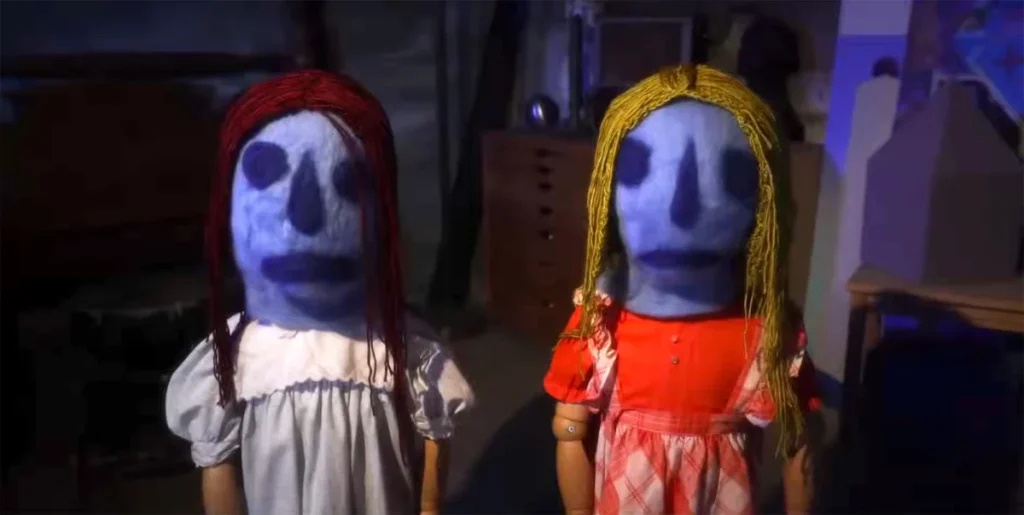
Variance Films has officially released the first trailer for O Horizon, a poignant independent science-fiction drama written and directed by Madeleine Rotzler. The film, which features Academy Award nominees Maria Bakalova and David Strathairn in lead roles, explores the intersection of neurological science, digital consciousness, and the enduring nature of human grief. Scheduled for a limited theatrical rollout beginning June 12, 2026, the project marks a significant stylistic departure for Rotzler, who previously gained acclaim for her documentary work and prison-based dramas. The narrative centers on a young neuroscientist who utilizes emerging artificial intelligence technology to reconnect with her deceased father, a premise that challenges contemporary ethical boundaries regarding the "digital afterlife."
Narrative Overview and Character Dynamics
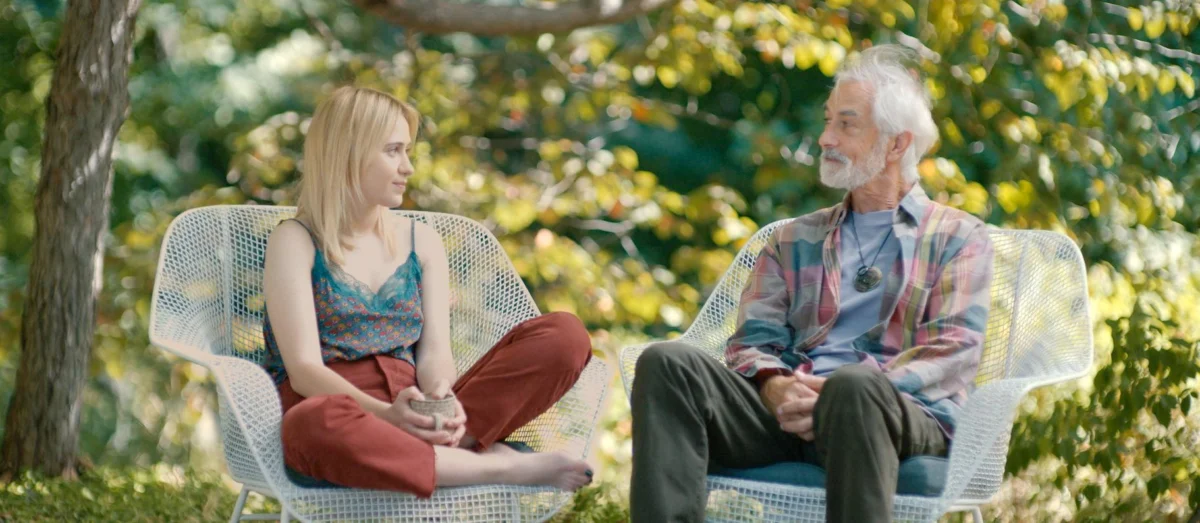
The plot of O Horizon follows Abby, portrayed by Maria Bakalova, a brilliant neuroscientist grappling with the psychological weight of her father’s recent passing. In the wake of her loss, Abby’s professional focus shifts toward her work with a primate named Dorey, a relationship that serves as a surrogate for the human connection she has lost. However, her trajectory changes when she encounters Sam (Adam Pally), a programmer who has developed a sophisticated software capable of synthesizing a person’s consciousness and memories into a digital avatar.
David Strathairn portrays Abby’s father, appearing primarily through the lens of this digital reconstruction. As Abby begins to interact with the AI version of her father, the film transitions from a standard study of grief into a complex exploration of identity. The "digital dad" serves as a catalyst for Abby to re-examine her romantic life, her scientific ethics, and the validity of her memories. Supporting performances are provided by Maggie Grace, Avi Nash, and Paulina Porizkova, each representing different facets of Abby’s social and professional circle as they react to her unconventional method of mourning.

Production History and Festival Chronology
The journey of O Horizon to the public eye began in early 2025. The film held its world premiere at the Santa Barbara International Film Festival, where it was noted for its visual palette and the chemistry between Bakalova and Strathairn. Following its debut, the film secured a spot at the Lighthouse Film Festival, further building momentum within the independent circuit.
The production was led by a team including Madeleine Rotzler, Paul Nelson, Audrey Tommassini, and Joseph Cross. Rotzler, formerly known as Madeleine Sackler, has a history of tackling high-stakes human stories. Her previous credits include The Lottery, a documentary on the American education system; Dangerous Acts Starring the Unstable Elements of Belarus; and O.G., a drama notable for being filmed entirely within a maximum-security prison. O Horizon represents her first foray into the science-fiction genre, though early screenings suggest she maintains her signature focus on grounded, character-driven realism rather than high-concept spectacle.
The film’s timeline from festival circuit to theatrical release reflects a strategic "slow-burn" approach common for independent titles seeking to capitalize on critical word-of-mouth. With a release date set for the summer of 2026, Variance Films aims to position the movie as a thoughtful alternative to the traditional blockbuster season.
The Rise of "Grief Tech" in Modern Cinema
O Horizon enters a cinematic landscape increasingly preoccupied with the ethics of artificial intelligence and digital immortality. Industry analysts have noted a surge in "grief tech" narratives over the last decade, citing titles such as Black Mirror’s "Be Right Back," After Yang, and the more comedic sensibilities of the series Upload. While these projects often lean into the dystopian or the satirical, O Horizon appears to lean toward a naturalistic, "Her-like" aesthetic, focusing on the emotional intimacy between the user and the software.

The film arrives at a time when real-world technology is beginning to mirror its fictional counterparts. Companies such as StoryFile and HereAfter AI already offer services that allow individuals to record "interactive" legacies for their descendants. By casting a neuroscientist as the protagonist, Rotzler’s script attempts to bridge the gap between the biological reality of the brain and the digital simulation of the mind. This thematic focus provides a platform for the film to address the "uncanny valley" of digital resurrection—the point at which a simulation becomes close enough to reality to be comforting, yet remains different enough to be disturbing.
Casting and Creative Execution
The casting of Maria Bakalova represents a continued evolution for the Bulgarian actress. After her breakout, Oscar-nominated performance in Borat Subsequent Moviefilm (2020), Bakalova has moved steadily into dramatic territory. Her role as Abby requires a balance of clinical intellectualism and raw emotional vulnerability, a task she reportedly fulfills with a performance that anchors the film’s more abstract sci-fi elements.
Opposite her, David Strathairn brings the gravitas of a veteran character actor. Known for his Academy Award-nominated turn in Good Night, and Good Luck, Strathairn’s role in O Horizon is unique in that he must portray a version of a human filtered through an algorithm. The trailer suggests that the "digitized dad" is not a perfect copy, but a construction that evolves based on Abby’s needs and Sam’s programming, raising questions about whether Abby is talking to her father or a mirror of her own desires.
The inclusion of Adam Pally as the programmer Sam introduces a layer of contemporary tech-culture commentary. Pally, often known for comedic roles, here plays a character whose innovations provide the central conflict of the story. The interaction between the scientist (Abby) and the coder (Sam) highlights the divide between understanding the brain as a biological organ versus a data set to be replicated.

Industry Implications and Market Analysis
For Variance Films, O Horizon is a significant addition to its 2026 slate. The distributor has built a reputation for handling prestige independent films that require nuanced marketing. By scheduling the release for June 12, 2026, the company is betting on the film’s ability to attract adult audiences during a period usually dominated by franchise sequels and action-oriented tentpoles.
The film’s performance will likely be watched as a bellwether for the viability of mid-budget science fiction. In an era where streaming services often absorb high-concept dramas, a dedicated theatrical run for a film like O Horizon underscores a belief in the theatrical experience for intimate, dialogue-heavy stories.
From a broader industry perspective, the film contributes to the ongoing debate regarding the use of AI in creative arts. Ironically, while the film’s plot concerns the digital recreation of a human being, the production itself serves as a showcase for traditional cinematic crafts: screenplay, acting, and direction. The contrast between the film’s subject matter and its medium of delivery provides an unintentional but relevant layer of meta-commentary.
Conclusion and Future Outlook
As the official trailer begins to circulate, O Horizon is positioned as a contemplative exploration of the human condition in the digital age. By focusing on the specific bond between a father and daughter, Madeleine Rotzler’s film seeks to ground its technological themes in universal emotional truths.

The film’s debut on June 12, 2026, will serve as the final step in a multi-year journey from concept to screen. With a cast of established award-winners and a narrative that taps into contemporary anxieties regarding AI, O Horizon is poised to be a significant entry in the 2026 independent film calendar. Whether the film offers a cautionary tale or a hopeful vision of technological healing remains to be seen, but its arrival marks another chapter in cinema’s long-standing fascination with the boundaries between life, death, and the machines we build to navigate both.