New York, NY – A palpable energy hums through Midtown Manhattan on a recent Wednesday evening, drawing throngs of fans, spanning generations from X to Z, to the venerable Ethel Barrymore Theatre. They gather with eager anticipation near the stage door, a testament to the magnetic pull of Taraji P. Henson, who is currently gracing the Broadway stage in a role that feels both deeply personal and historically resonant.
Henson, in a moment of lighthearted reflection during an April interview, likened the enthusiastic crowds to the fervor surrounding a Cardi B tour. This sentiment underscores the profound connection she fosters with her audience, a connection she actively nurtures even amidst the demanding schedule of a Broadway production. For the entirety of the preview period for August Wilson’s "Joe Turner’s Come and Gone," Henson has made a point to emerge after each performance, engaging with fans through handshakes, photographs, and autographed playbills. "It’s good to see my fans like this, up close and personal," she shared, her voice radiating warmth and genuine appreciation.
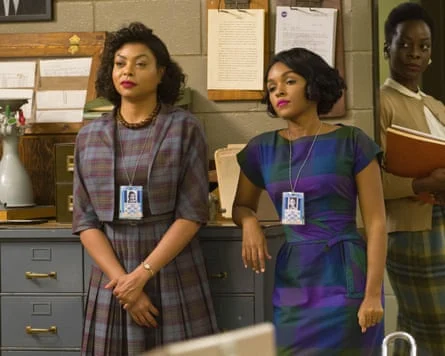
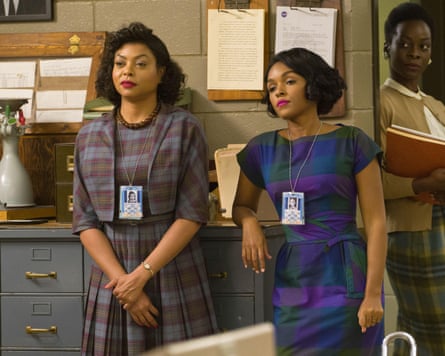
With a career spanning three decades, Taraji P. Henson has solidified her status as a Hollywood powerhouse, celebrated for her nuanced and deeply felt character portrayals. Her filmography boasts iconic roles: a captivating hip-hop soul singer in "Hustle & Flow," a fiercely devoted adoptive mother in "The Curious Case of Benjamin Button," and a groundbreaking mathematician in the critically acclaimed "Hidden Figures." Her accolades are equally impressive, including four Emmy nominations, a Golden Globe win, an Oscar nomination, and a Tony nomination as a producer. Yet, it is on the stage, where her formal training originates, that Henson finds a particularly profound sense of fulfillment. "I got that good Howard [University] training," she states, referencing her alma mater, where she immersed herself in drama studies during the 1990s. "I was made for the stage."
A Callback to August Wilson’s Legacy
While it might appear that Henson’s arrival on Broadway was a long-awaited event, the reality is that Broadway itself was poised to welcome her. This pivotal moment in her career was catalyzed by a brief, yet impactful, twenty-minute phone call from the esteemed Debbie Allen. Allen, a celebrated actor, choreographer, and filmmaker, was approached by Denzel Washington, a known champion of August Wilson’s oeuvre, to spearhead a stage and screen revival of "Joe Turner’s Come and Gone." It was during Allen’s meticulous casting process that Henson’s name emerged as the ideal choice for the role of Bertha Holly.
"Joe Turner found me. [My character] Bertha found me," Henson recounted, her voice imbued with a sense of destiny. She then seamlessly transitioned into a remarkably accurate impression of Debbie Allen, complete with the veteran artist’s signature raspy drawl. "Debbie called me and was like, ‘Taraji, I got something for you! How do you feel about doing Miss Bertha in Joe Turner’s Come and Gone, honey? We gon’ do the film, but we gotta do this Broadway play first, honey.’ And I said, ‘Well, Debbie, anything for you. All you had to do was say August Wilson, and I’m in.’ It was that easy."

"Joe Turner’s Come and Gone": A Tapestry of Black Experience
"Joe Turner’s Come and Gone," the fourth installment in August Wilson’s seminal Century Cycle, is set in the burgeoning landscape of 1911 Pittsburgh. The original production, which premiered in 1988 at the same Ethel Barrymore Theatre where the current revival is staged, featured a constellation of Black theatrical luminaries, including Delroy Lindo and Angela Bassett. Today, Henson leads a formidable cast in Allen’s directorial vision, alongside Cedric the Entertainer, veteran actor and playwright Ruben Santiago-Hudson, and rising Broadway star Joshua Boone.
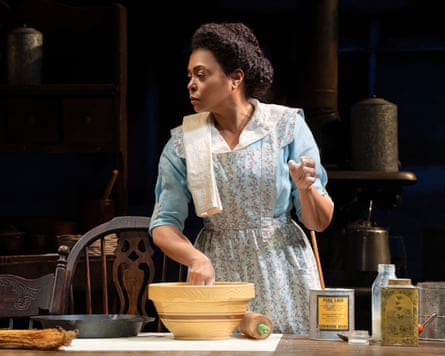
Henson embodies Bertha Holly, the steadfast matriarch of a boarding house she co-manages with her husband, Seth. Bertha and Seth’s nurturing presence over their lodgers creates an atmosphere of profound care, love, and protection, fostering an environment ripe for self-discovery—a crucial element for descendants navigating the complex legacy of slavery. The play masterfully explores the lives of characters who are, in many cases, only one generation removed from the brutal institution of slavery. Their migration north is fueled by an urgent quest for identity, stability, prosperity, and connection. However, they soon discover that the pervasive shadow of slavery extends far beyond its abolition, manifesting in subtle yet persistent ways throughout their lives. The very ground upon which these characters tread is a richly woven tapestry of the dreams, faith, grief, integrity, desires, trauma, and indomitable joy of the free Black migrant.
Echoes of the Past in the Present
The enduring relevance of "Joe Turner’s Come and Gone" to contemporary society is undeniable, particularly concerning the theme of displacement. "Families are being pulled apart right now as we speak," Henson observed, her tone shifting to one of concern. "Somebody who is being detained by ICE right now just disappeared. Whole families are being wrecked. That’s crazy to me." This poignant parallel highlights the cyclical nature of historical trauma and its persistent impact on marginalized communities.
The play is also deeply steeped in the spiritual fabric of Black America, encompassing both Hoodoo and Christianity. Henson noted that these spiritual nuances were perhaps less understood by audiences when the play first premiered in 1988. However, in the post-"Sinners" era, a broader mainstream understanding of the spectrum of African-American faith has emerged. Ryan Coogler’s 2025 spiritual thriller, for instance, offered audiences a profound engagement with Black religion beyond the confines of the Christian church, providing an insightful depiction of the sacred practices of Hoodoo. "That’s Black people, period. That’s just who we are," Henson asserted. "You could take us, snatch us from a whole continent, and what you not gon’ do is disconnect us from the creator."
Finding Purpose and the Power of Performance
For Henson, "Joe Turner’s Come and Gone" serves as a powerful call to action, emphasizing the critical importance of discovering one’s purpose. "It is very important in your lifetime to find your purpose, whatever that is. Nobody can give it to you," she stated. "Everybody has a purpose. [The character Bynum] talks about it as a ‘song.’ Because once you find your purpose, you’re going to want to sing about it, you’re going to want to tell the world about it, because now you’re going to impregnate somebody else with their purpose. And it’s all connected to God, connecting yourself back to the creator, love and laughter… There’s so much to be learned from [the play], but I think the overall theme is making sure love is in that purpose."
Henson views her Broadway debut as a moment of divine timing and a profound personal lesson—or perhaps a reminder—to embrace her own artistic path. "I still have a love for the craft. I’m a producer, I have a production company, [so] I’m behind the curtain," she explained. "The wizard doesn’t exist for me anymore. The rose-colored glasses are off. So now I understand the business, and a lot of times the business involves politicking. That takes the artistry out of me. It wears me thin and it makes me question, ‘Why am I doing this?’ Because it doesn’t make me happy, having to fight and scrap and scrape for a dollar and my worth. That’s exhausting."
A Return to the Stage, A Rediscovery of Joy
In 2023, Henson garnered significant attention for candidly discussing the pervasive pay disparity faced by Black women in Hollywood, a struggle that had impacted her own career. "I’m just tired of working so hard, being gracious at what I do [and] getting paid a fraction of the cost," she had said at the time. Reflecting on that period, Henson revealed that the last time she experienced such profound burnout was when she departed the CBS drama "Person of Interest" in 2013. Feeling "empty" and disillusioned, she stepped away from the screen and immersed herself in the Pasadena Playhouse production of "Above the Fold," a play set in the 1930s. This theatrical endeavor served as a deliberate test of her devotion to and compatibility with the craft of acting, a search for her artistic spark, with theater proving to be her sanctuary.
"I brought Hollywood to me in Pasadena, that was the difference," Henson recounted. "That’s how I got Cookie [in Lee Daniels’ hit TV show Empire], because Fox [executives] kept coming to that play." Her magnetic stage presence in that production was undeniable, drawing the attention that would lead to one of her most iconic roles.
Watching Henson command the stage in "Joe Turner’s Come and Gone" offers a clear understanding of why industry executives were so captivated. Her magnetism is utterly irresistible. As Bertha Holly, she delivers a masterful performance, showcasing her profound emotional depth as an actor, her impressive vocal talents, and her innate improvisational skills. "I think the night you came, I dropped flour," she recalled with a laugh, referring to a scene where Bertha is preparing biscuits while conversing with her husband. "I came home and beat myself up like crazy. Then I called my friend. [They] was like, ‘Taraji, you are so busy in that kitchen. Why would an audience member not think that dropping the flour is normal?’ I cleaned it up, and no one noticed. No one."
She laughs again, a sound that echoes with the liberating joy of the stage. "That’s what’s so beautiful about live theater: you have to stay in it. You can’t say, ‘Oh fuck, I dropped the flour, oh shit!’ [Then] I’m Taraji. I have to stay Bertha and I have to work it out." This ability to remain fully present and adaptable in the moment is a hallmark of exceptional live performance.
A Director’s Vision and an Actor’s Trust
Bertha Holly seems almost tailor-made for Henson, a perception that Debbie Allen recognized long before Henson herself. "I understood why [Allen] called on me to be Bertha," Henson stated. "A lot of characters I’ve portrayed in my career have been the glue, the moral compass [like Bertha]." Allen’s explicit trust in Henson has fostered a reciprocal dynamic, cultivating an intimate actor-director relationship and a burgeoning friendship that Henson describes as a "safety net."
"And whenever I’m safe, I’m uninhibited," she added. "You want an artist to explore, to feel free and safe enough to go there, to just forget that they’re acting… You just want to make [Allen] proud." This secure artistic environment allows Henson to delve deeper into her character, pushing the boundaries of her performance and creating a truly compelling theatrical experience.
Redefining Success Beyond Awards
Henson approaches each performance with the dedication of an opening night, yet maintains a crucial balance between rigorous discipline and self-care. "This Broadway moment forced me to really sit down and pat myself on the back… that’s why I’m glad I came now," she said, her voice tinged with emotion. "This is years of my hard work and me putting everything I have into all of these characters that I portray and earning the trust of my audience. It is hard out here. People are barely getting by, eggs and gas and groceries and insurance [are expensive]. So when people come out of their pockets to purchase a ticket that has my name on it, I’m going to give them everything I got."
Since the previews commenced, Henson has witnessed an outpouring of support, with fans traveling from across the country—from church groups and university excursions to individual flights from distant states—to witness her Broadway debut. The production’s success has led to its run being extended twice, a testament to its broad appeal. Witnessing the tangible impact of her artistry on her audience has not only served as re-affirmation but has also redefined her understanding of success. She is no longer measuring her value as a performer solely by the attainment of accolades.
"I’m very hard on myself," Henson admitted. "The industry can play a game with your mind and make you think you’re not worthy because you don’t have ‘the gold.’ I don’t care who got that gold. Are they coming to see you like this? I’m so giving of my gift to the world, and the world sees it. That’s why they show up for me. And that’s [worth] more than man-made gold." This perspective shift signifies a profound embrace of her own worth and the genuine connection she shares with her audience, a connection far more valuable than any material award.