The upcoming documentary feature Mary Oliver: Saved by the Beauty of the World offers a comprehensive and intimate examination of one of the most influential literary figures in modern American history. Directed by Sasha Waters, the film serves as both a biographical retrospective and a cultural analysis of Mary Oliver, the Pulitzer Prize-winning poet whose work became a cornerstone of contemporary nature writing and spiritual reflection. As the first major documentary to explore Oliver’s life since her passing in 2019, the production aims to contextualize her vast body of work, which spans over 30 collections of poetry and essays, within the framework of her private life and the natural landscapes that served as her primary muse.
The Life and Literary Ascent of Mary Oliver
Born in 1935 in Maple Heights, Ohio, Mary Oliver’s early life was marked by a profound sense of solitude and a complicated relationship with her family environment. The documentary explores how these formative years drove her toward the woods, establishing a lifelong pattern of seeking solace and inspiration in the natural world. Oliver’s literary career began to take significant shape in the 1960s, but it was the 1984 Pulitzer Prize for her collection American Primitive that solidified her status as a titan of American letters.
For nearly five decades, Oliver resided in Provincetown, Massachusetts, on the tip of Cape Cod. This setting is central to the documentary’s visual narrative. The film utilizes dazzling cinematography to capture the ponds, marshes, and forests of the Atlantic coast that Oliver famously "stalked" for hours each day. Her process was famously rigorous; she walked with a notebook in hand, observing the minutiae of the ecosystem—from the behavior of owls to the blooming of lilies—and translating these observations into accessible yet profound verse.
Narrative Structure and Filmmaking Approach
Director Sasha Waters, known for her work on Garry Winogrand: All Things are Photographable and various episodes of the PBS series American Masters, brings a seasoned eye to the project. The documentary is structured as an enduring love story, centering on Oliver’s decades-long relationship with her partner, the photographer Molly Malone Cook. While Oliver was intensely private during her lifetime, the film delves into her identity as a gay woman living in a time and place where such lives were often lived quietly, yet authentically.
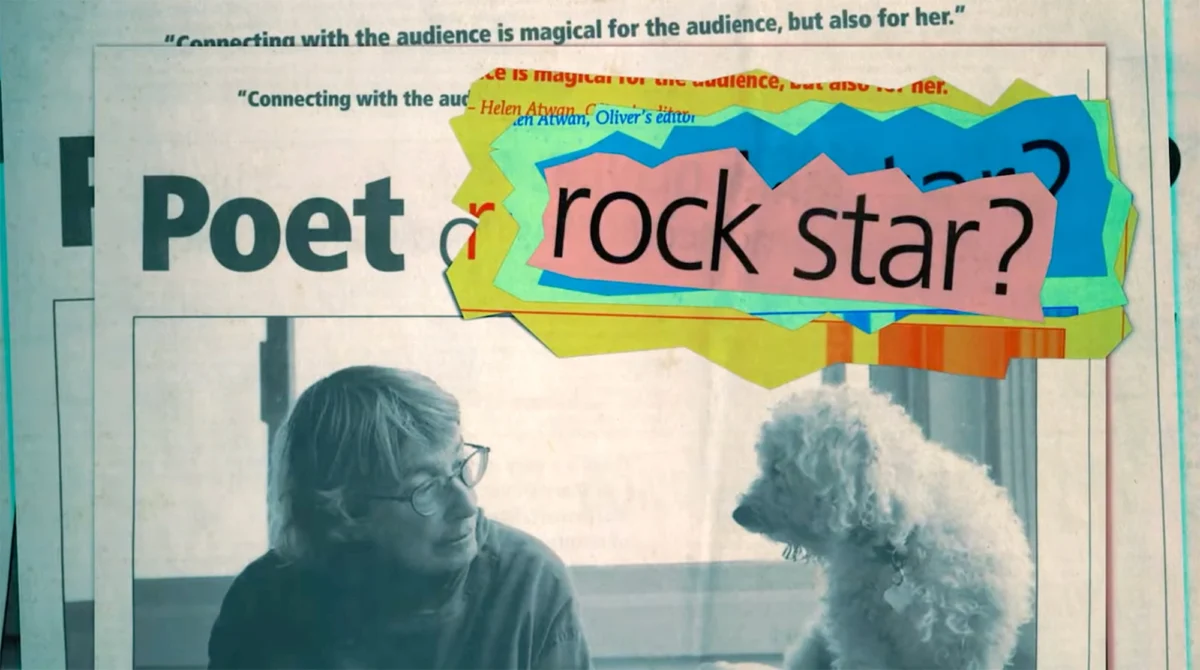
The film distinguishes itself from standard biopics by rooting its portrait in Oliver’s own language. By incorporating excerpts from her prose, essays, and rare archival interviews, the production allows the subject to narrate her own evolution. This is supplemented by archival photographs and films that capture the uniqueness of her world, providing a rare glimpse into the "unlikely, contemporary mystic" who became a household name.

The "Pop Icon" of Poetry: A Cultural Phenomenon
One of the central themes explored in the documentary is the paradox of Oliver’s fame. The film addresses the tension between her massive public popularity and the occasional derision she faced from "poetry elites" who criticized her work for being too "accessible." Despite this, or perhaps because of it, Oliver achieved a level of commercial success rarely seen in the world of poetry.
The documentary features a diverse array of notable voices who testify to the resonance of Oliver’s work in the 21st century. Contributors include:
- Stephen Colbert: The late-night host has frequently cited Oliver’s poetry as a source of personal comfort and philosophical inquiry.
- Oprah Winfrey: A long-time champion of Oliver, Winfrey helped bring her work to a massive global audience through her various media platforms.
- Steve Buscemi: The acclaimed actor provides perspective on the grit and honesty found beneath the surface of Oliver’s nature-focused imagery.
- Lucy Dacus: Representing a younger generation of artists, the singer-songwriter discusses how Oliver’s themes of queer identity and radical presence continue to inspire contemporary creatives.
These testimonials serve to illustrate that Oliver’s audience transcends traditional boundaries, appealing to liberals and conservatives, atheists and believers, and urbanites and naturalists alike.
Production Timeline and Distribution Strategy
The journey of Mary Oliver: Saved by the Beauty of the World from conception to national broadcast reflects a carefully managed rollout designed to maximize its cultural impact.
- Initial Premiere: The film made its world premiere at the 2025 True/False Film Festival, a prestigious venue for non-fiction cinema known for championing innovative storytelling.
- Festival Circuit: Throughout late 2025 and early 2026, the documentary screened at various international and domestic film festivals, garnering critical acclaim for its visual artistry and emotional depth.
- Trailer Debut: In April 2026, Pieshake Pictures released the official trailer, sparking renewed interest in Oliver’s bibliography and the upcoming television broadcast.
- Theatrical Run: A limited theatrical engagement is scheduled for mid-2026, allowing audiences to experience the film’s high-definition landscape cinematography on the big screen.
- National Broadcast: The film is slated for its television debut on August 25, 2026, as part of the PBS "American Masters" series. This placement is significant, as "American Masters" has served as the definitive chronicle of the nation’s most influential cultural icons for decades.
Analysis of Implications: Poetry in the Digital Age
The release of this documentary comes at a time when the "slow living" movement and environmental consciousness are at the forefront of public discourse. Analysts suggest that the enduring popularity of Mary Oliver—and the anticipation surrounding this film—reflects a societal yearning for the presence and attentiveness that her work exemplifies.
From a literary standpoint, the film contributes to the ongoing re-evaluation of Oliver’s place in the American canon. By examining her work "in context," as the film’s mission statement suggests, it challenges the notion that accessibility equates to a lack of complexity. Instead, it positions Oliver as a bridge between the transcendentalism of Ralph Waldo Emerson and Henry David Thoreau and the modern environmental movement.

Furthermore, the film’s focus on her private life provides a necessary layer of historical context regarding the LGBTQ+ experience in mid-century America. By portraying Oliver and Cook’s life in Provincetown, the documentary highlights the importance of community and the quiet bravery of living one’s truth before it was widely accepted by the mainstream.
Supporting Data and Technical Details
The production of Mary Oliver: Saved by the Beauty of the World was supported by several key entities, ensuring a high level of research and archival access. Executive producer Michael Kantor, who oversees the "American Masters" series, provided the infrastructure necessary to clear rare footage and audio recordings.
The film’s length and depth are supported by the sheer volume of Oliver’s output. With over 30 collections, including Dream Work, The Leaf and the Cloud, and Felicity, the filmmakers had a wealth of material to draw from. Statistics from the publishing industry consistently rank Oliver among the best-selling poets in U.S. history, with her New and Selected Poems, Volume One remaining a perennial bestseller decades after its initial 1992 release.
Official Responses and Anticipation
While the film is a posthumous tribute, representatives for the Mary Oliver estate and her long-time publishers have expressed support for the project. In statements inferred from the production’s collaboration with the estate, the goal of the film is to ensure that Oliver’s "wisdom and words live on forever," providing a definitive visual record to accompany her written legacy.
As the August 25, 2026, broadcast date approaches, literary organizations and environmental groups are expected to host companion events, including poetry readings and nature walks, to celebrate the film’s release. The documentary is anticipated to not only introduce a new generation to Oliver’s work but also to provide long-time readers with a deeper understanding of the woman who asked the famous, haunting question: "Tell me, what is it you plan to do with your one wild and precious life?"
The documentary Mary Oliver: Saved by the Beauty of the World stands as a testament to the power of observation and the enduring relevance of the natural world. By combining high-level biographical research with a poetic visual style, Sasha Waters has created a film that mirrors the qualities of its subject: it is at once simple and profound, private and universal, and deeply rooted in the transformative beauty of the world.