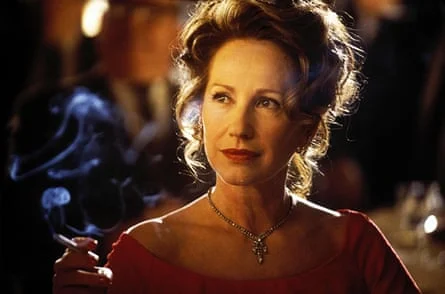
The French film industry is in mourning following the death of Nathalie Baye, a profoundly versatile and prolific actress whose career spanned nearly five decades and encompassed over 100 films. Baye, who passed away at the age of 77, was celebrated for her remarkable ability to inhabit a vast spectrum of characters, from gritty law enforcement officers and complex courtesans to aristocratic figures and even a memorable cameo in the globally recognized Downton Abbey film series. Her passing marks the end of an era for French cinema, a loss keenly felt by colleagues, critics, and audiences alike.
A Career Defined by Adaptability and Acclaim
Baye’s career was a testament to her chameleon-like talent. Her extensive filmography reads like a curated history of French cinema, featuring roles that showcased her command over a wide emotional and professional range. She portrayed an alcoholic police officer, a prostitute, a beautician, a wrestler, a supermarket cashier, and a telephone operator, demonstrating a fearless commitment to exploring the nuances of everyday life and extraordinary circumstances. More recently, audiences saw her as a marchioness in the second Downton Abbey film, a role that brought her considerable international visibility. She also graced the hit French television series Dix pour Cent (known internationally as Call My Agent!) with a memorable cameo.
Her journey in cinema began in the 1970s, a period of significant artistic upheaval and innovation. She was discovered by the legendary New Wave director François Truffaut, a pivotal moment that launched her into the upper echelons of French filmmaking. Subsequently, she worked with other giants of cinema, including Jean-Luc Godard and, on an international stage, Steven Spielberg, who cast her in his 2002 blockbuster Catch Me If You Can, starring Leonardo DiCaprio and Tom Hanks. This collaboration underscored Baye’s ability to transcend national borders and hold her own alongside Hollywood’s biggest stars.
The sheer volume of her work was matched, if not surpassed, by the quality of her performances. Baye was a four-time recipient of the César Award, the most prestigious film award in France, often referred to as the French Oscar. Notably, she secured two Best Actress awards, a rare feat that highlighted her consistent excellence. Her remarkable achievement of winning three Césars in successive years – for Sauve Qui Peut (La Vie) in 1980, Une Histoire de Femmes in 1981, and La Balance in 1982 – cemented her status as one of France’s most celebrated actresses.
The Truffaut Connection: A Defining Partnership
François Truffaut, a key figure in the French New Wave, played an instrumental role in shaping Baye’s early career. He first cast her in his celebrated 1973 comedy La Nuit Américaine (Day for Night), a film that garnered critical acclaim and an Academy Award for Best Foreign Language Film. Five years later, Truffaut cast Baye in a leading role opposite himself in the historical drama La Chambre Verte (The Green Room, 1978). This film, an adaptation of Henry James’s short story "The Altar of the Dead," showcased Baye’s dramatic depth and her ability to engage with complex literary material.
Baye later reflected on her experience working with Truffaut, recalling his intense dedication to his craft. She noted his anxiety about his own performance in The Green Room, a testament to his artistic integrity. "If François asked me to perform with him, it was because he knew I wasn’t the kind of actress who caused problems," she stated. "He could rely on me, which was very reassuring to him." This sentiment speaks volumes about Baye’s professionalism and her ability to be a steadfast presence on set, allowing directors to focus on their vision.
A Pantheon of Collaborators
Following her foundational work with Truffaut, Baye’s career trajectory continued upwards. Jean-Luc Godard, another titan of the New Wave, cast her in his 1980 film Sauve Qui Peut (La Vie), for which she received her first César Award for Best Supporting Actress. By the early 1980s, Baye had established working relationships with virtually all of France’s most renowned directors, including Claude Chabrol and Bertrand Blier. Her talent also brought her into collaborations with the era’s biggest stars, such as Gérard Depardieu, Alain Delon, and the iconic singer Johnny Hallyday.

Personal Life and Public Persona
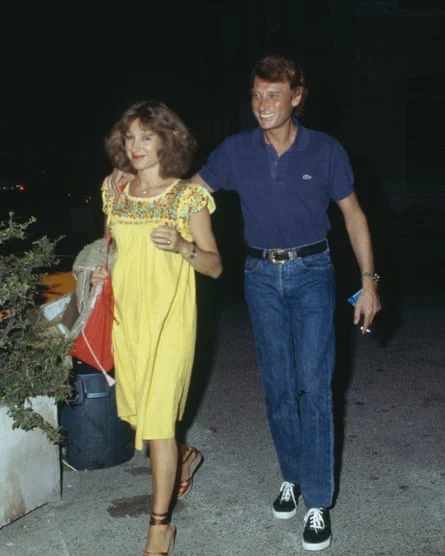
Baye’s personal life also captured public attention, particularly her highly publicized romantic relationship with Johnny Hallyday, the "French Elvis." They met on the set of a television comedy show and quickly became one of the most prominent celebrity couples of the 1980s. Baye was credited with bringing a sense of stability to Hallyday’s famously tumultuous life. She reportedly encouraged him to move away from a hard-drinking, club-centric lifestyle and settle in the Parisian suburbs. The couple had a daughter, Laura Smet, who has also pursued an acting career, and remains Baye’s only child. Although their relationship eventually ended after four years, they maintained a friendship until Hallyday’s death in 2017.
A poignant and touching moment in her later career was her appearance alongside her daughter Laura in a cameo role in Dix pour Cent in 2015. This self-referential appearance highlighted the enduring presence of Baye in the French cultural landscape. She continued to work prolifically, starring in 13 more films after Dix pour Cent, with her final film released in 2023.
National Tributes and Personal Reflections
The news of Nathalie Baye’s passing prompted widespread tributes from across France and beyond. French President Emmanuel Macron was among the first to pay homage, stating, "We loved Nathalie Baye so much… with her voice, her smile and her grace, she has been a constant presence in French cinema over the past few decades." He further elaborated that she was "an actress with whom we have loved, dreamed and grown up." This sentiment reflects the deep connection audiences felt with Baye, whose characters often resonated with their own life experiences.
Early Life and Artistic Roots
Born Nathalie Baye in Mainneville, in the Eure region of Normandy, she was the only child of Denise (née Coustet) and Claude Baye, both artists. The couple were described as "poor bohemians" who, according to Nathalie, lived in "a perpetual state of adolescent crisis." This artistic, yet unstable, upbringing profoundly shaped her early life. She candidly admitted that her parents’ struggles negatively impacted her childhood. "I was brought up to worship nothing," she once stated. "I had to rebuild myself from the ruins of my parents’ breakdown. They were funny, but they were suffering… my father paid me a single compliment; my mother never did."
Despite their apparent financial constraints, Baye’s parents moved to Paris when she was young and managed to enroll her in the prestigious École Alsacienne. However, Baye struggled academically due to dyslexia and dyscalculia, conditions that made traditional schooling a significant challenge. She left school at the age of 14 to pursue her passion for dance.
The Transformative Power of Dance
Dance became a crucial outlet and a saving grace for young Nathalie. "Dance saved me from school, where I was unhappy," she explained. "That’s a good reason, isn’t it? I was dyslexic; I used to mix up ‘m’s and ‘n’s, ‘b’s and ‘p’s. I got a lot of things mixed up. Above all, my mind was elsewhere." Dance, she found, instilled in her a sense of discipline and rigor that would serve her well in her future artistic endeavors.
At 17, seeking to escape the constant arguments between her parents, who eventually separated, Baye moved to New York. There, she studied at a dance school and worked as an au pair, simultaneously improving her English.
Entry into Acting: A Fortuitous Turn
Upon her return to France a year and a half later, a friend encouraged Baye to enroll in René Simon’s Conservatory for Dramatic Arts, one of France’s oldest drama institutions. The tuition fees were substantial, posing a significant financial hurdle. However, Simon recognized her raw talent and offered her a unique arrangement: if she committed to working diligently, he would waive the fees. This pivotal mentorship provided Baye with the opportunity to hone her acting skills.
After graduating second in her class, Baye secured a minor role in the 1973 film Two People, directed by the American filmmaker Robert Wise, renowned for his Oscar-winning direction of West Side Story. It was shortly after this initial foray into film that François Truffaut recognized her potential and took her under his wing, marking the beginning of a significant chapter in her career.
A Principled Approach to Role Selection
Baye consistently maintained that her choice of roles was driven by her affinity for a script and the artistic merit of a project, rather than the pursuit of fame or financial gain. This principled approach, however, did not prevent her from achieving significant commercial success. In 2007, she was listed as the eighth highest-paid cinema celebrity in France, a testament to her enduring appeal and market value.
Director Gérard-Brice Viret eloquently described her acting prowess: "She could play any role, without ever overdoing it: fragility as well as strength, silence as well as fury." He characterized her performances as "intelligent, understated, deeply embodied," capturing the essence of her nuanced and impactful acting style.
Enduring Loyalty and Controversy
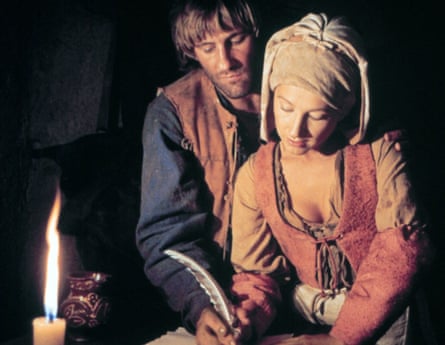
Baye maintained a deep professional loyalty to Gérard Depardieu, with whom she co-starred in six films. Their collaborations spanned from La Dernière Femme (The Last Woman) in 1976 to Je N’ai Rien Oublié in 2010, including the critically acclaimed Le Retour de Martin Guerre (The Return of Martin Guerre) in 1982. This enduring professional partnership highlighted their shared artistic chemistry.
In 2023, Baye publicly voiced her support for Depardieu amidst accusations of rape, sexual assault, and sexual harassment, describing the situation as a "witch-hunt." She stated, "He may use bad language, but I know that he is not at all the man who is being portrayed in such a monstrous light in the ridiculous tabloid press." This stance, while drawing criticism from some quarters, underscored her personal loyalty and her belief in her long-time colleague.
Legacy and Survivors
Nathalie Baye leaves behind a rich legacy as one of France’s most accomplished and respected actresses. Her ability to embody a vast array of characters with authenticity and grace, coupled with her dedication to her craft, has left an indelible mark on cinema. She is survived by her daughter, Laura Smet, and her grandson, Léo. Her passing is a profound loss, but her extensive body of work will continue to inspire and captivate audiences for generations to come. The quiet dignity and profound talent she brought to the screen will be deeply missed.