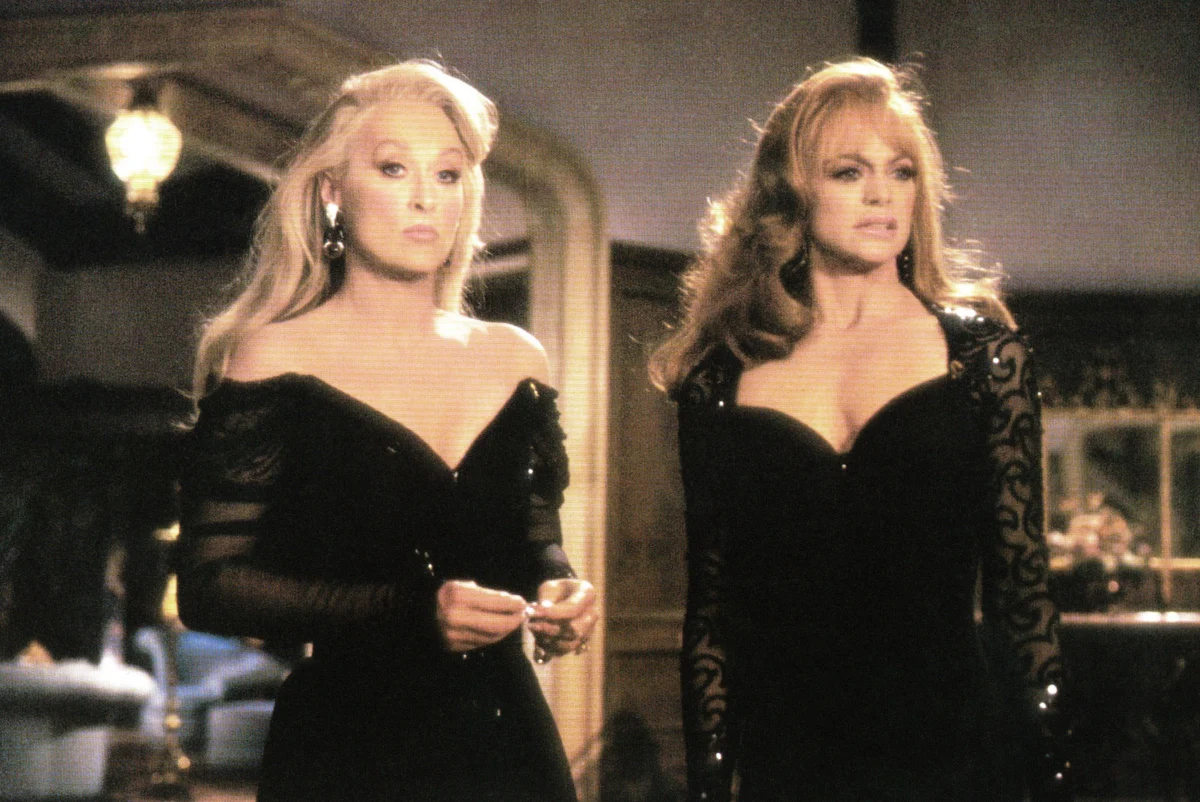
In a detailed retrospective regarding her storied career, Academy Award-winning actress Meryl Streep has provided new insights into the behind-the-scenes dynamics of the 1992 dark comedy cult classic Death Becomes Her. During a career-spanning interview with Vanity Fair published on April 30, Streep addressed a long-standing "beef" she shared with co-star Goldie Hawn during the film’s production, while also offering poignant reflections on her experience working with the now-retired Bruce Willis. The revelation offers a rare glimpse into the professional friction that can occur between two of Hollywood’s most formidable talents, even when the end result is a beloved piece of cinematic history.
Streep, now 74, recounted the specific habit of Hawn’s that tested her patience during the rigorous filming schedule of the Robert Zemeckis-directed project. According to Streep, the tension stemmed from a fundamental difference in their professional temperaments, specifically regarding punctuality. Streep, who described herself as "annoyingly" on time, noted that Hawn frequently arrived late to the set, often attributed to the fact that Hawn chose to drive herself to the studio in a red convertible.
The actress recalled the scene vividly, noting how Hawn would arrive with her hair in disarray, offering apologies that the crew and production staff found charming, much to Streep’s private chagrin. "Goldie, she was always late to set," Streep told Vanity Fair. "But she was so adorable. And I’m always on time, you know, and annoying. But she’s late. And she had a red convertible, I remember, and she’d drive herself to set. So that was probably the problem." Streep added that while the crew often excused the behavior because of Hawn’s infectious personality, it created a genuine point of contention for her at the time.
Despite these historical grievances, Streep was quick to emphasize that the friction never evolved into a lasting enmity. She characterized Hawn as one of her "buddies," noting that the two have spent the intervening decades laughing about the film’s production and its surprising longevity. Streep’s comments highlight a common phenomenon in high-stakes filmmaking: the "creative friction" that often exists between lead actors can be managed through mutual respect and shared professional goals.
The Technical Rigors of Death Becomes Her
To understand the context of Streep’s frustration with punctuality, one must look at the technical complexity of Death Becomes Her. Released in July 1992, the film was a pioneer in the use of computer-generated imagery (CGI) to augment physical performances. Produced on a budget of approximately $55 million—a significant sum at the time—the film required precise coordination between the actors and the visual effects team at Industrial Light & Magic (ILM).
The production was notoriously difficult for the actors. Streep has previously gone on record stating that she found the process of working with "blue screens" and mechanical effects tedious and physically demanding. In scenes where her character, Madeline Ashton, had her head twisted 180 degrees or her neck stretched, Streep had to remain perfectly still for hours while technicians adjusted the animatronics and lighting. When one lead actor is late to such a meticulously calibrated set, it can result in cascading delays for hundreds of crew members, which likely contributed to Streep’s irritation.
Despite these challenges, the film was a commercial success, grossing over $149 million worldwide. It also earned an Academy Award for Best Visual Effects, beating out competitors like Alien 3 and Batman Returns. The film’s success solidified the reputations of its stars and proved that Zemeckis could blend dark, satirical storytelling with cutting-edge technology.
Remembering Bruce Willis and the On-Set Atmosphere
The Vanity Fair interview also touched upon Streep’s working relationship with Bruce Willis, who played the central character of Dr. Ernest Menville, a plastic surgeon caught in the middle of the warring women. Streep spoke of Willis with profound affection, a sentiment made more significant by Willis’s recent retirement from acting following a diagnosis of frontotemporal dementia in early 2023.
Streep addressed Willis’s reputation during the early 1990s, acknowledging that he was sometimes perceived as a "bad boy" or difficult to work with on other sets. However, her experience was entirely contrary to that reputation. "Oh, Bruce was divine," Streep said. "I guess he was a bad boy on certain sets and came with a little reputation for being difficult. But we had so much fun. He was such a gent, and so game, and willing to be ridiculous. And I just thought he was wonderful."
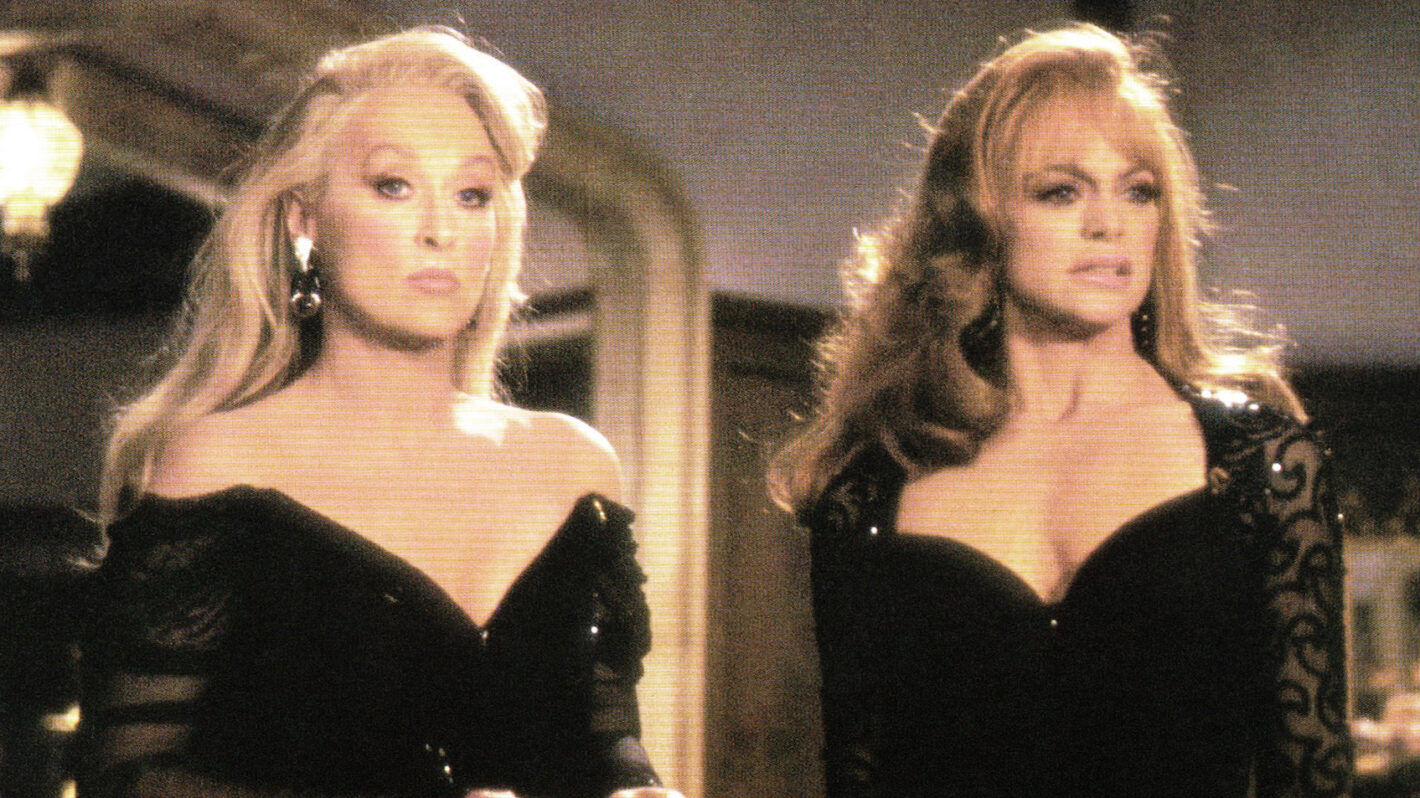
Willis’s performance in Death Becomes Her is often cited by critics as one of his most underrated. Stepping away from the "hard-boiled" persona established in the Die Hard franchise, Willis played Ernest as a harried, spineless, and ultimately moral figure. Streep’s comments reinforce the narrative that Willis was a versatile collaborator who thrived in an environment that allowed for comedic experimentation.
A Satirical Reflection of Beverly Hills Culture
During the interview, Streep offered a sharp observation regarding the film’s themes, stating that she viewed the movie as "a documentary on Beverly Hills." This comment underscores the film’s enduring relevance as a satire of vanity, the obsession with youth, and the lengths to which individuals will go to preserve their physical appearance.
The script, written by David Koepp and Martin Donovan, was a scathing critique of the Hollywood "beauty industrial complex." By 1992, cosmetic surgery was becoming increasingly mainstream among the elite, and Death Becomes Her took this trend to its logical, supernatural extreme. The "magic potion" offered by the mysterious Lisle Von Rhuman (played by Isabella Rossellini) served as a metaphor for the toxic pursuit of eternal youth—a pursuit that ultimately leaves the protagonists as literal hollow shells of their former selves.
In the decades since its release, the film has found a second life as a cornerstone of "camp" cinema. It has been particularly embraced by the LGBTQ+ community, who find resonance in its themes of transformation, artifice, and the performative nature of gender and beauty. The film’s dialogue—sharp, witty, and often cruel—has become a staple of drag performances and pop-culture references.
The Evolution of the Death Becomes Her Brand
The cultural footprint of Death Becomes Her continues to expand beyond the original film. In recent years, the property has been adapted into a stage musical, which premiered in Chicago in 2024 and is slated for a Broadway run. Starring Megan Hilty and Jennifer Simard in the roles originated by Streep and Hawn, the musical adaptation demonstrates the narrative’s lasting appeal across different mediums.
The transition from screen to stage highlights the strength of the characters Madeline Ashton and Helen Sharp. Their rivalry, while comedic, touches on universal anxieties about aging and relevance. Streep’s recent comments about the "beef" with Hawn add a layer of meta-commentary to the film, as the real-life friction between the two stars mirrored the onscreen competition of their characters, albeit in a much more professional and benign fashion.
Broader Implications for Hollywood Production Standards
Streep’s reflections also shed light on the shifting standards of Hollywood professionalism. In the early 1990s, the "star system" often allowed for certain eccentricities or lapses in discipline, such as Hawn’s habit of driving herself and arriving late. In the modern era of filmmaking, where budgets frequently exceed $200 million and schedules are managed with military precision, such behavior is increasingly rare and often heavily penalized by insurance bonding companies.
The anecdote serves as a reminder of a transitional period in cinema history—a time when the industry was moving from the personality-driven productions of the 20th century into the tech-heavy, corporate-managed blockbusters of the 21st. Streep, known for her rigorous preparation and disciplined approach, represents the "prestige" wing of the industry, while Hawn’s more relaxed approach reflects the "movie star" charisma that dominated the 1970s and 80s.
Conclusion and Current Availability
As Death Becomes Her continues to find new audiences through streaming platforms like Peacock, the insights provided by Meryl Streep offer a valuable historical context for the film. The "beef" over a red convertible and a few minutes of tardiness serves as a charming footnote to a production that changed the landscape of visual effects and provided a timeless satire of human vanity.
The enduring friendship between Streep and Hawn, despite their differing work ethics, serves as a testament to the bonds formed in the "trenches" of movie production. Furthermore, Streep’s warm words for Bruce Willis provide a touch of grace to the legacy of an actor whose career is now being celebrated in his absence from the screen. Death Becomes Her remains not just a "documentary on Beverly Hills," as Streep joked, but a landmark of 1990s cinema that continues to provoke laughter and reflection thirty-two years after its debut.