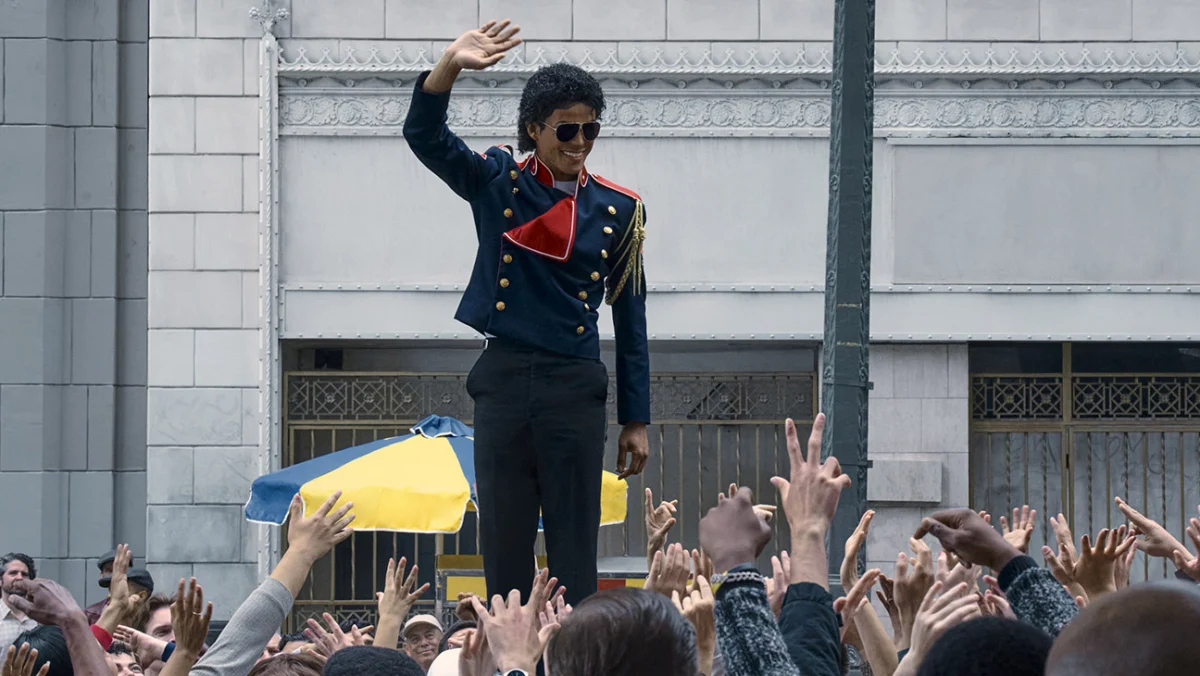
Antoine Fuqua’s Michael Jackson biopic has delivered an unprecedented box office performance, launching light-years ahead of initial projections to achieve a monumental domestic opening and a staggering global debut that has reshaped expectations for the music biopic genre and for Lionsgate, the studio behind the film. The highly anticipated film, simply titled Michael, is now projected to secure a domestic opening between $94 million and $100 million, contributing to a global launch exceeding $200 million. This extraordinary success marks a significant triumph for Lionsgate, registering as its most substantial opening in years and establishing new benchmarks across several categories within the film industry.
An Unprecedented Box Office Victory for Lionsgate
The initial domestic tracking for Michael three weeks prior to its release had estimated a more conservative opening in the $55 million to $60 million range. However, a surge in audience interest, effectively galvanized by Lionsgate’s strategic tapping into widespread nostalgia, propelled the film far beyond these early forecasts. The studio, while attempting to manage sky-high expectations, provided a wide domestic opening range of $90 million to $100 million, a testament to the film’s unexpected momentum. Rival studios, despite the inherent competition, have found it difficult to contain their excitement, recognizing the significance of such a robust performance in the current cinematic landscape.
On its official opening day, Friday, Michael commanded an impressive $38.5 million in domestic gross alone. This remarkable single-day performance signaled early on that the film was not merely meeting expectations but dramatically surpassing them. The swift ascent of audience exit scores to "platinum" status and the film’s broad appeal across virtually every demographic underscored its immediate cultural resonance. This strong audience reception stood in stark contrast to the earlier "chatter about generally bad reviews," demonstrating a clear disconnect between critical opinion and public enthusiasm. The film’s ability to attract such a diverse audience, notably led by Black and female moviegoers, highlights its broad appeal and the enduring power of Michael Jackson’s legacy.
Setting New Benchmarks: Music Biopics and Beyond
Michael‘s opening weekend has unequivocally rewritten the record books for music biopics. Its projected domestic haul comfortably surpasses the previous record holder, Universal’s Straight Outta Compton, which opened to $60.1 million, and Fox’s Freddie Mercury biopic, Bohemian Rhapsody, which debuted with $55 million. These figures, while not adjusted for inflation, represent a significant leap in the commercial viability of the music biopic genre. Straight Outta Compton, released in 2015, chronicled the rise of N.W.A. and resonated deeply with audiences for its compelling narrative and powerful soundtrack. Bohemian Rhapsody, released in 2018, similarly captivated viewers with its portrayal of Queen and Freddie Mercury’s iconic career, going on to win multiple Academy Awards. Michael‘s performance not only eclipses these successes but also signals a renewed appetite for biographical films centered on musical legends.

Beyond the music biopic niche, Michael has also emerged as one of the biggest biopic openings of all time across all genres. In a further impressive feat for 2026, it is set to surpass Project Hail Mary for the top domestic opening of the year for a non-franchise, non-tentpole film, indicating its standalone power without the built-in audience of established cinematic universes. For Lionsgate specifically, this achievement is monumental, placing Michael as the sixth-biggest opening in the studio’s history. This puts it in an elite category, trailing only the first four installments of the hugely successful Hunger Games franchise and Summit Entertainment’s final Twilight movie, showcasing the film’s extraordinary impact on the studio’s financial performance.
The early indicators of Michael‘s potential were evident during its preview screenings. The film garnered an impressive $12.6 million from Wednesday and Thursday previews, a figure comparable to the 2026 sleeper blockbuster Project Hail Mary. Furthermore, it outpaced event pictures such as Dune: Part Two and Oppenheimer, both of which reported preview grosses in the $10 million range earlier this year. These strong preview numbers hinted that Michael was poised for a significant opening, though the scale of its subsequent weekend performance still managed to surprise many industry observers.
Audience vs. Critics: A Striking Dichotomy
One of the most compelling narratives surrounding Michael‘s release has been the stark divergence between critical and audience reception. While headlines on Thursday focused on a "worrisome" Rotten Tomatoes critics’ score, which initially hovered between 29 percent and 33 percent before rising to 40 percent, audience scores told an entirely different story. The film was graced with an astounding 96 percent audience score on Rotten Tomatoes, a figure heralded as the best ever for the music biopic genre. This overwhelmingly positive audience sentiment was further corroborated by PostTrak exit scores consistently in the low 90s and an exceptional "definite recommend" rating of 85 percent – levels rarely seen in the industry. Although it did not achieve a perfect grade on CinemaScore, its solid A- rating underscored strong satisfaction among moviegoers.
This significant disparity highlights a growing trend in the film industry where audience enthusiasm can often override critical reservations, particularly for films with a strong cultural connection or nostalgic appeal. The strong word of mouth generated by these exceptional audience scores played a crucial role in sustaining the film’s momentum throughout its opening weekend, proving that Michael was not merely appointment viewing for hardcore fans but also captivated a broader public.
The demographic breakdown of Michael‘s audience further illuminates its widespread appeal. Black moviegoers significantly over-indexed, comprising 38 percent of opening-day ticket buyers. The film also successfully played to a relatively diverse audience, with Latinos accounting for 26 percent and white moviegoers also at 26 percent of Friday’s audience, according to PostTrak snapshots. This diverse appeal underscores the universal impact of Michael Jackson’s music and persona, transcending racial and cultural boundaries to unite audiences in cinemas.
The Long Road to the Screen: Production Context and Creative Choices

The journey of Michael to the big screen was protracted and fraught with challenges, including a significant delay that led to an increased budget. Initially budgeted at $155 million, the film’s final cost neared $200 million due to tens of millions spent on additional photography required to "rejigger" the third act. This substantial financial commitment reflected a critical creative decision made by producer Graham King, Lionsgate, and the Michael Jackson Estate: to conclude the film’s narrative before the superstar became engulfed in allegations of child sexual abuse. While rumors surrounding Jackson began to surface in the late 1980s, the first public accusation did not emerge until 1993. The filmmakers opted to avoid depicting these highly sensitive and legally contentious years, effectively sidestepping potential legal challenges and controversies that could overshadow the film’s focus on Jackson’s musical legacy.
The Hollywood Reporter chief film critic David Rooney acknowledged this strategic narrative choice in his review, noting that director Antoine Fuqua and screenwriter John Logan "don’t exactly break the mold with Michael, nor do they stuff it with major revelations. But they tap into a vein of melancholy underlaying the stratospheric success that’s surprisingly affecting." Rooney further elaborated, "The online mob will be sharpening their pitchforks given the movie’s failure to address the accusations of child sexual abuse that tarnished Michael Jackson’s legacy. But the filmmakers get around that by focusing on his early career, ending with the 1988 Bad World Tour concert in London, years before allegations first surfaced. The epilogue card reading ‘His story continues’ does some heavy lifting." This creative decision, while controversial for some, allowed the film to concentrate on Jackson’s monumental rise to stardom and his impact on music and culture, culminating at a point before the public controversies intensified.
Despite the film’s conclusive ending point, there is rampant discussion regarding the possibility of a sequel. However, some industry observers question the feasibility of such a project, acknowledging the inherent difficulty, if not impossibility, of avoiding the "darker years" that followed the 1988 Bad World Tour. Any subsequent film attempting to cover the later stages of Jackson’s life would inevitably confront the very allegations and legal battles that the current film meticulously avoided, posing a significant challenge for filmmakers and potentially reigniting intense public debate.
Global Phenomenon: International Market Dominance
Michael Jackson’s status as a global icon translated directly into Michael‘s overwhelming international success. Overseas, where Jackson’s fanbase is arguably even larger and more fervent, the biopic launched to a record-breaking estimated $114 million, excluding Japan, which has a delayed release. The film opened in 82 markets this weekend, securing the number one spot in an astonishing 64 of them and setting new records for a music biopic in 63 markets. This widespread international dominance underscores the universal appeal of the King of Pop and the film’s effective global marketing strategy.
The film began its international rollout in many key markets on Wednesday, earning $16.6 million on its first day, contributing to an early running total of $18.5 million including previews. By Thursday, it had added another $13.2 million, pushing its early international cumulative gross to $31.7 million. These early numbers were clear indicators of the global phenomenon that Michael was quickly becoming.
Key international markets delivered exceptional results, further illustrating the film’s worldwide impact:

- *U.K. & Ireland ($13.8 million projected opening through Sunday):* Achieved the biggest opening day for a musical biopic of all time with $2.6 million, surpassing the Wednesday opening of Bohemian Rhapsody and significantly outperforming the Friday openings of Elvis and Rocketman*. Thursday’s gross reached $4.1 million, capturing 71 percent of all tickets sold.
- *France ($10.3 million projected opening through Sunday):* Scored $2.6 million on Wednesday, marking the biggest opening day ever for any biopic, comfortably ahead of the Wednesday openings of Oppenheimer and Bohemian Rhapsody*. France added another $1.3 million on Thursday, reaching a two-day cume of $3.9 million and capturing 32 percent of all admissions across both daytime and night shows.
- *Mexico ($9.3 million projected opening through Sunday):* Opened to $1 million on Thursday, three times more than Bohemian Rhapsody*’s debut, and continued to account for 62 percent of all tickets purchased, demonstrating exceptional market penetration.
- *Italy ($8.1 million projected opening through Sunday):* Earned a strong $816,000 on Thursday for a two-day total of $2.1 million, commanding an impressive 69 percent of the market. Michael* also reported the highest per-location average of any top title, exceeding $16,000, underscoring its efficiency and demand.
- *Germany ($6.7 million projected opening through Sunday):* Delivered a strong Thursday, contributing to a running total of $2.1 million, with its opening day earnings of $1.3 million beating Bohemian Rhapsody*. The film notably had its world premiere at the Berlin Film Festival earlier this year, a strategic nod to the importance of the King of Pop’s fanbase in Europe.
Other top-performing markets included Brazil, where Michael secured the top opening day ever for a Hollywood biopic, thanks to a robust first day and record previews that outstripped both Bohemian Rhapsody and Oppenheimer. The film’s staggered release strategy will see Kino and Lionsgate release Michael in Japan in June, a market where Michael Jackson’s fanbase is famously enormous. The 2011 posthumous concert documentary This Is It earned $196 million at the foreign box office, with Japan alone contributing $57 million, providing a strong precedent for Michael‘s potential success in that territory.
Lionsgate’s Strategic Triumph and Industry Implications
Lionsgate Motion Picture Group Chair Adam Fogelson issued a statement early Saturday, expressing gratitude to all involved, including director Antoine Fuqua, producer Graham King, Jaafar Jackson (who portrays the titular role as the real-life nephew of the late King of Pop), and the Michael Jackson Estate. Fogelson remarked, "Above all, it reflects the tremendous outpouring of love and affection from moviegoers around the world, underscoring the strength and vitality of the theatrical box office. If you give audiences what they want, they will come." This statement encapsulates the studio’s successful strategy of identifying and delivering a film that resonated deeply with a global audience eager to revisit the legacy of Michael Jackson.
The success of Michael holds significant implications for Lionsgate, a "mini-major" studio. This monumental opening demonstrates the studio’s capability to deliver blockbusters without relying solely on established franchises, providing a significant boost to its market standing and financial health. It also serves as a powerful affirmation of the enduring vitality of the theatrical box office, particularly in an era where streaming services often dominate industry discussions. The film’s ability to inspire infrequent moviegoers to return to multiplexes in droves, and to spark interest among avid Gen Z moviegoers, showcases a broader trend that when a film captures the cultural zeitgeist and offers a compelling reason for a communal viewing experience, audiences will respond enthusiastically.
The triumph of Michael in the face of mixed critical reviews also reignites the ongoing debate about the influence of critics versus audience sentiment in determining a film’s commercial success. In this instance, the overwhelmingly positive audience reaction clearly overpowered any critical reservations, suggesting that for certain highly anticipated biographical films or cultural events, audience connection and emotional resonance can be the ultimate arbiters of box office performance. As the industry continues to evolve, Michael‘s record-breaking run will undoubtedly be studied as a case study in leveraging global icon status, strategic narrative choices, and effective audience engagement to achieve extraordinary cinematic success in 2026 and beyond.