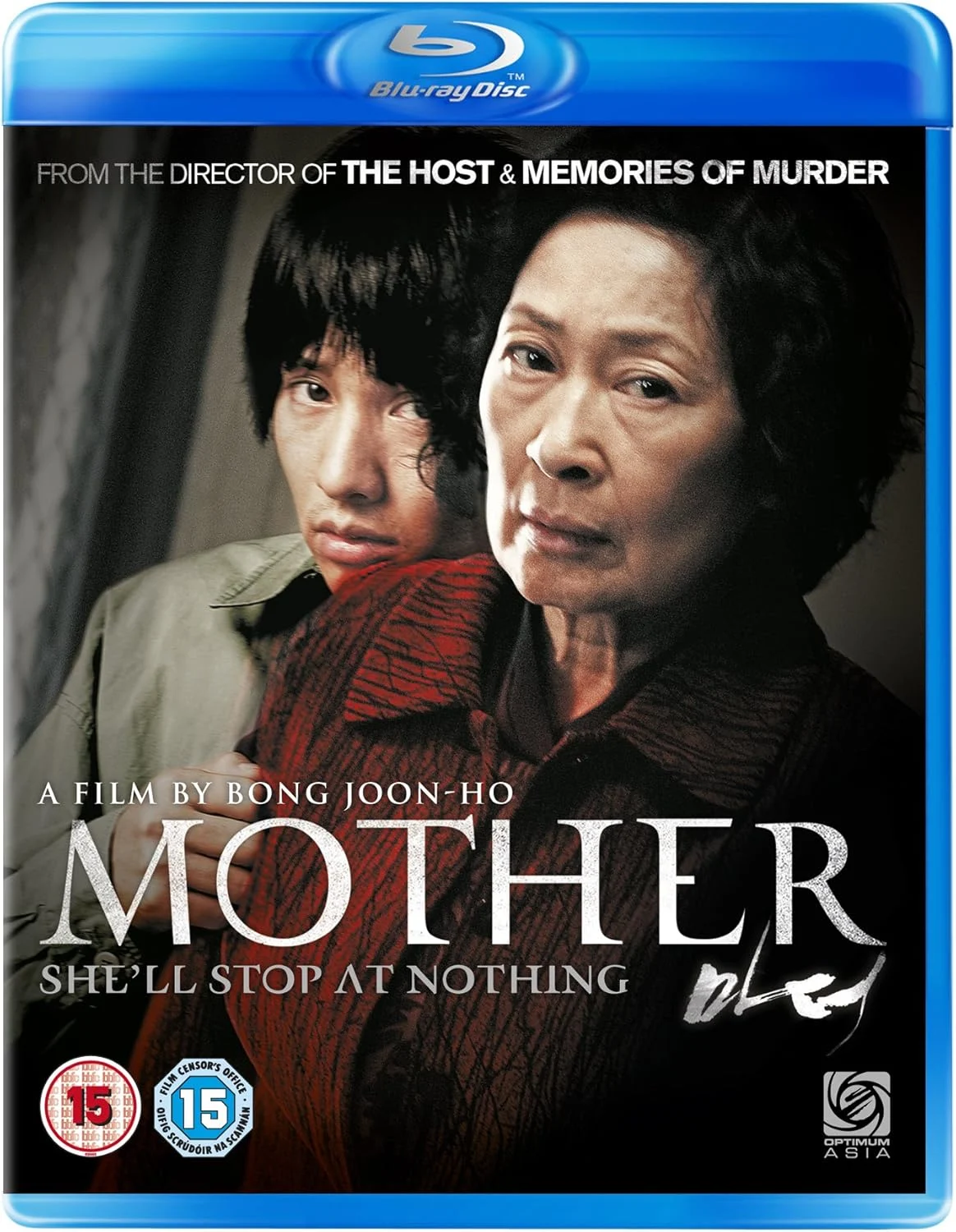
The 2009 cinematic release, Mother, stands as a pivotal entry in the distinguished filmography of South Korean director Bong Joon-ho, arriving in the wake of the international triumph of his monster feature, The Host. This intricately crafted film further solidified Bong’s burgeoning reputation as one of contemporary cinema’s most versatile and incisive auteurs, capable of seamlessly traversing and subverting established genre conventions. Produced on a comparatively modest budget, estimated at approximately $5 million, the film resonated profoundly with domestic audiences, achieving significant commercial success in South Korea. It attracted more than three million admissions during its theatrical run, positioning it among the top-grossing domestic films of that year and underscoring its cultural impact within its home market.
Production and Initial Reception
The genesis of Mother began shortly after Bong Joon-ho had achieved unprecedented global recognition with The Host (2006), which broke box office records in South Korea and garnered widespread critical acclaim internationally. This success provided Bong with a heightened level of creative freedom, allowing him to embark on a project that was both deeply personal and stylistically distinct from his previous works. Mother represented a deliberate shift in scale and thematic focus, moving away from the large-scale creature feature to an intimate, psychologically dense drama rooted in a specific familial relationship. Despite its smaller budget compared to The Host, the investment was strategically allocated to ensure a high production value, particularly in terms of cinematography, set design, and the meticulous casting of its central figures. The film’s commercial performance, exceeding three million admissions, translated into a substantial return on investment and demonstrated Bong’s ability to attract a broad audience even with a more challenging and nuanced narrative. This success was crucial in establishing him as a consistently bankable director whose artistic vision also possessed commercial viability, a rare feat in the global film industry.
Global Acclaim and Festival Circuit
Mother swiftly garnered international attention, marking its global premiere in the prestigious Un Certain Regard section of the 62nd Cannes Film Festival in May 2009. This selection, a significant honor in itself, immediately elevated Bong’s global profile and positioned the film as a must-see for international critics and cinephiles. The festival run continued with screenings at numerous other high-profile events, including the Santa Barbara International Film Festival, the Toronto International Film Festival, and the New York Film Festival, among others. These widespread festival appearances were instrumental in introducing the film to Western audiences, cultivating a dedicated following and generating considerable buzz across various media platforms. Critics lauded the film for its audacious narrative, stunning visual style, and the compelling central performance, often highlighting Bong’s unique ability to blend suspense, dark humor, and profound social commentary.
A particularly noteworthy aspect of the film’s distribution strategy was the subsequent release of a black-and-white version. This artistic decision, overseen by Bong Joon-ho himself, was not merely a stylistic flourish but a deliberate move to accentuate the film’s visual precision and highlight its noir-esque qualities. Bong stated that he felt the film’s meticulous compositions and intricate lighting, expertly captured by cinematographer Hong Kyung-pyo, would be even more striking without the distraction of color, drawing the viewer’s focus more intently on the characters’ expressions and the stark contrasts within the narrative. This re-release generated additional critical discussion and further solidified the film’s reputation as a work of profound artistic intent.
Narrative Unfolding: A Mother’s Unwavering Resolve
At its core, Mother presents a compelling and increasingly disquieting narrative centered on a widowed herbalist, known simply as Mother, portrayed with breathtaking intensity by Kim Hye-ja. Her existence is inextricably linked to that of her intellectually disabled son, Do-joon (Won Bin), with whom she shares a fragile and co-dependent life in a quiet, unassuming South Korean town. Their precarious equilibrium is irrevocably shattered when the brutal murder of a local high school girl rocks their community. In a swift and alarming turn of events, Do-joon is apprehended by a local police force depicted as both incompetent and indifferent, more concerned with a quick resolution than a just one. Through manipulative tactics rather than concrete evidence, they extract a confession from the vulnerable Do-joon, leading to his swift incarceration.
Confronted with a justice system that appears profoundly flawed and a community seemingly quick to condemn, Mother embarks on a desperate and relentless quest to prove her son’s innocence. Her journey is fraught with immense challenges, forcing her to navigate a labyrinthine landscape of social prejudice, dire financial hardship, and increasingly complex moral ambiguities. As she delves deeper into the mystery, her investigation transforms from a straightforward search for a killer into a far more unsettling and introspective exploration of truth, responsibility, and the darker recesses of human nature. The film meticulously charts her descent into an morally gray area, challenging audience perceptions of justice and maternal love.
Genre Subversion and Psychological Depth
While the initial premise of Mother might suggest a conventional, sentimental drama centered on themes of maternal devotion and sacrifice, Bong Joon-ho masterfully subverts these expectations. He crafts a narrative that operates far closer to the chilling intricacies of a psychological thriller, echoing the meticulous tension and thematic depth found in his earlier masterpiece, Memories of Murder (2003), while maintaining its own distinct and unique identity. The story unfolds with a deliberate, almost surgical precision, gradually escalating tension through a sophisticated layering of character development and unexpected tonal shifts.
Bong’s signature incorporation of dark humor serves as a crucial narrative device, momentarily disarming the viewer and providing fleeting moments of levity before plunging them back into an intensified state of unease. This deliberate juxtaposition highlights the absurdity inherent in the grim reality the characters inhabit and underscores the film’s nuanced approach to storytelling. Through this intricate narrative construction, Bong delves into not only the practical mechanics of crime and investigation but also, and perhaps more profoundly, the inherent fragility of human perception. The film challenges the audience to question what they see, what they believe, and the extraordinary lengths to which individuals will go to preserve their own version of reality, particularly when faced with existential threats to their loved ones. The psychological undercurrents are strong, exploring the boundaries of obsession, denial, and self-preservation within the context of an unbreakable maternal bond.
Themes of Institutional Failure and Societal Critique
Contextually, Mother resonates deeply within Bong Joon-ho’s broader body of work, serving as a poignant continuation of his consistent exploration of institutional failure and social marginalization. These themes are recurrent motifs throughout his filmography, from the bureaucratic ineptitude depicted in Memories of Murder to the class disparities explored in Snowpiercer and Parasite. In Mother, the police force is meticulously portrayed as not merely inefficient but actively careless, prioritizing the expedient closure of a case over the meticulous pursuit of justice. Their manipulation of Do-joon, a vulnerable individual, serves as a searing critique of systemic flaws that disproportionately affect the powerless.
Beyond the police, the broader community is depicted as being marred by a pervasive sense of indifference and quiet complicity. Neighbors turn a blind eye, whispers replace concrete action, and a collective apathy allows injustice to fester. This societal backdrop amplifies Mother’s isolation and underscores the systemic obstacles she faces. Simultaneously, the movie delves into the more uncomfortable and darker aspects of maternal love. Bong challenges the idealized notion of motherhood as a purely nurturing and selfless force, instead presenting it as something capable of profound distortion, obsession, and even excess. In this regard, the narrative compels the audience to critically re-evaluate the conventional boundaries of morality, particularly as the protagonist’s actions become increasingly ambiguous and ethically challenging. The film masterfully blurs the lines between right and wrong, forcing viewers to confront uncomfortable truths about human nature and the sacrifices made in the name of love.
Technical Mastery: Crafting the Atmosphere
From a technical standpoint, Mother exhibits a remarkable level of excellence across all production departments, contributing significantly to its immersive and unsettling atmosphere.
-
Cinematography by Hong Kyung-pyo: Hong Kyung-pyo’s cinematography is particularly striking and widely acclaimed. He captures the rundown neighborhood and narrow alleyways with a dual sense of stark realism and suffocating claustrophobia. His visual palette employs a muted, almost desaturated quality that emphasizes the bleakness of the setting and the grim nature of the investigation. The camera work is precise, often utilizing static shots that allow the unsettling drama to unfold naturally, punctuated by carefully orchestrated tracking shots that convey Mother’s relentless pursuit. His visual approach reaches its artistic zenith in the film’s unforgettable opening and closing sequences. These moments employ a surreal, almost dreamlike aesthetic that frames the entire narrative in a cyclical and profoundly hypnotic manner, creating an immediate sense of intrigue and leaving a lasting impression of existential ambiguity. The visual language effectively communicates the psychological state of the characters and the oppressive environment they inhabit.
-
Musical Score by Lee Byung-woo: Lee Byung-woo’s musical score is a masterclass in subtle enhancement. Rather than overwhelming the scenes with overt dramatic cues, the score discreetly underpins the emotional tension, creating an atmosphere of quiet dread and melancholic beauty. It utilizes sparse instrumentation, often featuring piano and strings, to evoke a sense of isolation and vulnerability. The music never dictates the emotion but rather amplifies the underlying currents, allowing the audience to feel the psychological weight of Mother’s journey without explicit manipulation. Its understated power ensures that the emotional impact of the narrative remains paramount.
-
Editing by Moon Sae-kyung: Moon Sae-kyung’s editing maintains a meticulous balance between clarity and ambiguity, a crucial element for a film that thrives on mystery and shifting perspectives. The pacing is deliberate, allowing scenes to breathe and characters to develop, yet it never drags. The cuts are purposeful, guiding the viewer through the complexities of the plot while strategically withholding information or presenting it in a way that continuously reshapes the viewer’s understanding. This masterful control over narrative flow ensures that the film’s revelations hit with maximum impact, contributing to the overall sense of unease and intellectual provocation.
Exceptional Performances: The Pillars of the Narrative
The profound impact of Mother is inseparably linked to the extraordinary performances delivered by its lead actors, who imbue their characters with compelling depth and nuance.
-
Kim Hye-ja as Mother: Kim Hye-ja, a veteran actress revered in South Korea for her television work, delivers what many critics consider a career-defining performance. She carries the entire narrative with a presence that is simultaneously commanding and deeply unsettling. Her portrayal transcends the conventional archetype of a grieving mother, transforming what could have been a straightforward role into a complex and often disturbing study of obsession, denial, and fierce, uncompromising love. Kim’s ability to convey a vast spectrum of emotions—from tenderness and despair to cunning and desperation—often within a single scene, is truly remarkable. Her physical acting, particularly in the iconic opening and closing sequences, conveys a profound internal struggle that is both captivating and profoundly disturbing, cementing her performance as one of the most memorable in contemporary South Korean cinema.
-
Won Bin as Do-joon: Won Bin, known for his charismatic leading roles, offers a nuanced and remarkably restrained performance as Do-joon. He deftly avoids caricature, instead presenting Do-joon as a character defined by a pervasive vulnerability and confusion. His intellectual disability is portrayed with sensitivity and authenticity, making his predicament all the more heartbreaking. Do-joon’s emotional state remains difficult for the audience to fully grasp, adding another layer of ambiguity to the narrative and making his innocence or guilt a constant question mark. Won Bin’s performance is crucial in maintaining the film’s psychological tension and the audience’s engagement with Mother’s desperate quest.
-
Supporting Cast: The ensemble of supporting performances further enriches the narrative tapestry. Jin Goo, as Jin-tae, Do-joon’s volatile friend, provides a crucial counterpoint to the central duo, injecting an element of unpredictable danger. The film also features early, impactful appearances from a number of then lesser-known actors who have since risen to prominence, such as Chun Woo-hee and Kwak Do-won. Their contributions, though often brief, add significant layers to the social environment in which the story unfolds, populating the town with believable, complex characters who reflect the film’s themes of apathy, suspicion, and veiled secrets. Their collective performances create a credible and unsettling backdrop for Mother’s increasingly desperate actions.
Legacy and Broader Implications
Ultimately, despite its deceptively simple premise of a mother seeking to clear her son’s name, Mother emerges as a deeply unsettling, intellectually provocative, and enduring work that masterfully transcends traditional genre boundaries. By skillfully blending elements of psychological thriller, intense drama, and subtle dark comedy, Bong Joon-ho crafts a narrative that is as emotionally engaging as it is intellectually challenging. The film’s audacious exploration of distorted maternal love, its unflinching critique of institutional failings, and its precise technical execution, combined with the outstanding and unforgettable performances, culminate in a cinematic experience that lingers long after its conclusion.
Mother solidified Bong Joon-ho’s standing as a formidable force in global cinema, showcasing his singular ability to meld social commentary with gripping storytelling. Its success paved the way for his subsequent international projects and further established the global recognition of Korean cinema’s artistic depth and commercial viability. The film leaves the audience in a state of profound discomfort, mirroring the deep-seated ambiguity at its core, and continues to be analyzed and admired for its daring vision and its unflinching examination of the human condition under duress. It remains a testament to the power of cinema to provoke thought, challenge perceptions, and explore the darkest corners of human emotion.