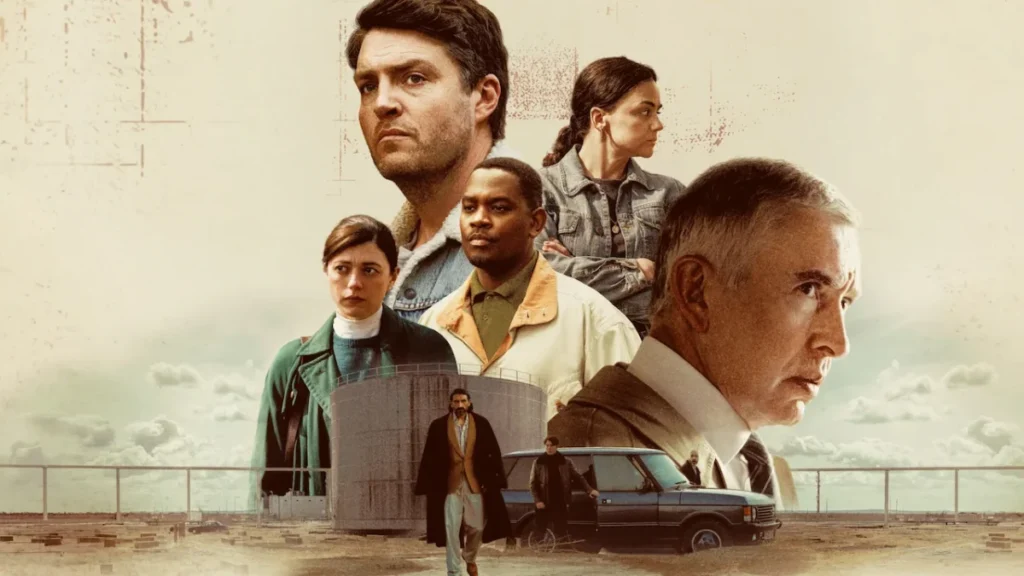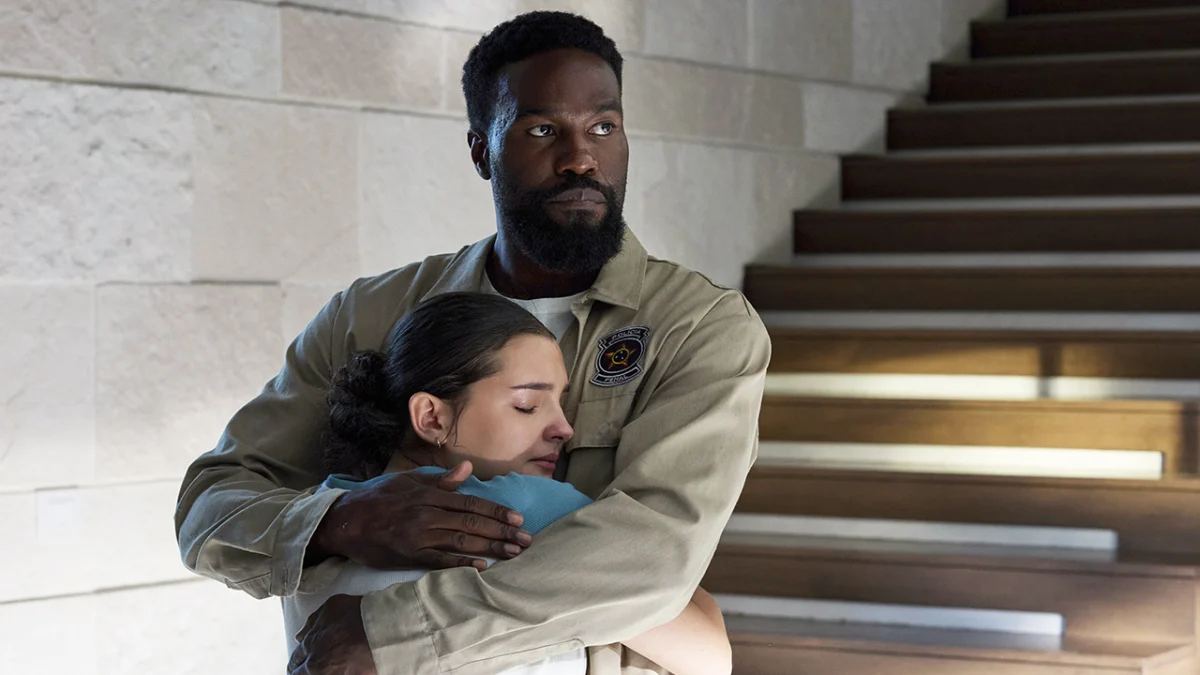
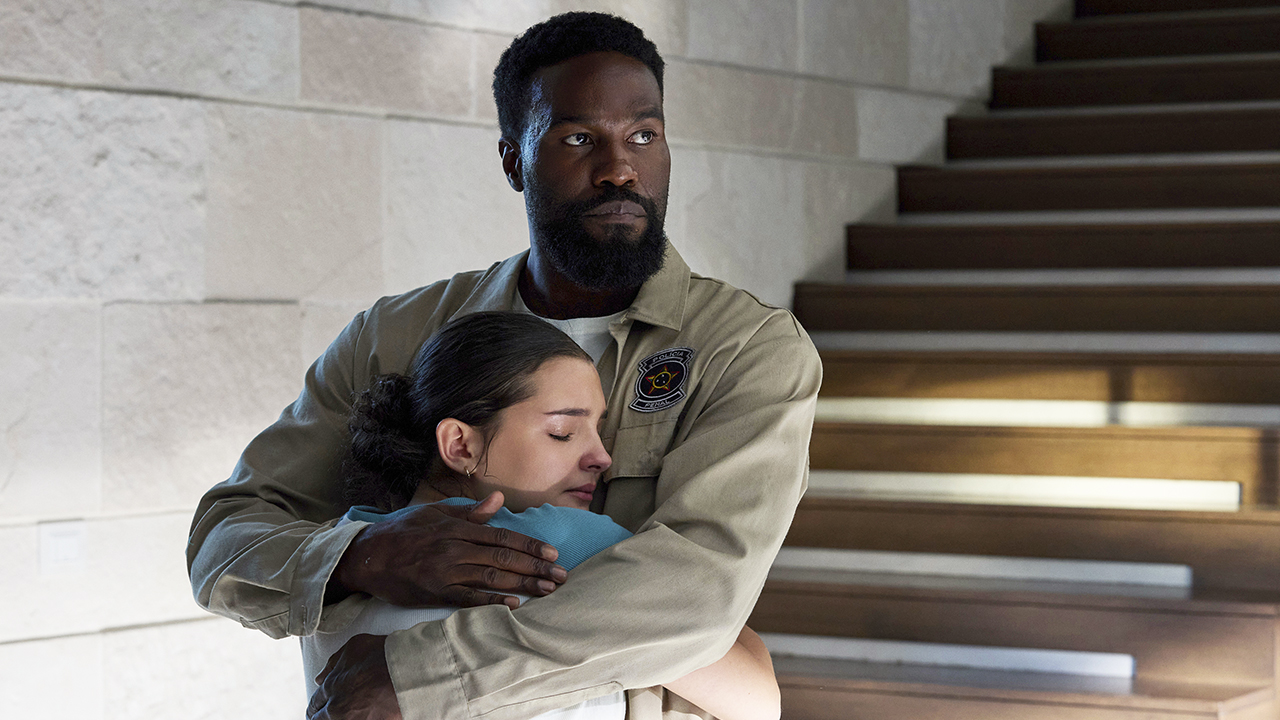
Netflix’s recent adaptation of A.J. Quinnell’s renowned novel, Man on Fire, premiered on April 30, 2024, concluding a month of diverse original programming. This gritty action thriller marks the third major screen interpretation of Quinnell’s work, following Tony Scott’s critically acclaimed 2004 film starring Denzel Washington and an earlier 1987 rendition featuring Scott Glenn. The series delves into the harrowing journey of John Creasy, portrayed by Yahya Abdul-Mateen II, a former soldier grappling with severe PTSD and alcoholism stemming from a mission gone awry. In this Netflix iteration, Creasy operates as a contractor for the CIA, a departure from the books where he served in the French Foreign Legion. A consistent narrative thread across all versions sees John Creasy undertaking the role of protector for a young girl. In the Netflix series, this charge is Poe Rayburn (Billie Boullet), the teenage daughter of Creasy’s old military comrade, Paul Rayburn.
A Deep Dive into Season 1’s Narrative and Resolution
Warning: The following section contains spoilers for Season 1 of Man on Fire. Readers wishing to avoid plot details should proceed with caution.
The first season of Man on Fire plunges Creasy into a desperate quest for vengeance after Paul and his family are tragically killed in a bombing. Poe, having survived the attack, becomes a crucial witness and, consequently, a target, placing her life in grave danger. Creasy, battling his own demons, assumes the mantle of her protector, embarking on a relentless personal mission to uncover the truth behind the mysterious attackers. The series meticulously traces a complex conspiracy, from the labyrinthine underworld of Rio de Janeiro’s gangs to the highest echelons of the CIA and the Brazilian government.
The investigation culminates in the shocking revelation that Henry Tappan (Scoot McNairy), another former CIA colleague, was the mastermind behind the betrayal. Following a climactic confrontation and the resolution of the immediate conflict, Creasy receives an intriguing offer from his former CIA boss. This proposition is framed as a form of recompense for Tappan’s egregious actions and, more significantly, presents Creasy with an opportunity for long-awaited retribution against the operatives in Mexico City responsible for the massacre of his team at the series’ outset. This unresolved thread serves as a potent cliffhanger, setting the stage for potential future narratives and further deepening Creasy’s journey of personal and professional reckoning. The first season effectively established a new interpretation of a beloved character, balancing fidelity to the source material’s core themes with contemporary relevance and a fresh geographical setting.
Official Renewal Status and Performance Metrics
As of May 13, 2024, Netflix has not yet issued an official announcement regarding the renewal of Man on Fire for a second season. The series currently holds a "Pending" status. However, based on initial viewership data and performance trends, industry observers and analysts are leaning towards a potential renewal.
The series made a strong debut on Netflix, quickly ascending to the top of the streaming charts in its first two weeks. In its premiere week (April 26 to May 3, 2024), Man on Fire accumulated an impressive 61 million hours viewed, translating to approximately 11 million total views (calculated by dividing hours viewed by the total runtime of the season, a common Netflix metric referred to as CVE or Completed Viewing Equivalents). This performance secured its position as the number one ranked series globally.
The momentum continued into its second week (May 3 to May 10, 2024), where the series saw a significant 15% uplift in viewing hours, reaching 70.2 million hours viewed. This brought the total views for the week to 12.6 million, once again holding the top spot. Cumulatively, as of May 13th, Man on Fire has garnered 131.2 million viewing hours and 23.6 million views. This consistent upward trend in viewership during its crucial initial weeks is often a strong indicator for Netflix, suggesting sustained audience engagement rather than a front-loaded surge.
Comparative Performance and Netflix’s Renewal Calculus
To contextualize Man on Fire‘s performance, it’s essential to compare it against other Netflix original series, particularly within the action-thriller genre, which has proven to be a popular and strategic area for the streamer. The series’ viewership places it firmly within the mid-tier of Netflix’s original programming. While it hasn’t achieved the stratospheric success of breakout hits like The Night Agent (which debuted with 168.71 million hours viewed in its first week) or the more recent Untamed, its numbers are competitive with many other shows that have successfully secured renewals. For instance, action series like FUBAR (starring Arnold Schwarzenegger) and The Recruit have seen comparable or slightly lower initial viewership but were greenlit for subsequent seasons, often factoring in completion rates and global reach.
The global popularity of Man on Fire is further evidenced by its strong performance across various tracked regions, as indicated by heatmaps from analytics platforms like FlixPatrol. The series has ranked prominently in the Top 10 lists in all tracked regions, demonstrating particular strength in Europe and Latin America. This widespread international appeal is a critical metric for Netflix, which operates as a global streaming service. Shows that resonate across diverse geographic markets are often prioritized for renewal, as they contribute significantly to subscriber retention and acquisition worldwide. A series that performs well globally can justify its production costs more effectively than one confined to a single market.
Netflix’s renewal decisions are multifaceted, typically considering factors beyond just raw viewership hours. These include:
- Completion Rate: How many viewers who start a series finish it? High completion rates signal strong engagement.
- Subscriber Acquisition/Retention: Does the show attract new subscribers or prevent existing ones from churning?
- Cost vs. Viewership: The budget of the series relative to its audience size.
- Critical Reception and Buzz: While less quantifiable, positive critical and audience buzz can contribute to a show’s longevity.
- Franchise Potential: Does the series have ongoing narrative possibilities or could it spin off into other projects? Man on Fire, with its literary source material, certainly presents this potential.
Given its solid viewership, positive week-over-week growth, and robust international performance, Man on Fire appears to be positioned favorably for a second season, aligning with several of Netflix’s key renewal criteria for mid-tier performers.
Anticipating Season 2: Narrative Trajectories and Character Evolution
Should Netflix greenlight a second season, the narrative direction is already strongly hinted at by the conclusion of Season 1 and statements from the creative team.
A Return to Mexico City: Unresolved Trauma and New Conflicts
The most immediate and compelling plotline for Man on Fire Season 2 points towards Mexico City. The invitation Creasy receives from his former CIA boss explicitly offers him a chance to confront those responsible for the tragic death of his team in Mexico City, the very incident that plunged him into PTSD and alcoholism. This arc would allow for a deeper exploration of Creasy’s initial trauma, providing an opportunity for him to seek closure and perhaps begin a genuine healing process.
Yahya Abdul-Mateen II, in an interview with Decider, coyly addressed the future of the show, stating, "Without giving away everything about the show, I think it’s always nice to be able to potentially peer forward into the future," acknowledging that the narrative door has been deliberately left open. This suggests a shift in geographical focus from Rio de Janeiro to Mexico, promising a new backdrop for conspiracy, corruption, and intense action. Fans can expect an intricate web of new adversaries and allies as Creasy navigates the complex political and criminal landscapes of Mexico in pursuit of justice for his fallen comrades.
"Flashes of the Old Creasy": Character Development and Psychological Depth
The creative team has offered significant insights into John Creasy’s potential evolution. Abdul-Mateen II expressed his desire to explore Creasy’s pre-trauma persona. "I would like to see some flashes of the old Creasy before the incident," the actor remarked in a Netflix interview breaking down the Season 1 finale. He added, "I would like to see him more in his element in a charming type of way, because he’s definitely got that to him, but he also has this dangerous quality that I think is important for Creasy to keep." This suggests a nuanced portrayal, allowing glimpses of the charismatic and capable operative Creasy once was, while still retaining the hardened edge forged by his experiences.
Showrunner Kyle Killen further elaborated on Creasy’s profound worldview shift. Throughout Season 1, Creasy maintained emotional distance, viewing people as "puzzles" – a coping mechanism to avoid intimacy and vulnerability. However, witnessing the villainous Tappan operate with the same detached, geopolitical sociopathy forces Creasy to a critical realization: such a mindset is "toxic for your soul." This internal revelation is pivotal. For Season 2, viewers can anticipate a Creasy who is actively attempting to shed his emotional armor, no longer running from connection, even as he plunges into a new mission of vengeance. This psychological journey promises to add significant depth to the character, moving beyond a purely action-driven narrative.
The Enduring Bond: Will Poe Return?

Season 1 concludes with Poe safely resettled with her grandmother, having found a measure of peace and a way to confront her past without succumbing to regret. Killen highlighted the success of Creasy and Poe’s bond, noting that "she’s turning into him," experiencing a similar flavor of PTSD that initially sidelined Creasy. While Creasy’s primary mission now points towards Mexico City, his newfound role as a father figure to Poe has given him "a reason to live," according to Abdul-Mateen.
Even if Poe is not directly embroiled in the action of a potential second season, her emotional significance to Creasy is undeniable. It is highly probable that she will remain an anchor for him, perhaps through intermittent contact or as a driving force behind his continued fight for justice. Her presence, even if remote, could serve as a crucial reminder of the humanity he rediscovered through protecting her, preventing him from fully succumbing to the darkness of his vengeful quest.
The Supporting Cast: New Allies and Shifting Dynamics
Creasy and Poe’s initial band of allies in Rio, including the resourceful cab driver Melo (Alice Braga) and her friends from the favelas, concluded Season 1 as national heroes, instrumental in exposing a high-level government conspiracy. Melo, who initially planned to leave Rio with her daughter, ultimately decided to stay. While their contributions were vital, a shift in location to Mexico City makes their direct involvement in Creasy’s next mission less likely. It is more probable that Creasy will forge new alliances in Mexico, introducing a fresh ensemble of characters who will aid or hinder his pursuit of justice. However, the possibility of a cameo or a plot thread that brings Melo back into Creasy’s orbit cannot be entirely dismissed, especially if the broader conspiracy were to have international tentacles connecting back to Brazil.
Leveraging the Literary Legacy: More of A.J. Quinnell’s Novels
The Man on Fire series is, of course, the inaugural novel in a series of five by A.J. Quinnell (a pseudonym for Philip Nicholson). The Netflix adaptation has already taken creative liberties, integrating elements from the sequel novel, The Perfect Kill, into its first season. This demonstrates a willingness to adapt and combine elements from the broader literary canon.
Beyond The Perfect Kill, Quinnell’s series offers a rich tapestry of further narratives that could inspire future seasons:
- The Blue Ring (1993): Set in the Mediterranean, this novel sees Creasy confronting another criminal cartel, notorious for its ties to Satanism, from which the book derives its title. This could offer a shift to a European setting and a more esoteric villain.
- Black Horn (1994): This installment takes Creasy through Zambia and Zimbabwe, exposing a criminal network with connections extending to Hong Kong. This presents an opportunity for an African setting and an exploration of international organized crime.
- Message From Hell (1996): In the final novel, Creasy travels to Vietnam and Cambodia, finding himself unexpectedly becoming the target of someone else’s revenge mission. This could invert the typical narrative, placing Creasy in a defensive rather than offensive role.
Given Netflix’s demonstrated approach of taking creative license with details—such as relocating the plot to Rio from Italy and altering specific characters and motivations—it is highly improbable that any future season would be a direct, 1:1 adaptation of these novels. The context of Quinnell’s books, often rooted in specific geopolitical realities of their publication era, differs significantly from contemporary narratives. However, the core themes of vengeance, protection, and Creasy’s relentless pursuit of justice, alongside the global scope and distinct geographical settings, offer a wealth of material for showrunner Kyle Killen and his team to draw upon and re-interpret for a modern audience.
Broader Implications and Netflix’s Strategy
The potential renewal of Man on Fire underscores Netflix’s continued investment in the action-thriller genre, particularly those based on established intellectual property. In an increasingly competitive streaming landscape, shows that resonate globally and demonstrate strong engagement are invaluable. Man on Fire leverages a recognized title and a compelling character, which can attract both existing fans of the books and films, as well as new viewers drawn to high-stakes drama. A successful multi-season run for Man on Fire would further solidify Netflix’s position as a premier destination for gritty, character-driven action content.
As the industry awaits an official announcement, the performance data and narrative potential strongly suggest that John Creasy’s journey of redemption and retribution is far from over. Fans will be eager to see if Netflix gives the green light for Creasy to ignite his quest for justice in Mexico City and beyond.
We will continue to update this article with any new information from Netflix, the cast, and the crew, as well as subsequent viewership data as it becomes available.