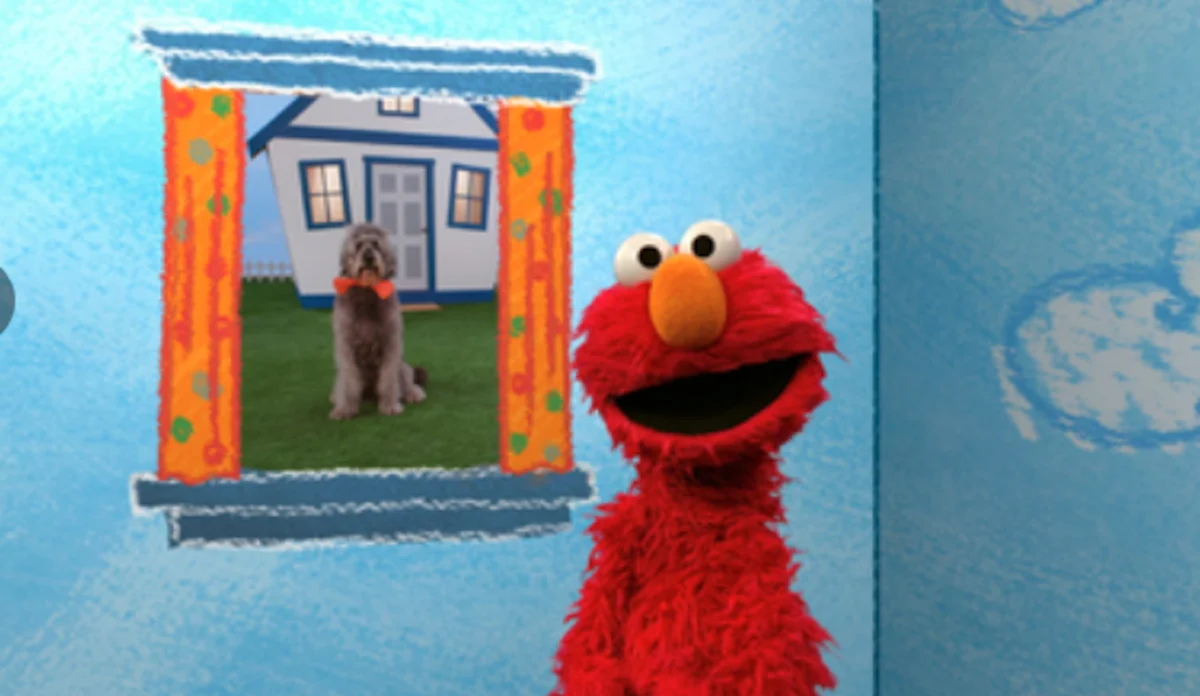
The long-standing educational program Sesame Street, which has served as a cornerstone of American children’s television since 1969, recently became the center of a cultural debate following a guest appearance by award-winning comedian and actor Ramy Youssef. In early April 2024, Youssef appeared in a segment alongside the iconic muppet Elmo to celebrate Arab American Heritage Month. The segment, designed to introduce young viewers to Arabic language and culture, featured Youssef teaching Elmo phrases such as "salamu alaykum" (peace be upon you) and "habibi" (my friend/my love). While the program intended the segment to be a celebration of diversity and inclusion, it triggered a wave of criticism from conservative media figures, leading to a broader discussion regarding the role of multiculturalism in children’s programming.
The controversy gained significant momentum following a broadcast of The Ingraham Angle on Fox News, where contributor Raymond Arroyo expressed deep dissatisfaction with the segment. Arroyo argued that the program should prioritize basic literacy and numeracy over what he characterized as "Arabic immersion." His commentary extended into speculative territory, suggesting that such cultural inclusions were a precursor to more overt religious displays on the show. Youssef, known for his Hulu series Ramy and his recent role in the Oscar-winning film Poor Things, subsequently appeared on ABC’s The View to address the backlash, pointing out what he perceived as a double standard in the criticism directed at his appearance.
The Chronology of the Sesame Street Segment and Initial Reception
The segment featuring Ramy Youssef was released across Sesame Street’s digital platforms and broadcast channels during the first half of April to coincide with Arab American Heritage Month. This month, formally recognized by the White House and several state governments, serves to honor the contributions of the estimated 3.7 million Americans of Arab descent. In the clip, Youssef is seen interacting with Elmo in a warm, educational manner. He explains that "salamu alaykum" is a greeting that translates to "peace be upon you," and he uses the term "habibi" to describe his friendship with the muppet.
Sesame Street’s official social media accounts promoted the video with the caption: "The word of the day is HABIBI! Happy Arab American Heritage Month from Ramy Youssef, Elmo, and all of your friends on Sesame Street!" Initially, the post received widespread praise from educators and families who appreciated the representation of Arab American culture, which has historically been underrepresented or negatively stereotyped in Western media. However, as the video circulated more widely, it caught the attention of conservative pundits who viewed the inclusion of Arabic language through a political lens rather than an educational one.
Conservative Criticism and the Fox News Response
The primary catalyst for the national debate was a segment on Fox News hosted by Laura Ingraham. During the discussion, Raymond Arroyo voiced his concerns, stating, "I wish Sesame Street would stick to teaching kids about letters and numbers and leave the Arabic immersion to someone else." Arroyo’s critique was not limited to the linguistic aspect of the segment; he further suggested that the inclusion of Arabic phrases was a slippery slope toward religious indoctrination. "Next, Bert and Ernie will be praying five times a day on Sesame Street, facing east," Arroyo added, referencing the Islamic practice of Salah.
This rhetoric tapped into a larger ongoing "culture war" in the United States, where critics of "woke" media argue that children’s entertainment has become overly focused on social engineering and identity politics. For these critics, the use of Arabic—a language spoken by over 400 million people globally—was interpreted as an unnecessary and potentially ideological insertion into a space meant for neutral learning.
Ramy Youssef’s Rebuttal on The View
On April 17, Ramy Youssef appeared on The View to discuss the situation with hosts Whoopi Goldberg, Joy Behar, Sara Haines, Sunny Hostin, and Alyssa Farah Griffin. Youssef expressed a mixture of surprise and amusement at the intensity of the backlash. He noted that Sesame Street has a five-decade history of incorporating various languages, most notably Spanish, which has been a staple of the show since its inception.
"I think they’re worried about Arabic immersion," Youssef told the panel. He then pivoted to a recent social media post by former President Donald Trump to highlight what he saw as a contradiction in conservative outrage. Youssef pointed out that on April 5, 2024, Trump had shared a post on Truth Social that included the phrase "Praise be to Allah" in a rhetorical context regarding the geopolitical tensions between Iran and Israel. Youssef remarked, "Imagine your president on Easter is tweeting, ‘Praise be to Allah,’ and now Elmo saying ‘habibi’ feels threatening."
Youssef emphasized that the word "habibi" is a term of endearment used by millions of people, regardless of their religious affiliation. He argued that the visceral reaction to the word "habibi" compared to the relative silence over a former president’s use of religious terminology suggested that the backlash was rooted in a specific discomfort with Arab identity rather than a consistent principle regarding language in the public sphere.
Historical Context: Sesame Street and Multiculturalism
To understand the context of this controversy, it is necessary to examine the history of Sesame Workshop, the non-profit organization behind Sesame Street. Since its debut in 1969, the show has been explicitly designed to reach underserved children and promote social harmony. The original cast was intentionally integrated, featuring Black, White, and Latino actors living together in a fictional New York City neighborhood.
The inclusion of the Spanish language was a revolutionary step in the early 1970s. Characters like Maria (Sonia Manzano) and Luis (Emilio Delgado) taught children Spanish words for decades without the level of sustained political backlash seen in the digital age. In more recent years, Sesame Street has continued this mission by introducing muppets from various backgrounds, including:
- Zari: A muppet from Afghanistan introduced in Baghch-e-Simsim to promote girls’ education.
- Kami: An HIV-positive muppet from South Africa designed to reduce the stigma surrounding the virus.
- Ji-Young: The show’s first Asian American muppet, introduced in 2021 to address anti-Asian racism.
- Ameera: A muppet who uses a wheelchair and was introduced to represent children with disabilities, particularly in the context of the Syrian refugee crisis.
The segment with Ramy Youssef fits squarely within this pedagogical tradition of using "windows and mirrors"—providing children with a window into other cultures and a mirror in which to see themselves reflected.
Supporting Data: Arab American Demographics and Media Representation
The backlash against the Arabic segment occurs against a backdrop of shifting demographics and increasing calls for representation. According to the Arab American Institute, the Arab American population has grown significantly over the last two decades, with major concentrations in states like Michigan, California, New York, and Florida. Despite this growth, studies by the Geena Davis Institute on Gender in Media have shown that Middle Eastern and North African (MENA) characters are frequently absent from children’s television or are relegated to background roles.
When MENA characters do appear, they have historically been associated with conflict or "otherness." Educators argue that segments like Youssef’s are vital for humanizing the Arab American experience for the next generation. For Arab American children, hearing a beloved character like Elmo say "habibi" can be a powerful moment of validation. For non-Arab children, it serves as a simple introduction to the reality of a globalized world.
Broader Impact and Implications for Children’s Media
The controversy surrounding Youssef’s appearance reflects a broader trend of "policing" children’s content. In recent years, programs ranging from Arthur to Bluey have faced scrutiny for addressing topics such as same-sex marriage, neurodiversity, or even mild behavioral issues. This climate has made children’s media a primary battlefield for adult political anxieties.
From a journalistic perspective, the data suggests that Sesame Street’s audience remains largely supportive of its inclusive mission. While social media "outrage" can create the appearance of a massive divide, the Sesame Workshop continues to receive high marks from child development experts for its ability to foster empathy. The "habibi" segment, while controversial in certain media circles, reached millions of viewers and sparked conversations about the importance of cultural literacy in early childhood education.
Analysis of the Cultural "Slippery Slope" Argument
The argument presented by Raymond Arroyo—that teaching "habibi" leads to "praying toward the east"—is an example of a "slippery slope" fallacy often used in cultural commentary. From a factual standpoint, Arabic is a language, not a religion. While it is the language of the Quran, it is also the native tongue of millions of Arab Christians, Jews, and secular individuals. By conflating a linguistic greeting with a specific religious ritual, critics risk alienating a diverse group of American citizens who share the same heritage.
Furthermore, Youssef’s point regarding the political use of the phrase "Praise be to Allah" highlights the selective nature of modern outrage. When a political figure uses such language for rhetorical effect, it is often ignored by the same pundits who find a children’s show’s use of "peace be upon you" to be provocative. This suggests that the objection is not to the language itself, but to the normalization of the culture within a mainstream, positive context.
Conclusion: The Surreality of Representation
For Ramy Youssef, the experience of being on Sesame Street was ultimately "surreal." He noted that growing up as an Arab American, he never saw his culture celebrated on the shows he loved as a child. "You grow up watching Elmo, you know?" he shared on The View. "And so for Elmo to say ‘salamu alaykum,’ for Elmo to say ‘habibi,’ I was very emotional."
The segment remains available on Sesame Street’s platforms, and despite the calls for the show to "stick to letters and numbers," the organization has shown no signs of retreating from its commitment to diversity. As the United States continues to grapple with its identity as a multicultural nation, the debate over a puppet saying "habibi" serves as a microcosm of the larger struggle to define what "American" culture looks like in the 21st century. While the backlash was vocal, the segment stands as a documented effort by one of the world’s most influential educational programs to bridge cultural divides through the simple act of teaching a new word.