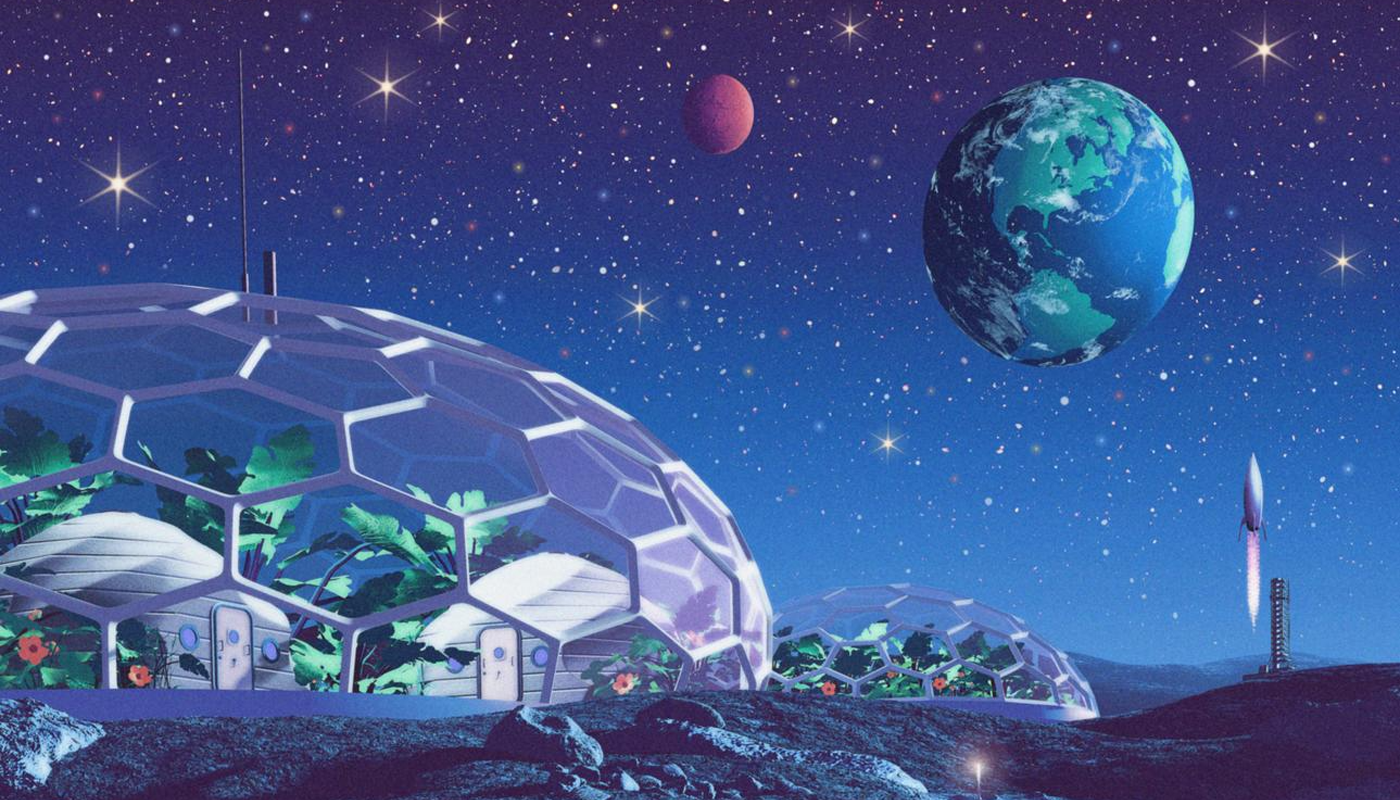
The enduring allure of the Moon has captivated humanity for millennia, serving as a constant celestial companion and a beacon of mystery in the night sky. For science fiction authors, however, this fascination has translated into a rich tapestry of narratives, exploring not just the journey to our closest celestial neighbor, but the profound implications of its settlement and transformation. These fictional explorations, spanning decades of literary output, paint a vivid picture of lunar colonization, societal development, and the challenges inherent in establishing human outposts beyond Earth. From the earliest speculative voyages to complex, near-future scenarios, these works offer a compelling glimpse into what might be, and what has been imagined.
The Dust of Dreams: Arthur C. Clarke’s "A Fall of Moondust" (1961)
Arthur C. Clarke, a titan of science fiction known for his prescient visions of technological advancement, delved into the unique geology of the Moon in his 1961 novel, "A Fall of Moondust." The story is predicated on Thomas Gold’s then-emerging hypothesis that lunar dust, far from being inert, could exhibit peculiar fluid-like properties under certain conditions. Clarke takes this concept and extrapolates it into a thrilling adventure set on a Moon transformed by human ingenuity.
The narrative centers on Port Roris, a tourist destination located in the Sea of Thirst, a region characterized by vast expanses of exceptionally fine, dry dust. This dust, in Clarke’s vision, behaves much like a fluid, capable of engulfing solid objects. The primary mode of transport across this unusual lunar landscape is the "dust-cruiser" Selene, a vessel designed to navigate the treacherous dust seas with apparent safety. However, the narrative takes a dramatic turn when the Selene, carrying a group of tourists and crew, including Captain Pat Harris and stewardess Sue Wilkins, encounters an unforeseen phenomenon: a massive subsurface bubble within the dust sea. The sudden rupture of this bubble traps the Selene fifteen meters beneath the featureless dust, creating a dire rescue scenario.

Clarke masterfully builds suspense as the trapped crew faces the daunting challenge of survival with limited resources and the overwhelming isolation of being buried beneath the lunar surface. The novel highlights the critical importance of rapid response and innovative engineering in off-world rescue operations. While the premise of frictionless dust in a specific lunar location might require a degree of suspension of disbelief, the core tension of a race against time to save a stranded crew remains a powerful narrative engine.
However, "A Fall of Moondust," like many works from its era, reflects the social norms and prevalent gender stereotypes of the early 1960s. The portrayal of characters, particularly the female stewardess, aligns with conventions that are now considered dated. Additionally, the casual inclusion of a thousand cigarettes among the ship’s supplies serves as a stark reminder of evolving societal attitudes towards health and lifestyle. Despite these dated elements, the novel’s inventive premise and gripping plot make it a foundational piece in lunar fiction, offering a solid foundation for potential adaptations that could resonate with modern audiences. The core concept of a lunar disaster and the subsequent rescue effort possess a timeless quality, proving that the fundamental human drive for survival and rescue can transcend the specific contexts of their creation.
Geopolitical Tensions on the Lunar Frontier: Ben Bova’s "Millennium" (1976)
Ben Bova’s "Millennium," published in 1976, shifts the focus from geological hazards to the complex geopolitical landscape of the late 20th century, projected onto the Moon. The novel envisions a future, specifically an alternate 1999, where the United States and the Soviet Union have established significant lunar bases, Lunagrad and Moonbase respectively. These bases, intriguingly, share integrated life support systems—a remnant of a past era when a common threat, namely China, fostered a degree of cooperation between the two superpowers.
However, as the narrative unfolds, this shared infrastructure becomes a critical vulnerability. The geopolitical climate has deteriorated, with the former alliance replaced by mutual animosity and a palpable march towards global conflict, World War III. The primary drivers of this escalating tension are the development of orbiting Anti-Ballistic Missile (ABM) systems. Both nations believe that completing their respective ABM networks will grant them a decisive strategic advantage, capable of dictating terms to the other.

At the heart of the conflict is Moonbase commander Chet Kinsman. Kinsman recognizes the catastrophic potential of this arms race, viewing the confidence of the leaders on Earth as a direct path to planetary annihilation. Because both ABM networks are reliant on resources and support from the Moon, Kinsman believes the lunar colonies possess a unique leverage. They could, in theory, intervene to prevent the impending global war. The central challenge, however, lies in Kinsman’s ability to overcome the deep-seated distrust and animosity between the superpowers and convince his Soviet counterpart to cooperate in a joint effort to de-escalate the crisis.
"Millennium" offers a fascinating insight into an alternate history where space technology, including advanced moonbases, space lasers, and widespread affordable crewed spaceflight, has progressed far beyond our actual 1999. This technological leap contrasts sharply with a perceived lag in social progress, particularly concerning the concept of workplace sexual harassment. The novel implicitly suggests that while humanity might conquer the stars, its internal social challenges might persist or evolve in unexpected ways. The narrative serves as a stark reminder that technological advancement does not automatically equate to societal maturity, and that the seeds of conflict can be sown and cultivated even in the most advanced settings. The potential for a lunar intervention in a global crisis underscores the growing importance of space-based infrastructure and the potential for extraterrestrial outposts to play a significant role in Earth’s destiny.
Forced Relocation to the Lunar Colony: Lee David Zlotoff’s "Plymouth" (1991)
The 1991 television movie "Plymouth," written and directed by Lee David Zlotoff, presents a unique premise of forced relocation to the Moon, driven by corporate negligence and a desire for resource exploitation. The story begins in Plymouth, Oregon, a seemingly ordinary American town that finds itself rendered uninhabitable due to an unspecified "mishap" at a UNIDAC facility. UNIDAC, a powerful and seemingly amoral entity, opts for an unusual course of action: instead of protracted legal battles and compensation claims, they offer the displaced residents a radical solution – a new town on the Moon.
This extraordinary offer is tied to UNIDAC’s struggling lunar helium-three mining venture. The creation of a new settlement on the Moon would not only provide a fresh start for the inhabitants of Plymouth but also supply a much-needed workforce for the ailing lunar colony. The surviving residents of Plymouth are thus presented with a choice akin to that of historical pioneers embarking on perilous journeys: to embrace the unknown and establish a new life on an alien world. The narrative poses questions about their ability to survive the harsh lunar environment and whether they will become the linchpin for a successful lunar colony.

However, "Plymouth" remains a tantalizing "what if." The ambitious premise was intended as a pilot for a television series, but it was not picked up by networks. This leaves the potential of the story, and the fate of the lunar colonists, unresolved. The film is characterized by an intriguing blend of quasi-plausible scientific elements and strikingly absurd plot devices. This unevenness has led to speculation about potential behind-the-scenes creative disagreements. The sheer convenience for UNIDAC, which effectively erases a terrestrial town and its problems while simultaneously acquiring a ready-made labor force for its lunar operations, highlights a cynical perspective on corporate responsibility and human displacement. The narrative, though incomplete, serves as a cautionary tale about the potential for powerful organizations to prioritize profit and expediency over the well-being of individuals and communities, even when dealing with the frontier of space.
Interstellar Law and Lunar Policing: Kristine Kathryn Rusch’s "The Disappeared" (2002)
Kristine Kathryn Rusch’s 2002 novel, "The Disappeared," part of her "Retrieval Artist" series, plunges into the complex realities of law enforcement in a lunar setting, amplified by the advent of interstellar contact. The story posits that policing on the Moon was always going to be a challenging endeavor, but the establishment of diplomatic and commercial relations with a vast array of alien civilizations from across the Milky Way elevates the complexity to an almost insurmountable level. The need to reconcile myriad legal systems and cultural norms presents a formidable task for lunar authorities.
The narrative focuses on Miles Flint and Noelle DeRicci, agents operating out of Armstrong Dome, the primary hub of lunar governance and law enforcement. Their job is to navigate this intricate web of interspecies jurisprudence. For a considerable period, treaty complications have been relatively rare, allowing for a semblance of order. However, the plot kicks into high gear when Flint and DeRicci find themselves confronting three seemingly unconnected cases. Each of these cases carries the potential to be a career-defining quagmire, or, if handled poorly, a career-ending disaster.
Rusch skillfully plays with narrative expectations, acknowledging the common literary trope where seemingly disparate events are revealed to be interconnected. The question posed to the reader is whether this clustering of unlikely occurrences is a deliberate plot device or a genuine reflection of the chaotic nature of an increasingly complex, multi-species society. The novel explores the human capacity to adapt and create order even in the face of unprecedented challenges, highlighting the importance of skilled diplomacy and legal interpretation in maintaining peace and stability, both on Earth and beyond. The implications of such a scenario are profound, suggesting that the future of law and order will increasingly transcend national boundaries and species distinctions, requiring a new paradigm of interstellar justice.

The Dawn of Space Colonization: Dr. Sandy Antunes, Christopher Griffen et al.’s "Pioneer" (2026)
Looking towards the immediate future, the tabletop role-playing game "Pioneer," developed by Mongoose Games and slated for release in August 2026, offers an immersive experience into the nascent era of near-future space development. Drawing inspiration from the renowned "Traveller" game system, "Pioneer" allows players to actively participate in shaping humanity’s expansion into the cosmos, with a particular emphasis on the establishment of the first moonbases.
The game’s design explicitly supports campaigns focused entirely on the lunar setting, enabling gamemasters and players to explore the multifaceted challenges and opportunities of lunar colonization. This could encompass everything from the logistical hurdles of building habitats and infrastructure to the social dynamics of a new society forming under extreme conditions. "Pioneer" aims to provide a framework for players to engage with the complexities of space exploration, resource management, and the societal structures that might emerge in such an environment.
The game’s imminent release, with a beta version available to Kickstarter backers, signals a growing interest in tangible, interactive explorations of space colonization. Unlike purely fictional narratives, role-playing games like "Pioneer" allow individuals to directly engage with hypothetical scenarios, fostering a deeper understanding and appreciation for the potential realities of off-world living. The emphasis on near-future development suggests a grounding in current scientific and technological trajectories, making the imagined scenarios feel more plausible and relatable. This approach democratizes the act of imagining the future, inviting a wider audience to contemplate the possibilities and challenges of becoming a multi-planetary species. The game serves as a testament to the enduring human desire to explore, to build, and to push the boundaries of our existence, with the Moon serving as a crucial stepping stone in this grand cosmic adventure.
A Lunar Legacy in Imagination
The Moon, a constant presence in our night sky, has undeniably served as a potent muse for generations of science fiction authors. The five works examined here—Arthur C. Clarke’s "A Fall of Moondust," Ben Bova’s "Millennium," Lee David Zlotoff’s "Plymouth," Kristine Kathryn Rusch’s "The Disappeared," and the forthcoming RPG "Pioneer"—represent a mere fraction of the vast literary and interactive landscape dedicated to lunar exploration and settlement. Each narrative, in its own distinct way, grapples with the scientific, social, political, and existential questions that arise when humanity contemplates its future beyond Earth.

These stories, from thrilling rescue missions and geopolitical brinkmanship to forced migrations and the dawn of interstellar law, illustrate the multifaceted ways in which science fiction has consistently pushed the boundaries of our imagination regarding the Moon. They serve not only as entertainment but as thought experiments, prompting reflection on our own societal structures, our technological aspirations, and our enduring desire to reach for the stars. The continued exploration of lunar themes in literature and interactive media underscores the Moon’s persistent hold on our collective consciousness, promising a future where its stories, both real and imagined, continue to unfold.