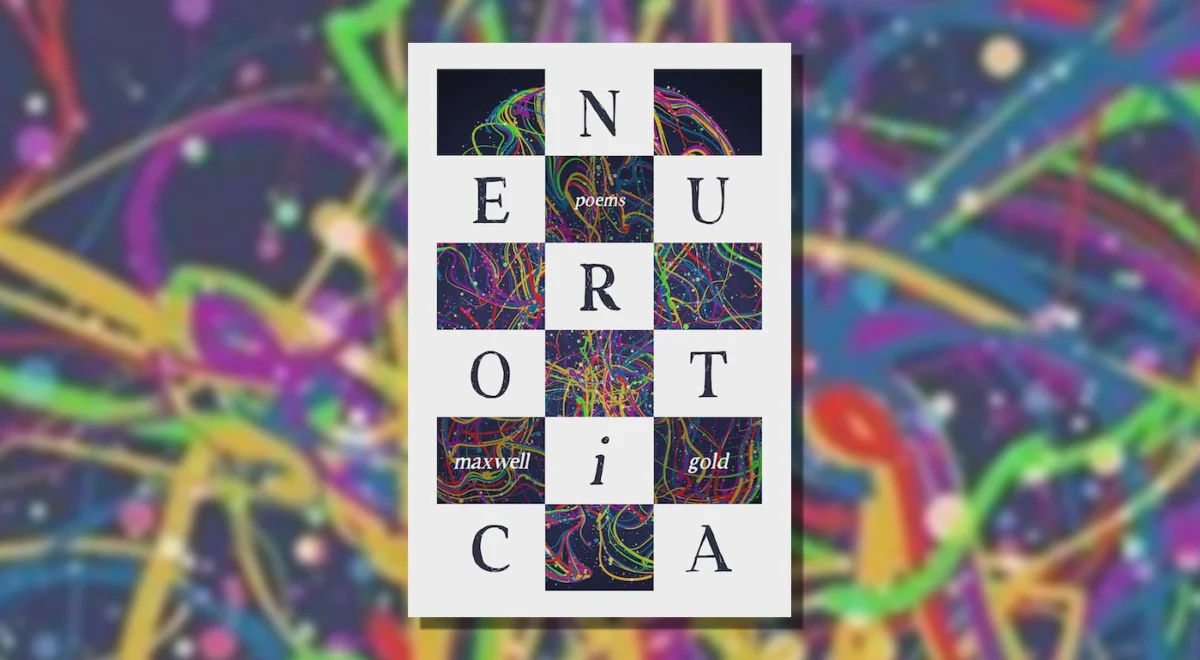
Reading the Weird: Maxwell Gold’s Poetry Explores the Abyss of Sleep and the Familiarity of Cosmic Horror delves into the intricate and unsettling world of Maxwell Gold’s poetry, specifically his contributions published in The Horror Zine in May 2022. The piece, a selection from the 2025 Bram Stoker Award nominee for Poetry, examines three prose poems: "The Naigoth Waits," "Where No One Goes," and "Chthonic Dreams." This exploration is framed within the broader context of "Reading the Weird," a column dedicated to dissecting weird fiction, cosmic horror, and Lovecraftian themes.
The author acknowledges the inherent challenge in summarizing poetry, likening it to the intricate defenses of an Australian thorny devil, where direct engagement is often met with a complex, multifaceted resistance that defies simple encapsulation. This metaphor highlights the nuanced nature of poetry, suggesting that a superficial understanding can lead to misinterpretation, much like an attacker being deterred by the creature’s formidable spikes. The article proposes that poetry, like the thorny devil, often presents "fake heads" or linguistic diversions that mislead the casual observer, urging readers to engage with the entirety of the work to grasp its true essence.
In an effort to provide a concise overview of Gold’s prose poems, the author employs the haiku form, a deliberate choice to distill the core themes of each piece.
Haiku Summaries of Maxwell Gold’s Poems
"The Naigoth Waits"
What is a naigoth?
Maybe it has leathern wings.
Graveyards figure, too.
This haiku suggests an enigmatic entity, the "naigoth," characterized by potential leathern wings, and a connection to funerary settings. The imagery evokes a sense of mystery and foreboding.
"Where No One Goes"
The keep of Nïgöths
Hungers, yearns, with entropy.
I think it can’t be.
This poem appears to depict a desolate, decaying structure, possibly a "keep of Nïgöths," consumed by entropy. The concluding line expresses a sense of disbelief or denial in the face of such overwhelming decay.
"Chthonic Dreams"
I’ve dreamt of foul things
Crawling ‘neath the world’s bedsheets.
No more sleep for me.
This haiku directly addresses the theme of nightmares and the unsettling presence of hidden horrors. The imagery of things crawling beneath bedsheets signifies a profound disturbance of peace and a loss of restful sleep.
Deconstructing the "Weird" in Gold’s Poetry
The article categorizes elements within Gold’s poems under "What’s Cyclopean," noting "Tenebrific skies," "Chthonic palaces and dreams," and "Rubescent auras." These terms evoke a sense of vast, ancient, and unsettling cosmic landscapes, characteristic of Lovecraftian horror. The "Weirdbuilding" section directly addresses the ambiguity surrounding the term "naigoth," positing potential connections to H.P. Lovecraft’s "shoggoth" or the "Nazgûl" from J.R.R. Tolkien’s Middle-earth, highlighting the recursive and intertextual nature of weird fiction. The "Madness Takes Its Toll" section points to the psychological consequences of prolonged sleeplessness, a central theme explored in the poems.

Ruthanna’s commentary delves deeper into the philosophical and psychological underpinnings of Gold’s work. She begins by acknowledging the elusive nature of poetry itself, contrasting the structured formality of rhyme and scansion with the more ambiguous free verse. This distinction is crucial in understanding how Gold’s prose poems occupy a unique space, blending narrative elements with evocative imagery. Her observation that "poetry is hard to define" serves as a guiding principle for her analysis.
The commentary draws a parallel between Gold’s poetic style and H.P. Lovecraft’s Fungi From Yuggoth, noting the "unapologetic worldbuilding and neologism" that characterize both. The recurrence of "Nïgöths" across poems suggests a consistent, albeit enigmatic, mythos being constructed. This focus on "worldbuilt" elements is juxtaposed with the direct emotional expression of the narrator, who experiences a spectrum of attraction-repulsion, unease, and fear. The use of adjectives like "tenebrific" further solidifies the cosmic horror aesthetic.
A significant point of analysis is the concept of "fuckery" in the context of elder gods and cosmic shifts. The author suggests that the horror lies not in the novelty of these events, but in their unsettling familiarity, as the vastness of cosmic dread becomes almost mundane. This resonates with the Lovecraftian trope of confronting incomprehensible entities, where the true horror is the erosion of human significance.
The commentary then pivots to the theme of sleep and sleeplessness, a core element in "Chthonic Dreams." It contrasts the Lovecraftian "Dreamlands," which are presented as reachable if not navigable, with Gold’s depiction of anxiety-ridden insomnia. The idea of "hideous things crawling underneath the bedsheets of the world" is explored as a visceral representation of the inescapable nature of these nightmares. The Sisyphean struggle of avoiding nightmares while simultaneously being pursued by them is highlighted as a central tension. The imagery of "broken palaces" beneath "the crusty nethers of oblivion" is praised for its blend of the cosmic and the corporeal, creating a disturbing yet relatable image of existential dread.
The phrase "graveyards of time and space where no one would remember me, forsake me, or dare to understand why I never slept" is dissected for its layered anxieties. The fear of being forgotten is common, but the fear of not being forsaken, coupled with the dread of incomprehension, creates a complex psychological landscape. This tension between well-meaning but ultimately uncomprehending individuals and the overwhelming nature of the horrors faced by the narrator is identified as a key element that contributes to the poem’s artistic merit. The unresolved nature of these tensions—attraction and repulsion, fleeing and returning—is posited as fundamental to the poem’s impact.
Anne’s commentary provides an alternative perspective, focusing on the tangible elements of Gold’s poetic creations. She commends the haiku summaries for their ability to crystallize the poems’ "themes." She directly addresses the mystery of the "naigoth," tracing it to a tabletop gaming figure by 3D artist Brayan Nafarrate. This provides concrete visual context, suggesting that Gold’s "naigoth" may be an original creation within the genre, embellished with descriptions of "leathery webbed wings" capable of darkening "every earthly corner."
The discussion of "Where No One Goes" expands on the "Nïgöths" as potentially related to the "naigoth" of the first poem. The "grinning statues of despicable winged creatures" and the presence of "chthonic palaces and decayed ruins" reinforce the cosmic horror atmosphere. The commentary touches upon the "Lady Hourglass" as a symbolic figure of time, whose sands might be "littered" across "vast fantastic dreamscapes." The notion of dwindling time and the decay of even symbolic entities like the Lady Hourglass adds another layer of cosmic dread.
The analysis of "Chthonic Dreams" highlights Gold’s effective use of the word "chthonic," a term associated with the underworld or things deep-rooted and earthy, referencing its mythological origins and its use in other weird fiction, such as Brian Lumley’s Burrowers Beneath. The visceral opening line, describing "hideous things crawling underneath the bedsheets of the world," is singled out for its potent imagery. Anne speculates on whether "bedsheets" is a metaphor for the Earth’s layers or a literal invocation of nighttime fears, leaning towards the latter for its immediate impact.
The poem’s "darkly gorgeous images and language" are further praised, with specific examples like "the muck and rust of time," monsters "coated in greasy, dirty possibilities," and "broken palaces under the crusty nethers of oblivion." The commentary concludes with a darkly humorous acknowledgment of these disturbing images, suggesting they stem from a shared understanding of such unsettling concepts, albeit through indirect means.
The article closes with two final haikus, offering a poignant summary of the themes of risk in dreaming and the struggle for survival through sleeplessness.
To dream is a risk.
Time, past, future, live in dreams,
Waiting to get you.
Not to dream is worse.
To rise intact, more or less,
That’s braving the fight.
These haikus encapsulate the central conflict presented in Gold’s poetry: the inherent danger of both engaging with the subconscious and resisting it, highlighting the no-win scenario that defines the human experience within the cosmic horror framework.
The article’s structure, moving from an introduction to the specific poems, through thematic analysis by both authors, and concluding with a summary of the core concepts, provides a comprehensive overview of Maxwell Gold’s contribution to the genre. The use of supporting data, such as the Bram Stoker Award nomination and the reference to Lovecraft’s Fungi From Yuggoth, grounds the analysis in established literary contexts. The exploration of the "naigoth" also serves as a form of background context, tracing its potential origins and symbolic meaning. The implications of Gold’s work are explored through the lens of contemporary anxieties surrounding sleep, mental health, and the overwhelming nature of existential threats, suggesting that his poetry taps into a deep well of shared human fears.