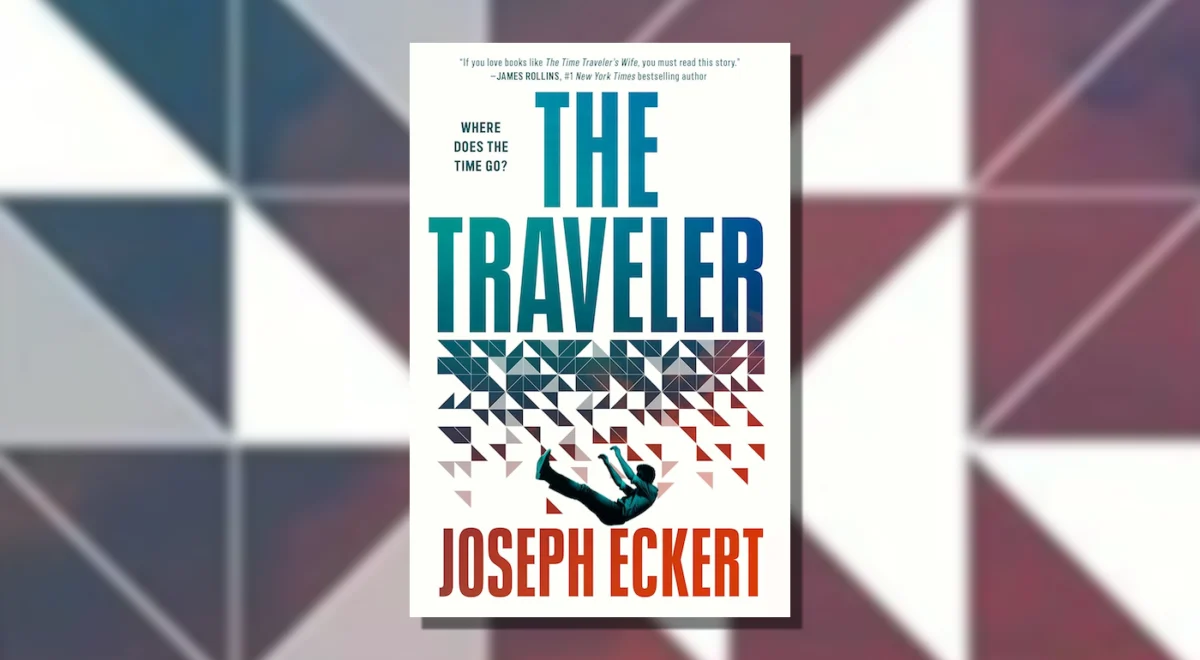
Joseph Eckert’s gripping new novel, "The Traveler," published by Tor Books on June 9th, plunges readers into a disorienting temporal anomaly that shatters the ordinary life of Scott Treder and hints at futures beyond human comprehension. The novel, a profound exploration of heartbreak, hope, and the elasticity of time, begins with a seemingly innocuous commute that rapidly escalates into an unimaginable ordeal.
An Unforeseen Chronological Disruption
The narrative ignites on a routine Monday morning, April 13th, in Madison, Wisconsin. Scott Treder, a man on his way to work, experiences a sudden, inexplicable temporal displacement. In the span of a single heartbeat, his vehicle vanishes, and he finds himself tumbling down the road, his familiar world replaced by a bewildering reality. His cell phone, a lifeline to his wife, Amy, is flooded with panicked voicemails, each a testament to the unfolding crisis.
The initial temporal shift is precisely timed: at 7:51 AM, Scott is driving; by 7:52 AM, a full twenty-four hours have elapsed. This seemingly instantaneous leap forward is not an isolated incident. From this point onward, Scott experiences a doubling temporal displacement each morning at precisely 7:52 AM. What begins as a day lost in the blink of an eye escalates to weeks, then months, and eventually years, passing him by in an instant.
A Family Torn Apart by Time
The devastating consequences of Scott’s temporal affliction extend far beyond his personal experience. His wife, Amy, is left to navigate the wreckage of their shared life, grappling with Scott’s inexplicable absences and the growing chasm in their reality. The most poignant casualty of this temporal rift is their son, Lyle. A child prodigy, Lyle, who is only seven years old when the phenomenon begins, rapidly surpasses his father in age. While Scott is adrift in time, Lyle embarks on an accelerated life trajectory, graduating early, pursuing quantum physics at Berkeley, and dedicating his prodigious intellect to the singular goal of finding a way to bring his father back.
Chapter 1: The First Slip
The opening chapter vividly recounts Scott’s first terrifying temporal displacement. Driving through the chilly April morning, a headache pulsing behind his eyes, Scott experiences a sensation described as the world "slipping." His car vanishes, and he is propelled from his vehicle, tumbling across the asphalt, his clothes tearing, his body battered. The immediate aftermath is a torrent of confusion and physical pain, compounded by the bizarre appearance of a truck that seemingly materialized from nowhere, narrowly avoiding him.
Disoriented and injured, Scott discovers his cell phone. The messages paint a picture of a day that has already transpired without him. His officemate, Andy, inquires about his absence. His supervisor, Melissa, expresses concern about his unexcused departure. The most alarming messages are from his wife, Amy. The first reveals that the police contacted her about Scott hitting a parked car and abandoning his Honda, keys still in the ignition and engine running. Subsequent messages detail Amy’s frantic efforts to deal with the police, the towing of the damaged car, and her growing worry as Scott remains unaccounted for.
The starkest evidence of the temporal anomaly emerges when Scott checks his phone’s date and time: 7:52 AM, Tuesday, April 14th. He is certain it is Monday, April 13th. This discrepancy, displayed on his phone’s screen against a photo of his wife and son, shatters his perception of reality.

The Escalation of Temporal Displacement
Scott’s initial attempts to make sense of the situation are met with disbelief. When he calls Amy, her reaction is one of escalating panic and confusion, mirroring his own. She rushes to pick him up, visibly distraught. A teenage boy on a bicycle, a witness to a car driving without a driver the previous day, adds another layer of unsettling corroboration to the bizarre events unfolding in Scott’s life.
The narrative then shifts to Scott’s visit to a doctor. The medical professional attributes his physical injuries to the accident but finds no evidence of concussion or other serious medical issues. However, the doctor’s dismissal of the "missing day" as potential shock-induced amnesia does little to allay Scott’s and Amy’s growing fears. Scott’s own research into "missing time" yields unsettling results, ranging from alien abductions to multiple personality disorder, none of which adequately explain his unique predicament.
A Glimpse into Lyle’s Accelerated Future
The novel further explores the profound impact of Scott’s temporal displacement on his son, Lyle. By Chapter 2, Lyle is depicted as a precocious seven-year-old, demonstrating an advanced intellect and a deep understanding of complex scientific concepts. His early graduation and pursuit of quantum physics are presented not just as a product of his innate genius, but as a desperate, life-defining mission to reunite with his father. This narrative thread underscores the devastating emotional toll of Scott’s condition on his family.
The Doubling Intervals: A Grim Progression
The true horror of "The Traveler" lies in the accelerating nature of Scott’s temporal displacement. The doubling intervals mean that each subsequent "slip" pushes him further into the future. This progressive loss of time creates an insurmountable gulf between Scott and his family, particularly his son, Lyle, who is growing up without his father’s presence. The excerpt vividly illustrates this with Scott’s second displacement, which occurs at work. He finds himself at 7:52 AM on Friday, April 17th, having "skipped over" three full days. This second incident intensifies Amy’s distress and leads to the filing of a missing person’s report, highlighting the growing societal and familial breakdown caused by Scott’s condition.
Chapter 3: The Family’s Vigil and the Doubling Reality
Chapter 3 plunges the reader into the heart of the family’s struggle. The Treder household becomes a focal point of anxiety and suspense as they wait for the inevitable 7:52 AM temporal shift. The scene in the kitchen, with Scott, Amy, and Lyle anticipating the event, is fraught with tension. Scott’s plea to his son, "Whatever you see, buddy, just remember I love you, and I’ll always come back to you," is a poignant expression of his love and his profound fear.
When the world "slips" again, Scott finds himself not in his car or at work, but still in the kitchen, albeit with a different Amy and Lyle. This time, four days have passed. Lyle, with his extraordinary intellect, articulates the chilling pattern: "It’s doubling." This revelation confirms the exponential nature of Scott’s temporal affliction and foreshadows a future where Scott will be increasingly out of sync with his loved ones. The excerpt ends with a profound commitment from Amy: "All right, Scott. All right," she concedes, agreeing to be present with him at 7:52 AM the following morning, a silent acknowledgment of the terrifying reality they now face together.
The Broader Implications of Temporal Displacement
"The Traveler" by Joseph Eckert is more than just a science fiction thriller; it is a profound meditation on time, memory, and the enduring bonds of family. The novel raises critical questions about the nature of reality and the human capacity to adapt to unfathomable circumstances. As Scott’s temporal displacements become more frequent and longer, the narrative explores the psychological and emotional toll on both the individual experiencing the anomaly and those left behind. The implications extend beyond personal tragedy, hinting at the potential for such temporal disruptions to impact society at large, challenging our fundamental understanding of causality and existence. Eckert’s masterful storytelling, evident in this compelling excerpt, promises a journey filled with heartbreak, hope, and a profound exploration of futures that defy imagination.