From Bestseller to Screen: The Genesis of the Adaptation
Shelby Van Pelt’s novel, "Remarkably Bright Creatures," first captivated readers upon its publication in April 2021. It quickly ascended bestseller lists, including the New York Times and USA Today, garnering widespread acclaim for its distinctive narrative voice, intricate plot, and profound emotional resonance. The novel was lauded for its ability to blend quirky humor with a sensitive exploration of loss, loneliness, and the serendipitous ways in which people (and cephalopods) find connection. Its success led to its selection as a prominent book club pick, solidifying its status as a contemporary literary phenomenon.
The allure of Van Pelt’s narrative for a cinematic adaptation was evident. The book’s compelling characters, particularly the wise and witty giant Pacific octopus, Marcellus, offered a fresh perspective on human struggles. Its picturesque setting in a small New England coastal town, alongside the inherent mystery surrounding Tova’s past and Cameron’s search for his father, provided a rich tapestry for visual storytelling. Netflix, known for its strategic investment in adapting popular literary works, quickly secured the rights, recognizing the novel’s potential to resonate with a broad global audience seeking stories of hope and healing. The adaptation process involved careful consideration of how to visually represent Marcellus’s internal monologue and physical capabilities, a challenge that would define a significant aspect of the film’s production.
The Creative Team Behind the Vision: Newman, Whittington, and the Cast
The task of bringing "Remarkably Bright Creatures" to the screen fell to a dedicated creative team. Olivia Newman, whose previous directorial work includes the critically acclaimed drama "First Match" and the successful literary adaptation "Where the Crawdads Sing," was tapped to direct. Her experience in helming character-driven narratives with strong emotional cores made her a suitable choice for a story that delicately balances introspection with external plot developments. Newman also contributed to the screenplay alongside John Whittington, known for his work on family-friendly blockbusters like "The Lego Batman Movie," suggesting a collaborative effort to ensure both the emotional depth and the narrative accessibility of the story.
The casting decisions were pivotal in realizing the film’s vision. Sally Field, a two-time Academy Award winner and a venerable figure in American cinema, was cast as Tova Sullivan. Field’s long career, marked by her ability to portray resilient, complex women with a blend of vulnerability and strength, made her an ideal choice for the role of a widow grappling with profound loss and solitude. Her presence anchored the human narrative, bringing credibility and emotional weight to Tova’s journey.
Lewis Pullman, a rising star known for his roles in "Top Gun: Maverick" and "Bad Times at the El Royale," took on the character of Cameron. Pullman’s natural charisma and ability to convey nuanced emotions were crucial for portraying Cameron, a young man adrift, searching for purpose and belonging. The chemistry between Field and Pullman was anticipated to be a central pillar of the film, forming the surrogate mother-son dynamic that is integral to the plot.
The voice of Marcellus was provided by veteran actor Alfred Molina, celebrated for his versatile performances across stage and screen. Molina’s distinctive voice, capable of conveying both gravitas and wit, was perfectly suited for Marcellus’s dry observations and profound insights into the human condition. His involvement lent an air of sophistication and depth to the cephalopod narrator, ensuring that Marcellus was more than just a quirky animal but a fully realized character in his own right. The ensemble also features notable actors such as Joan Chen, Kathy Baker, Beth Grant, Sofia Black-D’Elia, and Colm Meaney, who collectively populate the quaint coastal town, contributing to its rich community feel.
Marcellus’s Voice: A Cephalopod’s Perspective and its Cinematic Challenges
At the heart of "Remarkably Bright Creatures" lies the extraordinary perspective of Marcellus, the giant Pacific octopus residing in the Sowell Bay Aquarium. The original novel’s strength heavily relied on his internal monologue, which offered a cynical yet profoundly observant commentary on human behavior. The film faced the significant challenge of translating this unique narrative device to the screen without sacrificing its charm or falling into overly anthropomorphic clichés.
According to the characters within the story, octopuses are indeed "extraordinary beings"—remarkably intelligent, adept at tool manipulation, and incredibly nimble. They are depicted as patient, observant, and even mischievous, capable of playful interactions. This inherent fascination with cephalopods, fueled by documentaries like "My Octopus Teacher" and scientific discoveries highlighting their cognitive abilities, provided a strong foundation for Marcellus’s characterization.
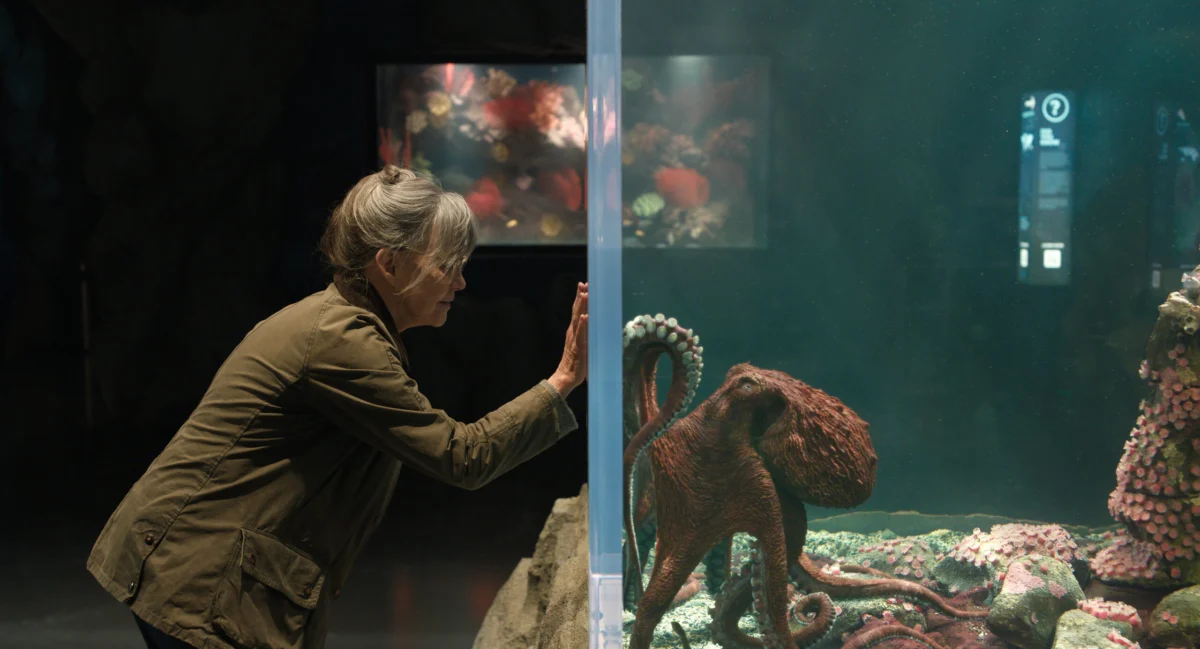
For the film, Marcellus’s portrayal required advanced computer-generated imagery (CGI), led by Chris Ritvo of Untold Studios. The aim was to create a creature that was "impressively lifelike," possessing "real heft and personality." This commitment to visual realism was critical in grounding Marcellus within the narrative, allowing his actions and expressions to feel authentic despite his non-human nature. Alfred Molina’s voice performance complemented this visual artistry, delivering Marcellus’s "inner musings on the failings and quirks of our species" with a "perfectly wry and amusing" tone.
However, the adaptation of Marcellus’s role also presented a key point of critical discussion. While the novel deftly used Marcellus as a lens through which to view human lives, the film version, in its cinematic translation, sometimes struggles with the balance. Critics have noted an "anthropocentrism" in the film’s approach, where Marcellus, despite his supposed intellectual superiority, is primarily preoccupied with the emotional lives of the two central humans, Tova and Cameron. This has led to observations that, at times, Marcellus might appear "as a cutesy dog in a rom-com," rather than the deeply philosophical and independent creature he is in the novel. The challenge of maintaining Marcellus’s distinct voice and agency while serving the human-centric plot remains a delicate balancing act for the adaptation.
The Human Heart of the Story: Tova and Cameron’s Journey
While Marcellus provides the unique narrative framework, the emotional core of "Remarkably Bright Creatures" rests firmly on the shoulders of its human protagonists: Tova Sullivan and Cameron. Their individual journeys of loss and self-discovery converge in unexpected ways, forming the central human drama.
Tova, played by Sally Field, is introduced as the night janitor at the Sowell Bay Aquarium. She leads a life steeped in solitude, a consequence of profound personal tragedies: the loss of her husband and, years prior, her son. Field masterfully portrays Tova as a woman who has "swaddled herself in solitude like it’s a ratty old cardigan she can’t bear to get rid of." Her character embodies the quiet resilience of those who have endured immense sorrow, finding solace in routine and the silent company of the aquarium’s inhabitants. Marcellus, observing Tova, senses her unhappiness, leading him to embark on a subtle mission to mend her broken heart, especially after she saves him from a dangerous tangle of computer cords.
Cameron, portrayed by Lewis Pullman, enters Tova’s life as a "lost soul"—a broke musician living out of an old camper, adrift and searching for answers about his absent father. His car troubles strand him in Soul Bay, coincidently at a time when Tova needs temporary help at the aquarium due to an ankle injury. This series of "almost too tidy to be believed" coincidences, as noted by critics, sets the stage for their unlikely connection.
The dynamic that develops between Tova and Cameron is central to the film’s appeal. She is a parent missing a lost child; he is a child searching for a lost parent. This creates an "inevitable as the ebb and flow of the tides" surrogate mother-son relationship. Tova’s scolding for Cameron to take his job seriously and Cameron’s actions of fixing things around her "stunningly beautiful" seaside cabin illustrate their developing bond. Their relationship is depicted as sincere and organic, largely thanks to the "crackling chemistry" between Field and Pullman. The film builds their connection through "offbeat adventures," including an open-mic night where Cameron showcases his musical talents and a road trip culminating in a "hilarious gun-waving confrontation." Field’s performance, particularly a "third-act monologue in which she cracks open her deepest wounds," has been described as a "stunner," eliciting strong emotional responses from audiences. Pullman’s "magnetism," radiating sweetness beneath Cameron’s "dirtbag exterior," complements Field’s gravitas, making their shared screen time deeply affecting.
A Tapestry of Characters: The Supporting Ensemble of Soul Bay
Beyond the central trio of Tova, Cameron, and Marcellus, "Remarkably Bright Creatures" enriches its narrative with a vibrant supporting cast that populates the small New England town of Soul Bay. These characters contribute significantly to the film’s "warm" and inviting atmosphere, providing both comedic relief and genuine human connection.
Colm Meaney portrays a lovelorn store owner who harbors affections for Tova. His interactions with her are characterized by a delicate charm, approaching her "like she’s a tiny beautiful bird he’s afraid of scaring off." This gentle courtship adds a layer of sweet, understated romance to Tova’s journey, highlighting her gradual re-engagement with life and human connection.
Sofia Black-D’Elia makes a "fun and snappy impression" as Avery, Cameron’s love interest. Her character provides a fresh, modern counterpoint to Cameron’s aimlessness, challenging him with her independent spirit and witty retorts. Her presence, though limited, is impactful, leaving an impression that she "didn’t get more screen time." This brief but memorable performance adds a youthful dynamic to the story, showing Cameron’s potential for growth and stable relationships.
The broader community of Soul Bay is depicted as a collection of "busybodies, but well-meaning ones." They are the kind of small-town residents who are "ready to swoop in with advice before a date or aid in the investigation of a minor mystery." This communal aspect underscores the theme of interconnectedness, illustrating how a supportive, if sometimes intrusive, community can play a role in an individual’s healing process. Even in its depiction of clouds, fog, and drizzle, the film manages to make the world around its characters feel "similarly warm," creating a cozy and inviting backdrop for the unfolding drama. This ensemble cast, though not always central to the plot, collectively contributes to the film’s overall charm and its depiction of human life in a quaint, close-knit setting.
Critical Reception: Balancing Cephalopod Charm with Human Drama
Upon its release, "Remarkably Bright Creatures" has drawn a range of critical responses, largely echoing the sentiments expressed in early reviews that identified a distinct dichotomy in its success. The prevailing consensus positions the film as a "charming human one" that, paradoxically, struggles to fully capitalize on its unique "octopus movie" premise.
The core strength consistently highlighted by critics lies in the performances of Sally Field and Lewis Pullman. Their "reliably endearing" portrayals and "winsome together" dynamic are frequently cited as the film’s emotional anchor. Field’s depiction of Tova, particularly her ability to convey deep-seated grief and quiet resilience, is lauded as "unquestionably fantastic," with her third-act monologue being a standout moment that reportedly moved audiences to tears. Pullman’s "magnetism" and "extraordinary gift as a scene partner" complement Field’s performance, creating a believable and touching surrogate mother-son relationship that feels "sincere and organic" despite some narrative contrivances. The "crackling chemistry" between the leads is credited with elevating the human story, making it genuinely moving and humorous.
Conversely, the film’s portrayal of Marcellus, the eponymous "remarkably bright creature," has received a more mixed reception. While the CGI used to create Marcellus is praised for being "impressively lifelike," and Alfred Molina’s voice work is described as "perfectly wry and amusing," critics argue that the film ultimately falls into "anthropocentrism." The concern is that Marcellus, despite his supposed intelligence and unique perspective, is primarily relegated to the role of a plot device, pushing the human characters together rather than exploring his own complex inner world as extensively as the novel did. This perceived reduction of Marcellus to "a cutesy dog in a rom-com" is seen as a missed opportunity, diminishing the distinctiveness of the source material’s most original element. The film’s plot, particularly the convenient coincidences that bring Tova and Cameron together, has been noted as "almost too tidy" and somewhat "contrived" from a distance.
Despite these limitations, the overall sentiment remains largely positive for those seeking a heartwarming human story. The film’s "gentle sense of humor and depth of feeling" in the human interactions are enough to "sweep you away on a wave of emotion." The depiction of the small coastal town, despite being one of many such narratives, is found to be "seductive," offering a "cozy as an old woolen blanket" and "sweet as a mug of hot chocolate" viewing experience. Ultimately, the critical reception suggests that while the film may not fully satisfy those hoping for a deep dive into cephalopod psychology, it largely succeeds as a poignant drama about human connection and healing.
Broader Implications: Netflix’s Strategy and the Enduring Appeal of ‘Comfort Fiction’
The release of "Remarkably Bright Creatures" on Netflix carries broader implications for the streaming giant’s content strategy and reflects a continuing trend in audience preferences for specific types of narratives. Netflix has increasingly invested in adapting popular novels, recognizing the built-in audience and critical recognition that such properties often bring. This strategy aims to mitigate risks in content development by leveraging established fanbases and proven storytelling. "Remarkably Bright Creatures," with its status as a "much-loved novel," fits perfectly into this mold, offering a story that is both critically acclaimed and commercially successful in its original form.
The film’s reception, particularly its strength as a "charming human one" despite perceived weaknesses in its unique cephalopod element, highlights the enduring appeal of "comfort fiction" or "up-lit" (uplifting literature) adaptations. These stories, often characterized by themes of healing, community, and the triumph of the human spirit over adversity, resonate deeply with audiences seeking emotional solace and heartwarming narratives. In an increasingly complex world, films that offer a "gentle sense of humor and depth of feeling" and conclude with a sense of hope and resolution provide a form of escapism and emotional catharsis.
The choice to emphasize the human drama, even at the expense of Marcellus’s more complex narrative, could also be a strategic decision to broaden the film’s appeal. While the concept of an intelligent, philosophical octopus is unique, a strong human story with relatable characters like Tova and Cameron is often more universally accessible and easier for a mass audience to connect with emotionally. This approach aligns with Netflix’s goal of producing content that can attract a diverse subscriber base.
Furthermore, the film’s success is likely to generate renewed interest in Shelby Van Pelt’s original novel, potentially boosting sales and introducing it to new readers who discover the story through the adaptation. This symbiotic relationship between literature and screen adaptations continues to be a significant driver for both industries. The enduring fascination with small coastal town settings, as noted by the critic ("approximately the 87th work… about the charms of life in a small coastal town"), also underscores a persistent cultural romanticism with such locales, symbolizing simpler lives and tighter-knit communities. "Remarkably Bright Creatures" taps into this collective yearning, presenting a world that, for all its individual sorrows, ultimately offers connection and a sense of belonging, making it a powerful testament to the enduring human need for stories of hope and healing.
Conclusion: A Deep Dive into Emotional Currents
"Remarkably Bright Creatures" on Netflix emerges as a nuanced adaptation that navigates the intricate emotional landscapes of its source material. While it may face scrutiny for its interpretation of Marcellus, the wise and witty octopus, its core strength lies in the compelling performances of Sally Field and Lewis Pullman, who imbue their characters, Tova and Cameron, with profound depth and authenticity. The film succeeds in crafting a heartwarming narrative about unexpected connections, the processing of grief, and the enduring power of community. It serves as a testament to the idea that even in the quietest corners of life, and through the most unconventional of friendships, individuals can find solace and a path toward healing. Ultimately, "Remarkably Bright Creatures" offers a deeply moving cinematic experience, proving that the currents of human emotion, much like the tides of the sea, are powerful enough to sweep us away into a world of genuine feeling and hope.