The French cinematic landscape has recently been punctuated by the release of Lila Pinell’s latest feature, a visceral exploration of urban struggle, generational trauma, and the cyclical nature of self-destructive behavior. Shana, directed and written by Pinell, centers on a young woman navigating the complexities of life in contemporary Paris, caught between the demands of a low-wage service job and the high-stakes dangers of the illicit drug trade. The film, which runs for 80 minutes, features a breakout performance by Eva Huault in the titular role, supported by a cast including Noémie Lvovsky, Inès Gherib, and Sékouba Doucouré. Through a lens of stark realism, Pinell examines the internal and external forces that trap individuals in cycles of poverty and violence, offering a narrative that prioritizes character study over traditional plot progression.
Narrative Overview and Character Dynamics
The film follows Shana, a young Parisian whose life is characterized by a frantic, high-energy pursuit of stability that remains perpetually out of reach. While she maintains a steady position at a quick-service restaurant—a detail that establishes her as a member of the working class—her primary financial and emotional energy is diverted toward acting as a proxy for her incarcerated boyfriend, Moïse (Sékouba Doucouré). Despite his physical absence, Moïse exerts a profound psychological control over Shana, manipulating her through a combination of affection and intimidation via telephone communications.
The narrative tension escalates following two pivotal events: the death of Shana’s grandmother and the subsequent release of Moïse from prison. The grandmother leaves Shana a ring intended to ward off the "evil eye," a symbolic gesture that introduces themes of superstition and protection in an environment defined by vulnerability. However, any perceived protection is quickly overshadowed by the reality of Moïse’s return. His re-entry into Shana’s daily life exacerbates her existing troubles, forcing her to confront the toxicity of their partnership and the legal risks she has assumed on his behalf.
Socio-Economic Context and Urban Realism
Shana serves as a microcosm for broader sociological issues prevalent in modern European urban centers. The protagonist’s involvement in drug distribution is portrayed not as a choice of ambition, but as a consequence of systemic pressures and emotional coercion. Data from the European Monitoring Centre for Drugs and Drug Addiction (EMCDDA) suggests that "proxy dealing"—where individuals with no prior criminal records are used to facilitate transactions for incarcerated or high-level figures—is an increasingly common phenomenon in metropolitan areas like Paris.
Director Lila Pinell utilizes the setting to emphasize the contrast between the aesthetic beauty of Paris and the gritty reality of Shana’s existence. While the film captures the natural sunlight and the architectural charm of the city, these elements remain largely background noise to the protagonist’s internal chaos. This visual dichotomy highlights a "blindness" to beauty often experienced by those in survival mode, where the immediate demands of safety and finance override the appreciation of one’s environment.
The Chronology of Conflict
The film’s structure is episodic, focusing on a series of interactions that illustrate Shana’s volatile temperament. Her emotional range is described by family members within the film as moving from "zero to ten in five seconds," a trait that Pinell uses to drive the narrative forward in the absence of a traditional three-act structure.
- The Proxy Phase: The initial segment of the film establishes Shana’s routine. She balances her service job with the high-stress demands of Moïse’s drug business, showcasing a resilience that is simultaneously admirable and tragic.
- The Loss of the Matriarch: The death of the grandmother serves as the emotional catalyst. It strips Shana of a primary support system and leaves her with the "protective" ring, which becomes a focal point for her hopes of a better life.
- The Return of Moïse: The second half of the film chronicles the fallout of Moïse’s release. The transition from phone-based manipulation to physical presence creates a suffocating atmosphere, leading to increased friction between Shana and her social circle.
- The Confrontation of Trauma: A climactic public argument with her mother serves as the film’s emotional peak. This scene reveals a history of childhood trauma, providing the necessary context for Shana’s current behavior. It suggests that her volatility is a defense mechanism forged in a harrowing past.
Technical Execution and Directorial Style
Lila Pinell employs specific cinematic techniques to elevate the film beyond a standard social drama. The use of flashy but unobtrusive editing, particularly the use of dissolves during high-stress sequences, creates a "hallucinogenic" quality that mirrors Shana’s mental state. The camera frequently focuses on minute details, such as Shana’s long, manicured nails. This focus serves as a metaphor for the character’s attempt to maintain a sense of self and "glamour" amidst a life of hardship.
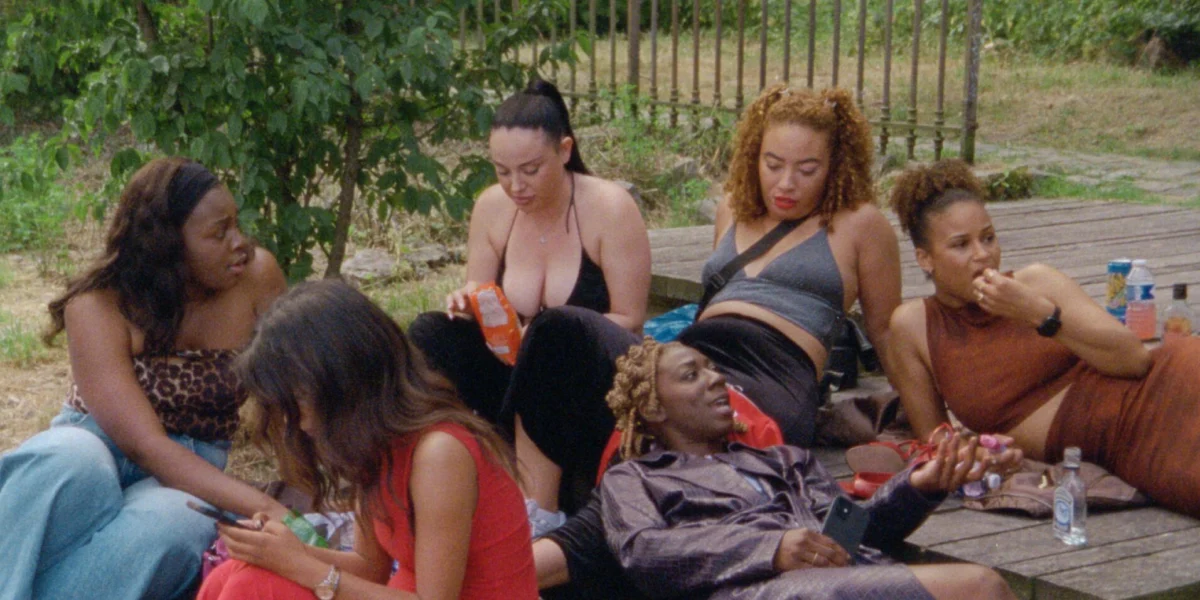
The auditory landscape of the film is equally deliberate. The score features sparse percussion, drawing comparisons to the rhythmic tension found in the works of Stanley Kubrick. This choice provides a steady, heartbeat-like underlying stress to even the most mundane scenes, such as a dispute over a board game or a casual hang-out with friends. By pairing these intense sounds with visuals of natural sunlight, Pinell creates a "bizarrely pleasant" energy that complicates the viewer’s emotional response to the tragedy unfolding on screen.
Supporting Data on Recidivism and Domestic Dynamics
The character of Moïse reflects documented patterns in recidivism and the psychology of control. According to French Ministry of Justice reports, the period immediately following a prisoner’s release is the most volatile for both the individual and their domestic partners. The "toxic" nature of the relationship depicted in the film is supported by psychological studies on trauma bonding, where the victim (Shana) feels a sense of loyalty to the aggressor (Moïse) due to the intermittent reinforcement of affection and the shared "us against the world" mentality common in criminal subcultures.
Shana’s refusal to acknowledge Moïse’s manipulation—insisting that she "knows best"—is a common trait among young adults facing external criticism of their personal lives. This demographic reality adds a layer of authenticity to the film, as it avoids the trope of the "perfect victim" and instead presents a protagonist who is often her own worst enemy.
Critical Reception and Performance Analysis
Industry reactions have centered largely on the performance of Eva Huault. Critics have noted that Huault’s portrayal of Shana is essential to the film’s success; without her ability to humanize an abrasive and often antisocial character, the film risked becoming "unwatchable." Huault manages to convey the "brittle and abrasive" nature of a woman who screams to get her way, while simultaneously revealing the "impassioned and hurting" individual beneath the surface.
The film has been praised for its honesty. In a cinematic era often dominated by escapism, Shana is recognized for its refusal to provide easy answers or a redemptive arc. The repetition of Shana’s mistakes is seen not as a narrative flaw, but as a truthful representation of the difficulty of breaking cycles of behavior. The linguistic nuances of the script also provide depth; Shana’s frequent use of phrases like "I couldn’t care less" (often used incorrectly in a grammatical sense) betrays the fact that she cares deeply, but lacks the emotional tools to express it constructively.
Broader Impact and Implications
The release of Shana contributes to a growing movement in French cinema that focuses on the "unseen" populations of the suburbs and the working class. By centering the story on a woman who is both a victim of her circumstances and a participant in her own downfall, Pinell challenges the audience to find empathy for "unseemly" people.
The film’s implications extend to the discussion of mental health and social services. Shana’s story suggests that without intervention for childhood trauma, individuals are likely to replicate the environments that harmed them. The "protective ring" inherited from her grandmother symbolizes the inadequacy of superstition and tradition in the face of modern systemic failure.
Ultimately, Shana stands as a rigorous document of a life in turmoil. It does not seek to comfort the viewer, but rather to force an acknowledgement of the harsh realities faced by those whose "internal compasses" have been damaged by experience. The film asserts that ignoring these stories for the sake of audience comfort is a disservice to the complexity of the human condition. As the credits roll, the viewer is left not with a resolution, but with a profound understanding of the weight Shana carries—a weight that, despite her energy and the support of her friends, remains a formidable barrier to the "calm and quiet life" she may never truly know.