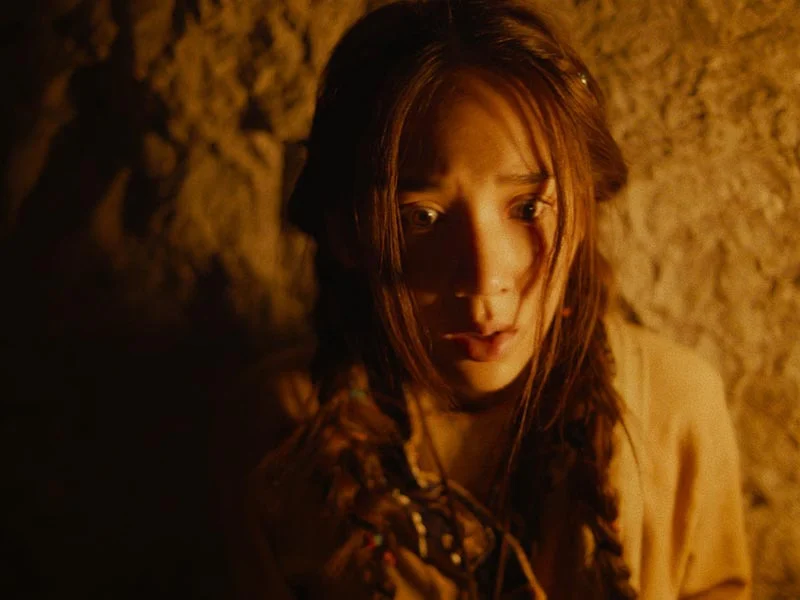
Lai Cheuk Nam’s critically acclaimed short film, “Stray Dog,” has been awarded the prestigious Golden Capybara for Best Experimental Short Film at the Tiete International Film Awards, marking a significant recognition for its profound thematic depth and innovative cinematic approach. The director describes his 21-minute work as a rigorous cinematic inquiry into Necropolitics and a potent, silent protest against the pervasive influence of mechanical tyranny in contemporary society. Nam has articulated a particular interest in the film’s visual language, emphasizing its unique capacity to bridge the often-disparate realms of avant-garde cinema and forensic observation, creating a dialogue between artistic expression and meticulous scrutiny of reality.
The film’s official synopsis provides a compelling entry point into its dense thematic landscape: "In a city consumed by the relentless hum of mechanical progress, a silent wanderer—the ‘Stray Dog’—becomes a forensic witness to the ruins of modern existence. Stripped of dialogue and rendered in stark, high-contrast monochrome, the film explores the ‘State of Exception’ where human life and animalistic survival converge. Through a rhythmic observation of decaying textures and the tyranny of standardized time, STRAY DOG is not a narrative, but a visual mutiny—a meditative inquiry into the solitude of those discarded by the machinery of the 21st century." This description alone sets a high bar for intellectual engagement, promising a film that challenges viewers to look beyond conventional storytelling.
The Tiete International Film Awards: A Beacon for Avant-Garde Cinema
The Tiete International Film Awards, established as a prominent fixture in the global independent film circuit, has consistently championed films that push the boundaries of cinematic expression and engage with pressing socio-political issues. Renowned for its discerning curatorial selection, the festival, which typically takes place over a week in a major cultural hub, serves as a crucial platform for emerging and established filmmakers to showcase works that might not find mainstream distribution. Winning the Golden Capybara, the festival’s highest honor for short experimental films, is a testament to "Stray Dog’s" artistic merit and its resonance within the international experimental film community. Past winners of the award have often gone on to achieve further critical acclaim and influence in their respective fields, solidifying Tiete’s reputation as a launchpad for innovative cinematic talent. The festival’s focus on experimental shorts underscores a commitment to artistic freedom and intellectual rigor, valuing films that prioritize conceptual depth and formal innovation over commercial appeal.
Decoding the Philosophical Underpinnings: Necropolitics and the State of Exception
At the core of "Stray Dog’s" intellectual framework are the philosophical concepts of Necropolitics and the State of Exception. Necropolitics, a term primarily advanced by Cameroonian philosopher Achille Mbembe, refers to the power to dictate who may live and who must die, or how certain populations are subjected to conditions that make their lives precarious and their deaths probable. It explores how political power operates not just through control over life (biopolitics), but also through the management of death. In "Stray Dog," this concept is not explicitly narrated but is visually embodied through the depiction of individuals and environments "discarded by the machinery of the 21st century," suggesting a societal structure where certain lives are rendered disposable. The film’s protagonist, the "Stray Dog," becomes a living metaphor for those whose existence is marginalized, subject to the arbitrary powers that define their vitality and vulnerability.
Complementing this is the notion of the "State of Exception," famously explored by Italian philosopher Giorgio Agamben. This concept describes a condition where the normal legal order is suspended, often in times of crisis, leading to a situation where individuals exist outside the protective framework of law. In such a state, the distinction between human life and mere "bare life" (zōē) blurs, making individuals vulnerable to unchecked power. "Stray Dog" illustrates this by presenting a world where human and animalistic survival converge, where the protagonist navigates a landscape stripped of the conventions that typically define human society. The film’s stark monochrome aesthetic and lack of dialogue heighten this sense of an existence outside the norm, forcing viewers to confront the raw, unmediated reality of those living in a perpetual state of vulnerability and abandonment.
A Chronology of Cinematic Inquiry: The Film’s Visual Trajectory
"Stray Dog" commences its unsettling journey with a series of deliberate, symbolic images that immediately establish its departure from conventional narrative. The opening shot features an hourglass on a table, its sand relentlessly falling, underscored by a subtle dripping sound. This immediate evocation of time’s inexorable march is accompanied by atmospheric music and the striking visual of a figure shrouded in a white sheet, blowing into a horn-like instrument. The camera then zooms in on the figure’s face, an intimate yet unsettling introduction to the film’s world. This sequence can be interpreted as a ritualistic invocation, a prelude to the "visual mutiny" that is to unfold, signaling a break from linear time and an entry into a realm where meaning is derived from sensory experience and symbolic resonance. The horn, an ancient instrument often associated with warnings or calls to action, further emphasizes the film’s protest against unseen forces.
The narrative then shifts to introduce another solitary figure, a man dressed in what appears to be militant attire, carrying a briefcase. His slow, deliberate movement through a deserted park is captured by a shaky handheld camera, which follows him with an almost forensic intensity, both horizontally and vertically, emphasizing his isolation within the urban landscape. This portrayal immediately suggests a character grappling with the remnants of a structured, militarized existence, yet now adrift. His journey leads him to an area near train tracks, where the sudden, forceful interruption of a passing train shatters the stillness, a stark reminder of the mechanical progress and standardized time the film critiques. In a pivotal act of defiance or despair, the man quickens his pace and discards his briefcase, shedding a symbol of societal expectation and utility.
His odyssey culminates at a strange, unidentifiable contraption embedded in the ground, before which he kneels and touches it with an almost reverential, yet equally curious, gesture. This interaction with the mysterious device, a relic or symbol of the very mechanical tyranny he seems to be protesting, adds another layer of complexity. His attention then shifts to a cloak hanging on a nearby tree. Upon removing it, a mirror is revealed, which he proceeds to caress. This moment of self-reflection, albeit distorted or fragmented, serves as a poignant counterpoint to the external world of decay and mechanical imposition, hinting at a search for identity or an confrontation with the self in a world that denies individuality.
The film’s setting undergoes another transformation, transitioning into a slow-motion shot of a snail meticulously traversing a table. This seemingly mundane image is intercut with a disquieting sequence of a group of people throwing dice that grotesquely resemble eyeballs. The most visceral moment of this segment occurs when a woman places one of these eyeball-dice in her mouth and chews it, a chilling act that is mirrored by a man in a shirt and tie, and another wearing a black covering over his head. The snail’s movement, depicted through an aggressive audiovisual approach, transforms the creature into something almost horrific, amplifying the film’s unsettling atmosphere and perhaps symbolizing the slow, inexorable creep of decay or the overlooked horror in the mundane. The emergence of an otherworldly female voice, marking the film’s first instance of spoken sound, initially suggests themes of love before diverging into abstract, enigmatic territory, further disorienting the viewer and challenging conventional interpretation. The focus then returns to the wandering man, who enters a public restroom and directly addresses the camera, shattering the fourth wall and pulling the audience into his desolate reality.
Cinematic Craft: Black-and-White, Handheld, and Techno-Ritualistic Sound
Lai Cheuk Nam employs a distinctly experimental cinematic approach that is fundamental to "Stray Dog’s" impact. The pervasive black-and-white cinematography is not merely an aesthetic choice but a thematic one, stripping away the distractions of color to focus on textures, contrasts, and the stark reality of the depicted world. This monochromatic palette intensifies the sense of desolation and timelessness, making the ruins of modern existence feel both ancient and terrifyingly contemporary.
The use of a shaky handheld camera contributes significantly to the film’s raw, immediate, and almost documentary-like feel. It immerses the viewer directly into the protagonist’s fragmented perception, mirroring the instability and uncertainty of his journey. This technique fosters a sense of unease and authenticity, making the audience feel like an active participant or an uninvited witness rather than a passive observer.
The combination of low- and high-definition imagery is another deliberate choice, creating a visual texture that reflects the film’s exploration of fragmented realities and the blurring lines between observation and interpretation. This interplay of resolutions can symbolize the varying degrees of clarity or obfuscation through which we perceive the world and its underlying tyrannies.
Crucially, the sound design imbues "Stray Dog" with a "techno-ritualistic quality." The atmospheric music, the dripping sounds, the horn, and the otherworldly female voice are meticulously crafted to build an imposing, almost sacred, yet deeply unsettling soundscape. This sonic tapestry functions independently of, and often in counterpoint to, the visuals, creating a multi-sensory experience that is both immersive and disorienting. The deliberate avoidance of a clear narrative trajectory, even while a loose road-movie structure can be discerned, prevents the film from becoming a conventional horror piece, despite its dystopian elements. Instead, the film maintains an imposing atmosphere, allowing thematic intentions to emerge through visceral experience rather than explicit articulation.
Unforgettable Imagery and Potent Performances
Certain sequences in "Stray Dog" are designed to leave an indelible mark on the viewer’s psyche. The sequence involving the swallowing of the eyeball-like dice stands out as the most viscerally memorable. This disturbing ritualistic act is a powerful symbol of dehumanization, conformity, and perhaps the consumption of perception or truth in a tyrannical system. It forces viewers to confront the grotesque implications of a world where individuals are compelled to ingest the very mechanisms of their own subjugation. The snail imagery, with its unsettling audiovisual rendering, also leaves a lasting impression, transforming a benign creature into a harbinger of dread, encapsulating the film’s ability to find horror in the seemingly innocuous. Furthermore, the protagonist’s direct address to the camera in the public restroom sequence breaks the fourth wall, creating a moment of intense, albeit unsettling, intimacy that forces the audience to acknowledge their role as witnesses.
Jake Fan, in his role as the wandering "Stray Dog," delivers a compelling performance that masterfully oscillates between cinematic subtlety and theatrical exaggeration. His nuanced portrayal captures the internal struggle of a marginalized individual, while moments like his interaction with the mirror allow for a more expressive, almost performative, exploration of identity and self-perception within the film’s bleak landscape. Ng Pui Lam, as the enigmatic character Q, further enhances the film’s otherworldly tone, her presence contributing to the mystical and unsettling atmosphere. The synergy between these performances and the film’s aesthetic ambitions is evident, with both actors effectively embodying the director’s vision. Lai Cheuk Nam’s own meticulous editing results in a deliberately slow pace that complements the overall meditative and observational approach, allowing each image and sound to resonate deeply.
Broader Implications for Experimental Cinema and Socio-Political Commentary
"Stray Dog’s" triumph at the Tiete International Film Awards is not merely an accolade for Lai Cheuk Nam but a significant affirmation for the broader landscape of experimental short films. In an industry often dominated by commercial narratives and feature-length productions, the success of a film like "Stray Dog" underscores the vital role that shorts play in fostering innovation, artistic freedom, and critical discourse. It demonstrates that profound philosophical inquiries and potent socio-political critiques can be effectively conveyed within a condensed format, challenging conventional notions of narrative and audience engagement.
The film’s iconoclastic nature, characterized by its absence of dialogue and meaningful interaction among characters, serves as a powerful reflection on solitude and alienation in the 21st century. This deliberate choice forces viewers to engage with the film on a sensory and intellectual level, rather than through traditional plot points or character development. It is a testament to the power of atmosphere and gritty audiovisual execution that "Stray Dog" can be profoundly appreciated even without being fully "understood" in a conventional sense. This category of work—films that resonate viscerally and intellectually, prompting contemplation rather than providing definitive answers—is crucial for pushing the boundaries of cinematic art.
The recognition of "Stray Dog" suggests a growing appetite within festival circuits for works that dare to be different, that provoke thought, and that confront complex societal issues through unconventional means. It highlights the potential for experimental cinema to serve as a mirror to contemporary anxieties, offering unique perspectives on themes as urgent as dehumanization, surveillance, and the relentless march of technological progress. For Lai Cheuk Nam, this award not only validates his distinctive artistic vision but also positions him as an important voice in contemporary experimental filmmaking, potentially paving the way for future projects that continue to challenge and inspire audiences globally. The film’s success serves as an encouragement for other independent filmmakers to embrace bold, uncompromising artistic choices, reinforcing the idea that the most profound cinematic experiences often emerge from the most unconventional approaches.