The unprecedented collaboration between French commercial broadcasting giant TF1 and global streaming leader Netflix has yielded immediate and historic results, fundamentally altering the digital media landscape in Europe. Just three weeks after the official commencement of a landmark carriage deal, TF1 has reported record-breaking streaming figures that have far exceeded the company’s most optimistic internal projections. According to official data released by the broadcaster, the integration of TF1’s live and on-demand content into the Netflix platform in France has catalyzed a massive surge in viewership, effectively meeting eighteen-month audience targets in less than a month.
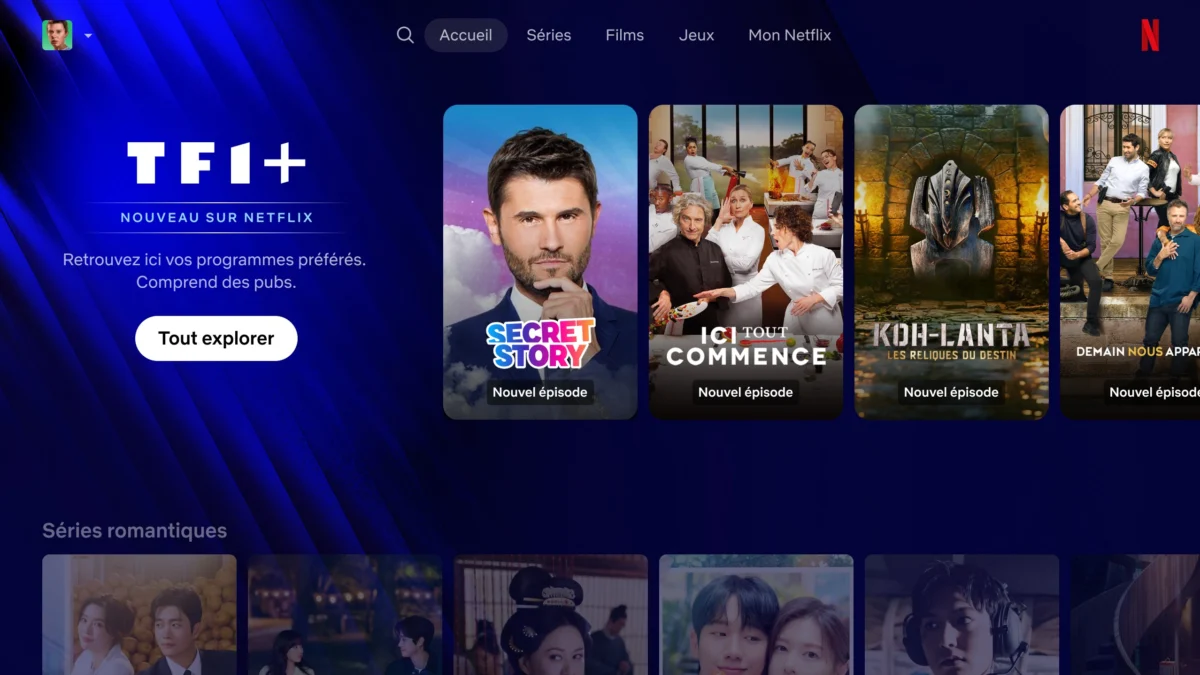
This strategic alliance, which represents the first time Netflix has entered into a comprehensive carriage agreement with a free-to-air national broadcaster, allows Netflix subscribers in France to access live broadcasts and a vast library of on-demand content from TF1 and its dedicated digital platform, TF1+. The early success of this partnership is highlighted by the performance of the long-running reality competition Koh-Lanta—a French adaptation of the Survivor format. The series finale, which aired on June 25, generated 8.3 million unique daily streams, setting a new benchmark for the network and demonstrating the immense reach provided by Netflix’s sophisticated distribution infrastructure.
A Rapid Ascent: Chronology of the TF1-Netflix Integration
The path to this collaboration began as a strategic pivot by TF1 leadership following several years of intense competition with global Over-The-Top (OTT) platforms. For much of the last decade, traditional European broadcasters viewed Netflix as an existential threat. However, the dissolution of Salto—the French joint-venture streaming service launched by TF1, M6, and France Télévisions—in early 2023 forced a reevaluation of the "go-it-alone" digital strategy.
In late 2023 and early 2024, negotiations between TF1 and Netflix intensified as both parties recognized a mutual benefit: Netflix required high-quality local content to stabilize its newly launched ad-supported tier, while TF1 sought to expand its digital footprint beyond the limitations of traditional linear television. The deal was finalized in the second quarter of 2024 and officially implemented last month.
Within the first seven days of the collaboration, the impact was palpable. TF1 reported a 16 percent jump in unique daily streams across its entire digital catalog. By the second week, several TF1 original productions began appearing consistently in Netflix’s "Top 10" most-watched lists for the French territory. By the end of the third week, TF1 CEO Rodolphe Belmer confirmed that the audience engagement metrics originally anticipated for late 2025 had already been achieved.
Supporting Data: Analyzing the Streaming Surge
The 8.3 million unique daily streams recorded for the Koh-Lanta finale serve as the cornerstone of the deal’s success, but the data suggests a broader trend across various genres. The network’s reboot of the reality series Secret Story also saw a significant audience boost, particularly among the "Gen Z" and millennial demographics, who are more likely to consume content through the Netflix interface than through traditional terrestrial tuners.
Furthermore, licensed content has benefited from the "Netflix effect." Good American Family, a Hulu limited series for which TF1 holds the exclusive licensing rights in France, saw a marked increase in viewership once it became available via the Netflix-TF1+ integration. This suggests that the partnership is not only aiding TF1’s original intellectual property but also maximizing the value of its third-party acquisitions.
From a commercial perspective, TF1 has characterized the advertising sales generated through the Netflix partnership as "excellent." While specific revenue figures remain confidential, the broadcaster noted that the advertising yield and Cost Per Mille (CPM) rates on Netflix are comparable to those achieved on its proprietary TF1+ platform. This is a critical development for TF1’s bottom line, as it proves that the broadcaster can maintain high ad margins even when its content is hosted on a third-party global streamer.
Executive Responses and Strategic Vision
The leadership at TF1 has been vocal about the transformative nature of this deal. In a formal statement addressing shareholders and the media, TF1 CEO Rodolphe Belmer emphasized the efficiency of the rollout. "We achieved our audience targets for the Netflix deal, originally set for an 18-month timeframe, in less than three weeks," Belmer stated. "This strong start confirms the value of this unprecedented partnership and the public’s appetite for our content. It validates our strategy of being a content provider for the modern era, meeting the audience wherever they choose to watch."
Industry analysts suggest that Belmer’s confidence is rooted in the "aggregation strategy" that TF1 has adopted. Rather than fighting for the sole attention of the viewer on a standalone app, TF1 is positioning itself as a premium content layer within the world’s most popular streaming ecosystems. This move allows TF1 to leverage Netflix’s superior recommendation algorithms and user interface, which are often more effective at surfacing content than traditional broadcast guides.
While Netflix has been more reserved in its public commentary, the partnership aligns with the company’s global shift toward becoming a "total entertainment" destination. By incorporating local live news and major reality events from national broadcasters like TF1, Netflix reduces churn among local subscribers and strengthens its value proposition in the face of rising subscription costs.
Broader Impact: A New Blueprint for European Media
The success of the TF1-Netflix deal is being closely monitored by media executives across the globe, as it offers a viable alternative to the aggressive consolidation currently sweeping the industry. For years, the prevailing wisdom in the European television market was "get big or die." This was evidenced by the recent announcement of Comcast-subsidiary Sky’s $2.1 billion acquisition of the British broadcaster ITV.
However, the TF1 model suggests that "collaboration over consolidation" may be a more agile and less risky path for national broadcasters. By partnering with a global streamer, TF1 retains its independence and brand identity while gaining the technological scale of a Silicon Valley giant. This "frenemy" strategy is now being replicated by other players in the French market. Amazon’s Prime Video has recently signed similar carriage deals with the public broadcaster France Télévisions and the commercial group M6. In Spain, the national public broadcaster RTVE has entered into a comparable arrangement with Prime Video to ensure its content remains accessible to younger, digital-native audiences.
Implications for the Future of Advertising and Content Distribution
The TF1-Netflix partnership also carries significant implications for the future of digital advertising. By integrating TF1’s ad-supported content into Netflix, the two companies are creating a high-density environment for advertisers. This allows for more sophisticated data targeting and cross-platform campaigns that were previously impossible when linear TV and streaming were siloed.
As Netflix continues to grow its ad-supported tier, the inclusion of "appointment viewing" content like live sports or reality TV finales from broadcasters like TF1 provides the "live" element that advertisers crave. For TF1, the partnership serves as a hedge against the decline of linear television viewership. As traditional cable and satellite subscriptions dwindle, the ability to port an entire broadcasting ecosystem into a streaming app ensures the long-term viability of the free-to-air model.
Conclusion: The Evolution of the "National Broadcaster"
The record-breaking figures reported by TF1 this month signal a coming-of-age for the streaming industry. The era of the "streaming wars," defined by total competition and content hoarding, appears to be giving way to an era of "streaming pragmatism." In this new landscape, the distinction between a traditional broadcaster and a streaming service is becoming increasingly blurred.
TF1’s ability to reach 18-month goals in 21 days is more than just a short-term win; it is a proof of concept for a global media strategy. As other territories look to France as a laboratory for these new carriage deals, the TF1-Netflix partnership will likely serve as the gold standard for how local cultural icons and global digital powerhouses can coexist and thrive in a unified ecosystem. For the French public, the result is a more seamless viewing experience; for the industry, it is a roadmap for survival in a digital-first world.