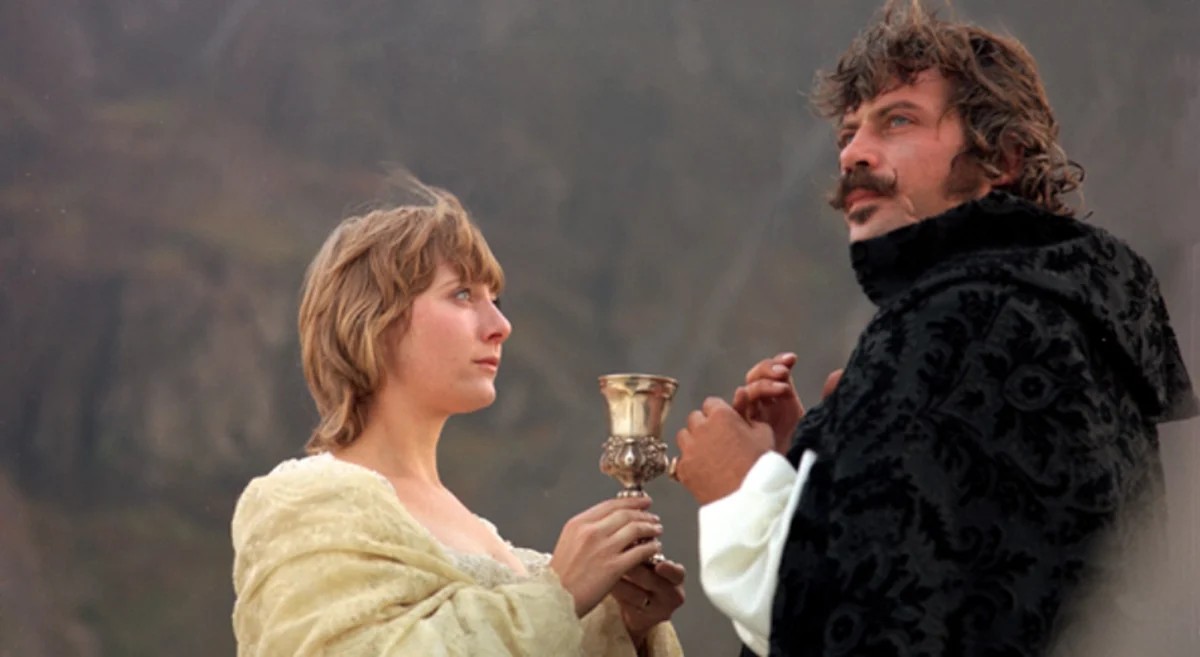
The re-emergence of Ken Russell’s notoriously controversial 1971 film, The Devils, is set to make waves across the cinematic landscape. Warner Bros. has announced a significant undertaking: a 4K restoration of the film, which will not only be screened as part of the prestigious 2026 Cannes Classics lineup but will also receive a limited theatrical release in the United States the week of October 16. This marks a pivotal moment for cinephiles and historians of censorship, as a more complete and restored version of Russell’s audacious vision is finally poised for broader public access.
A Long and Tumultuous Journey for The Devils
The Devils, based on Aldous Huxley’s 1952 non-fiction work The Devils of Loudun, chronicles the harrowing events in 17th-century France surrounding Urbain Grandier, a charismatic priest whose perceived transgressions ignite mass hysteria and accusations of demonic possession among the nuns of Loudun. The film’s unflinching depiction of religious fervor, sexual repression, and political maneuvering, particularly its graphic and provocative sequences, ensured its status as one of the most shocking and debated films of its era.
Upon its initial release in 1971, The Devils faced considerable censorship. Warner Bros., the distributing studio, made significant cuts to both the British and American releases. In the United Kingdom, sequences were removed to avoid an X rating, while the United States release was further edited to secure an R rating. These alterations, critics and fans have long argued, fundamentally altered Russell’s intended narrative and thematic impact, sanitizing what was already a daring and confrontational work.
The "Holy Grail" Version and the Fight for Access
For decades, the director’s intended cut of The Devils remained largely inaccessible. Film critic Mark Kermode became a prominent advocate for its restoration and release, eventually assembling a version of the film in 2002 for a documentary titled Hell on Earth. Kermode’s efforts highlighted the studio’s protracted resistance to making the full version available. Reports from Kermode and others suggest that Warner Bros. has actively blocked attempts by various entities, including the renowned Criterion Collection, to distribute the director’s cut in any format. This deliberate withholding has contributed to the film’s mystique and its reputation as a piece of "lost media."
The difficulty in accessing any official version of The Devils over the years has further cemented its controversial legacy. Censored iterations have primarily circulated through unofficial or semi-official physical media releases, with occasional, fleeting appearances on streaming services. Worldwide bans and stringent censorship have been a constant companion to the film since its debut, rendering the director’s original vision almost sacrilegious in the eyes of the studio that held its rights.
Unveiling the Restored Vision: What to Expect
The upcoming theatrical engagement, described as a "one-week" event, will likely be limited to select screens, a practical consideration given the film’s challenging subject matter and niche appeal. The specifics of ticket sales and venue announcements are still forthcoming from Warner Bros.
The most talked-about and excised scenes involve graphic depictions of sexual acts performed by the nuns, notably one sequence involving a statue of Christ and another featuring a femur bone. These elements, combined with the film’s overarching themes of societal control, religious hypocrisy, and the explosive nature of repressed desires, contribute to its potent and enduring notoriety. The very nature of these deleted scenes underscores the film’s audacious attempt to confront taboos prevalent not only in the 17th century but also in the early 1970s when it was released by a major Hollywood studio.
Beyond the shock value, however, The Devils is recognized by many as a work of significant artistic merit and societal commentary. It has been lauded as a definitive example of erotic horror, transcending its genre to offer profound insights into the interplay of society, religion, sex, and the fundamental aspects of the human condition. While certainly not a film for all audiences, its re-emergence in a restored form offers an invaluable opportunity to re-evaluate Russell’s complex and provocative filmmaking.
A Timeline of Controversy and Rediscovery
- 1952: Aldous Huxley publishes The Devils of Loudun, a historical account of witchcraft accusations and religious conflict in 17th-century France.
- 1971: Ken Russell’s film adaptation, The Devils, premieres. Significant cuts are made for its release in the UK and US to secure more favorable ratings.
- Post-1971: The film faces widespread bans and censorship globally. Various versions, heavily edited, circulate on home video.
- 2002: Film critic Mark Kermode, with extensive research, reassembles a version of the director’s cut for the documentary Hell on Earth: The Story of Ken Russell’s The Devils. This version is screened publicly but not widely released.
- 2002-Present: Kermode and others report ongoing efforts by Warner Bros. to prevent official releases of the director’s cut, including attempts by the Criterion Collection.
- Announced 2024/2025: Warner Bros. announces a 4K restoration of The Devils.
- 2026 ( Cannes Classics): The restored film is slated for screening at the Cannes Film Festival.
- October 2026 (Theatrical Release): Warner Bros. plans a limited one-week theatrical run for the restored film in the United States.
- Later 2026 (Physical Media): Rumors suggest a physical media release of the restored version may also occur this year.
Implications and the Future of Censored Cinema
The decision by Warner Bros. to restore and release The Devils in its more complete form signals a potential shift in how historically controversial films are treated. The film’s journey from being a "forbidden" text to a subject of a major studio restoration underscores evolving societal attitudes towards censorship and the appreciation of challenging artistic expression.
This event has broader implications for the preservation and exhibition of films that have historically been suppressed. It raises questions about other works that may have suffered similar fates and whether this move could pave the way for similar restorations and releases. For scholars of film history, censorship, and religious studies, the availability of a more complete The Devils offers a rich opportunity for academic analysis and a deeper understanding of the cultural anxieties and artistic ambitions of the era.
The re-release of The Devils is more than just a theatrical event; it is a cultural moment, allowing audiences to engage with a film that has long been shrouded in controversy and access limitations. The restoration and subsequent exhibition mark a significant victory for film preservationists and a testament to the enduring power of Ken Russell’s uncompromising cinematic vision. As details on the theatrical engagements and physical media releases are finalized, the cinematic world eagerly awaits the return of this once-unseen masterpiece.