The Cannes Film Festival, an annual spectacle of cinematic achievement and unparalleled glamour, has long been a fortress, a seemingly impenetrable bastion of exclusive industry access and stringent security. Yet, as a decades-long observer and participant in its vibrant ecosystem, one discovers that this fortress is more permeable than it appears, particularly when it comes to the insatiable appetite for publicity. The perceived impenetrability of Cannes, with its byzantine bureaucracy and tight security, often serves as a grand stage for the very media it seeks to control, a dynamic that has been consistently exploited and, in many ways, embraced by the festival itself.
The Unforeseen Infiltration: A Media Experiment in the "Fortress"
Years ago, The Guardian embarked on an ambitious initiative to enhance its coverage of the Cannes Film Festival by integrating a dedicated video crew alongside its seasoned festival reporters. A pre-festival meeting, however, presented a starkly different perspective. The argument was clear: Cannes, a city transformed into a cinematic citadel, would undoubtedly resist such an overt media presence. The rationale was rooted in the assumption that access would be severely restricted by overwhelming security measures and labyrinthine administrative protocols. The prevailing sentiment was that a constant filming operation would prove to be a colossal expenditure of time and resources, given the impossibility of freely pointing a camera at individuals within such a controlled environment.
The reality, however, proved to be a revelation. Cannes, it transpired, was remarkably accommodating, even eager, to embrace the presence of the video crew. Far from being a fortress, it became an open-air studio. Filming occurred unhindered on bustling streets, along the sun-drenched beaches, and atop the iconic Palais des Festivals. In a testament to the festival’s willingness to push boundaries, a sand-smeared rubber dinghy was unceremoniously brought into the opulent lobby of the five-star Carlton Hotel, serving as a quirky interview setting for A-list actors. The carousel in the nearby park and the picturesque pavilions lining the Mediterranean coastline also became impromptu backdrops for journalistic endeavors. The sole instance of resistance encountered was not from official festival channels, but from the steward of a billionaire’s yacht. While granting full access to the deck, the steward discreetly indicated a requirement for a financial “greasing of the palms” – a few hundred euros – to facilitate the filming. This isolated incident underscored a broader truth: the allure of being documented, even in the most unconventional settings, held significant sway.
The Psychology of the Red Carpet: A Spectacle of Self-Promotion
The underlying principle driving Cannes’ permissive attitude towards media access, even for those perceived as outsiders, is the understanding that all publicity, regardless of its source or nature, contributes to the festival’s global brand. Cannes operates as a vast, open-air movie set and a high-stakes reality television production, a reflective hall of mirrors where self-promotion is the currency of success. The ritualistic live feed of red carpet arrivals, a lengthy preamble to the main cinematic event, perfectly encapsulates this phenomenon. The anticipation, the display of wealth and fashion, and the sheer visibility of attendees often overshadow the films themselves.
A particularly telling observation is the audience’s reaction once the lights dim for a premiere. Instances of audience members hissing and booing are not uncommon, a reaction that, for those involved in the spectacle, represents a profound failure. The ultimate indignity, it seems, is not a critically panned film, but the realization that the attendees, who have basked in the limelight moments before, are more engrossed in the perceived drama of their peers’ arrivals than in the cinematic narrative unfolding before them. This underscores a fundamental aspect of the Cannes experience: the event itself, and the individuals who populate it, often become the primary attraction, superseding the art form it ostensibly celebrates.

The White Lotus Factor: A New Layer of Meta-Commentary
Adding a fresh dimension to this perennial spectacle is the recent integration of high-profile television productions within the festival’s orbit. For the current year, season four of the critically acclaimed HBO series, The White Lotus, has been positioned as a significant sidebar event, reportedly outbidding rival locations such as Norway and Ireland. Mike White’s acclaimed series has established its presence within the prestigious Hotel Martinez, which has been temporarily rebranded as "The White Lotus Cannes" for the duration of the festival. The ensemble cast, featuring luminaries like Helena Bonham Carter, Steve Coogan, Vincent Cassel, and Heather Graham, boasts a caliber of talent that would not be out of place in the main competition. The series is slated for production throughout the festival, mirroring the very approach the media crew adopted years prior. This development can be seen as a continuation of a long-standing tradition, where the line between cinematic presentation and the real-world machinations of the industry blurs.
The Cannes Film Festival has always harbored a deep affection for films, particularly those that engage with the cinematic process itself. However, its most profound love affair appears to be with films and series that are about Cannes. It has become a recurring trope that a surefire way to gain entry into the festival’s official selection or to secure prominent placement is to either explicitly reference the event within the film’s narrative or to utilize the picturesque backdrop of the Côte d’Azur.
A Cinematic History of Cannes on Screen
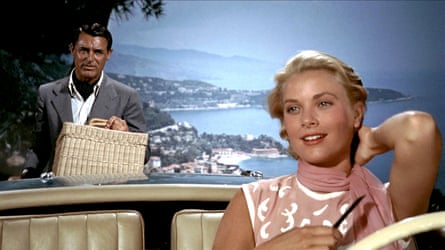
The festival’s history is replete with examples of films that have either directly or indirectly engaged with its unique environment. The 2014 opening-night slot was famously awarded to Grace of Monaco, a biographical drama centered on the iconic actress and princess. More recently, Elton John’s biopic, Rocketman, concluded with a visually striking recreation of his "I’m Still Standing" music video, filmed on the very beach adjacent to the Carlton Hotel.
Perhaps one of the most meta cinematic interventions was Nouvelle Vague, which premiered the previous year. This film featured an extended sequence wherein a young Jean-Luc Godard, expertly portrayed by Guillaume Marbeck, undertakes a clandestine road trip to attend the festival. The meta-narrative reached its zenith when festival attendees, seated in the Grand Théâtre Lumière, watched a depiction of Godard settling into that very same auditorium. This created a disorienting, Escher-esque effect, blurring the lines between the film’s reality and the immediate surroundings of its audience.
Filmmaker Mark Cousins has aptly described Cannes as a "church," emphasizing its "rituals, the grandeur, the massing of the hordes. The climbing of the steps like Santiago de Compostela." This analogy holds significant weight, particularly concerning the festival’s highly selective nature, with only approximately 2% of submitted films typically making the cut. Yet, within this seemingly sacred space, established rules can be bent, and favored individuals or projects can find preferential treatment. While official festival policy generally prohibits outside film crews from accessing the red carpet premieres, an notable exception was made in 2007 for Mr. Bean’s Holiday. This decision, which allowed for slapstick antics both outside and inside the Palais, was reportedly influenced by the festival’s president at the time, Gilles Jacob, who was a known admirer of Rowan Atkinson’s comedic work.
The inclusion of Mr. Bean’s Holiday served as a humorous counterpoint to the festival’s inherent pomp and pretension. Similarly, the French sitcom Call My Agent! offered a more grounded, albeit fictionalized, glimpse into the backstage chaos. In one memorable sequence, Juliette Binoche is depicted navigating the labyrinthine service corridors and attempting, unsuccessfully, to reach the stage. Binoche herself later explained that this scene was inspired by a personal experience of arriving late to accept an award and becoming disoriented within the Palais, finding herself blocked by locked doors. Such anecdotes highlight how Cannes, even for its most seasoned participants, can be a bewildering environment where the boundaries between authenticity and artifice become increasingly indistinct.
The Satirical Lens: The White Lotus and the Art of Mockery
The impending arrival of The White Lotus at Cannes presents fertile ground for satire. The festival, with its inherent blend of aspiration, excess, and the stark juxtaposition of the ultra-wealthy with those striving for recognition, provides a perfect canvas for the show’s distinctive brand of social commentary. While the narrative of "haves and have-nots" is a well-trodden path in cinematic portrayals of Cannes, White’s intention to embed the festival as a "living, breathing side attraction," integrating his stars alongside other industry luminaries and interweaving scripted drama with public events, offers a fresh approach.
This strategy, however, is not entirely novel. Brian De Palma’s Femme Fatale utilized the 2001 festival as its backdrop, and Michael Ritchie’s An Almost Perfect Affair similarly piggybacked on the 1978 edition. Even Murder at the Cannes Film Festival in 2000, starring Bo Derek as the world’s most famous star, explored a fictionalized crime within the festival’s glamorous setting, though Derek’s character tragically meets her demise during the opening ceremony. These precedents suggest that the allure of using Cannes as a narrative device is enduring, despite the potential for the festival’s inherent realities to overshadow fictional plots.
The Outsider’s Edge: Guerilla Filmmaking and the True Spirit of Cannes
Ideally, the Palme d’Or is awarded to the finest film presented at Cannes. However, the most compelling films about Cannes often emerge from the periphery, the "outsiders" and "opportunists" who, like the audacious thieves who stole $130 million worth of gems from the Carlton Hotel in 2013, capitalize on the festival’s unique ecosystem.
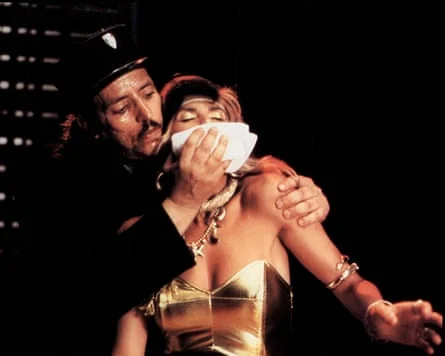
David Winters, though perhaps not as celebrated as cinematic giants like Bergman or Tarkovsky, crafted what can be considered the quintessential piece of guerilla filmmaking at Cannes with his postmodern slasher flick, The Last Horror Film (1982). Shot on the fly and unashamedly framing the celebrity circus as a descent into a tawdry circle of hell, the film captures the chaotic energy of the festival. A pivotal scene features the imperiled scream queen being pursued down the Croisette by a deranged killer, amidst the frenzy of paparazzi and bewildered film fans. Their exclamations of "It’s a publicity stunt!" and "What a fabulous entrance!" perfectly encapsulate the blurred lines between genuine terror and manufactured spectacle.
The Guardian’s video team, with their logistical challenges of hauling equipment between the rooftop and the beach, might be seen as the iron-age precursors to the current White Lotus production. However, The Last Horror Film stands as a more potent example of subversive filmmaking. It was a low-budget, yet remarkably clever, production that operated outside the festival’s official sanction. Shot without permits, it candidly ogled movie stars from a distance, presenting a raw and unflattering portrait of the event. The city of Cannes, it is reported, did not welcome the film and refused it screening opportunities. Consequently, The Last Horror Film found its premiere at the Sitges Film Festival, a testament to its independent spirit and its inability to be tamed by the established order of Cannes. This legacy of outsider commentary and unvarnished observation continues to resonate, reminding us that the most potent critiques often come from those operating just beyond the velvet ropes.