A new trailer for Christopher Nolan’s highly anticipated epic, The Odyssey, released Monday night, has ignited significant buzz, promising audiences a cinematic spectacle when it arrives in theaters on July 17. The Universal Pictures production, directed by the acclaimed filmmaker known for his intricate narratives and grand scale, appears to be an ambitious undertaking, delving into one of Western literature’s most enduring tales. The newly unveiled footage offers a more intimate look at the arduous journey of Greek hero Odysseus, portrayed by Matt Damon, as he endeavors to return home to Ithaca to reunite with his wife and son after the Trojan War.
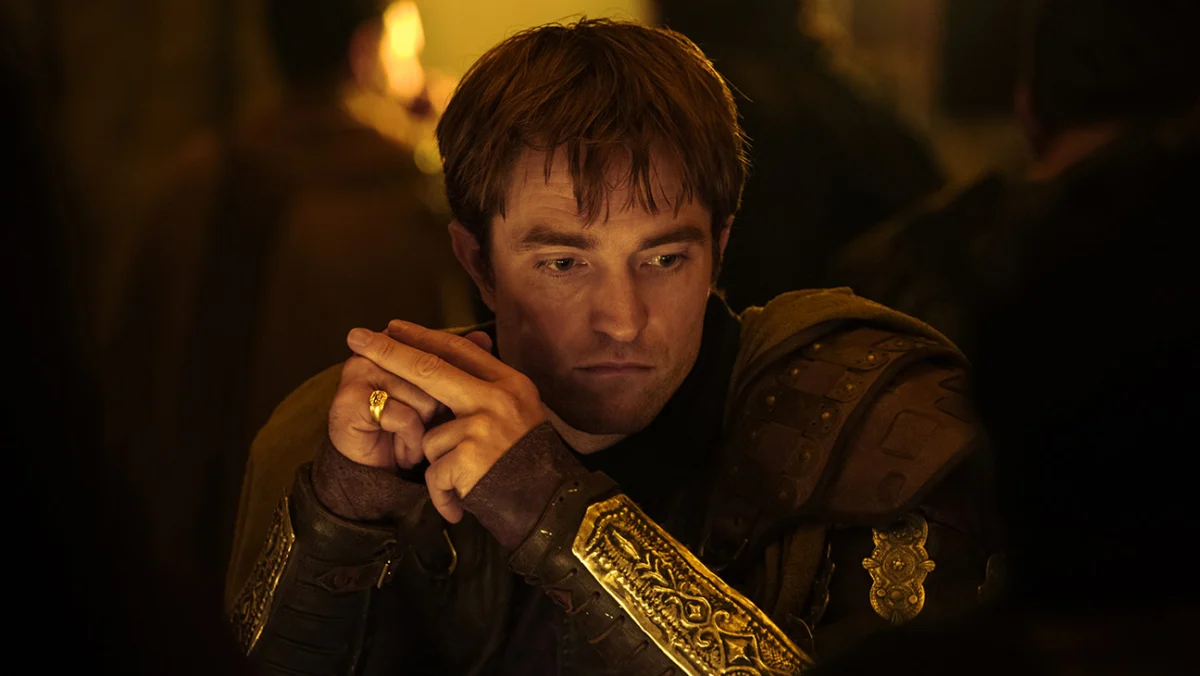
The trailer provides tantalizing glimpses of the film’s star-studded ensemble cast, each bringing gravitas to their mythological roles. Matt Damon takes on the lead as the cunning and weary Odysseus, while Tom Holland embodies his son, Telemachus, who is desperately awaiting his father’s return and contending with unwelcome suitors. Anne Hathaway portrays Penelope, Odysseus’s steadfast wife, whose resilience and loyalty are tested over two decades. Charlize Theron appears as the alluring nymph Calypso, a pivotal figure in Odysseus’s prolonged detainment. Robert Pattinson, pictured prominently in a recently released production still, takes on the role of Antinous, one of Penelope’s most persistent and "sniveling" suitors, hinting at a darker, more antagonistic performance. The supporting cast further boasts John Leguizamo as Eumaeus, Odysseus’s loyal swineherd, and Jon Bernthal as Menelaus, the formidable Greek king of Sparta and brother of Agamemnon, adding layers of historical and mythological depth to the narrative.
Beyond the compelling performances, the trailer also offered the first proper look at one of the epic’s most iconic mythical creatures: the Cyclops. Nolan, renowned for his preference for practical effects blended seamlessly with cutting-edge visual technology, seems to have rendered the colossal, one-eyed giant with a blend of realism and awe-inspiring menace, suggesting a departure from more fantastical interpretations. This visual grounding of mythical elements is a hallmark of Nolan’s style, aiming to immerse audiences deeply into the world he creates.
The Enduring Legacy of Homer’s "The Odyssey" on the Big Screen
Homer’s The Odyssey, an ancient Greek epic poem attributed to the legendary poet Homer, stands as a foundational text of Western literature, chronicling Odysseus’s ten-year journey home after the fall of Troy. This journey is fraught with divine intervention, monstrous encounters, and profound tests of character, loyalty, and perseverance. Its themes of homecoming, identity, temptation, and the human condition have resonated across millennia, influencing countless works of art, literature, and philosophy. Adapting such a revered and complex narrative for the big screen presents unique challenges, particularly in balancing fidelity to the source material with the demands of modern cinematic storytelling and pacing.
Previous attempts to bring The Odyssey to film or television have varied in their success and artistic interpretation. From early silent films to lavish television miniseries and more stylized cinematic versions, filmmakers have grappled with portraying its sprawling scope, fantastical elements, and deep philosophical undertones. Notable adaptations include the 1954 Italian-American film Ulysses starring Kirk Douglas, and the 1997 television miniseries directed by Andrei Konchalovsky. Each sought to capture a different facet of the epic, often simplifying or reinterpreting certain mythological encounters for a contemporary audience. Christopher Nolan’s involvement, however, signals a potentially groundbreaking approach, given his reputation for intellectual rigor and cinematic innovation.
Christopher Nolan’s Vision: A Masterclass in Epic Filmmaking
Christopher Nolan has carved out a unique niche in contemporary cinema, celebrated for his cerebral blockbusters that blend intricate plots with breathtaking visuals and immersive soundscapes. His filmography, which includes critically acclaimed and commercially successful titles like Inception, The Dark Knight trilogy, Dunkirk, and most recently, Oppenheimer, demonstrates a consistent commitment to pushing the boundaries of cinematic storytelling. Nolan is a fervent advocate for the theatrical experience, particularly the IMAX format, which he has championed as the ultimate medium for grand-scale filmmaking.
For The Odyssey, Nolan has reportedly shot the entirety of the film using IMAX cameras. This choice is not merely a technical preference but a crucial artistic decision, designed to maximize the visual impact and immerse viewers directly into Odysseus’s perilous journey. The battle scenes showcased in the trailer, appearing incredibly detailed and expansive, are undoubtedly designed to be awe-inspiring when experienced on the immense IMAX screen. Nolan’s meticulous approach to practical effects, often favoring real locations and tangible sets over excessive green screen, is expected to lend an authentic and visceral quality to the ancient Greek world, from the windswept shores of Troy to the mystical island of Calypso.
His previous work, Dunkirk, demonstrated his prowess in crafting large-scale historical epics with a focus on human drama amidst monumental events. Similarly, Oppenheimer showcased his ability to imbue biographical storytelling with the tension and scope of a thriller. With The Odyssey, Nolan is poised to apply his distinctive vision to a narrative steeped in mythology and adventure, promising a film that is both intellectually engaging and visually spectacular.
A Pantheon of Talent: Crafting the Characters
The casting for The Odyssey reflects Nolan’s penchant for assembling top-tier talent capable of bringing complex characters to life.
- Matt Damon as Odysseus: Damon brings a seasoned gravitas and a proven track record in both action-oriented roles (like the Bourne franchise) and more nuanced dramatic performances (Good Will Hunting, The Martian). His portrayal of Odysseus is expected to capture the hero’s famed cunning (metis) as well as his profound weariness and longing for home. Industry analysts suggest Damon’s ability to convey both physical prowess and deep emotional vulnerability makes him an ideal choice for the multi-faceted protagonist.
- Tom Holland as Telemachus: Holland, widely recognized for his portrayal of Spider-Man, offers a youthful energy and an ability to convey sincerity and determination. As Telemachus, he will likely depict the poignant journey of a son growing into his own, grappling with his father’s absence and the daunting task of defending his mother’s honor.
- Anne Hathaway as Penelope: Hathaway, an Academy Award winner, possesses the elegance and emotional depth to portray Penelope’s unwavering loyalty and strength. Her character’s ordeal—resisting the relentless advances of the suitors while holding onto hope for Odysseus’s return—is central to the epic, and Hathaway is expected to bring a powerful performance to this iconic role.
- Charlize Theron as Calypso: Theron’s commanding screen presence and ability to embody powerful, often enigmatic characters (e.g., Mad Max: Fury Road, Atomic Blonde) make her a compelling choice for Calypso. The nymph’s role in detaining Odysseus for seven years, offering him immortality, is a crucial exploration of temptation and the human desire for mortality and family.
- Robert Pattinson as Antinous: Pattinson’s versatility, demonstrated in roles ranging from independent dramas to blockbuster franchises, allows him to convincingly portray complex, morally ambiguous figures. His casting as Antinous, described as "sniveling," hints at a portrayal that will likely delve into the character’s arrogance and villainy, providing a significant antagonist within Ithaca.
- John Leguizamo as Eumaeus: Leguizamo, a veteran character actor, brings a unique blend of humor and pathos to his roles. As Eumaeus, the loyal swineherd, he is expected to provide a grounded, human connection for Odysseus upon his return, embodying the steadfast loyalty that contrasts with the treachery of the suitors.
- Jon Bernthal as Menelaus: Bernthal’s intense physicality and ability to project authority are well-suited for the role of Menelaus, the Spartan king whose own journey and counsel play a part in Telemachus’s quest.
The combined talent promises a rich tapestry of performances, each contributing to the epic’s vast emotional and narrative landscape.
A Colossal Investment: The $250 Million Gamble
The Odyssey comes with a reported production budget of $250 million, making it Christopher Nolan’s most expensive film to date. This figure eclipses his previous high-budget productions like Tenet (estimated $200 million) and significantly surpasses Oppenheimer (around $100 million). Such a substantial investment by Universal Pictures underscores the studio’s confidence in Nolan’s vision and the project’s potential, but also highlights the inherent financial risk associated with a film of this scale.
The reasons for the exorbitant budget are manifold. Filming entirely on IMAX cameras is a costly endeavor, requiring specialized equipment and extensive post-production work. The film’s period setting necessitates elaborate practical sets, authentic costumes, and potentially extensive location shooting across the Mediterranean region, aiming to faithfully recreate the ancient world. Furthermore, the inclusion of large-scale battle sequences, visual effects for mythical creatures like the Cyclops, and the salaries for a star-studded ensemble cast all contribute to the ballooning production costs.
This financial commitment represents a significant "gamble" for Universal, particularly because, as the original report noted, the source material, while classic, "may not be familiar to general audiences" in its full mythological scope. Unlike adaptations of popular comic books or established literary franchises, a classical epic, even one as renowned as The Odyssey, requires effective marketing to bridge this potential familiarity gap and attract a broad audience beyond Nolan’s dedicated fanbase. Success will depend heavily on critical acclaim and strong international box office performance to recoup the investment and generate profit.
Marketing and Anticipation: Charting a Course for Success
The release of the new trailer marks a crucial phase in the marketing campaign for The Odyssey. Early reactions suggest the trailer successfully conveys the film’s epic scale, visual grandeur, and dramatic intensity, effectively building anticipation among cinephiles and general audiences alike. Universal Pictures is clearly positioning this film as a major summer blockbuster, banking on Nolan’s directorial brand and the allure of a timeless story retold through a modern, visionary lens.
The film’s July 17 release date places it squarely in the competitive summer blockbuster season, typically crowded with superhero films, animated features, and established franchises. This timing underscores Universal’s confidence in The Odyssey‘s ability to stand out and draw significant crowds. Industry analysts will be closely watching its performance, not only as a benchmark for Nolan’s continued box office prowess but also as an indicator for the viability of original, large-scale historical epics in the contemporary market. Recent historical dramas, such as Ridley Scott’s Napoleon, have demonstrated that while interest exists, consistent blockbuster numbers for non-franchise historical epics can be challenging to achieve without overwhelming critical and audience endorsement.
Should The Odyssey resonate strongly with audiences and critics, it could signal a renewed interest in classic narratives and embolden studios to invest further in ambitious, intellectually rich projects that prioritize cinematic artistry and grand storytelling. Conversely, a lukewarm reception, despite Nolan’s involvement and the stellar cast, might reinforce the industry’s cautious approach to non-franchise blockbusters.
Broader Impact and Implications
The release of Christopher Nolan’s The Odyssey holds several significant implications for the film industry. For Nolan himself, it represents a bold step into direct mythological adaptation, a genre that offers immense creative freedom but also the challenge of satisfying generations of expectations. Its success or failure could influence his future directorial choices and the types of projects studios are willing to finance at such a high budget.
For Universal Pictures, it is a statement of intent, demonstrating a willingness to invest in auteur-driven, original content outside of its established franchises. A triumph for The Odyssey would not only deliver substantial box office returns but also bolster the studio’s reputation for backing prestige projects. Furthermore, the film’s dedicated use of IMAX technology continues Nolan’s mission to preserve and elevate the communal theatrical experience, a crucial endeavor in an era increasingly dominated by streaming and home entertainment.
Ultimately, The Odyssey stands as a monumental cinematic undertaking, combining one of history’s most compelling narratives with the distinctive vision of one of cinema’s most revered filmmakers. As July 17 approaches, the anticipation continues to build, with audiences worldwide eager to embark on Odysseus’s epic journey as reimagined through Christopher Nolan’s unparalleled lens.