The seventh episode of the anime adaptation of Kamome Shirahama’s acclaimed manga, Witch Hat Atelier, delves deeply into the philosophical underpinnings of magic and the complex emotional landscape of its young witches. Titled "Who is Magic For?", the episode directly confronts the ethical responsibilities inherent in wielding magical power, a central theme that has been subtly woven throughout the narrative. This installment serves as a pivotal moment for the character of Agott, forcing a confrontation with her motivations and the consequences of her internal struggles, while also raising further questions about the enigmatic figures orchestrating events from the shadows.
The Core Conflict: Purpose and Responsibility in Magic
At its heart, the episode poses a fundamental question: for whom is magic intended? Within the established lore of Witch Hat Atelier, the answer is presented as clear: magic is meant for the betterment of others, for aid and assistance, and not for the selfish accumulation of power. The existence of forbidden spells and the stringent rules surrounding magical practice, such as the Pact, underscore this principle, designed to prevent harm and the abuse of arcane abilities. However, the difficulty with which Agott grapples when confronted by Olruggio with this very question reveals a significant disconnect between the ideal and her personal aspirations.
Agott has consistently been a character that elicits strong reactions from viewers. Even for those familiar with the manga, her early actions often border on abrasive and, at times, unkind. Prior to this episode, anime-only audiences have lacked a clear understanding of the deep-seated motivations driving her intense focus on magical mastery. This episode, however, begins to illuminate those drives, revealing that her pursuit of success is not merely about becoming a skilled witch. There is an almost desperate intensity to her ambition, a quality that can be perceived as selfishness and leads her to dismiss advice and overlook gestures of kindness. While Qifrey, her mentor, has attempted to temper these impulses with a gentle approach, it has proven largely ineffective. Agott appears to be a personality that thrives on structure and clear directives, rather than the more nuanced approach of gentle guidance.
Olruggio’s Intervention: A Catalyst for Change
It is Olruggio, a character who is not Agott’s direct instructor, who demonstrates a more effective method of engaging with her. His handling of the unfolding situation before it escalates further is strategically designed to foster understanding through practical experience rather than rote learning. Olruggio permits Agott to accompany the group, and it is he who directly challenges her by asking whom she is learning magic for. Furthermore, he decisively redirects her focus by entrusting her with his rings and tasking her with drying the drenched travelers. This action serves as a clear signal that Agott’s anticipated moment of personal triumph, where she would prove her competence on par with adults, will not materialize in the manner she envisioned.
Agott’s reaction to Olruggio’s intervention is telling. While clearly upset, her response differs significantly from her interactions with Qifrey. Instead of immediate defiance or emotional withdrawal, she buckles down and complies with the instructions given. When Olly and Qifrey depart with Richeh and Tetia to investigate the river, Agott experiences shock and distress but does not immediately resort to blaming Coco. While it is premature to suggest she fully grasps the realities of the world outside the atelier, there are indications that she is slowly beginning to confront these differences, even as they intersect with her own past traumas. The critical moment arrives when Custas is trapped beneath a boulder, and the adult witches turn to her for assistance. This incident appears to trigger a profound internal reckoning.
Trauma and Coping Mechanisms: A Tale of Two Witches
The fact that it is Coco, rather than Agott, who ultimately rescues Custas speaks volumes. While the rescue involves significant teamwork, underscoring Agott’s growth in setting aside personal issues for a greater cause, it also starkly illustrates the divergent ways in which Agott and Coco process trauma. Coco, as has been established, possesses an remarkable resilience. She picks herself up and perseveres, transforming her pain into a driving force and a motivation for moving forward, even finding moments of joy amidst her struggles. Agott, conversely, tends to internalize her pain, holding onto it tightly as a form of self-protection. The narrative suggests that her deep-seated insecurities stem from perceived inadequacies. Being told she wasn’t good enough, or her mother’s rejection of her as an apprentice due to a lack of perceived talent, fuels a fierce determination to prove them wrong. Her closely cropped hair becomes a potent symbol of this resolve, representing a severance from her family and a commitment to forging her own path. In essence, Coco mourns the loss of her family, while Agott burns with a consuming rage at the severance from hers.
Unraveling the Mysteries: The Knights Moralis and Qifrey’s Role
It is unlikely that a deeper exploration of Agott’s backstory or a shift in her role from hindrance to asset will immediately endear her to a wider audience. She has yet to fully earn that level of acceptance. However, her character arc now possesses greater clarity, and she appears to be developing a more nuanced perspective towards Coco, who, after all, was instrumental in Custas’s rescue.
A pressing question remains: will Agott defend Coco from the Knights Moralis? The arrival of these law enforcement officials was not precipitated by Coco’s magic, nor by Agott’s diversionary bird, but rather by Qifrey’s own water sword spell. Upon their arrival, the Knights Moralis are swift to assign blame, immediately making assumptions about Coco and Agott and the entirety of the situation. While their role as law enforcement is acknowledged, their immediate resort to judgment, rather than objective investigation into the adherence of magical laws, is called into question.
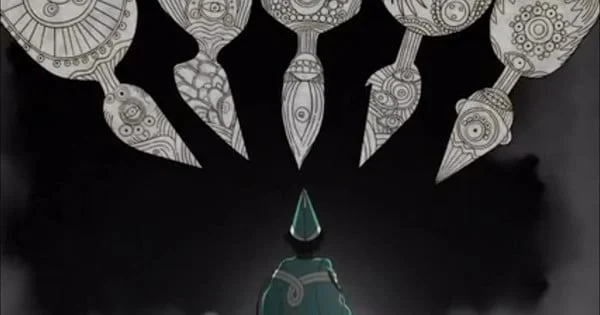
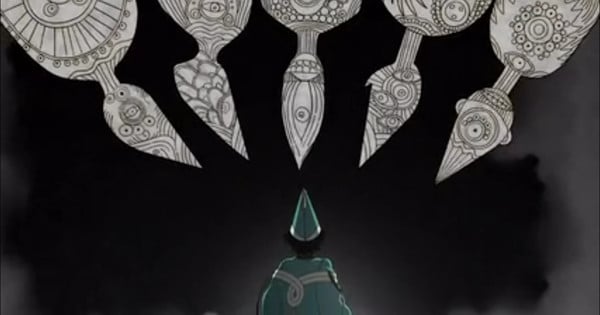
Viewers may recall the Brimmed Cap’s cryptic statement about presenting their "apprentice," Coco, with a gift following the dragon labyrinth incident. This unknown item is strongly implicated as the cause of Coco’s spell malfunctioning, transforming the entire riverbank into sand instead of merely affecting the boulder. The Knights Moralis’ assumption that Agott or Coco were deliberately collaborating with the Brimmed Caps, while understandable given the circumstances, highlights their prejudiced and hasty approach to judgment.
However, the originating spell that summoned the Knights Moralis was cast by Qifrey himself. While Olruggio’s silence on the matter suggests it might not be strictly forbidden magic, it only deepens the enigma surrounding Qifrey’s true nature and his connection to such powerful and potentially dangerous magic. What is Qifrey’s relationship to forbidden magic, and will the Knights Moralis ultimately deem both him and Coco a threat to be removed from the magical world? The episode’s conclusion offers little reassurance regarding the Knights Moralis’ capacity for impartial judgment, leaving a significant cloud of uncertainty over the future.
Broader Implications and Future Trajectories
The events of episode seven of Witch Hat Atelier have significant implications for the unfolding narrative. Agott’s internal shift, catalyzed by her encounter with Olruggio and the near-disaster involving Custas, marks a crucial turning point in her character development. Her struggle with her motivations and the acknowledgment of her own limitations are vital steps towards maturity. This introspection could lead to a more collaborative and less antagonistic relationship with Coco, potentially strengthening the group’s overall cohesion.
The actions of the Knights Moralis, however, introduce a new layer of external conflict. Their swift judgment and apparent bias suggest a systemic issue within the magical governance of this world. Their immediate assumption of guilt for Coco and Agott, despite the complexity of the situation and Qifrey’s own involvement in summoning them, indicates a potentially flawed enforcement system. This raises concerns about the fairness and impartiality of magical law and could lead to further complications for the young witches.
Furthermore, Qifrey’s use of the water sword and the subsequent mystery surrounding his connection to forbidden magic place him under increased scrutiny. His enigmatic nature has been a persistent source of intrigue, and this episode only amplifies the questions surrounding his true intentions and allegiances. His role in both the initial summoning of the Knights Moralis and the potential ramifications for Coco and himself will be a key element to watch in future episodes. The interplay between these internal character arcs and the external pressures from the magical authorities will undoubtedly shape the trajectory of the series as it progresses.
Witch Hat Atelier is currently streaming on Crunchyroll.