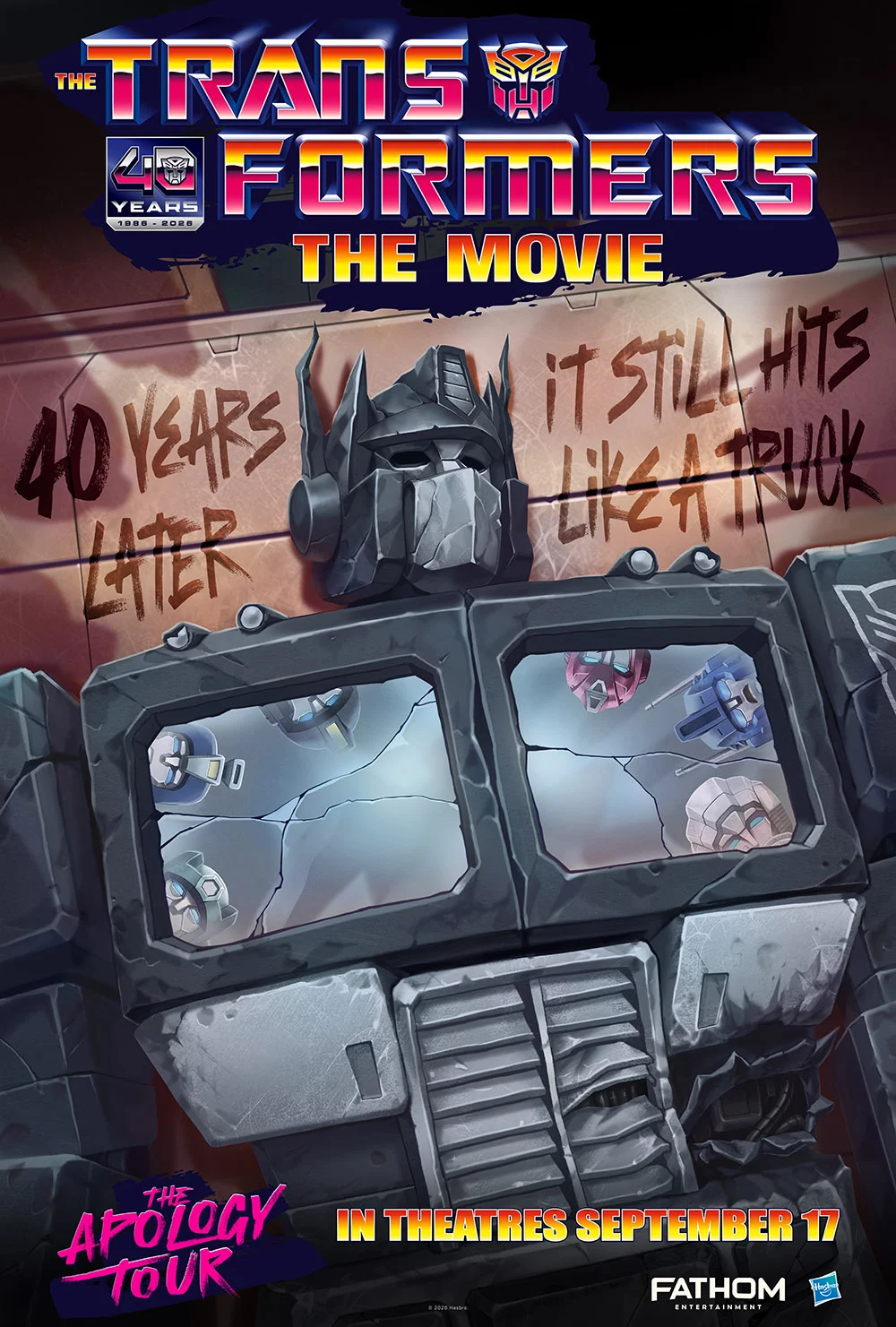
What was once deemed a box office failure upon its initial 1986 release and famously left a generation of young moviegoers in emotional distress due to the unprecedented deaths of beloved characters, The Transformers: The Movie is set to make a triumphant return to cinemas. Hasbro, the global toy and entertainment giant that owns the iconic Transformers brand, has partnered with specialty distributor Fathom Entertainment to orchestrate a wide theatrical re-release of the animated feature, meticulously restored in stunning 4K resolution. This significant cinematic event is strategically timed to coincide with the film’s 40th anniversary in 2026, offering both long-time devotees and new audiences a chance to experience a pivotal, albeit controversial, chapter in the Transformers saga. The limited engagement is scheduled to commence on September 17, 2026, and run through September 21, 2026, across the United States, with select international markets expected to launch day-and-date. This re-release is not merely a nostalgic trip down memory lane but a calculated move by Hasbro to lean into the film’s notoriety, leveraging its unique place in pop culture history to engage its multi-generational fanbase and reinforce the brand’s enduring appeal.
A Retrospective Look: The 1986 Release and Its Aftermath
When The Transformers: The Movie first premiered on August 8, 1986, it arrived with significant expectations, serving as a cinematic extension of the wildly popular animated television series and toy line. However, its theatrical run was met with commercial disappointment. Produced on an estimated budget of $6 million, the film grossed a meager $5.8 million domestically, barely recouping its production costs and falling far short of financial success. This underperformance can be attributed to several factors, including a competitive summer box office dominated by blockbusters like Top Gun, Aliens, and Ferris Bueller’s Day Off, as well as a perhaps overly ambitious narrative that alienated its core demographic. Critics at the time were largely dismissive, often labeling it as an extended commercial for new toys, a common critique for animated features tied to merchandise in the 1980s. While this perception wasn’t entirely unfounded given the film’s role in introducing a new wave of Transformers characters, it overshadowed the genuine effort at crafting an epic space opera.
Beyond its financial woes, the film’s most profound and lasting impact stemmed from its narrative choices, particularly the dramatic and unexpected demise of several established characters, most notably Optimus Prime, the venerable leader of the Autobots. For millions of children who had grown up with Prime as a symbol of unwavering heroism and moral rectitude, his death was a shocking and emotionally devastating event. Reports from the time chronicled widespread tears, confusion, and even anger among young viewers, an emotional response that parents often struggled to console. This was an era when children’s entertainment rarely depicted the permanent death of a central protagonist, and The Transformers: The Movie shattered that unspoken convention with brutal efficiency. The outcry was significant enough to spark a letter-writing campaign from distraught children and parents to Hasbro and Marvel Productions, the studio behind the animated series, demanding Prime’s resurrection. This unprecedented backlash underscored a profound misjudgment of the audience’s emotional attachment to the characters, turning a planned narrative transition into a defining moment of childhood "trauma" for many. The film’s bold, dark tone, coupled with its mature themes of mortality and sacrifice, proved too much for its target audience, contributing to its initial commercial and critical rejection.
From Box Office Bomb to Cult Classic: The Evolution of a Legacy
Despite its inauspicious debut, The Transformers: The Movie gradually shed its "bomb" status to emerge as a cherished cult classic, a journey that mirrors many initially misunderstood cinematic works. The Transformers franchise itself began in 1984, an ingenious adaptation by Hasbro of Japanese toy lines Diaclone and Micro Change. It quickly became a global phenomenon, driven by a compelling narrative of sentient alien robots warring across the cosmos, encapsulated in the popular animated television series, comic books, and an extensive toy line. The movie was intended to bridge the gap between two seasons of the animated show, allowing for a significant reset of the character roster and storyline, a common practice in toy-driven franchises to introduce new merchandise.
In the years following its theatrical run, the film found a second life through home video releases. VHS copies became hot commodities, passed among friends and family, allowing repeated viewings that gradually transformed initial shock into appreciation. As the original audience matured, their perspective on the film evolved. What was once seen as a cruel twist became recognized as a daring narrative choice, an attempt to infuse gravitas and consequence into a children’s cartoon. The film’s ambitious animation, often darker and more fluid than the television series, its vibrant soundtrack featuring rock anthems from artists like Lion and Stan Bush, and its surprisingly complex themes of leadership, succession, and the cyclical nature of conflict, all contributed to its re-evaluation. Adult fans began to appreciate its uniqueness within the canon of 1980s animated features. Online communities and fan conventions further cemented its cult status, fostering discussions that celebrated its audacious spirit and acknowledged its profound impact on their childhoods. This re-assessment transformed the film from a commercial misstep into an integral, almost revered, piece of Transformers lore, essential for understanding the franchise’s deeper narrative ambition.
The 40th Anniversary Re-release: A Strategic Revival
The upcoming 40th anniversary re-release in 2026 is a meticulously planned strategic maneuver by Hasbro, reflecting a sophisticated understanding of brand management and the lucrative nostalgia market. Hasbro has openly acknowledged the past fan discontent, even embarking on an informal "Apology Tour" in recent years, which has included special merchandise and new toy lines that directly reference the film’s events and characters. This "Apology Tour" is less an act of contrition and more a shrewd commercial strategy to tap into the powerful emotional connection fans have with the original film. By embracing, rather than shying away from, the controversies of the past, Hasbro creates a narrative that empowers the fanbase, validating their long-held feelings and transforming perceived "sins" into marketable nostalgia. This approach not only generates renewed interest in a foundational piece of Transformers history but also serves to introduce the film to a new generation of fans, potentially bridging the gap between those who grew up with the original animation and those familiar with the modern live-action blockbusters.
Fathom Entertainment, known for its expertise in "event cinema," is the ideal partner for this endeavor. Fathom specializes in bringing classic films, operatic performances, and other unique content to theaters for limited engagements, catering to niche but dedicated audiences. Their business model thrives on creating shared cinematic experiences that transcend a typical movie-going outing. Ray Nutt, CEO of Fathom Entertainment, affirmed this synergy, stating, "Even 40 years later, this animated feature film remains a defining moment for fans across generations." This statement underscores Fathom’s commitment to delivering high-quality, memorable events for passionate fan communities. The 4K restoration is a critical component of this re-release, promising an unparalleled visual and auditory experience. Modern audiences, accustomed to high-definition content, will be able to appreciate the film’s hand-drawn animation with unprecedented clarity and detail, revealing nuances that were impossible to perceive in its original theatrical run or even on subsequent home video formats. This technical upgrade is a significant draw, offering a compelling reason for fans to return to cinemas and witness the film in a way it has never been seen before.

A Pantheon of Voices: The Enduring Talent
One of the most remarkable and enduring legacies of The Transformers: The Movie is its extraordinary voice cast, which remains a benchmark for animated features. The film brought together a constellation of legendary vocal talents, elevating the production beyond a mere children’s cartoon. Leading the charge were the franchise stalwarts Peter Cullen as the iconic Optimus Prime and Frank Welker as the menacing Megatron, whose voices are synonymous with the characters. However, the film also featured a host of Hollywood luminaries, some of whom were making rare forays into animation.
Most notably, the film marked the final screen performance of cinematic titan Orson Welles, who lent his unmistakable gravitas to the role of Unicron, the planet-eating harbinger of chaos. Welles’ powerful, resonant voice provided an intimidating presence that perfectly encapsulated the cosmic scale of the villain, leaving an indelible mark on animation history. Alongside Welles, the cast included other distinguished actors: Judd Nelson, fresh off his iconic role in The Breakfast Club, voiced the brash Hot Rod, who would eventually rise to become Rodimus Prime; Leonard Nimoy, celebrated for his portrayal of Spock in Star Trek, delivered a chilling performance as Galvatron, the resurrected and upgraded Megatron; comedic genius Eric Idle brought his distinctive wit to the junkion leader Wrek-Gar; and the stoic Robert Stack, known for his roles in The Untouchables and Airplane!, provided the commanding voice of Ultra Magnus. This assembly of talent not only added significant prestige to the film but also contributed immensely to its lasting appeal, imbuing the animated characters with a depth and presence that resonated with audiences then and now. The sheer quality of the voice acting, ranging from the familiar comfort of Cullen and Welker to the unexpected star power of Welles and Nimoy, continues to be a major draw, underscoring the film’s unique place in animated cinema.
Broader Implications: Nostalgia, Market Strategy, and Cultural Resonance
The theatrical re-release of The Transformers: The Movie extends beyond a simple anniversary celebration; it represents a sophisticated engagement with the modern "nostalgia economy" and a strategic effort to fortify the Transformers brand across multiple generations. In an entertainment landscape increasingly dominated by established intellectual properties, companies like Hasbro are adept at leveraging the emotional capital invested by fans over decades. The target audience for this re-release is multifaceted: it includes original fans in their 40s and 50s, eager to relive a formative cinematic experience with newfound appreciation, potentially introducing their own children to the film; it also aims to capture the attention of younger audiences who may only know Transformers through the live-action films or newer animated series, offering them a gateway to the franchise’s animated roots.
This re-release serves as a powerful marketing tool, generating buzz that can ripple across the entire Transformers ecosystem. The renewed interest in the 1986 film invariably drives sales of related merchandise, from collectible toys featuring characters from the movie to apparel and home entertainment releases. It reinforces the brand’s narrative continuity, connecting the past to the present and demonstrating the enduring power of its core mythology. Furthermore, the film’s initial controversy, far from being a liability, has become a unique selling point. Hasbro’s "Apology Tour" is a testament to how brands can strategically embrace past missteps, turning perceived flaws into celebrated quirks that strengthen fan loyalty. This approach fosters a sense of shared history and camaraderie within the fanbase, enhancing the overall brand experience. The lasting cultural impact of The Transformers: The Movie is undeniable; it inadvertently challenged conventions in children’s storytelling, proving that even in seemingly lighthearted narratives, profound emotional stakes could resonate deeply. Its legacy is a testament to the power of animation to evoke strong feelings and to the enduring appeal of stories that dare to be different, even if initially misunderstood.
Official Commentary and Industry Perspectives
The enthusiasm surrounding the re-release is palpable from both Hasbro and Fathom Entertainment, reflecting their confidence in the film’s enduring appeal. Alyse D’Antuono, Hasbro’s VP of Global Brand & Franchise Strategy for Action Brands, articulated the company’s vision in a statement: “For decades, Transformers fans have carried this film with them, which is a testament to its storytelling and lasting cultural impact. Bringing it back to theaters is an opportunity for longtime fans to relive it together, and for new audiences to experience a defining chapter of Transformers history.” Her remarks highlight Hasbro’s dual objective: to honor its loyal fanbase and to cultivate new enthusiasts by showcasing a foundational piece of the franchise. This perspective aligns with a broader industry trend of revitalizing classic content to maintain brand relevance and expand audience reach.
Industry analysts view this re-release as a smart and low-risk investment in intellectual property. "This move by Hasbro and Fathom demonstrates the incredible longevity and untapped potential of iconic animated films," noted a prominent entertainment market analyst, speaking on background. "In an era of content saturation, leaning into well-loved, nostalgic properties with a built-in fanbase is a proven strategy. The 4K restoration adds a premium element, justifying the theatrical experience, and the ‘Apology Tour’ narrative is a masterclass in brand engagement, turning a past controversy into a communal celebration." This analyst also suggested that the success of such event screenings provides valuable data on audience engagement and can inform future content development and marketing strategies for the Transformers franchise as a whole. The re-release is thus not just a retrospective but a forward-looking strategic play, reinforcing the brand’s vitality and its deep connection with its global audience.
From its rocky start as a box office bomb and a source of childhood tears, The Transformers: The Movie has journeyed through decades to become a revered cult classic. Its 40th anniversary theatrical re-release in 4K is a testament to its unique narrative ambition, its legendary voice cast, and the unwavering dedication of its fanbase. More than just a film, it is a cultural touchstone that continues to resonate, demonstrating the enduring power of storytelling and the strategic brilliance of a brand that understands how to harness its own complex history to captivate audiences anew.