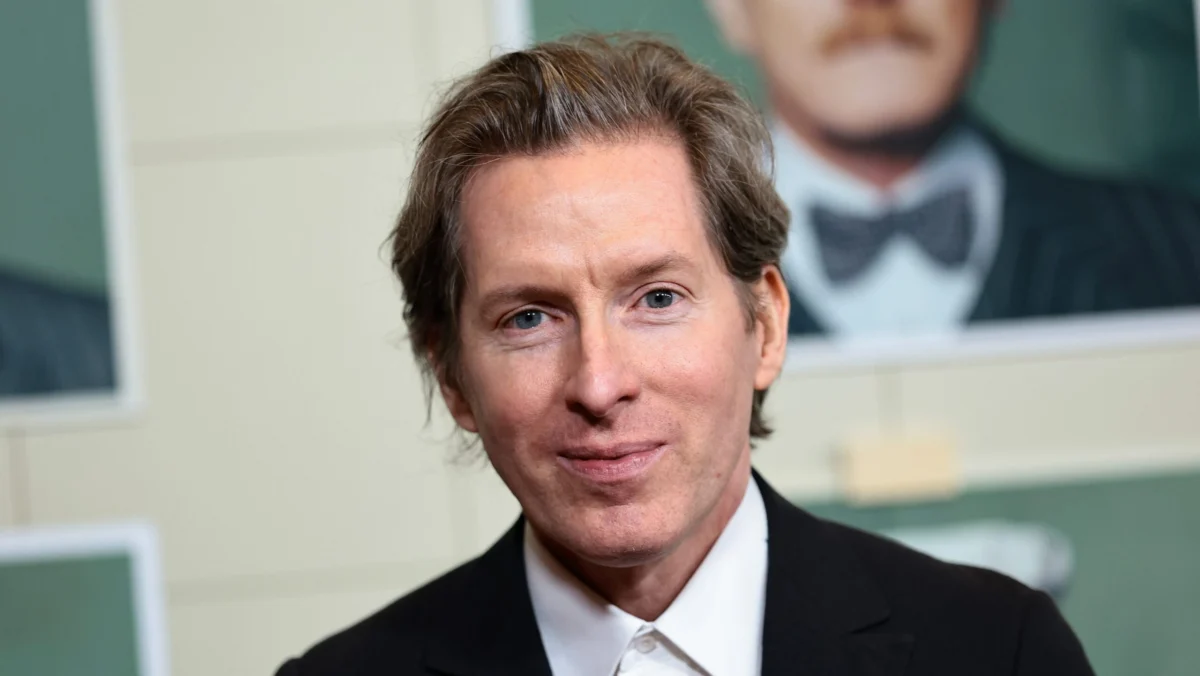
In an unexpected turn of events following a commemorative celebration for the 30th anniversary of Wes Anderson’s debut film, Bottle Rocket, acclaimed director Wes Anderson found himself temporarily confined within an elevator at the prestigious Academy Museum of Motion Pictures. The incident, which occurred on Monday, placed Anderson alongside veteran producer James L. Brooks and actor Luke Wilson, brother to Owen Wilson and a star of the aforementioned film, in a predicament that required intervention from the Los Angeles Fire Department (LAFD). The trio, along with an unspecified number of other occupants, remained trapped for approximately 30 minutes before emergency services successfully facilitated their egress, casting a brief shadow over an otherwise celebratory evening marking a significant milestone in cinematic history.
The Celebration and Its Context: A Nod to Bottle Rocket
The evening had commenced with a vibrant celebration honoring the enduring legacy of Bottle Rocket, a film that, despite its modest box office performance upon release in 1996, has since garnered cult classic status and is widely recognized as the launchpad for Wes Anderson’s distinctive directorial career. The event at the Academy Museum, a fitting venue dedicated to the art and science of moviemaking, brought together key figures associated with the film. Owen Wilson, who co-wrote the screenplay with Anderson and also starred alongside his brother Luke, was notably present, underscoring the reunion aspect of the commemoration. While the original article stated "30th anniversary" in 2025, it’s pertinent to note that a 1996 release would technically mark its 29th anniversary in 2025, with the 30th occurring in 2026. This might suggest a premature celebration, a general approximation for a significant milestone, or an anticipatory event. Regardless, the gathering served as a poignant reflection on the film’s impact, which introduced audiences to Anderson’s signature aesthetic—characterized by meticulous symmetry, deadpan humor, a vibrant color palette, and ensemble casts—elements that would become hallmarks of his subsequent critically acclaimed works like Rushmore, The Royal Tenenbaums, and The Grand Budapest Hotel.
Bottle Rocket holds particular significance as it marked Anderson’s feature directorial debut, evolving from a short film he created with Owen Wilson. Its understated charm and unique narrative voice, even in nascent form, captivated a segment of the audience and critics, eventually securing its place as a foundational text in contemporary independent cinema. The celebration at the Academy Museum was thus more than just a party; it was a testament to a film that defied initial commercial expectations to become a beloved touchstone, influencing a generation of filmmakers and cinephiles alike.
Chronology of the Elevator Incident
Following the festivities, as attendees began to depart, Anderson, Brooks, and Wilson entered an elevator within the Academy Museum. The precise time of entry remains unconfirmed, but the subsequent malfunction trapped the group for an estimated half-hour. Details surrounding the immediate moments of entrapment are sparse, but it can be inferred that standard protocols for such emergencies were initiated, likely involving alarm activation and communication with museum staff, who in turn would have contacted the LAFD.
The Los Angeles Fire Department, known for its rapid response capabilities and specialized rescue teams, was dispatched to the scene. Upon arrival, LAFD personnel assessed the situation, which typically involves determining the elevator’s precise location between floors, evaluating the condition of the occupants, and deploying appropriate extraction techniques. These methods can range from manually overriding the elevator’s control system to physically prying open doors, depending on the nature of the malfunction. In this instance, the rescue operation unfolded smoothly, culminating in the safe release of all individuals inside the stalled cabin.
A video clip, shared on Instagram by Carolyn Dunn, a production specialist for 20th Century Fox, provided a glimpse into the immediate aftermath of the rescue. The footage captured Anderson and Brooks emerging from the elevator, appearing calm despite the inconvenience. Anderson, ever the meticulous observer, could be heard inquiring with an LAFD official, "What went wrong?" The official’s candid response, "Probably had too much weight in there," suggested a plausible explanation for the mechanical failure, indicating that the elevator’s weight capacity might have been exceeded, or that the sensors interpreted the load as such. Anderson’s polite reply, "Okay, thank you very much," underscored the professional and courteous interaction between the rescued parties and the emergency responders.
The "Secret Passageway" and Museum Logistics
The incident brought to light a curious claim regarding the specific elevator involved. An entity identified as "Save Your Cinema" asserted that the elevator was, in fact, a "secret passageway/elevator so celebrities can enter and exit without" being seen by the general public. While The Hollywood Reporter was unable to independently confirm this claim, the notion of private access points for high-profile individuals at major cultural institutions is not uncommon. Many museums, theaters, and event venues incorporate discreet entrances and exits to manage security, control crowds, and afford privacy to celebrities and VIPs, particularly during high-profile events.
The Academy Museum of Motion Pictures, a relatively new institution having opened its doors in September 2021, is a significant cultural landmark in Los Angeles. Designed by renowned architect Renzo Piano, the museum features striking architectural elements, including the spherical David Geffen Theater, which appears to float above the main building. As a hub for cinematic celebration and preservation, it frequently hosts premieres, galas, and industry events, necessitating robust logistical planning for celebrity arrivals and departures. If the elevator in question indeed serves as a private access point, it would highlight the intricate operational challenges faced by such venues in balancing public accessibility with the unique demands of celebrity management. The potential for a malfunction in such a specialized system, particularly one intended for discreet use, raises specific questions about its maintenance protocols and emergency readiness.
Profiles of the Individuals Involved
The incident involved three figures whose careers have profoundly shaped various facets of the entertainment industry:
- Wes Anderson: An Oscar-winning director, screenwriter, and producer, Anderson is celebrated for his unique auteurial vision. His films are instantly recognizable for their distinctive visual style, ensemble casts often featuring Bill Murray, Jason Schwartzman, and the Wilson brothers, and narratives that blend whimsy with poignant introspection. Beyond Bottle Rocket, his filmography includes critically acclaimed works like The French Dispatch, Isle of Dogs, and his most recent feature, The Phoenician Scheme, released in 2025 and starring an impressive ensemble including Benicio Del Toro, Mia Threapleton, Michael Cera, Jeffrey Wright, Tom Hanks, and Scarlett Johansson. His presence at the celebration of his debut film underscored his deep connection to his early work and its enduring relevance.
- James L. Brooks: A towering figure in Hollywood, James L. Brooks is an Academy Award-winning director, producer, and screenwriter whose influence spans film and television. He is perhaps best known as a co-creator of The Simpsons, the longest-running American animated series, and for his work on iconic films such as Terms of Endearment (for which he won three Oscars), Broadcast News, and As Good as It Gets. His presence alongside Anderson speaks to the interconnectedness of Hollywood’s creative community and the respect Anderson commands from industry veterans.
- Luke Wilson: An accomplished actor, Luke Wilson rose to prominence through his collaborations with Wes Anderson, particularly in Bottle Rocket and Rushmore. His career has seen him star in a diverse range of films, from comedies like Old School and Legally Blonde to dramas such as The Royal Tenenbaums and Vacancy. His participation in the Bottle Rocket anniversary event underscored his integral role in the film’s genesis and his long-standing professional relationship with Anderson.
Safety Protocols and Institutional Responsibilities
An elevator malfunction, even a brief one, inevitably raises questions about safety protocols, maintenance schedules, and emergency preparedness, particularly for a high-profile institution like the Academy Museum. Public buildings, especially those hosting large events and attracting significant foot traffic, are subject to stringent safety regulations and regular inspections. Elevator systems require routine maintenance checks to ensure proper functioning, adherence to weight limits, and operational emergency communication systems.
The LAFD official’s comment about "too much weight" points to a potential overload situation, which can trigger safety mechanisms designed to prevent mechanical failure or structural damage. While these mechanisms are intended to protect occupants, their activation can lead to temporary entrapment. For the Academy Museum, this incident may prompt a review of its elevator capacity guidelines, staff training for emergency response, and the frequency and thoroughness of its maintenance checks, particularly for any elevators designated for private or VIP use. The reputation of the museum as a world-class institution dedicated to cinematic excellence also implies a commitment to the highest standards of safety and operational efficiency for all its visitors and guests.
Public Reaction and Media Dissemination
Despite its relatively minor nature, the incident quickly garnered attention, primarily through social media. Carolyn Dunn’s Instagram video served as direct evidence, offering a rare, unvarnished glimpse into a celebrity’s post-incident interaction. The public’s fascination with celebrity mishaps, even benign ones, ensures that such stories spread rapidly across digital platforms. This incident, while not severe, became a talking point, demonstrating how quickly information, particularly that involving well-known figures, can disseminate in the age of instant communication. The lightheartedness of Anderson’s exchange with the LAFD official likely contributed to the story being received more as an amusing anecdote than a serious safety concern, although underlying questions about museum safety remain relevant.
Official Responses and Ongoing Inquiries
As of the time of the original publication, The Hollywood Reporter had reached out to both the Academy Museum and the Los Angeles Fire Department for official comments but had not received a response. It is standard practice for institutions and emergency services to investigate such incidents thoroughly. The Academy Museum would likely review internal reports, interview staff involved, and consult with elevator maintenance contractors. The LAFD would typically file an incident report detailing their response and findings.
Any official statements, when released, would likely emphasize the safety of all individuals involved, the prompt response of emergency services, and a commitment to investigating the cause and implementing any necessary preventative measures. For the LAFD, such rescues are a routine part of their service, requiring specialized training and equipment to ensure public safety in various urban environments.
Broader Implications for High-Profile Venues
The elevator incident at the Academy Museum, while resolved without injury, serves as a reminder of the operational complexities faced by high-profile cultural venues. These institutions must not only curate compelling exhibits and host prestigious events but also ensure the seamless and safe flow of thousands of visitors, including distinguished guests and celebrities. The balance between maintaining public access and providing discreet, secure environments for VIPs often necessitates specialized infrastructure, such as the rumored "secret passageway" elevator. The proper functioning and rigorous maintenance of all such systems are paramount, not only for safety but also for preserving the institution’s reputation.
For Wes Anderson, Luke Wilson, and James L. Brooks, the episode likely amounted to a momentary inconvenience and an unexpected anecdote from an evening dedicated to celebrating cinematic achievement. For the Academy Museum, it offers an opportunity to reinforce its commitment to safety and operational excellence, ensuring that future celebrations and public engagements proceed without any unforeseen interruptions, allowing the focus to remain squarely on the magic of motion pictures.