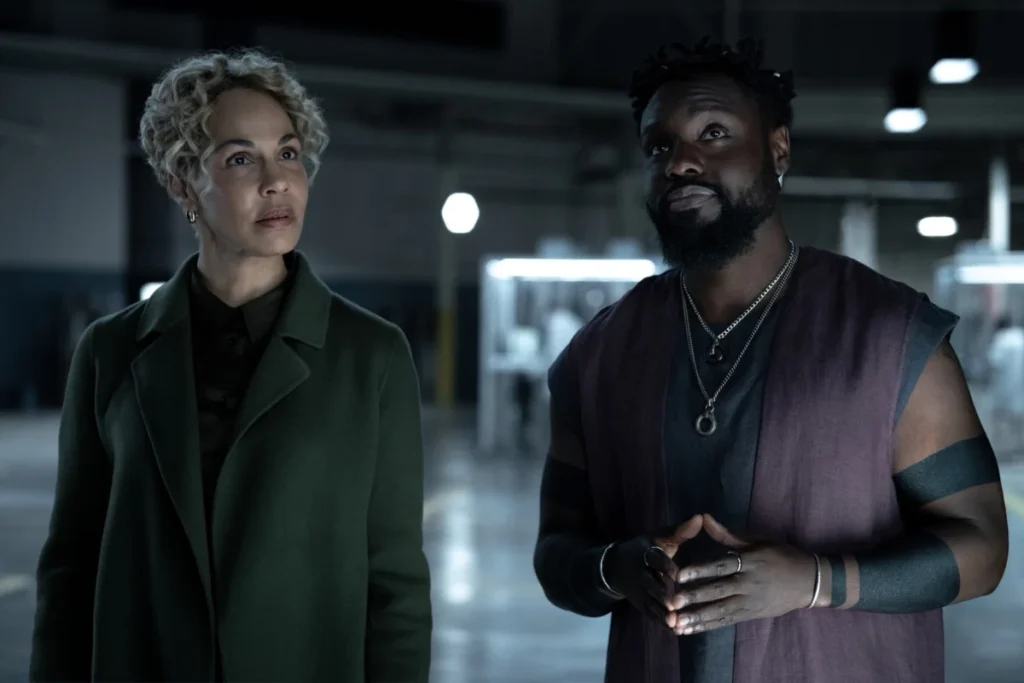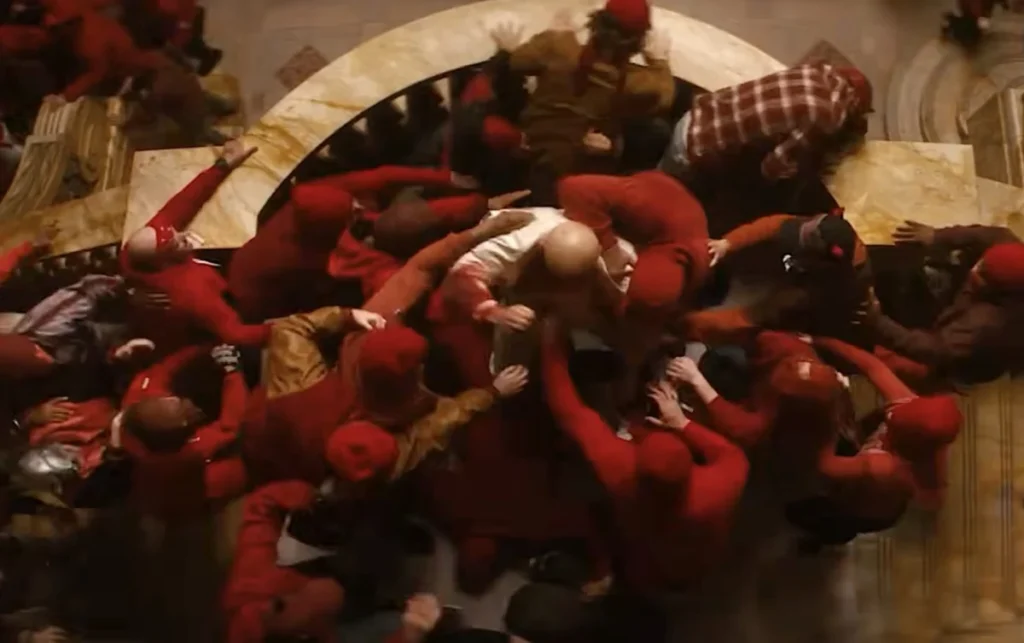
The horror-comedy genre, a complex and often underappreciated art form, thrives on its ability to weave together our most primal emotional responses. It is a space where the visceral release of a scream and the uninhibited joy of laughter can coexist, often blurring into one another, particularly in times of societal unease. This delicate balance, akin to the indispensable pairing of peanut butter and jelly or a bagel and its essential schmear, is what makes a well-executed horror-comedy resonate so deeply. It’s a genre that acknowledges the darkness of life without succumbing to it, finding catharsis in the juxtaposition of fear and humor.
Apple TV+’s new series, Widow’s Bay, helmed by Katie Dippold, a seasoned writer and former co-producer for the beloved sitcom Parks and Recreation, emerges as a compelling testament to this genre’s potential. Dippold, whose career has been dedicated to crafting laughter-inducing narratives, now ventures into the shadowed, yet humorous, landscape of horror. The series is set on the titular island town, a seemingly idyllic, yet decidedly struggling, hamlet somewhere off the coast of the Northeast, presumably Massachusetts.
The narrative centers on Mayor Tom Loftis, portrayed by Matthew Rhys, a newcomer to the town’s political scene. Loftis is driven by an ambitious agenda to revitalize the island’s economy, primarily through a significant increase in tourism. However, his efforts are met with deep-seated skepticism and outright fear from the town’s inhabitants. Their apprehension is amplified by the persistent presence of Wyck Crawford, played by the inimitable Stephen Root, a character who seems to embody the island’s troubled past and serves as a constant reminder of its purported curse. According to the islanders, this curse manifests as a menagerie of spectral entities, malevolent forces, and an unending stream of ominous events that perpetually threaten their fragile existence.
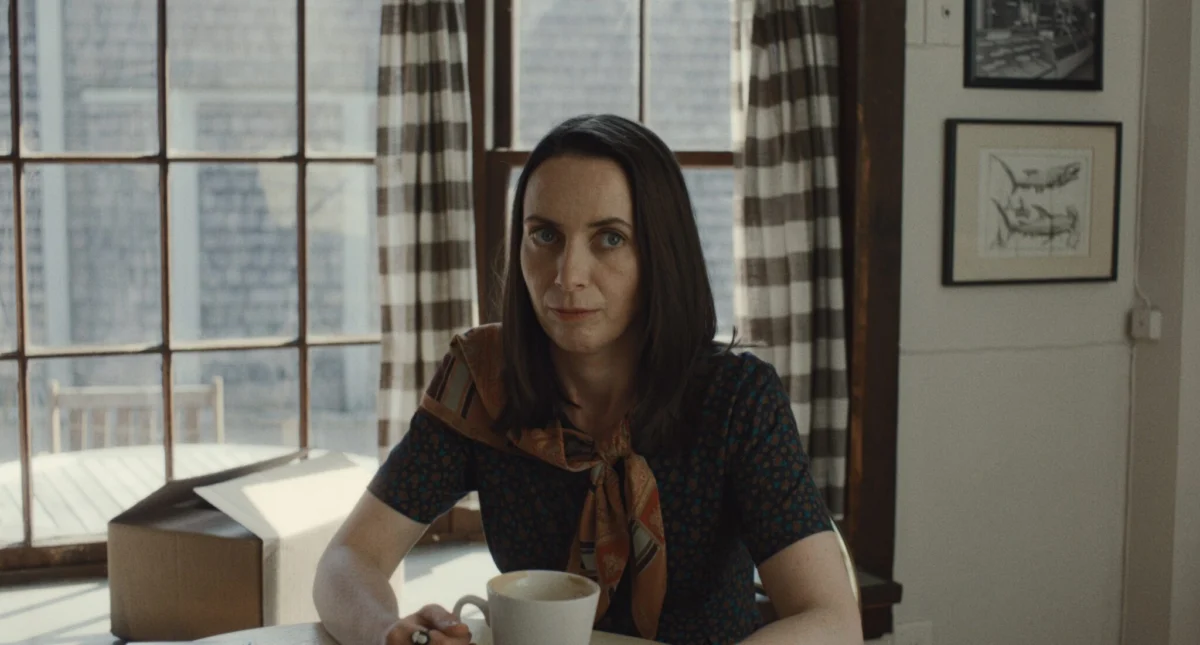
Mayor Loftis, however, remains undeterred in his mission to improve the lives of the townspeople and, crucially, his son Evan, played by Kingston Rumi Southwick. To achieve his goals, he enlists the support of his trusted confidante, Patricia Moyer, brought to life by Kate O’Flynn. While Moyer holds a pivotal role, the true administrative backbone, albeit a rather unreliable one, is Ruth, played by K. Callan, whose full workday often seems to be eclipsed by the necessity of naps. The supporting cast is a vibrant tapestry of island life, including the chain-smoking Rosemary and the perpetually anxious Dale, portrayed by Dale Dickey and Jeff Hiller respectively, who are seemingly assisting at the town hall in their own unique ways. The ensemble also features a diverse array of local business proprietors, each adding to the island’s eccentric charm: the manager of a haunted inn, a reluctant coffee shop owner, the proprietor of the town’s best, albeit haggard, restaurant, the lighthouse keeper, the sheriff, and the harbormaster. Their collective efforts, while present, are often not in a manner that Mayor Loftis can readily appreciate, contributing to the show’s inherent comedic friction.
H2: A "Monster of the Week" Approach with a Fresh Twist
The initial episodes of Widow’s Bay adopt a classic "monster of the week" format, drawing heavily from the annals of horror cinema. Yet, the series infuses these familiar tropes with clever narrative remixes and sharp comedic sensibilities. Viewers will recognize echoes of iconic films such as The Shining, Carrie, and the quintessential Jaws. The influence of slasher classics and more recent acclaimed horror films like Midsommar and The VVitch are also palpable. However, Widow’s Bay does not merely replicate these inspirations; instead, it uses them as springboards for original storytelling, skillfully weaving in the show’s overarching themes and leveraging the exceptional talents of its cast to create something distinctly exciting and unpredictable.
A significant strength of Widow’s Bay lies in its casting. The series is populated by a wealth of talented character and theater actors, which lends a crucial grounding effect to its fantastical premise. In an industry often characterized by an idealized portrayal of its performers, Widow’s Bay opts for authenticity. None of the characters are presented in a conventionally "Hollywood" glamorous fashion, nor are they dressed in fleeting, trend-driven attire. This deliberate choice reinforces the island’s distinctive character, imbuing it with a time-forgotten New England fishing town aesthetic. The visual representation suggests a community that exists several decades behind the pace of major metropolitan centers, a subtle yet effective detail that contributes to the overall atmosphere and potential narrative choices.
H3: Kate O’Flynn: The Emotional Core of Widow’s Bay
While the entire ensemble delivers commendable performances, Kate O’Flynn’s portrayal of Patricia Moyer deserves particular commendation. O’Flynn imbues Patricia with a peculiar blend of warmth and pathos, creating a character who is simultaneously endearing and pitiable. She emerges as the show’s emotional anchor, not through conventional character arcs, but by embodying the series’ inherent awkwardness and unrefined spirit. Patricia’s presence pulls Widow’s Bay out of the abyss of pure genre pastiche and into a more nuanced exploration of character and community. The fourth episode, which centers significantly on her, is particularly lauded by critics as a standout, offering a deep dive into her multifaceted personality and her place within the island’s peculiar ecosystem.
The series further enriches its viewing experience with a generous sprinkling of cameos from recognizable faces, adding layers of familiarity and surprise for the audience. The soundtrack, composed by David Fleming, is remarkably dynamic, shifting its personality with each episode to complement the evolving narrative. Widow’s Bay also plays with temporal elements, employing flashbacks in a manner that is tailored to the specific needs of each episode’s story. While the intricate lore of the island is clearly being developed to support future seasons, this world-building feels deliberate and methodical, a contrast to the often abrupt mystery-driven introductions seen in other Apple TV+ hits like Severance or Pluribus. Here, the history of the place is not merely a plot device; it is integral to the narrative’s very fabric, inviting viewers to unravel the island’s origins organically.

H2: Beyond the Monsters: Deeper Thematic Explorations
As Widow’s Bay progresses beyond its initial weekly monster encounters, it begins to delve into more profound thematic territory. At its heart, the series examines Mayor Loftis’s well-intentioned but ultimately misguided attempts to impose an external vision of prosperity onto an island that resists such impositions. His pursuit of capitalist extraction in a location ill-suited for such endeavors highlights a central conflict. However, the show also astutely portrays the less visible, yet equally potent, "nastiness" that can fester in small, isolated communities. The pervasive nature of gossip, the pressure to conform to a favored status quo, and the inherent resistance to change are all laid bare.
The narrative deftly sandwiches these observations between the fantastical elements, prompting viewers to consider what truly constitutes and sustains a community. It offers a critique of how many communities, both fictional and real, are fundamentally flawed in their construction. This exploration is particularly relevant within the context of the United States, a nation where its own "ugly history" often lurks beneath the surface, much like the island’s own sinister entities, ready to resurface and disrupt the perceived peace.
H3: A Nod to Parks and Recreation, with a Crucial Distinction
Dippold’s background in Parks and Recreation is evident in the series’ underlying thematic connection: the inherent conflict between the belief that one is helping their community and the stark reality that their intended assistance is not desired. However, Mayor Tom Loftis is a stark departure from Leslie Knope. The critical distinction lies in Loftis’s status as an outsider. Unlike Knope, who was deeply embedded in Pawnee’s social fabric, Loftis lacks this foundational connection. The series posits that genuine community integration requires empathy and a willingness to understand the existing dynamics, a process Loftis is only beginning to undertake, much to the amusement and manipulation of characters like Wyck Crawford.
H2: Redefining Value and Community Contribution
Widow’s Bay pushes even deeper, questioning who holds value within a community and, more importantly, to whom that value is attributed. There’s an immediate, almost instinctual, assumption that elected officials, such as the mayor, wielding legal authority, possess the ultimate power and prestige. Yet, the series challenges this notion by demonstrating that such contributions may not be valued by the community if they do not demonstrably improve their lives. This raises a crucial question: Who, then, are the individuals truly doing the essential work? Who are the people the community genuinely turns to in times of crisis and struggle? The show suggests that true value often lies with those who are deeply integrated, who understand the nuances of collective experience, and who offer support in ways that resonate with the community’s lived realities.
H3: Meta-Horror and the Metaphorical Landscape of Life
Ultimately, Widow’s Bay taps into a profound meta-horror. The town’s curses and the havoc they wreak can be interpreted as potent metaphors for the mundane, everyday hardships that plague human existence. These challenges are often cyclical and relentless, mirroring the persistent nature of life’s difficulties. In this sense, the series offers a starkly realistic portrayal of the human condition, suggesting that periods of adversity, malevolence, and "curses" are an unavoidable part of life. The critical element, the show argues, lies not in the presence of these challenges, but in how individuals navigate them collectively. The strength and character of a community are ultimately defined by how it treats its members, especially during times of strife.
Widow’s Bay is more than just a horror-comedy; it is a sharp, insightful, and often hilarious exploration of what it means to belong, to lead, and to survive in a world that constantly throws unexpected challenges our way. Its blend of genre thrills and thoughtful commentary makes it a standout addition to the streaming landscape, inviting audiences to laugh, scream, and ponder the enduring questions of community and resilience.