Directed by Maxence Voiseux, the documentary film Gabin recently made its international debut at the 79th Cannes Film Festival, featured within the prestigious Quinzaine des Cinéastes (Directors’ Fortnight) section. This feature-length debut represents a decade-long undertaking, chronicling the formative years of Gabin Jourdel as he transitions from a spirited eight-year-old boy into a young man of eighteen in the rural landscapes of northern France. The film operates at the intersection of traditional documentary observation and narrative storytelling, utilizing a longitudinal approach to capture the complexities of family legacy, neurodiversity, and the shifting socio-economic realities of the French agricultural sector.
The Narrative Arc and the Weight of Tradition
The central conflict of the film is rooted in the generational expectations of the Jourdel family. Gabin’s father, Dominique, operates a local butcher shop, a profession he hopes to pass down to his youngest son. This narrative trope—the inheritance of a family trade—is set against the backdrop of a modernizing France where small-scale artisanal businesses face increasing pressure from industrial competition. However, Gabin’s personal inclinations diverge sharply from his father’s vision. While his father deals in the commerce of meat, Gabin finds his calling in the care of living animals.
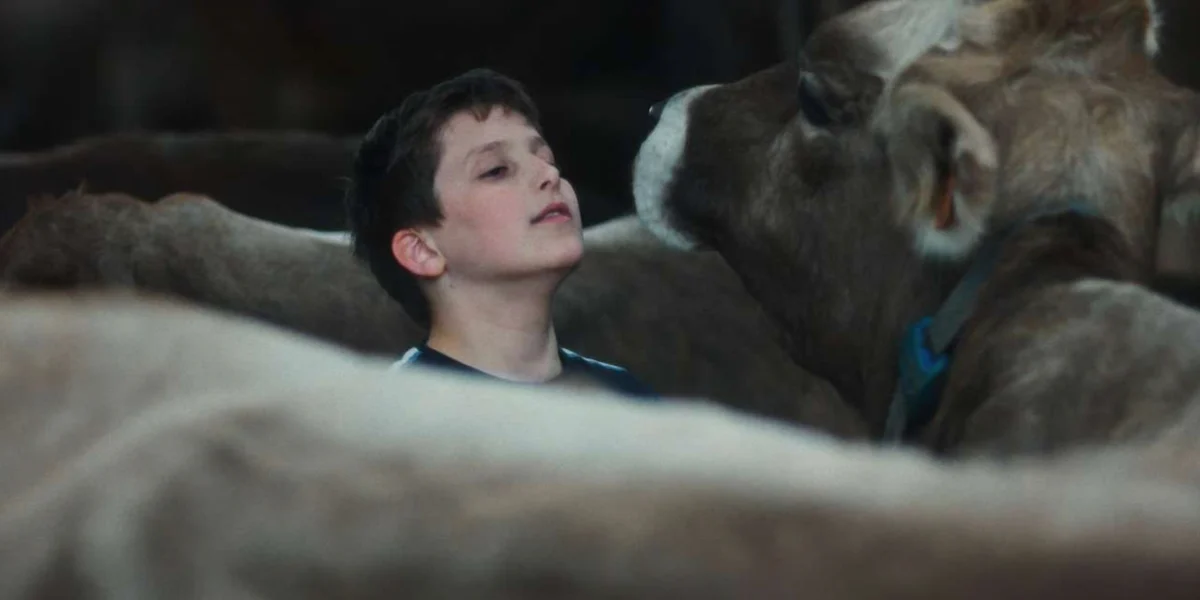
Over the course of the film’s 105-minute runtime, viewers witness Gabin’s growing fascination with animal husbandry and dog breeding. His ambitions are multi-faceted: he seeks to train a contest cow, establish himself as a sheepdog breeder, and ultimately secure the financial future of his mother’s farm, which faces significant economic instability. This tension between the "dead" commerce of the butchery and the "living" labor of the farm serves as the primary thematic engine of the documentary.
A Longitudinal Chronology of Growth
The production of Gabin began almost by accident. Director Maxence Voiseux initially captured footage of an eight-year-old Gabin for a short film focused on the broader Jourdel family and Gabin’s grandfather. Recognizing the child’s unique charisma and the inherent drama of his environment, Voiseux committed to a ten-year filming cycle. This methodology draws inevitable comparisons to Richard Linklater’s narrative feature Boyhood, though Voiseux’s work is grounded in the unscripted reality of his subject’s life.
The chronological progression of the film allows for a rare cinematic experience: the literal aging of a human being in real-time. The audience observes Gabin as he navigates the typical milestones of adolescence—changing physical features, evolving hairstyles, and shifting social circles. Beyond physical changes, the film tracks his psychological development. A pivotal moment in the chronology occurs when Gabin receives a diagnosis of Attention Deficit Hyperactivity Disorder (ADHD). This medical clarity provides a lens through which his previous academic and social struggles are recontextualized, offering both the subject and the audience an explanation for his difficulties with concentration and traditional classroom structures.
Methodology and the Blurring of Genres
One of the most distinctive aspects of Voiseux’s direction is his rejection of "fly-on-the-wall" purity in favor of a more collaborative, hybrid approach. To achieve emotional depth, Voiseux spent years building a foundation of trust with the Jourdel family. Rather than simply waiting for dramatic moments to occur, the director often placed his subjects in naturalistic settings—such as a trip to the beach or a session in the barn—and suggested topics of conversation.
This technique results in scenes that possess the polished emotional arc of a scripted drama while maintaining the authenticity of genuine human interaction. For instance, a scene involving Gabin and his classmate Lilou Duflos captures a nuanced moment of adolescent rejection that feels both spontaneous and cinematically precise. This method acknowledges the presence of the camera as a catalyst for truth rather than an intrusion upon it, a style that has become increasingly prominent in contemporary European documentary filmmaking.
The Socio-Economic Context of Northern France
The film’s setting in northern France (Hauts-de-France) is not merely incidental; it is a character in itself. The region, historically known for its industrial and agricultural contributions, has faced decades of economic restructuring. Patricia Jourdel, Gabin’s mother, represents the emotional and financial stakes of this struggle. Her farm is portrayed not just as a place of work, but as a legacy at risk of disappearing.
The film subtly addresses the "crisis of the countryside" that has been a recurring theme in French political discourse. The struggle to keep a family farm solvent while resisting the lure of urban migration is a reality for many young people in rural Europe. Gabin’s desire to stay and innovate—through specialized dog breeding and livestock care—presents a portrait of a new generation attempting to redefine rural life on their own terms.
Family Dynamics and Emotional Architecture
The documentary is anchored by the contrasting temperaments of Gabin’s parents. Dominique, the father, is depicted as a figure of traditional masculinity—stern, emotionally guarded, and focused on the continuity of his trade. His difficulty in expressing affection creates a palpable tension, reflecting a generational gap in emotional communication.
In contrast, Patricia provides a source of warmth and vulnerability. One of the film’s most poignant sequences involves Patricia recounting the circumstances of Gabin’s birth and her relationship with her late mother-in-law. Her willingness to share these intimate memories on camera is a testament to the relationship Voiseux cultivated with his subjects. These domestic interactions are supplemented by Gabin’s sessions with his tutor, Catherine Ranson. These scenes often deviate from academic instruction, functioning more as therapeutic interventions where Gabin can process his frustrations and aspirations.
Visual Composition and Technical Execution
Working with cinematographers François Chambe and Martin Roux, Voiseux employs a visual language that elevates the documentary above standard observational tropes. The film utilizes wide shots of the northern French landscape to emphasize the scale of the environment Gabin seeks to master. A particularly noted shot involves a massive flock of sheep where the viewer must search for a single working dog, a visual metaphor for Gabin’s own search for purpose within a vast, traditional system.
The sound design also plays a critical role in the film’s emotional impact. In a scene where Gabin trains in livestock care, the soundtrack is dominated by the amplified rhythmic thumping of a cow’s heartbeat heard through a stethoscope. This sensory focus highlights Gabin’s deep, almost intuitive connection to the animals, contrasting sharply with the clinical approach of his peers.
Analysis of Implications and Reception
The premiere of Gabin at Cannes suggests a growing interest in long-form, observational documentaries that challenge the boundaries between fiction and non-fiction. Critics have noted that while the film leaves certain narrative threads—such as the ultimate fate of Gabin’s relationship with Lilou or the departure of his tutor—unresolved, these omissions mirror the untidiness of real life.
The film’s exploration of ADHD in a rural, vocational context also provides a valuable contribution to the conversation surrounding neurodiversity. By showing Gabin’s success in high-stakes animal training, the film suggests that traditional education is often ill-equipped to harness the talents of individuals who think outside of standard parameters.
Conclusion and Broader Impact
Gabin stands as a significant achievement in contemporary French cinema, offering a profound look at the transition from childhood to adulthood. It serves as a document of a specific time and place, capturing the vanishing traditions of the French butcher shop while highlighting the resilience of those who choose to remain on the land.
For Maxence Voiseux, the film marks a successful transition to feature filmmaking, proving that patience and long-term commitment to a subject can yield results that a standard production schedule cannot replicate. As Gabin Jourdel enters adulthood at the film’s conclusion, his journey reflects the broader challenges of a generation tasked with honoring the past while forging a sustainable future in a rapidly changing world. The film does not offer easy answers regarding the financial survival of the Jourdel farm or the ultimate success of Gabin’s career, but it provides a deeply humanistic portrait of the effort required to try.