Narrative Overview and Character Dynamics
The plot of Blaise is structured around the parallel struggles of the three Sauvage family members, each of whom is driven by a desperate need for external validation. Carole, voiced by Léa Drucker, is a newly appointed department head who finds herself paralyzed by the need to be liked by her subordinates. Her attempts to project an image of approachable authority frequently backfire, as her specific communication style leads to a cycle of misinterpretation and professional tension. Jacques, played by Jacques Gamblin, mirrors this insecurity in his private life, obsessively managing his standing among his social circle. His character is further complicated by a psychosomatic or perhaps literal allergy to apple-scented detergents, a quirk that triggers physical crises at the most socially inconvenient moments.
At the center of the film is Blaise, a 16-year-old navigating the traditional anxieties of adolescence. Unlike the stereotypical rebellious teen, Blaise’s motivations are rooted in a profound uncertainty about how to enter adulthood. His trajectory shifts when he meets Josephine, a peer who masks her own insecurities with a veneer of misplaced confidence. Their relationship becomes the catalyst for a "revolutionary crusade" that is as impromptu as it is violent, serving as an extreme manifestation of the teenage desire to belong. The film portrays these characters not as villains, but as individuals trapped in a "Murphy’s Law" of social etiquette, where every attempt to rectify a mistake only deepens the predicament.
Chronology of Development: From Comic Strip to Feature Film
The journey of Blaise to the big screen spans over a decade, reflecting the persistent relevance of Dimitri Planchon’s satirical vision. The project originated as a series of comic strips characterized by their biting wit and focus on the mundane horrors of middle-class life.
- 2010–2015: Dimitri Planchon establishes the Blaise brand through printed media, gaining a following for his unique blend of social satire and visual discomfort.
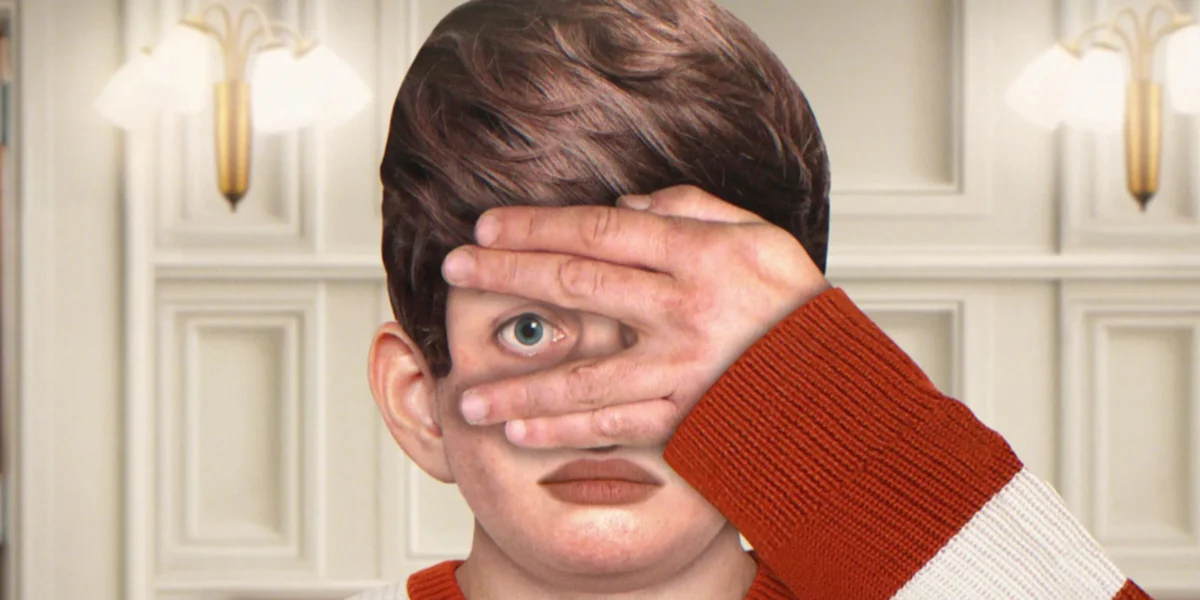
- 2016: The property is adapted into a series of animated shorts for ARTE. These episodes, often lasting only a few minutes, focused on singular instances of social awkwardness. This format proved the viability of the "uncanny" animation style—a mix of photo-realism and distorted caricature.
- 2021–2023: Production begins on the feature-length adaptation. Co-directors Planchon and Jean-Paul Guigue aimed to evolve the episodic nature of the shorts into a cohesive narrative that maintained the "cringe" factor while providing deeper character development.
- 2024: The film enters the international festival circuit and theatrical release, marketed as a "comedy of manners" for the digital age.
This timeline illustrates the slow-burn success of the franchise, which has moved from niche literary circles to a broader cinematic audience while retaining its uncompromising tone.
Technical Execution and Visual Aesthetics
One of the most discussed aspects of Blaise is its visual identity. The animation avoids the fluid, sanitized aesthetics common in major studio productions, opting instead for a style that leans into the "uncanny valley." The characters possess features that are almost realistic but are rendered with a stiffness and exaggeration that evokes a sense of unease. According to industry analysts, this choice is intentional; it mirrors the internal state of the characters, who feel "wrong" in their own skin during social interactions.
The film’s 82-minute runtime is meticulously paced to allow the tension of each scene to reach a boiling point. Unlike traditional comedies that use "punchlines" to release tension, Blaise often denies the audience that relief, forcing them to sit with the discomfort of the characters. This approach aligns with a growing trend in European adult animation that prioritizes psychological realism over escapism. The use of sound design also plays a critical role, with exaggerated foley work highlighting the physical manifestations of the characters’ stress, such as Jacques’s allergic reactions or Carole’s nervous stammers.
Industry Context and the French Animation Market
France remains a global leader in the production of adult-oriented animation, supported by robust cultural funding through the Centre National du Cinéma et de l’image animée (CNC). Blaise sits within a tradition of French satirical animation that includes works like The Rabbi’s Cat or the films of Sylvain Chomet, though it distinguishes itself through its focus on contemporary social neurosis rather than historical or fantastical themes.
Data from the European Audiovisual Observatory indicates that adult animation has seen a 15% increase in production volume over the last five years, driven in part by the success of streaming platforms looking for "prestige" animated content. Blaise benefits from this market shift, appealing to an audience that values auteur-driven storytelling. The casting of high-profile live-action actors like Léa Drucker and Jacques Gamblin further bridges the gap between traditional cinema and animation, signaling the film’s status as a serious piece of narrative art rather than a children’s commodity.
Critical Implications and Broader Impact
Thematic analysis of Blaise suggests that the film is a critique of the "reputation economy." In an era where social standing is often managed through digital personas, the film’s focus on face-to-face miscommunication feels both nostalgic and prescient. The characters’ insistence on "keeping up appearances" through a series of casual lies reflects a broader societal trend where the fear of appearing "bad" or "awkward" outweighs the value of the truth.
Psychologists and social commentators have noted that "cringe comedy" serves a cathartic function for audiences. By watching the Sauvage family fail in spectacular fashion, viewers are able to process their own social anxieties from a safe distance. However, Blaise pushes this further by suggesting that these anxieties have real-world consequences. The "violent and completely impromptu crusade" embarked upon by the teenage protagonist serves as a warning about the volatility of repressed emotions and the dangers of a society built on a foundation of polite falsehoods.
Official Responses and Director’s Vision
While official press statements from the directors emphasize the comedic nature of the film, they also acknowledge the darker undercurrents. Dimitri Planchon has frequently stated in interviews that his work is inspired by the "micro-aggressions of daily life" and the absurdity of the rules we impose upon ourselves. Jean-Paul Guigue, bringing his directorial experience to the project, focused on ensuring that the animation served the script’s psychological depth.
"We wanted to create a world where the environment itself feels like it’s judging the characters," Guigue noted during a pre-release screening. This sentiment is echoed by the cast; Léa Drucker described her role as Carole as an exploration of the "tragedy of the mundane," noting that the character’s inability to communicate is a universal human experience.
Conclusion
Blaise stands as a significant entry in the landscape of modern animated cinema. By eschewing traditional narrative tropes in favor of a hyper-focused exploration of social discomfort, the film offers a unique and often unsettling viewing experience. Its success lies in its ability to take the trivial—a misunderstood greeting, an allergy to a specific scent, a workplace misunderstanding—and elevate it to the level of Greek tragedy. As the film reaches wider audiences, it is expected to spark discussions regarding the nature of social anxiety and the increasingly complex ways in which we attempt to navigate the modern world. Through the Sauvage family, Planchon and Guigue have created a mirror that, while distorted and cartoonish, reflects a deeply recognizable reality of the human condition.