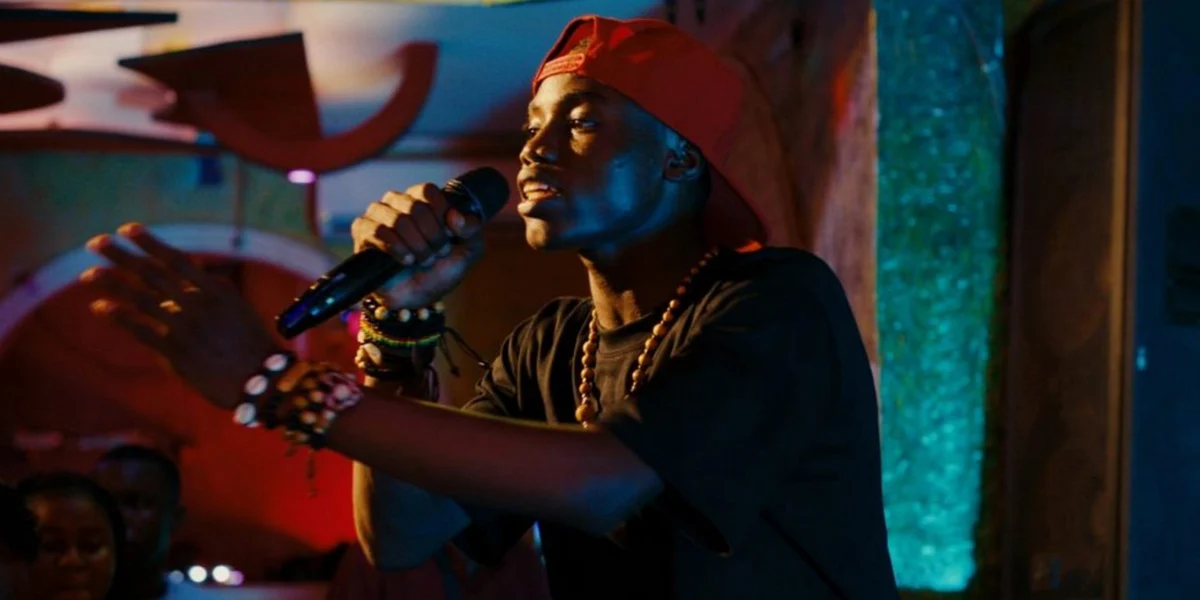
The narrative feature debut of director and writer Rafiki Fariala, this production offers a poignant and unflinching look at the intersections of displacement, familial responsibility, and the indomitable pursuit of artistic expression. Set against the volatile backdrop of Bangui in the Central African Republic (CAR), the film centers on the life of 17-year-old Robert, portrayed by Bradley Fiomona Dembeasset. As a refugee from the Republic of the Congo, Robert’s journey serves as a microcosm of the broader socio-political struggles facing youth in the region, where the remnants of civil war and economic instability create an environment that is often hostile to the aspirations of the young.
Narrative Overview and Character Dynamics
The story follows Robert as he navigates a precarious existence in Bangui. His life is characterized by a series of high-stakes responsibilities that would be daunting for an adult, let alone a teenager. Following the imprisonment of both of his parents—a situation that reflects the often arbitrary and harsh nature of the local justice system—Robert is thrust into the role of primary caregiver for his four younger siblings. The screenplay, co-written by Fariala and Tommy Baron, meticulously details the "gauntlet" of Robert’s daily life. He must balance the pursuit of academic credentials, specifically his final exams, with the immediate necessity of earning an income through various odd jobs to sustain his family and secure his parents’ release.
Amidst this struggle, Robert’s primary source of hope is his musical talent. A chance encounter with a local music producer provides him with a potential path out of poverty: a talent contest featuring a significant cash prize. This narrative arc, while utilizing the familiar "triumph of the underdog" trope, is grounded by the specific cultural nuances of Bangui and the authentic performance of Dembeasset. The cast is rounded out by Christy Djomanda Louba, Pétruche Mbomba, Rosiana Kotozia, Gloria Ambacko, and Dieufera Sana, who collectively portray a community where individual survival often supersedes communal altruism.
Geopolitical and Socio-Economic Context
To understand the stakes of the film, one must consider the historical and current state of the Central African Republic. The country has been marred by intermittent civil war since 2012, primarily involving clashes between the Séléka rebel coalition and the Anti-balaka militias. This conflict has led to the displacement of hundreds of thousands of people. According to data from the United Nations High Commissioner for Refugees (UNHCR), the CAR remains one of the world’s most neglected humanitarian crises, with over 600,000 internally displaced persons and nearly 700,000 refugees living in neighboring countries as of 2023.
Robert’s status as a Congolese refugee in Bangui highlights a specific layer of vulnerability. Refugees in the CAR often face restricted access to the formal labor market and are frequently subjected to exploitation. The film portrays Robert living on the compound of a military colonel, a setting that underscores the power imbalances inherent in a society where military authority often eclipses civilian law. The "capitalist" environment described in the film is one of extreme necessity, where every interaction is transactional and the "every-man-for-himself" mentality is a survival mechanism rather than a moral choice.
Chronology of Production and Premiere
The development of the film followed Rafiki Fariala’s success in the documentary sphere. Fariala, who gained international recognition with his 2022 documentary Nous, Étudiants ! (We, Students!), transitioned to narrative fiction to provide a more stylized yet equally grounded perspective on the Central African experience.
The production of the film was a significant undertaking, given the logistical challenges of filming in Bangui. The project moved through several stages:
- Script Development (2022–2023): Fariala and Baron collaborated to refine a story that blended personal narrative with the broader themes of the refugee experience.
- Casting and Pre-production: The team focused on finding non-professional or emerging local actors to ensure an authentic representation of the youth in Bangui.
- Principal Photography: Filming took place on location, utilizing the vibrant and often chaotic energy of the city to enhance the film’s visual language.
- Post-production and Music Composition: A unique aspect of the film is that Fariala himself composed the musical numbers, ensuring that the lyrics and rhythms were intrinsically linked to the character’s emotional journey.
- Festival Premiere (May 2024): The film premiered at the Cannes Film Festival, receiving significant attention for its energetic storytelling and its rare look at Central African life.
Artistic and Technical Analysis
The cinematography of the film plays a crucial role in distinguishing it from traditional "poverty porn" often associated with Western depictions of the African continent. Fariala and his technical team utilize vibrant lighting and a dynamic use of shadows to create a visual style that mirrors the protagonist’s internal state. The camera work is often intimate, staying close to Robert to foster a sense of empathy and urgency.
Music serves as the film’s heartbeat. Fariala’s compositions are described as propulsive and honest, bridging the gap between traditional Central African sounds and contemporary beats. The songs are not merely interludes but are essential to the plot, serving as Robert’s primary tool for self-empowerment and economic mobility. The climactic performance of the song "Mama ti kondo" is cited as a definitive moment in the film, blending the technical proficiency of the performance with the emotional weight of Robert’s personal stakes.
Industry and Cultural Impact
The release of the film is a milestone for the Central African Republic’s burgeoning film industry. For decades, the CAR lacked the infrastructure for consistent cinematic production. Fariala’s emergence as a leading voice in African cinema suggests a shift toward more diverse storytelling from the continent, moving beyond the established hubs of Nigeria (Nollywood) and South Africa.
Industry analysts suggest that the success of this film on the international festival circuit could pave the way for more co-productions between Central African filmmakers and European or North American distributors. By presenting a story that is both hyper-local and universally relatable, Fariala has demonstrated the commercial and critical viability of Central African narratives.
Furthermore, the film’s portrayal of the "capitalist" reality in Bangui offers a sobering look at how global economic structures manifest in developing nations. It challenges the audience to view Robert not as a passive victim of circumstance, but as an active participant in an unforgiving economic system. His ambition to monetize his gift is presented as a rational and necessary response to a world that offers no safety nets.
Official Responses and Critical Reception
While official government statements regarding the film’s portrayal of the military and prison system in the CAR have been minimal, the local artistic community in Bangui has embraced the film as a truthful representation of the "generation of the crisis." International critics have praised Fariala for his ability to maintain a tone that is uplifting without being saccharine.
Initial reviews from the Cannes premiere highlighted the performance of Bradley Fiomona Dembeasset, noting that his portrayal of Robert avoids the tropes of "kicked-puppy" misery, instead offering a character defined by focus and resilience. The film’s 95-minute running time is noted for its efficiency, avoiding the "repetitive" nature of the protagonist’s misfortunes by keeping the musical and emotional stakes high.
Broader Implications for Youth and Displacement
The story of Robert is representative of millions of young people globally who are forced to sacrifice their education and childhood to support families in conflict zones. The film underscores the "two options" faced by those in such circumstances: acceptance of a dire reality or the pursuit of a "lofty aspiration" that carries immense risk.
In a broader sense, the film serves as a critique of the global community’s apathy toward the Central African Republic. By focusing on the dreams of a single boy, Fariala humanizes the statistics associated with the refugee crisis and the civil war. The film suggests that the preservation of culture and art is not a luxury, but a vital necessity for survival in the face of systemic collapse.
As the film moves into wider international distribution, it is expected to serve as both a cultural ambassador for the CAR and a testament to the power of resilient storytelling. The journey of Robert, from the streets of Bangui to the potential of the concert stage, remains a powerful metaphor for the enduring human spirit in the 21st century.