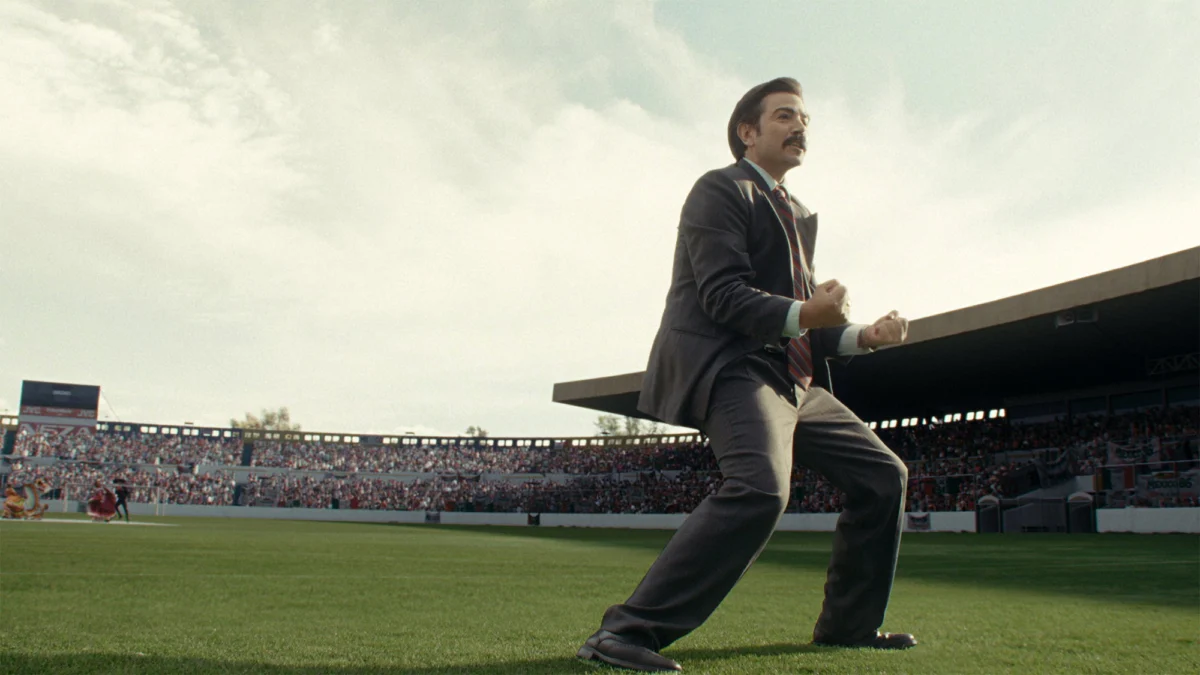
Netflix has officially released the first trailer for Mexico 86, a high-stakes comedy-drama based on the true events surrounding Mexico’s audacious and improbable bid to host the 1986 FIFA World Cup. Scheduled for a global streaming release on June 5, 2026, the film arrives as the international community prepares for the 2026 World Cup, which will see Mexico once again take center stage as a co-host. Directed by Gabriel Ripstein and starring Diego Luna in the lead role of Martín De La Torre, the production explores the political maneuvering, bureaucratic deception, and national pride involved in bringing the world’s largest sporting event to Mexican soil for a historic second time.
The film focuses on the period between 1982 and 1986, a window of time during which Mexico transitioned from a long-shot candidate to a successful host, overcoming significant geopolitical competition and internal challenges. The narrative centers on De La Torre, a bureaucrat described as having more audacity than resources, who navigates the corridors of power within FIFA to secure the tournament after Colombia officially withdrew as host. The trailer highlights the comedic yet tense nature of these negotiations, emphasizing the tagline: "Not all goals are scored on the field."
Historical Context and the 1986 Hosting Crisis
To understand the stakes presented in Mexico 86, it is necessary to examine the historical timeline of the 1986 World Cup. Originally, the hosting rights for the 1986 tournament were awarded to Colombia in 1974. However, by the early 1980s, the Colombian government faced severe economic instability and realized it could not meet the expanding requirements set by FIFA, which then included a 24-team format. In November 1982, Colombia officially resigned as the host, marking the first and only time in FIFA history that a selected host country withdrew.

This withdrawal triggered an emergency bidding process. While the United States, Canada, and Mexico all expressed interest, the film portrays the intense lobbying efforts led by Mexican officials to convince FIFA President João Havelange and the executive committee that Mexico was the only viable option. Mexico had previously hosted the tournament in 1970, and the bid was met with skepticism by international critics who questioned whether a country could or should host twice in such a short span, particularly when other nations had never hosted.
The film dramatizes this "political gamble," focusing on how the Mexican delegation, led by the fictionalized De La Torre, outmaneuvered the United States bid. The narrative suggests that while the U.S. offered superior infrastructure and financial stability, the Mexican bid relied on deep-rooted soccer culture, personal relationships within FIFA, and a series of "calculated risks" that bordered on the absurd.
Production Details and Creative Leadership
Mexico 86 is a collaboration between Netflix and Gaumont, with production services provided by several prominent Latin American firms. Gabriel Ripstein, known for his work on the gritty drama 600 Miles and the political thriller series An Unknown Enemy, serves as both director and co-writer alongside Daniel Krauze. Ripstein’s previous work often explores the intersection of institutional power and individual ambition, a theme that appears central to this latest project.
Diego Luna, who also serves as an executive producer, portrays Martín De La Torre. Luna’s involvement is seen as a major draw for international audiences, following his success in global franchises and his long-standing commitment to Mexican cinema. He is joined by an ensemble cast of celebrated Mexican actors, including Karla Souza (How to Get Away with Murder), Daniel Giménez Cacho (Bardo, False Chronicle of a Handful of Truths), Álvaro Guerrero, Memo Villegas, and Juan Pablo Fernández.

The production design aims to capture the specific aesthetic of mid-1980s Mexico City, characterized by its unique architecture, automotive style, and the burgeoning media landscape of the era. According to production notes, the film was shot on location in Mexico, utilizing various government buildings and historic sites to maintain an authentic atmosphere.
Chronology of Events Portrayed in the Film
The narrative structure of Mexico 86 follows a chronological progression of the four years leading up to the tournament’s opening ceremony:
- Late 1982: Colombia’s withdrawal creates a vacuum in the international sporting calendar. The Mexican government, despite internal economic pressures, sees an opportunity for a "soft power" victory.
- 1983: The formal bidding process begins. De La Torre and his team travel to Zurich to meet with FIFA officials. The film depicts these meetings as high-stakes poker games where the Mexican team must project a sense of stability that the country’s balance sheets do not necessarily support.
- May 1983: FIFA officially awards the tournament to Mexico, making it the first nation to host the World Cup twice. The decision is met with controversy in the U.S. and Europe, sparking allegations of favoritism.
- 1985: The narrative shifts to the logistical nightmare of preparation. In September 1985, a catastrophic earthquake struck Mexico City, killing thousands and destroying significant infrastructure. The film explores the resilience of the organizing committee as they insisted the tournament proceed as a symbol of national recovery.
- June 1986: The climax of the film coincides with the start of the tournament, showcasing the culmination of De La Torre’s maneuvers as the world’s eyes turn to the Azteca Stadium.
Supporting Data and Economic Implications
The decision to host the 1986 World Cup had profound economic and social implications for Mexico. At the time, the country was grappling with a massive external debt crisis and the "Lost Decade" of Latin American economic growth. Critics of the era argued that the funds spent on stadiums and tourism infrastructure should have been diverted to social services.
However, proponents of the bid argued that the World Cup provided a necessary boost to the national psyche and generated significant foreign exchange through tourism. Data from the era suggests that the 1986 World Cup was a commercial success for FIFA, despite the local economic challenges. The tournament saw an average attendance of 46,000 fans per match, and the broadcast reach expanded significantly compared to the 1982 tournament in Spain.

The film Mexico 86 uses these economic tensions as a backdrop for its comedic elements, highlighting the irony of a nation spending millions on a game while its bureaucrats scramble to keep the lights on in government offices. This juxtaposition serves to humanize the "cunning bureaucrat" archetype, showing De La Torre as a man caught between his love for the sport and the harsh realities of 1980s governance.
Industry Reactions and Strategic Release
The release of the trailer has garnered significant attention within the film and sports industries. Analysts note that Netflix’s decision to premiere the film in June 2026 is a calculated move to capitalize on the "soccer fever" that will accompany the 2026 World Cup. With matches being held in Mexico City, Monterrey, and Guadalajara, the film serves as both a historical primer and a celebratory piece of cultural marketing.
"The timing is impeccable," noted one media analyst. "By revisiting the ‘impossible’ success of 1986, Netflix is tapping into a multi-generational nostalgia. For older viewers, it’s a look back at a defining moment in Mexican history. For younger viewers, it’s a high-stakes heist-style comedy set in a world they are currently experiencing through the 2026 lens."
Industry insiders suggest that Mexico 86 represents a continued trend of "sports-adjacent" storytelling—narratives that focus on the executives, agents, and politicians behind the scenes rather than just the athletes on the field. This sub-genre has seen success with films like Air and Moneyball, and Netflix appears to be applying this formula to the global stage of international soccer.

Broader Impact and Legacy
The 1986 World Cup remains one of the most iconic tournaments in history, largely due to the performance of Diego Maradona and the "Hand of God" goal, as well as the "Goal of the Century." While the film focuses on the administrative side, the shadow of these legendary sporting moments looms large over the production.
Beyond the entertainment value, Mexico 86 aims to shed light on the complexities of international sports diplomacy. The film examines how a developing nation can leverage a sporting event to assert its place on the global stage, often at a high internal cost. It also highlights the evolution of FIFA from a smaller, more club-like organization in the early 80s to the massive corporate entity it is today.
As the June 5 release date approaches, Netflix is expected to launch a comprehensive marketing campaign across Latin America and Europe. The film will be available in multiple languages, reflecting the global appeal of its subject matter. For Mexico, the film serves as a reminder of a time when the country achieved the "impossible," setting the stage for the next chapter of its World Cup history in the summer of 2026.