Hirokazu Kore-eda, the internationally acclaimed Japanese filmmaker and recipient of the Palme d’Or, has officially released his latest cinematic venture, Sheep in the Box, a speculative drama that explores the intersection of grief, technology, and the traditional family unit. Known for his poignant examinations of domestic life in films such as Shoplifters, Broker, and Monster, Kore-eda’s newest work signals a stylistic shift into the realm of science fiction. The film, which runs for 127 minutes, features a high-profile cast led by Haruka Ayase and Daigo Yamamoto, centering on a couple’s decision to integrate an advanced humanoid robot into their lives following the tragic loss of their biological son. While the premise invites comparisons to Western science fiction archetypes, the production maintains Kore-eda’s signature focus on the emotional minutiae of human relationships.
Narrative Overview and Core Premise
The story is set in a near-future Japan where technological advancements have allowed for the commercialization of grief through robotic surrogacy. Otone Komoto, portrayed by Haruka Ayase, is a professional architect whose work emphasizes the harmony between structural design and the natural environment. Her husband, Kensuke Komoto (Daigo Yamamoto), operates a construction company, rooting the couple in the physical world of building and creation. Despite their professional success, the couple is paralyzed by the accidental death of their young son.
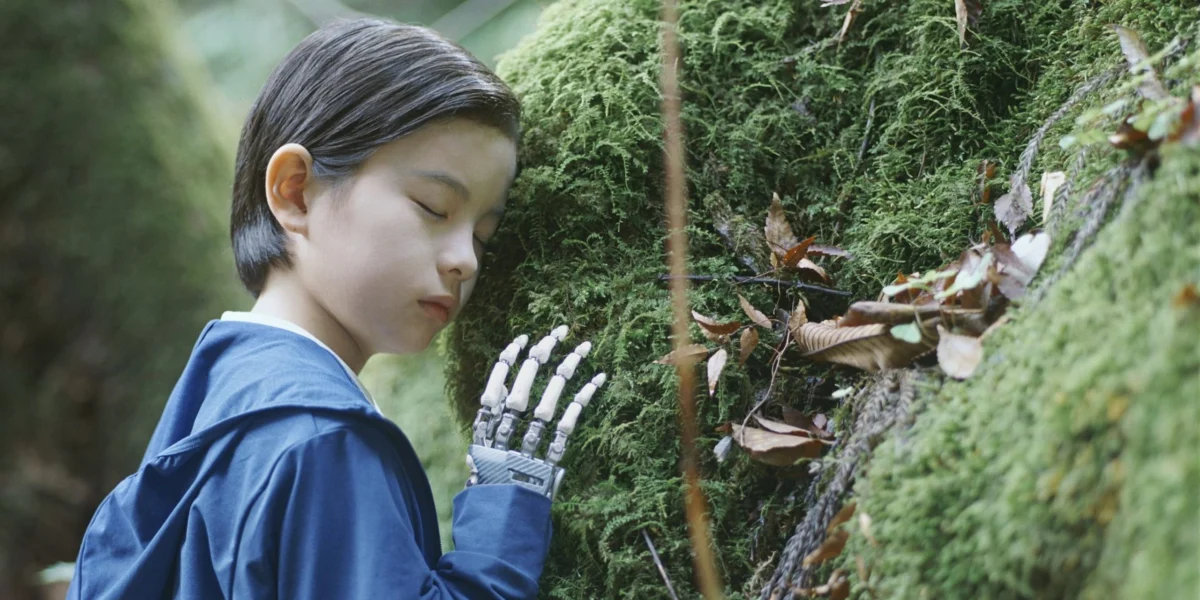
In an attempt to navigate their stagnant mourning process, the Komotos turn to REbirth, a corporation specializing in the development of humanoid replicas designed to mirror lost loved ones. The company’s primary product is a highly sophisticated robot capable of mimicking human behavior, learning from its environment, and providing a physical presence to fill the void left by the deceased. The couple eventually adopts Kakeru (Rimu Kuwaki), a humanoid modeled after their late son. The narrative follows the integration of this entity into their household, tracing the disparate ways Otone and Kensuke perceive the robot’s "soul" and the ethical boundaries of their unconventional domestic arrangement.
Cinematic Chronology and Plot Development
The film’s 127-minute runtime is structured into three distinct phases that track the evolution of the Komoto family and the broader implications of humanoid technology.
The Acquisition and Integration Phase
The initial act establishes the psychological state of the protagonists. The audience is introduced to the sterile, high-tech headquarters of REbirth, where the couple is presented with the possibility of "restarting" their parenthood. This segment highlights the ideological divide between the spouses: Otone approaches the humanoid with a sense of maternal hope, believing that the technology might harbor a latent consciousness or soul. Conversely, Kensuke displays a cynical detachment, colloquially referring to the advanced AI as "Tamagotchi" or "Roomba." Despite his skepticism, he agrees to the adoption, and Kakeru is introduced to the home. This phase focuses on the technical requirements of the humanoid, including the necessity of a GPS tracking system. The film establishes a critical plot point: without this internal tracker, the humanoid has the capacity to "reclaim" its body and act with complete autonomy.
The Expansion of the Narrative
The second act shifts from the domestic confines of the Komoto residence to a more expansive exploration of the world outside. As Kakeru begins to interact with his surroundings, the film introduces subplots involving a community of other humanoids and their human handlers. This transition marks a departure from Kore-eda’s typical contained dramas, moving toward a "sprawling science fiction tale" akin to the works of Steven Spielberg. During this period, the film explores the relationship between the mind and nature. Otone’s architectural projects serve as a metaphor for this connection, as she attempts to preserve disappearing woodlands by incorporating living trees into her designs. A significant narrative thread involves Kakeru’s brief but impactful bond with an elderly carpenter, who is depicted as a human embodiment of an ancient tree, bridging the gap between biological life and artificial existence.
The Resolution and Confrontation of Grief
The final act of Sheep in the Box deals with the breakdown of the initial domestic order. As the humanoid-focused plot points proliferate, the Komotos are forced to confront the reality that the robot is not a solution to their grief, but a mirror reflecting it. Kakeru’s ability to sense the "darkest corners" of Otone’s mind leads to a series of vulnerable, often terrifying realizations for the characters. The story eventually moves toward a conclusion that addresses whether the couple can move past their self-blame or if they will remain in a state of "perpetual limbo," reliant on a manufactured presence to sustain their emotional well-being.
Supporting Data and Production Context
The production of Sheep in the Box comes at a time when Japanese cinema is increasingly grappling with the role of artificial intelligence in society. Data from the Motion Picture Producers Association of Japan (Eiren) suggests a rising interest in genre-bending dramas that utilize speculative elements to address contemporary social issues.
Kore-eda’s decision to cast Haruka Ayase, one of Japan’s most recognizable actresses, underscores the film’s commercial ambitions. Ayase’s performance is noted for its restraint, providing a grounded center to a narrative that occasionally ventures into abstract territory. The supporting cast, including Nana Seino and Kanichiro, adds depth to the film’s secondary storylines, though critical analysis suggests these characters are less developed than the central trio.
The film’s score plays a pivotal role in its emotional delivery. Industry analysts have pointed out that the use of a poignant, heavy-lifting soundtrack is a common trait in high-budget Japanese dramas intended for international festival circuits. The technical aspects of the film, including the "serene landscapes" and the contrast between modern architecture and decaying nature, were handled by long-time Kore-eda collaborators, ensuring a visual continuity with his previous works despite the change in genre.
Comparative Analysis and Critical Reception
Thematic parallels between Sheep in the Box and Steven Spielberg’s 2001 film A.I. Artificial Intelligence have been widely noted by critics. Both films examine the ethical and emotional ramifications of replacing a lost child with a machine. However, where Spielberg’s work leaned into the "abandonment" and "odyssey" aspects of the machine’s journey, Kore-eda’s approach is more focused on the "chosen family" and the internal psychological state of the parents.
Initial critical responses have been mixed regarding the film’s narrative clarity. While the first half is praised for its "luminous glimmers of promise" and its "portrait of parental figures who have lost the ability to cope," the second half has been described as "muddled" and "disorienting." The introduction of a "new wave of plot points" in the latter portion of the film reportedly causes the story to lose its focus on the central family unit. Despite these narrative hurdles, the performances of Ayase and Yamamoto have been cited as a primary reason for the film’s ability to "evoke curiosity" throughout its duration.
Broader Impact and Implications
Sheep in the Box arrives during a global conversation regarding the ethics of "ghost bots" and digital recreations of the deceased. In real-world contexts, several tech startups have already begun offering services that use AI to simulate the personalities of late family members through text and voice. Kore-eda’s film serves as a cultural reflection of these emerging technologies, questioning whether such innovations assist in the grieving process or merely prolong it.
The film’s emphasis on architecture and nature also highlights an environmental subtext. By portraying the disappearance of woodlands alongside the rise of humanoid technology, Kore-eda suggests that as humanity becomes more capable of replicating itself, it simultaneously loses its connection to the organic world. This dual focus on the "artificial" versus the "natural" provides a layer of social commentary that extends beyond the immediate plot of the Komoto family.
From an industry perspective, Sheep in the Box represents a significant moment for Kore-eda as a filmmaker. After winning the Palme d’Or for Shoplifters, he has expanded his horizons by filming in France (The Truth) and South Korea (Broker). Returning to Japan for a science fiction-inflected project indicates a desire to experiment with the boundaries of the "family drama" genre. While the film may be perceived as "derivative" of Western sci-fi classics, it remains a uniquely Japanese exploration of how technology interacts with the traditional values of the household.
In summary, Sheep in the Box is a complex, 127-minute exploration of the human condition in an age of technological surrogacy. While the narrative may struggle with its own ambition and clarity in its final act, it provides a significant contribution to the ongoing dialogue regarding grief, the definition of the soul, and the limits of artificial intelligence in the domestic sphere. The film stands as a testament to Hirokazu Kore-eda’s willingness to evolve his cinematic language, even as he continues to search for the "common ground" that unites all families, whether biological or manufactured.