Directed and co-written by Guillaume Canet, this 149-minute psychological thriller explores the harrowing intersection of past trauma, religious extremism, and the systemic failure of protective institutions. Starring Academy Award winner Marion Cotillard alongside Denis Ménochet, Luis Zahera, and Leonardo Sbaraglia, the film presents a narrative that, while fictional, draws heavily on the documented realities of coercive control and the enduring legacy of isolated communes. The story follows Jeanne, a woman whose attempt to outrun a dark history is shattered by the disappearance of her six-year-old godson, triggering a chain of events that forces her back into the clutches of the radical religious community that shaped her.
Narrative Overview and Premise
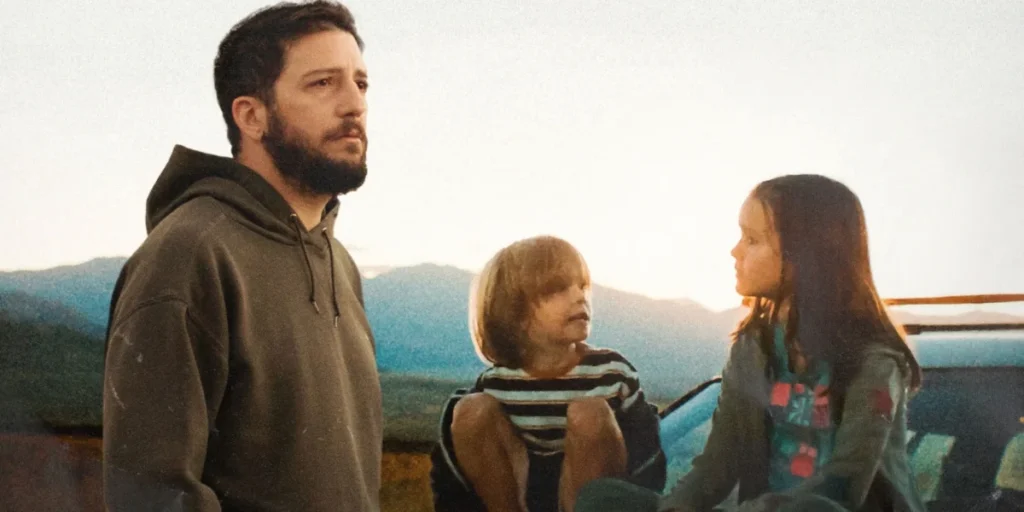
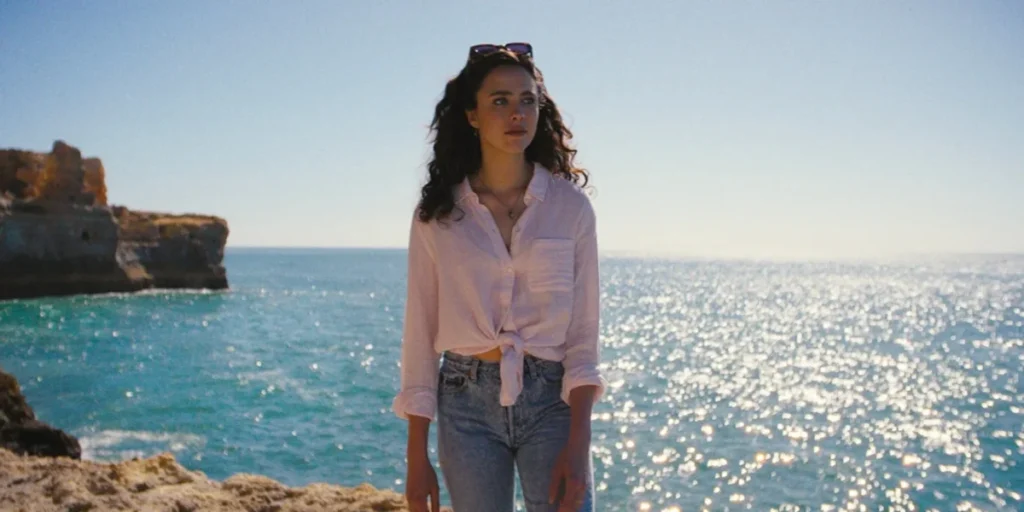
The story begins in the rugged landscapes of northern Spain, where Jeanne (Cotillard) has established a seemingly tranquil existence. She is involved in a supportive relationship with Daniel (Sbaraglia), a local carpenter who remains largely ignorant of the complexities of her upbringing. Central to Jeanne’s daily life is her role as the godmother to Mateo, a young boy on the autism spectrum. This relationship serves as the emotional anchor of the film’s first act, establishing a sense of normalcy that is abruptly dismantled when Mateo disappears during a routine trip to soccer practice.
The disappearance serves as the catalyst for a deep dive into Jeanne’s psychological instability. Following a unexplained blackout, Jeanne is unable to provide the police with a coherent timeline of events. Her initial statements are marked by inconsistencies, and her subsequent emotional collapses lead law enforcement, led by characters played by Luis Zahera, to designate her as the primary suspect. Facing imminent arrest and unable to prove her innocence through traditional means, Jeanne flees across the border into France. Her destination is the "commune"—a gated religious community led by a figure named Marc (Ménochet)—where she was raised and from which she had previously escaped.
Chronology of Events and Plot Development
The timeline of the film is structured to mirror the psychological unraveling of its protagonist. The narrative can be divided into three distinct phases: the disappearance, the flight, and the confrontation.
- The Spanish Incident: The first 45 minutes establish the domestic setting in Spain. The bond between Jeanne and Mateo is highlighted to emphasize the gravity of his loss. The disappearance is depicted not as an external action-thriller sequence, but as a fractured internal experience for Jeanne, characterized by sensory overload and memory gaps.
- The Investigation and Flight: As the Spanish authorities intensify their scrutiny, the film transitions into a procedural drama. Jeanne’s inability to recall the specifics of the day leads to a series of high-tension interrogations. The pressure culminates in her decision to return to her origins in France, believing the commune offers the only sanctuary from a legal system that has already judged her.
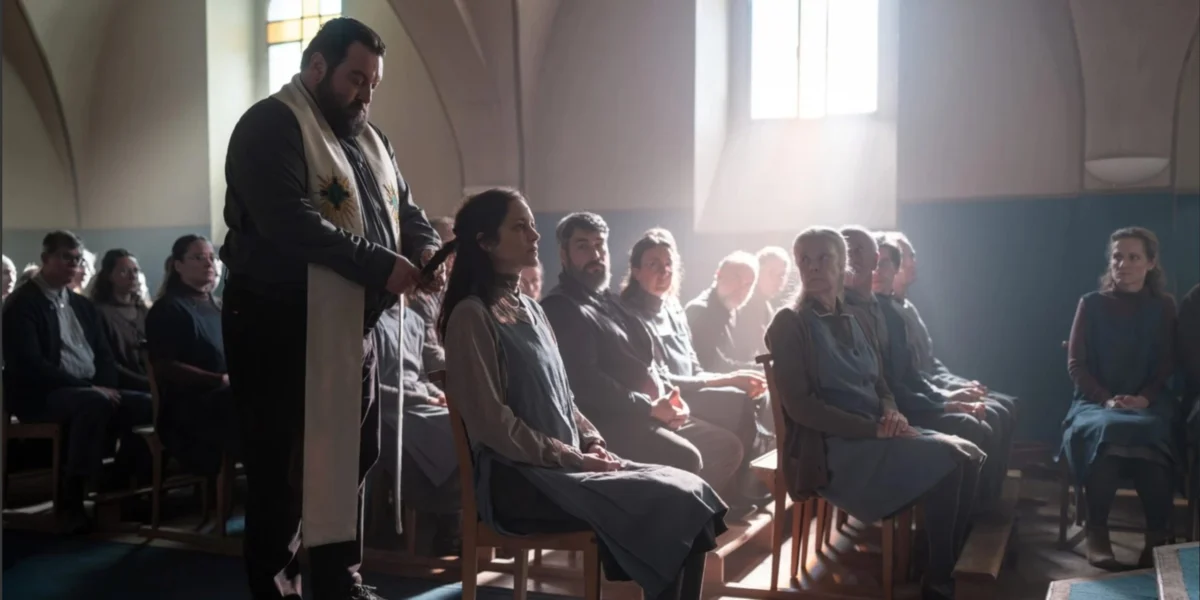
- The Return to the Commune: The final act takes place within the confines of the French religious sect. Here, the film shifts from a missing-person mystery to a study of cult dynamics. Jeanne’s return is not greeted with traditional sanctuary but with the re-imposition of the radical doctrines she once fled. Parallel to this, Daniel’s independent investigation brings him into the orbit of the commune, setting the stage for a confrontation between the outside world and Marc’s isolated micro-society.
Character Analysis and Casting Dynamics
The production is anchored by the performances of Marion Cotillard and Denis Ménochet. Cotillard’s portrayal of Jeanne is noted for its restraint; she depicts a woman living in a state of perpetual hyper-vigilance, a common symptom of Post-Traumatic Stress Disorder (PTSD) found in survivors of cultic abuse. Her performance captures the "emotional exhaustion" of a character who has spent a lifetime suppressing the details of her childhood.
Denis Ménochet provides a stark contrast as Marc, the leader of the commune. Eschewing the tropes of the flamboyant cult leader, Ménochet plays Marc with a quiet, terrifying authority. He is depicted as a man who views himself as a benevolent protector, using a fabricated theology to justify absolute control over his followers. This "banality of evil" approach makes the character’s psychological abuse and the physical restrictions of the commune feel grounded in reality.
Leonardo Sbaraglia’s Daniel represents the audience’s perspective—an outsider motivated by love who must navigate a world that operates on entirely different logic and moral codes. Luis Zahera provides the necessary bureaucratic tension as the investigator whose pursuit of the truth inadvertently pushes Jeanne back into danger.
Thematic Exploration: Cult Dynamics and Coercive Control
At its core, the film serves as a case study in the mechanics of religious communes and the concept of "total institutions." Sociologists define these as places where all aspects of life—work, sleep, and play—occur in the same place under a single authority. The commune in the film exhibits several hallmarks of such organizations:
- Isolationism: The use of gated grounds and the discouragement of contact with the "outside world" to maintain a monopoly on information.
- Fabricated Theology: The belief system is a "patchwork" of various faiths, redesigned by Marc to serve his personal and hierarchical needs.
- Intergenerational Trauma: The film highlights the presence of three interconnected families who have lived within the commune for decades, suggesting a cycle of inbreeding and systemic violence that is passed down to children.
- Performance of Normalcy: The community is adept at presenting a benign facade to external authorities, a tactic often used by real-world fringe groups to avoid legal intervention.
The film’s title, Karma, suggests a thematic focus on the "inevitability of consequences." For Jeanne, the karma is not a mystical force but a psychological one; the unresolved trauma of her past eventually demands a reckoning, regardless of how far she travels or how much of her identity she changes.
Production Context and Directorial Vision
Guillaume Canet, known for his work on Tell No One and Little White Lies, moves into darker territory with this project. Co-written with Simon Jacquet, the script prioritizes tension and atmospheric dread over traditional action beats. The 149-minute runtime allows for a slow-burn exploration of the commune’s internal logic, which Canet has described as "peeling away layers of human skin."
The production utilizes the natural geography of northern Spain and rural France to emphasize the isolation of the characters. The hills and forests are shot to feel both expansive and claustrophobic, mirroring Jeanne’s internal state. However, the film’s technical execution has faced some scrutiny regarding its score. The heavy reliance on electronic keyboard arrangements has been noted by some analysts as occasionally intrusive, potentially pushing the film’s grounded realism toward the territory of melodrama.
Societal Implications and Genre Impact
The narrative touches upon several contemporary social issues, particularly the difficulty of reintegrating survivors of high-control groups into mainstream society. According to data from organizations specializing in cult recovery, survivors often face "fragmented memories" and "identity loss," much like the symptoms displayed by Jeanne during the police investigation.
Furthermore, the film highlights the vulnerability of children within these structures. The disappearance of Mateo serves as a metaphor for the way children can "disappear" within closed systems where there is no external oversight. The film’s depiction of the failure of the police to understand Jeanne’s psychological state reflects a broader critique of how legal systems handle victims of coercive control, often mistaking trauma responses for signs of criminal guilt.
Fact-Based Analysis of Implications
While Karma is a work of fiction, its portrayal of cultic behavior aligns with documented cases of "closed-loop" communities. Research into such groups indicates that the most difficult aspect of escape is not the physical exit, but the psychological deprogramming. Jeanne’s return to the commune, while seemingly illogical to an outsider, is a documented phenomenon known as "regression under stress," where a survivor returns to a known environment—even an abusive one—when the outside world becomes too hostile.
The film also contributes to the "missing person" genre by subverting the typical resolution. Rather than focusing solely on the "who-done-it" aspect of Mateo’s disappearance, the narrative shifts its focus to the "why" of Jeanne’s life. This elevates the film from a standard thriller to a psychological drama that examines the long-term effects of spiritual and physical captivity.
Conclusion: The Legacy of Survival and Consequence
In summary, the production offers a grim but necessary look at the intersection of faith, fear, and the search for autonomy. Through the lens of a high-stakes thriller, it examines the uncomfortable truth that escaping an abusive environment is often just the beginning of a lifelong struggle for freedom. The film concludes with a stark reminder that the past is never truly behind us; it is a force that must be faced directly if one is to ever truly survive. With strong lead performances and a commitment to exploring the darker corners of human control, the film stands as a significant, if unsettling, entry in modern French-Spanish cinema.