Barnaby Thompson’s thoroughly exhilarating and enjoyable documentary about movie director David Lean offers a compelling portrait of a filmmaker whose career was as audacious and expansive as the cinematic landscapes he meticulously crafted. The film powerfully underscores the adage that fortune favors the bold, presenting Lean’s professional journey as a grand, almost military-style adventure, reminiscent of historical titans like Napoleon or Winston Churchill, or indeed, T.E. Lawrence himself in Lean’s seminal 1962 epic, Lawrence of Arabia. This narrative of improvisation in challenging circumstances, of imposing command through sheer force of will, and of a masterful grasp of theatrical leadership, complete with an almost performative command of oratory and the inherent allure of authority, resonates throughout the documentary.
The film invites viewers to reconsider the iconic portrayal of Lawrence by Peter O’Toole. While acknowledging Lawrence’s often comic and absurd persona—a figure clad in borrowed, culturally appropriated Arab robes—the documentary highlights an undeniable aura of respect that precluded mockery. Thompson suggests that Lean, perhaps in his director’s chair, possessed a unique perspective, seeing the vulnerabilities and internal struggles that his subordinates might not have perceived or acknowledged. This includes the director’s own admitted susceptibility to impostor syndrome and secret doubts, despite his reputation for being tempestuous and dictatorial on set. While no direct film or audio recordings exist to substantiate these claims of irascibility, Lean himself, in various interviews presented in the documentary, appears endearingly charming and self-deprecating, though one might infer a subtle shift in his patrician accent when under duress.
The Art of Grandeur: Lean’s Cinematic Philosophy
Lean’s approach to filmmaking was characterized by an unwavering commitment to scale and spectacle, a vision that demanded absolute control and an uncanny ability to marshal resources and personnel. His films were not merely stories told on screen; they were immersive experiences designed to transport audiences to distant lands and bygone eras. This ambition, however, often came at a significant cost, both financially and personally. The documentary, while celebrating Lean’s achievements, also delves into the complexities of his personality and the demanding nature of his creative process.
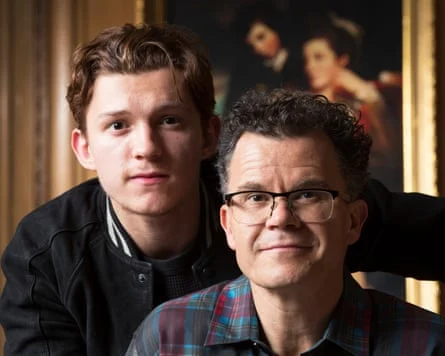
The documentary, while offering a rich and visually engaging history of Lean’s career, may not sufficiently emphasize the profound impact of music in his most celebrated works. The evocative and sweeping scores of Maurice Jarre, particularly in Lawrence of Arabia and his adaptation of Boris Pasternak’s Doctor Zhivago, were integral to the emotional resonance and epic scope of these films. Nonetheless, the documentary features an impressive array of directorial talent, including Francis Ford Coppola, Greta Gerwig, Wes Anderson, Alfonso Cuarón, Paul Greengrass, Celine Song, and a notably youthful Steven Spielberg in archival footage, all offering insights into Lean’s enduring influence. These contemporary filmmakers articulate a deep admiration for Lean’s singular vision, a testament to his lasting legacy.
Thompson posits a compelling theory that a significant wellspring of Lean’s personal and professional behavior can be traced to his father, Francis Lean, who abandoned his family and offered no subsequent support. This early trauma, the documentary argues, mirrored Lean’s own pattern of estrangement from his first wife and child. The recurring themes of romance, temptation, and infidelity that permeate his cinematic oeuvre are thus presented as stark reflections of his own unresolved psychological landscape. Furthermore, Lean’s relentless pursuit of his father’s approval, a quest that remained unfulfilled as his father reportedly never viewed a single one of his films, adds another poignant layer to his complex character.
From Editor’s Desk to Epic Vision
Lean’s cinematic journey commenced in the editing suite, a role that likely honed his meticulous attention to detail and instilled a desire for comprehensive control over the filmmaking process. He then transitioned to co-directing with Noël Coward on the wartime classic In Which We Serve, effectively assuming sole directorial responsibility. His early solo directorial efforts showcased a remarkable command of studio filmmaking, evident in the Coward-scripted romantic melodrama Brief Encounter. Greta Gerwig, in her insightful commentary, highlights the film’s nuanced portrayal of innocence intertwined with burgeoning eroticism. Lean’s subsequent adaptations of Dickens’s Great Expectations and Oliver Twist demonstrated his adeptness at utilizing intricately designed and beautifully realized sets to create atmospheric and compelling narratives.

A pivotal turning point arrived with his 1955 Venice-set film Summertime. This marked Lean’s significant venture into location shooting abroad, a decision partly influenced by his status as a tax exile. This nomadic lifestyle, characterized by the rather humorous detail of transporting his Rolls-Royce wherever he went, became a defining aspect of his later career. The fate of Lean’s iconic Rolls-Royce remains an intriguing, albeit minor, footnote in the grand narrative of his life.
The Golden Age of Epics and the Shifting Tides of Taste
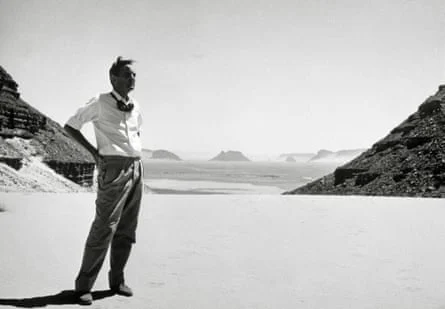
Fuelled by a potent creative and financial partnership with producer Sam Spiegel, Lean entered a golden era of epic filmmaking. These ambitious productions were predominantly shot on location, immersing audiences in authentic global settings. The Bridge on the River Kwai, filmed in Sri Lanka, and Lawrence of Arabia, spectacularly realized in the Jordanian desert, exemplify this era. Even Doctor Zhivago, a sprawling adaptation of Boris Pasternak’s novel, was shot in Spain, ingeniously standing in for the Russian landscape.
However, as the 1960s drew to a close and the cinematic landscape began to shift, embracing the countercultural sentiments of the New Wave, Lean found his signature style falling out of favor. Despite Doctor Zhivago‘s considerable box office success, which largely silenced detractors, the film faced some critical derision. His subsequent Irish drama, Ryan’s Daughter, was met with harsh criticism. This period also witnessed one of the most ignominious episodes in film criticism: a group of prominent New York critics, including Pauline Kael, reportedly convened a lunch at the Algonquin Hotel specifically to publicly humiliate and criticize Lean. This incident underscores the intense pressures and shifting critical paradigms faced by filmmakers in the late 20th century.
A Resounding Finale and Enduring Legacy
Lean’s directorial career concluded on a high note with his adaptation of E.M. Forster’s A Passage to India. The film garnered widespread critical acclaim. However, the documentary’s coverage of this film, perhaps in an effort to maintain a culturally sensitive tone, might have benefited from addressing the controversy surrounding Alec Guinness’s casting in brownface to portray Professor Godbole. Notwithstanding this point, Thompson’s documentary navigates Lean’s eventful life and career with the exhilarating momentum of a cavalry charge, offering viewers a thoroughly enjoyable and insightful cinematic gallop.
The film’s exploration of Lean’s personal life reveals a man driven by a profound dedication to his craft, intertwined with a restless romantic and sexual appetite. His pattern of serial marriages and relationships with a remarkable constellation of overlapping partners is presented not just as a biographical detail but as a potential consequence of his paternal abandonment. This, coupled with his unfulfilled yearning for paternal approval, provides a psychological framework for understanding the thematic preoccupations of his cinema.
The impact of Lean’s work extended far beyond the box office. He set new benchmarks for cinematic scale and ambition, influencing generations of filmmakers to think bigger and bolder. His ability to translate literary epics into visually stunning and emotionally resonant cinematic experiences cemented his status as a master storyteller. The documentary serves as a vital testament to his enduring contribution to the art of film, reminding audiences of the power of a singular vision and the courage it takes to realize it on the grandest possible scale. The legacy of David Lean is not just in the films he made, but in the very idea of what cinema could achieve.