Ann Robinson, the vibrant red-haired actress whose portrayal of Sylvia Van Buren indelibly etched her into the annals of cinematic history, particularly for her memorable role in the 1953 science fiction classic The War of the Worlds, passed away on September 26 at her Los Angeles home. She was 96 years old. Her granddaughter, Tori Bravo, confirmed the news to The Hollywood Reporter, with her death having been privately mourned until this public announcement. Robinson’s career, spanning decades, was defined not just by her iconic encounter with Martians but by a journey through Hollywood that began in the Golden Age, marked by grit, talent, and a unique perspective on one of cinema’s most terrifying alien invaders.
A Legacy Forged in Sci-Fi: The War of the Worlds
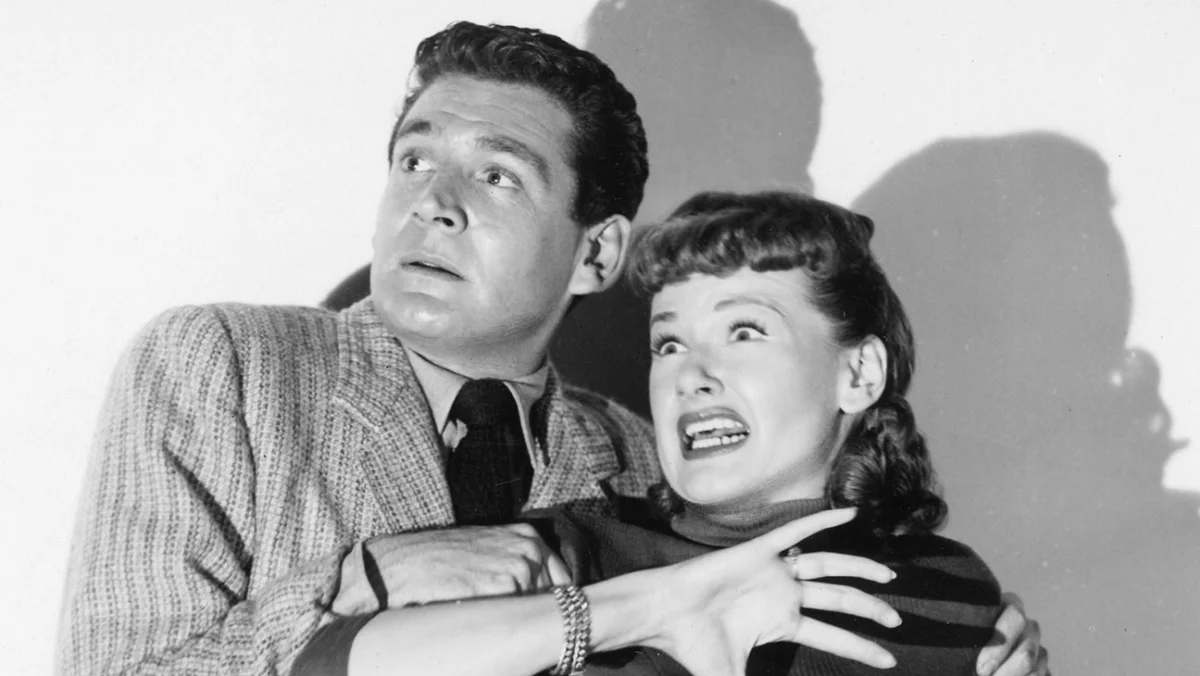
Robinson’s most celebrated role came as Sylvia Van Buren, a resourceful library science teacher, in the George Pal-produced and Byron Haskin-directed The War of the Worlds. This adaptation of H.G. Wells’ seminal 1898 novel captivated audiences with its groundbreaking special effects and a narrative that tapped into the anxieties of the Cold War era. Robinson, then a relatively inexperienced contract player at Paramount Pictures, secured the role after auditioning for the visionary producer George Pal. Alongside Gene Barry, who played Pacific Tech professor Clayton Forrester, Robinson’s character navigated a world plunged into chaos as Martians, employing their devastating heat-rays, unleashed widespread destruction across the globe, starting in a small town outside Los Angeles.
The film’s impact was immediate and enduring, earning an Academy Award for Best Special Effects. Its depiction of alien invasion, characterized by menacing, cobra-like Martian war machines and their terrifying energy weapons, set a new benchmark for science fiction cinema. The narrator’s ominous pronouncements in the movie trailer, "The nations of the world mobilize their armed might rushing to defend the Earth against the unknown weapon of the super race from the Red Planet! Is there nothing that can stop the Martians’ death machines?" perfectly encapsulated the film’s high stakes and widespread dread. Robinson’s Sylvia, often the focus of the Martians’ chilling attention, provided a human anchor amidst the alien terror, embodying both vulnerability and resilience.
One particularly memorable sequence involved a close encounter where a Martian’s long, slender fingers reached for an unsuspecting Sylvia. In a heroic act, Clayton Forrester intervened, dispatching the creature with a hatchet. Robinson, with her characteristic wit, later offered a humorous, alternative interpretation of this pivotal scene. In a 1994 interview with Tom Weaver for his book, Attack of the Monster Movie Makers, she mused, "I always thought, ‘This guy might have been nice! Maybe we ruined a chance for peace because Gene Barry got overzealous and threw that hatchet.’ This Martian was just coming up behind me to tap me on the shoulder — he wasn’t aggressive, he wasn’t mean. Of course, the Martians had blown my uncle apart, along with a bunch of other people, but maybe this guy was the nice one who wanted to negotiate." This playful commentary underscored her unique charm and her enduring connection to the film’s legacy.
Early Career: From Stunts to Stardom
Born on May 25, 1929, in Hollywood, California, Ann Robinson’s journey into the film industry was quintessentially Tinseltown. She attended Hollywood High and Sacred Heart Academy in La Cañada Flintridge, immersing herself in the local culture that revolved around the burgeoning movie business. Her career initially took an unconventional path, starting as a stunt performer, a testament to her adventurous spirit and physical prowess. In an era before advanced CGI, stunt work was particularly demanding and dangerous, requiring genuine courage and skill.
One of her earliest and most challenging experiences involved doubling for June Havoc in The Story of Molly X (1949). Robinson vividly recounted a scene where she found herself caught on a 15-foot barbed-wire fence while attempting to escape the Tehachapi state prison. She admitted to Weaver, "I had lied like crazy to get the job, telling everybody how experienced I was! I looked and thought to myself, ‘What have I got myself into?’ But when you’re that young and stupid, nothing fazes you." This anecdote highlights the raw, often unglamorous beginnings of many Hollywood careers, built on a mixture of ambition, nerve, and a willingness to learn on the job.
Her early filmography also included riding horses in Black Midnight (1949), starring Roddy McDowall, and stepping in for Shelley Winters in Frenchie (1950). She also appeared as an extra in George Stevens’ critically acclaimed A Place in the Sun (1951), where she was given a rare line of dialogue, a small but significant step forward for an aspiring actress. These experiences honed her craft and provided invaluable exposure to the inner workings of a major studio system. Her talent and potential were eventually recognized, leading to her signing a contract with Paramount Pictures for $125 a week, placing her among the studio’s "Golden Circle" of promising future stars.
Post-Martian Encounters: A Shifting Landscape
Following her breakout role in The War of the Worlds, Robinson continued to work in Hollywood, albeit in a career path that took several turns. She was loaned out to Columbia Pictures for the film noir The Glass Wall (1953), demonstrating her versatility beyond the sci-fi genre. However, despite the success of War of the Worlds, Paramount opted not to renew her contract, a common occurrence in the transient studio system of the time, where actors were often seen as assets to be managed rather than long-term investments.
In 1954, Robinson took on another notable role as an L.A. cop opposite Jack Webb in the first Dragnet movie, an adaptation of the immensely popular radio and television series. That same year, she ventured into syndicated children’s sci-fi television, portraying an alien queen on Rocky Jones, Space Ranger, showcasing her continued engagement with the science fiction realm.
However, a significant turning point in her career arrived in 1957 when she made a personal decision that dramatically altered her professional trajectory. She traveled to Mexico to marry Jaime Bravo, a renowned matador. This choice, while deeply personal, had a profound impact on her burgeoning Hollywood career. As she candidly told Weaver, "That blew my career right out of the water. When I got back home, Hollywood had passed me by. I just ruined it, I blew it." In the societal context of the 1950s, particularly for actresses, marriage and starting a family often meant a step back, if not a complete departure, from the demanding and often unforgiving world of film production. The studio system, which had once nurtured her, was less forgiving of extended absences. She and Bravo had two children before their divorce in 1967.
Despite this professional pause, Robinson found opportunities in the expanding medium of television during the 1960s. She became a familiar face to viewers, guest-starring in numerous popular shows, including legal drama Perry Mason, sitcom Bachelor Father, Western The Life and Legend of Wyatt Earp, detective series Peter Gunn, anthology series Death Valley Days, and the iconic private eye show 77 Sunset Strip. This period demonstrated her adaptability and continued appeal to audiences, even as her film career waned.
The Enduring Appeal of The War of the Worlds
Even decades after its initial release, The War of the Worlds continued to be a touchstone in Ann Robinson’s life and career. The film’s enduring cultural significance meant that she was frequently invited to retrospectives, conventions, and new adaptations. One of the most significant of these was Steven Spielberg’s 2005 reimagining of War of the Worlds, starring Tom Cruise. Spielberg, a self-professed fan of the original film, invited both Robinson and Gene Barry to make a cameo appearance, reprising their roles in a poignant nod to the 1953 classic.
Robinson recounted the experience with fondness, telling Nick Thomas in 2016, "Steven was just so adorable. He came up behind me, squatted down and placed three fingers on my left shoulder and yelled, ‘Someone take my picture!’ Apparently, War of the Worlds was one of his favorite films growing up." She further described the royal treatment she received: "They treated me like royalty. My son, who was with me, told me he heard people saying, ‘She’s here, she’s here!’ after we arrived on the set. Then for the Ziegfeld Theater premiere, they flew me to New York first class, put me up in a beautiful hotel overlooking Central Park and arranged for a limousine to drive my family around. I waited 60 years to get that treatment!" This experience underscored the deep respect and admiration the original film continued to command, and the personal significance it held for a new generation of filmmakers.
Her connection to the Martian invasion saga didn’t end there. Robinson also reprised her role as Sylvia in a few episodes of the 1988-90 War of the Worlds syndicated television series, demonstrating the enduring marketability of the franchise and her iconic character. Reflecting on the longevity of her signature role, Robinson once quipped to Tom Weaver, "I’ve gotten more mileage out of War of the Worlds than Vivien Leigh did on Gone With the Wind." This humorous comparison perfectly captured the unique and continuous resonance her role had, far outstripping many other performances in terms of its lasting public recognition.
Contextualizing a Sci-Fi Masterpiece
The War of the Worlds (1953) arrived at a pivotal moment in cinematic history and global affairs. H.G. Wells’ original novel, published in 1898, was a prescient commentary on British imperialism, xenophobia, and the fragility of human civilization against a superior, indifferent force. Pal’s adaptation skillfully translated these themes into a Cold War context, transforming the Martians into a metaphor for the unknown, possibly communist, threats of the atomic age. The film tapped into widespread anxieties about nuclear annihilation, technological superiority of adversaries, and the sheer helplessness of humanity against an unimaginable power.
The film’s visual effects, groundbreaking for their time, were critical to its success. George Pal, known for his innovative approach to special effects, employed a combination of miniatures, matte paintings, and optical effects to create the terrifying Martian war machines and the widespread destruction they wrought. The "heat-ray" effect, achieved through complex animation and optical printing, was particularly impactful, leaving audiences awestruck and genuinely fearful. Robinson, as one of the main human characters, served as the audience’s emotional conduit, her terror and determination reflecting the collective human struggle against an existential threat. Her character, a knowledgeable library science teacher, represented intellect and reason in the face of brute force, a subtle yet important message for the era.
The 1950s was a golden age for science fiction films, often serving as allegories for contemporary fears. Films like The Day the Earth Stood Still (1951), The Thing from Another World (1951), and Forbidden Planet (1956) explored themes of alien contact, invasion, and the consequences of scientific advancement. The War of the Worlds stands out among these for its sheer spectacle and its visceral depiction of an overwhelming, unprovoked attack. Robinson’s portrayal of Sylvia Van Buren also subtly challenged some gender norms of the time. While she was indeed "menaced," Sylvia was not a screaming damsel in distress; she was intelligent, contributed to the intellectual struggle against the Martians, and showed remarkable composure in terrifying circumstances, making her a strong female figure in a genre often dominated by male heroes.
A Life Remembered
Ann Robinson’s life was a testament to the dynamic nature of a career in Hollywood, from the exhilarating highs of an iconic role to the personal decisions that shaped its trajectory. She balanced the demands of a public career with her personal life, including her marriage to Jaime Bravo and raising their children.
She is survived by her son, Jaime Bravo Jr., who has followed a path in sports media as a director for ABC Sports and ESPN, and her granddaughter, Tori Bravo, and grandson, Sammy. Ann Robinson’s passing marks the end of an era, but her legacy, particularly through her unforgettable performance in The War of the Worlds, will continue to inspire and entertain generations, forever reminding us of the human spirit’s resilience against the unknown. Her unique blend of grace, wit, and a touch of rebellious spirit ensured her place not just in Hollywood history, but in the hearts of science fiction fans worldwide.