At 82, the character actor is as frank and fired-up as ever with two hit stage shows and a summer blockbuster on the way. He’s embracing being odd, he says, even if everyone doesn’t quite get it. Wallace Shawn, a figure who has consistently defied categorization throughout his prolific career, is experiencing a remarkable resurgence at 82. With two critically acclaimed stage productions currently captivating audiences and a major summer blockbuster on the horizon, Shawn remains as sharp, insightful, and unyieldingly committed to his artistic vision as ever. He attributes his continued relevance and creative output to an embrace of his inherent “oddity,” a quality that, while not universally understood, has become the bedrock of his distinctive artistic persona.
A Career of Unconventional Brilliance
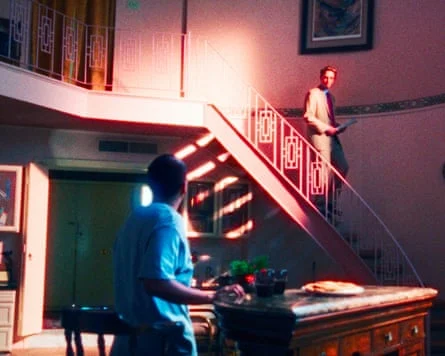
Shawn’s journey in the performing arts began in the late 1960s, establishing him as a fixture in the New York theater scene. While his early work often delved into the introspective and philosophical, his career took a significant turn with memorable appearances in mainstream Hollywood productions. His role as the villainous Vizzini in the beloved 1987 fantasy adventure The Princess Bride introduced him to a global audience, showcasing his unique delivery and comedic timing. This was followed by a string of impactful roles in films that ranged from independent darlings to critical successes. He made his film debut in Woody Allen’s Manhattan (1979), a testament to his early recognition within the cinematic landscape. Subsequent appearances in cult classics like Bob Fosse’s All That Jazz (1979) and Alan J. Pakula’s Starting Over (1979) further solidified his presence.
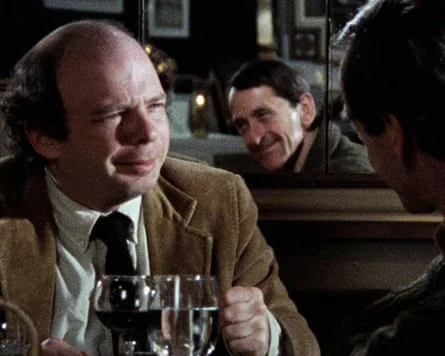
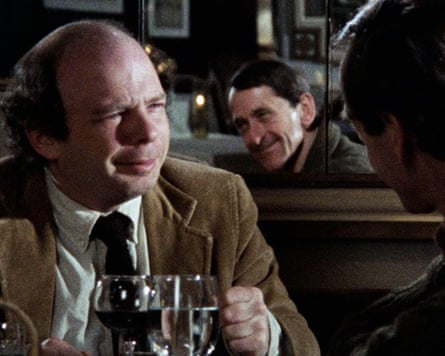
However, it is perhaps his profound collaborations with director André Gregory, particularly My Dinner with Andre (1981) and Vanya on 42nd Street (1994), that best exemplify Shawn’s ability to blend intellectual depth with raw, human vulnerability. These films, co-written by Shawn and Gregory, are cinematic dialogues that explore existential themes with a quiet intensity that has become a hallmark of Shawn’s work. He famously described acting as a “miracle,” noting that while actors may appear relatable, their ability to embody characters is a unique and often mysterious craft. This sentiment, coming from an actor with over 200 screen credits, underscores his consistent self-examination and dedication to the art form.
A Season of Intense Creative Output
The current spring season has seen Shawn operating at an exceptionally high creative velocity. His latest stage work, What We Did Before Our Moth Days, is currently playing to enthusiastic reviews. When asked about the casting process for this new play, Shawn offered a characteristically direct and boundary-setting response: “Well, I think that’s secret. I don’t think I’ll tell you.” This polite yet firm assertion reveals a comfort with self-definition and a clear delineation of his creative space.

Adding to this demanding schedule, Shawn has also been reprising his seminal 1990 monologue, The Fever, on nights when Moth Days is not in performance. Witnessing The Fever live is a powerful experience. Shawn’s performance, delivered with an almost visceral intensity, is a searing indictment of capitalism and moral complacency. He acknowledges the physical and mental fortitude required to sustain such a performance for its nearly two-hour duration, admitting, “That’s a physical feat which is at the absolute limit of my ability. I am surprised that I can go through it without falling apart.” The monologue, which he first performed in intimate apartment settings before larger theatrical runs, probes the complicity of the privileged in global inequality and suffering. It’s a work that continues to resonate, prompting audiences to confront uncomfortable truths about their own lives and societal structures.
Navigating Hollywood and Artistic Recognition
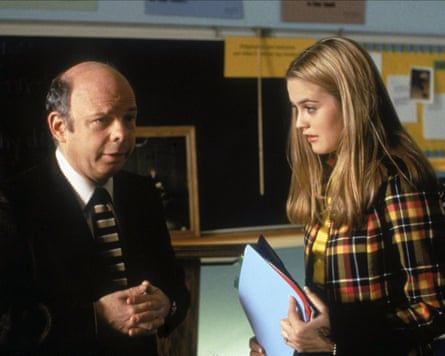
Despite his consistent presence and acclaimed performances, Shawn expresses a nuanced frustration with the limitations he perceives in his acting career beyond his collaborative work with Gregory. He observes that while his roles in comedies like Clueless (1995) or his recurring part in the television series Gossip Girl have showcased his comedic talent, they haven’t consistently translated into offers for more dramatically complex characters. “I don’t think the returns are in,” he states candidly. “Obviously, a lot of people don’t think I can act because otherwise they’d give me different parts. I’m clearly not highly respected as an actor by a lot of people, even if I’ve been sitting here for many decades, totally available.” He points to his role in the long-running sitcom Young Sheldon, where he held a recurring role, as an example of his capability, remarking, “they cast me in that part and I acquitted myself. I don’t think they made a terrible mistake.”
This perceived underestimation by some in the industry stands in stark contrast to the adoration he receives from dedicated fans. A recent visit to the Posteritati gallery in Manhattan for a poster signing event underscored this. The entire gallery staff, including those not on duty, turned out to meet him, a testament to his enduring appeal. During the event, Shawn displayed his characteristic humility, deflecting praise while showing genuine enthusiasm for rare items like an original British one-sheet for My Dinner with Andre. He also inquired about the potential impact of signing a Toy Story 2 postcard on its value, a thoughtful consideration that highlights his awareness of the fan culture surrounding his work. His adaptation and starring role in Jonathan Demme’s A Master Builder (2013), based on Ibsen’s play, was met with critical appreciation, though he wryly noted its modest box office performance.
The Genesis of a Singular Voice
Shawn’s financial security, which allowed him the freedom to pursue his writing without compromise, emerged in his late thirties. “I began to understand that I could make money by being a funny actor,” he recalls. “I was quite delighted to find that, even though my [stage] writing was not appealing to a large number of people, my acting apparently could be.” This realization proved pivotal, enabling him to continue developing his distinctively singular stage works, which now number seventeen. These include his interpretations of classic plays, such as Machiavelli’s The Mandrake and The Threepenny Opera, the latter marking his sole Broadway credit.
What We Did Before Our Moth Days represents a profound exploration of familial dynamics and the enduring impact of infidelity. The play, structured as a series of direct addresses to the audience, features four characters – referred to as The Man, The Son, Dad’s Wife, and His Lover – who recount how a father’s affair shaped their lives up to their respective “moth days,” a metaphorical end of life. Performed by a stellar cast including Hope Davis, Maria Dizzia, John Early, and Josh Hamilton, the production offers a poignant yet darkly satirical examination of a family grappling with grief and its repercussions. The play’s themes hold a personal resonance for Shawn, whose father, William Shawn, served as editor-in-chief of The New Yorker for over three decades and engaged in a long-term, semi-public affair with one of its writers, Lillian Ross.
Shawn admits that his creative process is one of discovery, never knowing the ultimate direction his writing will take. He views the inspirations behind Moth Days as stemming from “absolutely true and well-documented” aspects of his own life. When drawing parallels to Barbra Streisand’s sentiment about avoiding therapy due to a lack of self-interest, Shawn laughs, finding common ground in a desire to avoid introspective analysis that might impede creative momentum. “I think she doesn’t care, perhaps, why she behaves the way she does. It’s never gotten in her way. I understand it.” This philosophy of non-introspection extends to his own life: “It’s about being self-protective. I think I avoided psychedelic drugs up until this point, and psychotherapy probably for the same reason.”
Political Activism and Artistic Integrity
The intellectual rigor and political consciousness embedded in Shawn’s work are undeniable. The Fever, in particular, serves as a potent critique of bourgeois complicity in global exploitation. The monologue’s unnamed protagonist, shivering in a hotel bathroom while visiting a developing country, confronts the oppressive role of their class in perpetuating systemic injustices. Shawn articulates this with stark clarity: “If people in Sudan were prosperous, and if America hadn’t had slavery and if there hadn’t been a genocide of the Indigenous people, I wouldn’t be able to be doing what I’m doing.” This unflinching self-examination, rooted in a deep understanding of historical and ongoing exploitation, has defined his artistic output.
The initial reception of The Fever was mixed, with The New York Times famously dismissing it as a “musty radical-chic stunt.” Shawn acknowledges his sensitivity to criticism, stating, “I’m afraid I read reviews, because I grew up in a print-loving household and I hate the idea that people are saying things about me behind my back.” Despite early setbacks, the play eventually found wider recognition with an HBO film adaptation starring Vanessa Redgrave in 2004. The drive for recognition, akin to the respect he believes Arthur Miller garnered by his thirties, served as a significant motivator.
Shawn reflects with a touch of embarrassment on the delayed acclaim of his writing career, particularly after reaching his eighties. “I feel bad talking this way now because people have been extremely nice since I crossed the line into being 80, maybe even 70 or 75,” he admits. “But, before that… I always had higher expectations for myself.” This sentiment highlights a lifelong commitment to artistic excellence and a persistent internal standard that predates widespread public recognition.
A Voice for the Voiceless
Shawn’s political convictions are deeply intertwined with his artistic output. He designed The Fever to be intentionally “vague and abstract” in its setting, yet its allusions to rebel militias and warm climates evoke the mid-20th century geopolitical landscape of Central America, a region he visited frequently. He notes the play was written during a period of significant U.S. influence in El Salvador, Guatemala, and Honduras, underscoring its origins in a context of geopolitical power dynamics. This deliberate ambiguity ensures the play’s enduring relevance, serving as a contemporary call to action. Shawn’s activism extends to his long-standing membership in the left-wing, anti-Zionist organization Jewish Voice for Peace.
He expressed shock at Columbia University’s disciplinary actions against students protesting the university’s ties to Israel, stating, “Instead of defending these students, these academic institutions have given in to their donors and into the evil administration of Trump.” Shawn acknowledges that his political stances have drawn criticism, though he maintains a position of solidarity with those who oppose violence and oppression. “I don’t know any people who are enthusiastic supporters of the genocide in Gaza. I know a couple who would rather not think about it, but I don’t hang out with people who would be defending that.” He concedes, “Undoubtedly, there are criticisms of me that I, myself, haven’t read,” indicating a commitment to his principles irrespective of potential backlash.
Embracing the Oddity
Looking ahead, Shawn’s creative trajectory remains vibrant. Following the conclusion of Moth Days, he is slated for a voice role in Toy Story 5, continuing his association with the beloved animated franchise. He will also portray the visionary 1960s architect Buckminster Fuller in the forthcoming drama The Man Who Changed the World. Shawn’s ability to navigate such diverse projects, from beloved animated characters to complex historical figures, speaks to his remarkable range.
He attributes his enduring artistic vitality and personal contentment to his willingness to embrace his inherent uniqueness. “Wally is odd and that’s how he is,” he quips, suggesting that those closest to him have learned to accept and even appreciate his distinctive approach to life and art. This acceptance of his “oddity,” far from being a limitation, has paradoxically empowered him to create work that is both profoundly personal and universally resonant, solidifying his status as a singular and indispensable voice in contemporary culture.