James Bond fans have navigated a prolonged period of anticipation and uncertainty since Daniel Craig’s poignant departure in "No Time to Die." The franchise’s future, while bolstered by the prospect of Denis Villeneuve directing a new installment, remains shrouded in mystery regarding release dates, casting, and the potential direction of 007 under Amazon’s stewardship. This vacuum has left enthusiasts yearning for tangible connections to the iconic spy. Now, a unique development in North Swindon offers precisely that, with a new housing estate christening its streets after figures and elements integral to the James Bond universe.
A Tribute Unearthed in Swindon
The Robin Gardens development, spearheaded by developer Taylor Wimpey, has made headlines for its creative naming of residential streets. Reports from the BBC reveal a charming collection of street names that pay homage to the enduring legacy of James Bond. Among them are "Bond Place," a direct nod to the titular agent, and "Desmond Crescent" and "Llewelyn Road," honouring the esteemed actor Desmond Llewelyn, who immortalized the role of Q for over three decades. A subtle reference to Pierce Brosnan’s tenure as Bond is also reportedly included, though the most prominent tribute appears to be "Dench Close," named in honour of Dame Judi Dench, who portrayed M with formidable authority. While "Dench Close" might evoke a sense of gravitas, perhaps even a touch of apprehension for some, its inclusion underscores the depth of the franchise’s impact.
The Curious Case of Swindon’s Cinematic Connection
The choice of Swindon as the site for this unique tribute might initially seem arbitrary. However, a closer examination of the franchise’s production history reveals a surprisingly deep, albeit unconventional, connection. While it’s true that Ian Fleming, the creator of James Bond, is buried in the nearby parish church of St. James’s in Sevenhampton, and "Quantum of Solace" was penned a short drive from the town, the primary reason for Swindon’s selection is far more cinematic. It stems from a pivotal scene in the 1999 film "The World Is Not Enough."
In this installment, the exterior of the former Motorola manufacturing facility in Swindon was ingeniously repurposed to represent a Turkish oil refinery. This clever piece of on-location filmmaking, which successfully deceived audiences into believing they were witnessing a Middle Eastern industrial complex, has now cemented Swindon’s place, however unlikely, in the annals of James Bond filming locations. The Robin Gardens development, built on the very site of this former Motorola plant, has seized upon this cinematic heritage to imbue its streets with a distinct and memorable identity.

A Broader Franchise Context: Swindon’s Recurring Role
The connection to "The World Is Not Enough" is not Swindon’s sole entanglement with the Bond franchise. A deeper dive into the production of earlier films reveals further instances where the town, or its surrounding areas, played a role. Notably, in the 1985 film "A View to a Kill," the climactic scene featuring Max Zorin’s imposing underground warehouse was filmed at a Renault distribution centre, which, by sheer coincidence or perhaps a keen eye for suitable industrial landscapes, was also located in Swindon.
This recurring presence, even if often disguised as exotic locales, highlights the practical and often understated contributions of seemingly ordinary locations to the grand spectacle of James Bond films. The choice to honour these connections through street names acknowledges the collaborative effort behind the cinematic magic, extending recognition beyond the on-screen talent.
Analysis: The Implications of Location-Based Naming
The naming of streets after James Bond figures and elements carries several implications. On one hand, it offers a charming and enduring tribute that can become a part of local folklore, potentially outliving the franchise itself in its current form. For Swindon, a town that might not always be associated with glamour, this infusion of Bond-related nomenclature injects a unique element of intrigue and recognition.
However, the underlying premise – that an entire estate is named after a single instance of a location scout’s ingenuity in transforming a factory into a refinery – raises questions about the broader applicability of such naming conventions. Many filming locations across the globe could lay claim to similar nods. The diverse shooting locations for "The World Is Not Enough," including Chamonix, the Bahamas, and Chatham Dockyard, could theoretically also warrant their own "Dench Closes" or "Bond Places."
Furthermore, the article points out that "The World Is Not Enough" is just one film in a vast franchise. Previous installments like "Tomorrow Never Dies" utilized locations such as Feltham, Surrey Quays, and even a multi-storey car park at Brent Cross Shopping Centre. "Die Another Day" found its backdrops in the Eden Project and a vintage clothing store. This demonstrates that the phenomenon of Bond filming in unexpected places is not isolated to Swindon, suggesting a wider potential for similar tributes across the country.
A Potential Solution to Housing Challenges?
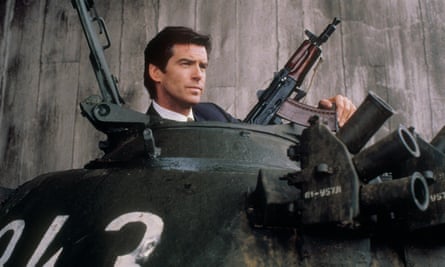
The article playfully, yet perhaps with a kernel of truth, suggests that this approach to naming could even be a part of solving the housing crisis. If the Robin Gardens development is met with widespread enthusiasm, the logic follows that identifying every mundane establishing shot in the Bond franchise and developing new housing estates at those locations could create a significant number of new homes. The article humorously lists potential candidates: the tank chase sequence from "GoldenEye" filmed in Peterborough, the Shanghai swimming pool scene from "Skyfall" shot at a Virgin Active in Canary Wharf, and the climactic cargo plane scene from "Die Another Day" filmed at an abandoned Kent airport, which has more recently served as a lorry park for post-Brexit overspill. This imaginative proposition highlights the widespread and often surprising presence of the Bond saga in the fabric of everyday landscapes.
Keeping the Bond Flame Alive
In the current climate of uncertainty surrounding the future of the James Bond film series, developments like the Robin Gardens estate serve as vital anchors for fans, keeping the spirit of 007 alive. The article contrasts the tangible, albeit quirky, tribute of a street named after Judi Dench with the less impactful "007 Road to a Million" gameshow launched by Amazon three years ago. It posits that a street named in honour of a beloved cinematic figure, however indirectly, resonates more profoundly with the enduring appeal of James Bond than a fleeting entertainment venture.
Looking Ahead: The Enduring Allure of 007
The naming of streets in a Swindon housing estate after James Bond characters and elements is a testament to the enduring cultural impact of the franchise. It highlights how even seemingly disparate elements – a retired manufacturing facility and a global espionage saga – can converge to create something unique and engaging. As fans eagerly await the next chapter in the 007 saga, these real-world connections, etched into the very geography of our towns, provide a comforting reminder of the rich and varied legacy that continues to captivate audiences worldwide. The development in Swindon serves as a delightful, if unconventional, monument to the enduring power of cinematic imagination and its ability to leave a lasting imprint on our world.